
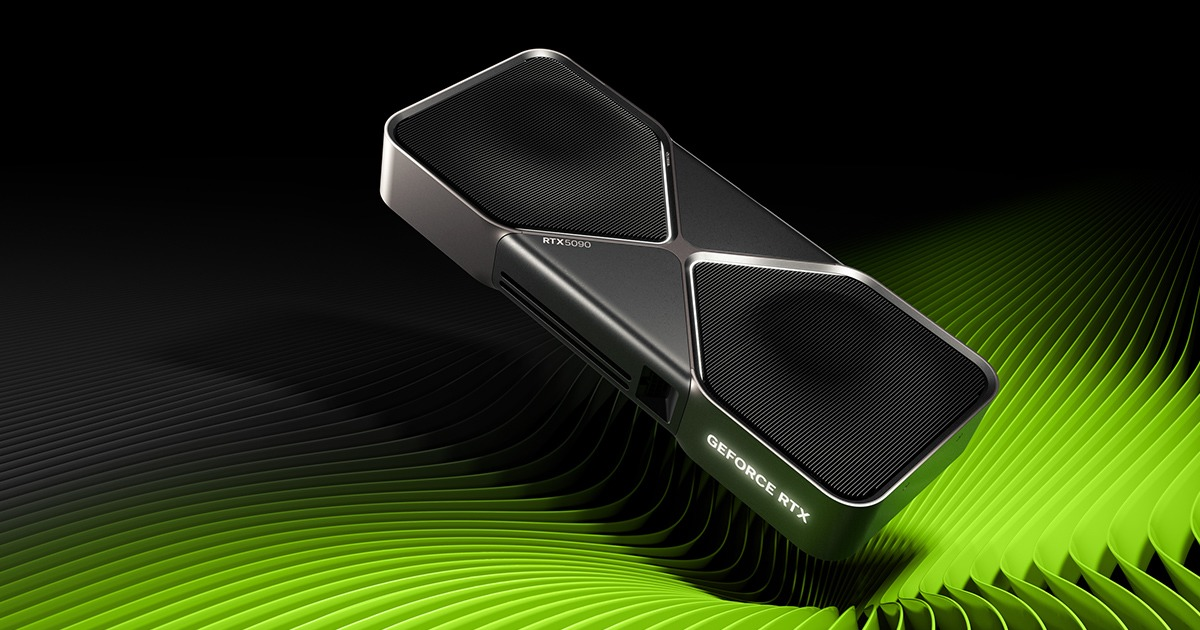
NVIDIA has reassured PC gamers that GeForce graphics cards are not going away following Jensen Huang's resignation, but the company has offered no guarantees about future GPU availability or pricing. With the GeForce RTX 5090 now appearing at US retailers for more than 3 times its original launch price, the future of affordable gaming hardware remains uncertain.
During the PDXLAN gaming event, NVIDIA GeForce Evangelist Jacob Freeman addressed concerns surrounding the company's leadership transition. In a post on X, Freeman expressed appreciation for colleagues dedicated to PC gaming and confirmed that their work continues despite recent corporate changes.
"A lot has happened this week. I'm grateful to work alongside some amazing colleagues who love PC gaming, hardware, and tech. This work continues!"
— Quote by: Jacob Freeman, NVIDIA GeForce Evangelist.
When a user directly questioned whether NVIDIA was preparing to abandon the GeForce brand, Freeman responded with a simple "Nope," dismissing speculation that the company intends to discontinue consumer graphics cards. However, his comments do not represent an official product roadmap, nor do they confirm future production volumes, launch schedules, or pricing strategies.
The reassurance comes as NVIDIA undergoes a historic leadership transition following Jensen Huang's resignation after 33 years, with CFO Colette Kress assuming the interim CEO position. The company's growing dependence on AI infrastructure has raised concerns that consumer graphics hardware could receive less attention as NVIDIA prioritizes enterprise accelerators and data center investments.
Meanwhile, GeForce RTX 5090 prices have reached extraordinary levels. Although NVIDIA officially lists the RTX 5090 starting at 1,999$, recent US retailer listings show the ASUS ROG Astral RTX 5090 OC at approximately 6,249.99$, while premium GIGABYTE and MSI configurations range from 6,599.99$ to more than 7,300$. These are retailer asking prices for specific models rather than changes to NVIDIA's official MSRP, but they highlight the enormous difference between advertised pricing and actual market availability.
The problem is not entirely new. Previous RTX 5090 marketplace listings approached 10,000$, demonstrating how limited availability and speculative pricing have increasingly affected high end graphics hardware. Growing AI demand, expensive GDDR7 memory, and semiconductor manufacturing constraints continue putting pressure on the consumer market, although their individual contributions to retail pricing remain difficult to quantify.
NVIDIA's next generation GeForce RTX 6000 Series also remains uncertain. Industry speculation suggests a potential launch in 2028 rather than 2027, but the company has not officially announced the lineup, its specifications, or a release window. Reports concerning changes to previously discussed RTX SUPER models have likewise not been confirmed.
While Freeman's comments indicate that NVIDIA intends to maintain its GeForce business, continuing to manufacture gaming GPUs does not automatically mean those products will remain affordable. Under its new leadership, NVIDIA faces the challenge of balancing AI infrastructure demand with the expectations of millions of PC gamers who depend on its consumer hardware.
NVIDIA keeping GeForce alive should be the minimum expectation, not a major reassurance. The company built its reputation through PC gaming, and that market deserves more than occasional product releases with increasingly inaccessible prices.
The RTX 5090 demonstrates the problem clearly. A graphics card originally positioned at 1,999$ should not routinely appear at established retailers for more than 6,000$. Although NVIDIA does not directly control every retailer's pricing, its production priorities, supply commitments, and product strategy influence the market.
Gaming hardware must remain accessible to the people who actually use it. NVIDIA's future leadership should prioritize sustainable consumer GPU supply, realistic pricing, and meaningful performance improvements rather than allowing enterprise AI demand to overshadow the PC gaming ecosystem.
Is NVIDIA's reassurance enough to keep your confidence in GeForce, or have rising GPU prices convinced you to consider AMD, Intel, or keeping your existing graphics card longer?
