
NVIDIA RTX 6000D 84 GB PCB Leak Shows 28x 3 GB GDDR7 Layout and 448 Bit Memory Bus
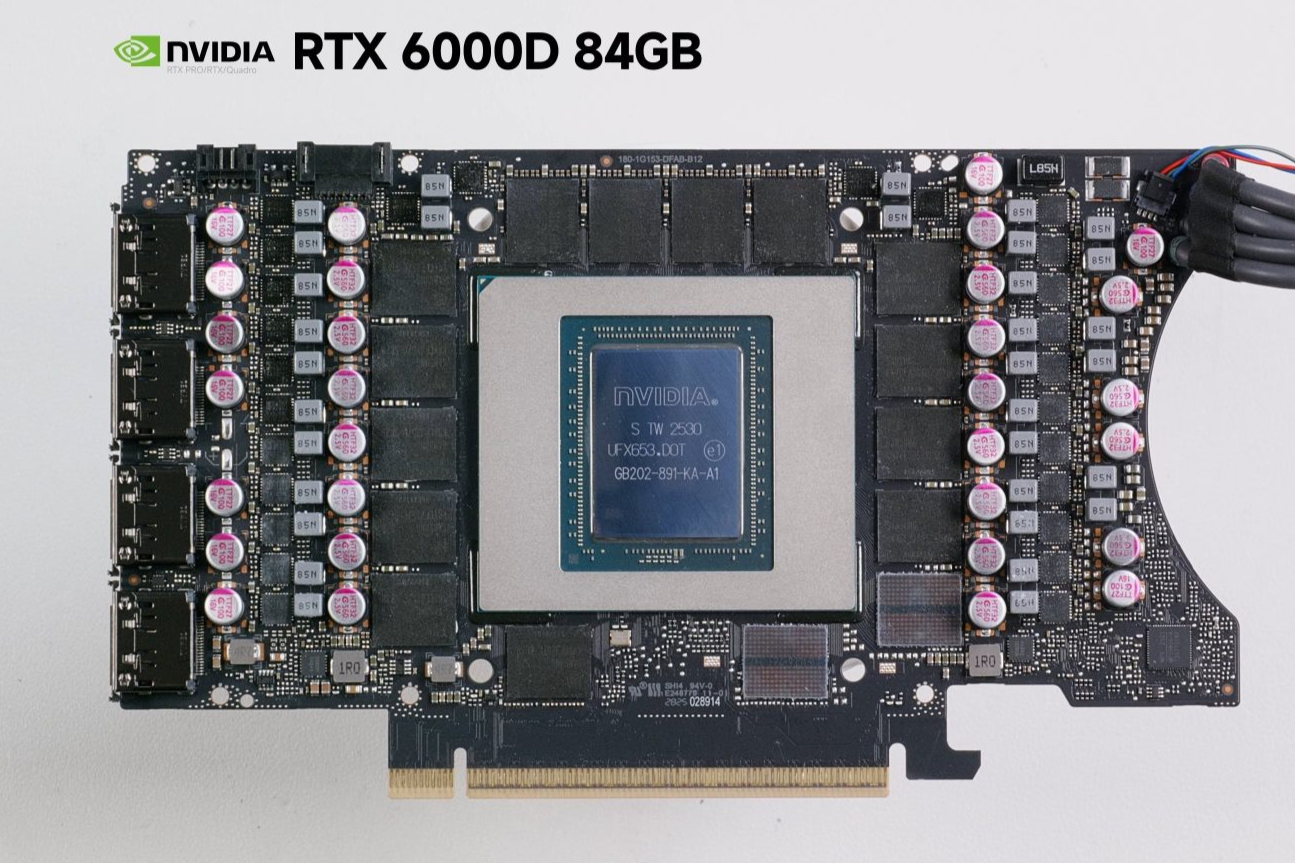
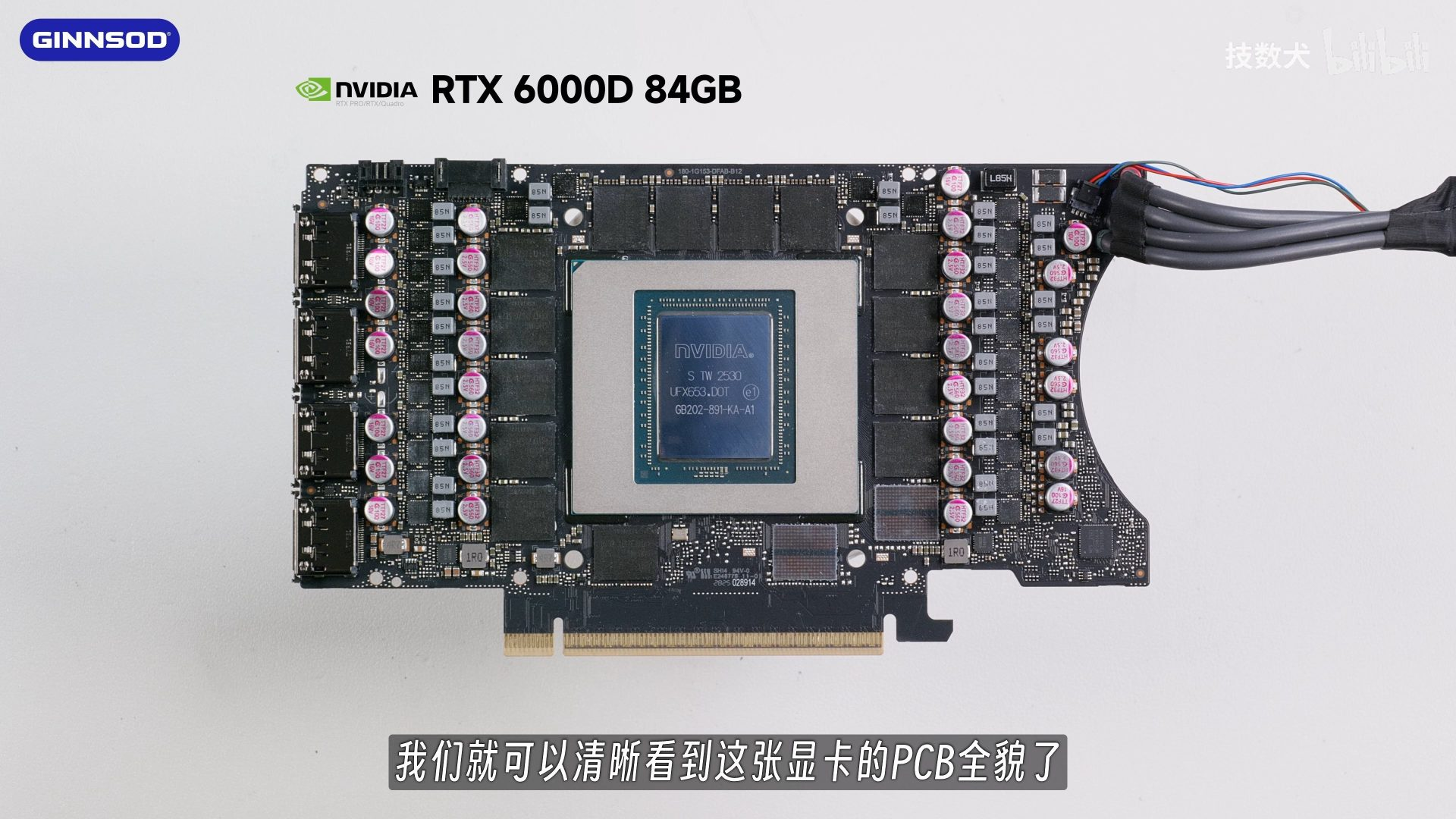
A teardown video has surfaced showing what appears to be the China exclusive NVIDIA RTX 6000D with its PCB exposed, giving us an early look at how NVIDIA is physically implementing the cut down memory configuration on this Blackwell workstation and server focused GPU. The footage comes from a teardown posted by GINNSOD, and it is likely the first time we have seen the RTX 6000D board layout this clearly, including the partially populated memory footprint that defines its 84 GB configuration.
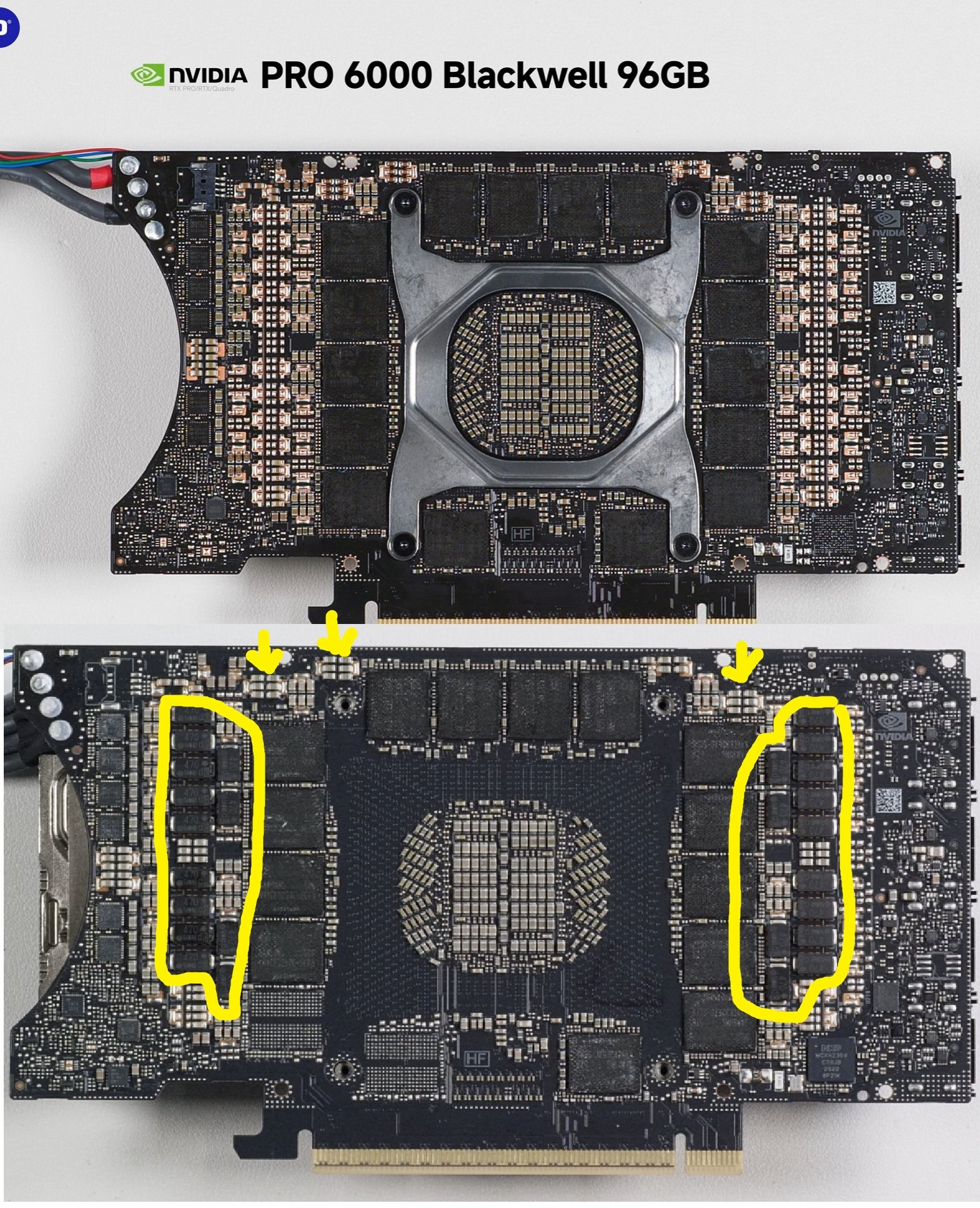
The key visual reveal is the memory layout. Unlike the RTX PRO 6000 Blackwell Server Edition where the memory positions are fully populated, the RTX 6000D shows 4 empty memory pads. The configuration shown in the teardown points to 28 memory chips installed, using 28x 3 GB GDDR7 modules for a total of 84 GB. That is a notable design choice because it keeps the same per chip density approach while reducing overall capacity and bus width through partial population rather than a completely different board design.
That partially filled layout also lines up with a narrower memory interface. With 28 chips populated instead of 32, the card is described as running a 448 bit memory bus, which is exactly what you would expect when the board is built around a 32 position layout but only 28 channels are active. From a workstation and AI workflow standpoint, this is the kind of change that can impact bandwidth heavy tasks, especially memory bound inference and certain simulation workloads, even if the raw capacity remains very large for many professional pipelines.
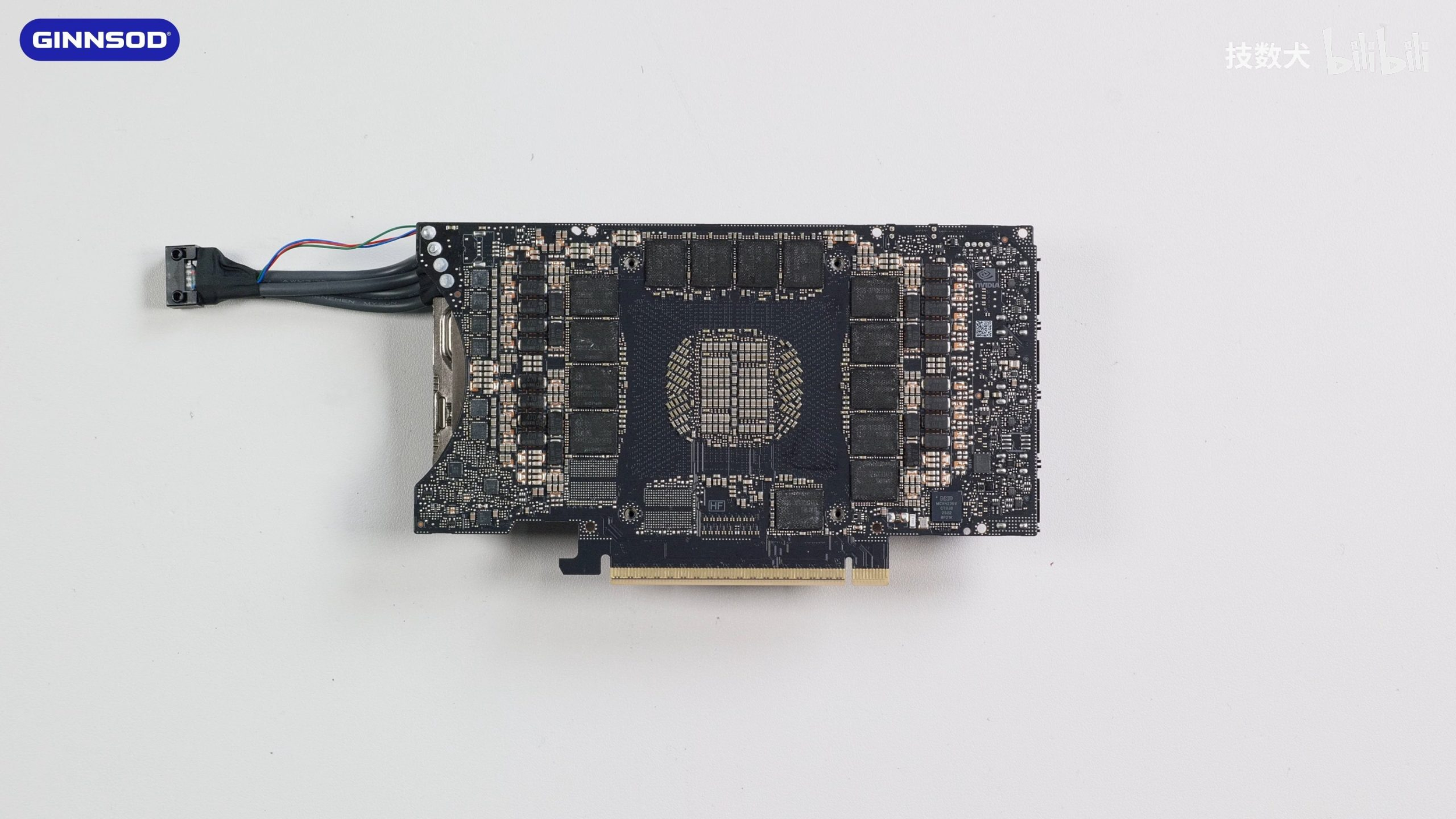
Cooling is also part of the story here. The video shows the stock passive cooler being removed and replaced with a custom waterblock connected to a radiator. The server edition cooler is designed around passive airflow and quieter operation, but the report suggests some companies are swapping coolers to improve thermals depending on deployment constraints. For anyone who has built around high power workstation GPUs, this tracks with real world behavior: data center style passive designs can be excellent, but they rely on chassis airflow assumptions that do not always match workstation enclosures.
On core specs, the RTX 6000D is described as having 19,968 shaders compared to 24,064 on the RTX PRO 6000 Blackwell, with additional downgrades in other areas as well. That shader reduction combined with the memory changes reinforces the product positioning: a market specific variant that preserves the Blackwell workstation identity while dialing back the ceiling to comply with regional availability constraints.
Power behavior is where the teardown also gets interesting. The RTX 6000D 84 GB is described as rated at 600 W, matching the RTX PRO 6000D power class, but in the GINNSOD system the GPU was observed drawing up to 419 W. That delta suggests either workload limits in the test scenario, conservative power tuning, or platform level constraints that prevented the GPU from stretching to its full power target. It is also noted that the RTX PRO 6000 Server Edition supports configurable TDP settings, while the Max Q Workstation Edition is capped at 300 W, which is useful context for how NVIDIA is segmenting the broader stack.
If this layout is representative of retail units, the RTX 6000D becomes a very clear example of how workstation GPUs can be segmented through a mix of compute cuts and memory channel population, instead of reinventing the entire PCB. For enthusiasts watching from the sidelines, it is also a rare peek into the physical reality of product segmentation in the Blackwell era.
If you had access to the RTX 6000D, would you prioritize the 84 GB capacity for heavy creation and AI workloads, or would the 448 bit bus and shader cuts push you toward a different pro card?
