

NVIDIA has reportedly notified its graphics card manufacturing partners of another significant reduction in consumer and gaming GPU allocations, with supply expected to decline by 20% to 30% during its fourth fiscal quarter, covering November 2026 through January 2027. The decision comes shortly after the official reinstatement of Jensen Huang as NVIDIA's CEO on November 23, raising further concerns about graphics card availability and affordability.
According to a November 25 report from the Chinese distribution forum Board Channels, NVIDIA's GPU supply to China was already severely constrained during the previous quarter. The latest reduction could place additional pressure on graphics card manufacturers, distributors, and retailers, resulting in limited inventory and further price fluctuations throughout the holiday shopping season and into early 2027.
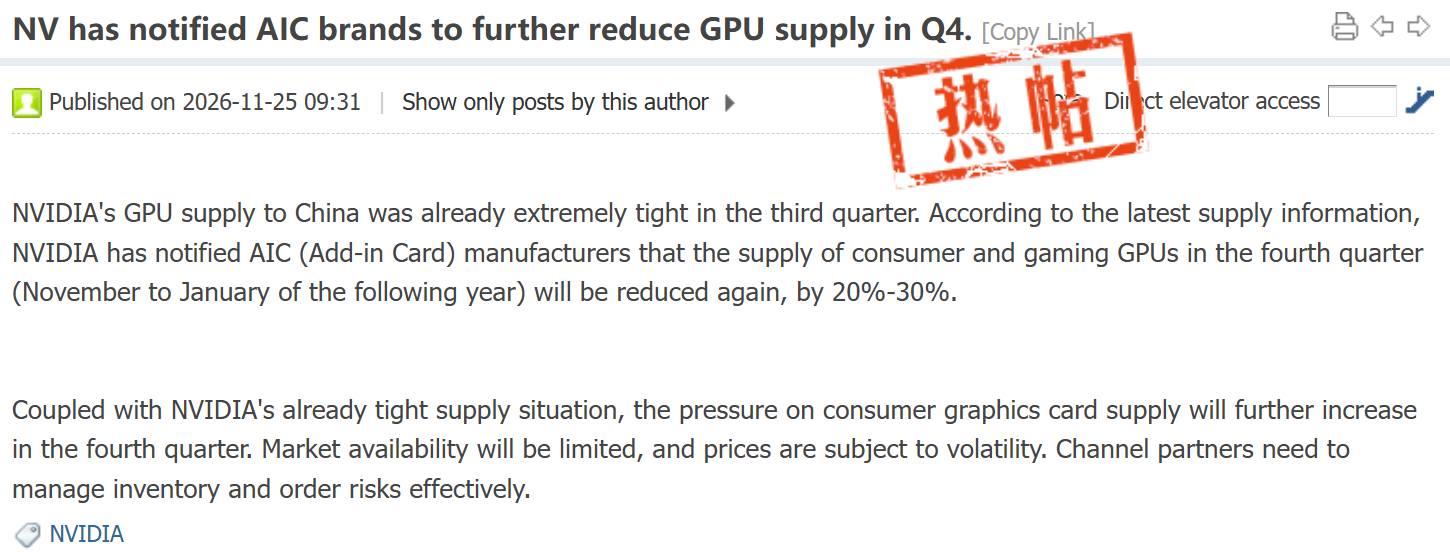
The situation follows reports that NVIDIA previously implemented GeForce graphics card price increases for the third time in 2026, alongside rising GDDR6 and GDDR7 memory procurement costs. Some distribution channels are reportedly being encouraged to prioritize older GeForce RTX 3060 and RTX 3050 models as inventories of newer RTX 50 series graphics cards become increasingly constrained.
These developments coincide with NVIDIA's continued expansion into enterprise AI infrastructure. According to its latest financial results, the company generated 115.8 billion dollars in quarterly revenue, representing a 103% annual increase. NVIDIA has also announced expanded commitments with manufacturing partners to support AI infrastructure development, highlighting the growing commercial importance of its enterprise computing ecosystem.
The reported supply reduction could further complicate the introduction of upcoming consumer graphics cards, particularly the GeForce RTX 5080 24 GB, which already faces uncertainty surrounding its anticipated January 2027 launch.
NVIDIA has not officially confirmed the reported reduction, identified the affected GPU models, or clarified whether similar allocation cuts will extend beyond China. There is also no confirmed evidence directly connecting the decision to Jensen Huang's reinstatement.
The continued reduction of consumer GPU availability is becoming increasingly concerning for the PC industry. While NVIDIA's enterprise AI business generates unprecedented revenue, gamers, independent developers, content creators, and local AI enthusiasts are facing increasingly restrictive hardware availability and higher ownership costs.
Consumers should not be expected to purchase outdated graphics cards at inflated prices simply because enterprise customers offer manufacturers higher profit margins. The gaming and personal computing markets played a fundamental role in establishing NVIDIA's technological and commercial success, and these communities deserve consistent access to modern hardware at reasonable prices.
Greater competition from AMD and Intel, increased consumer GPU production, and improved transparency regarding hardware allocations are essential to maintaining a healthy PC ecosystem. The future of computing should empower users to own and operate capable hardware locally rather than making cloud subscriptions the only financially accessible alternative.
If NVIDIA continues reducing gaming GPU supply while prioritizing enterprise AI, would you consider switching to AMD or Intel for your next graphics card upgrade?

