
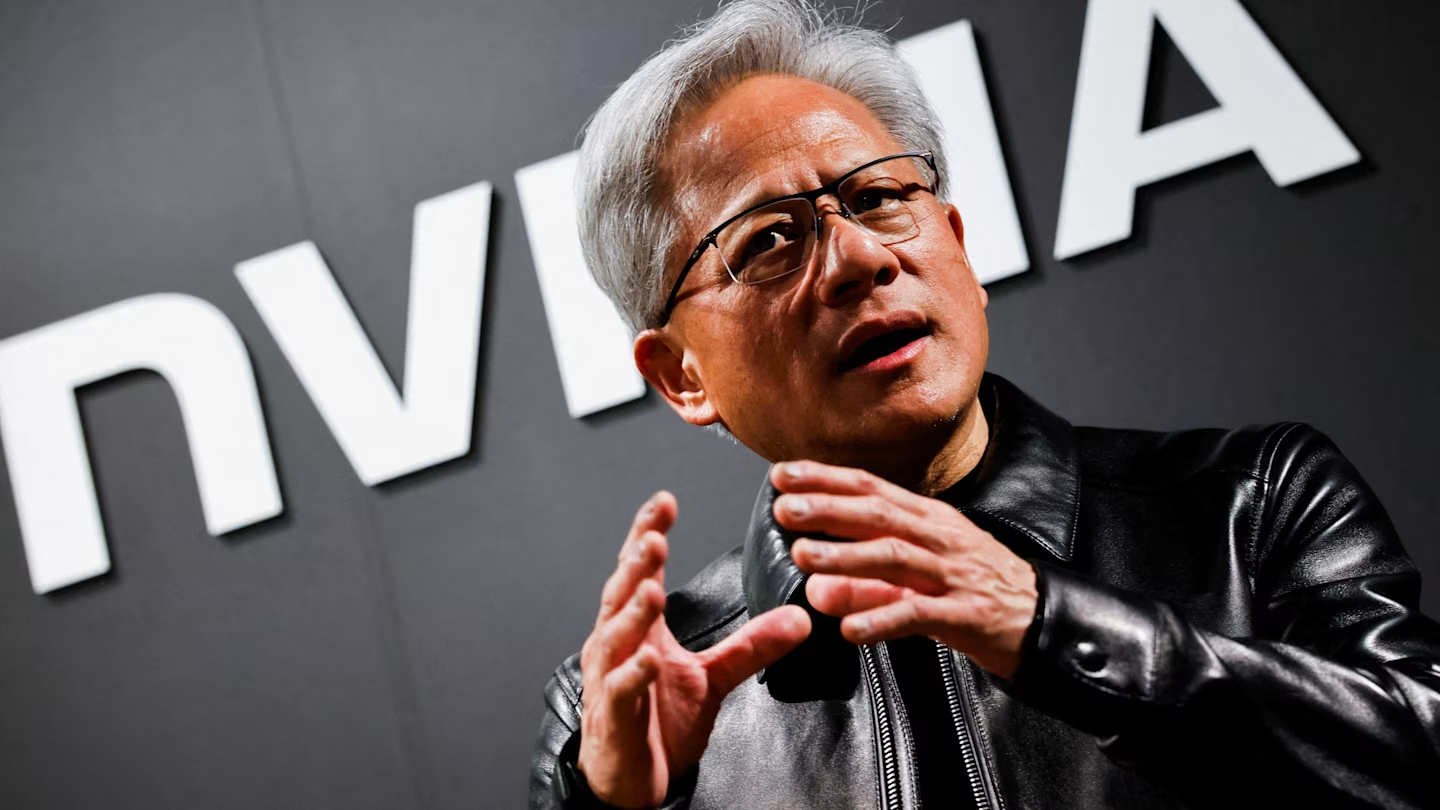
NVIDIA's position in the artificial intelligence semiconductor market is facing renewed scrutiny as Taiwanese supply chain sources suggest the company could reduce future chip orders following the controversy surrounding CEO Jensen Huang. The uncertainty has raised questions about whether competitors such as AMD, Broadcom, MediaTek, and other custom AI chip developers could gain access to additional manufacturing capacity at TSMC. However, no widespread NVIDIA order cancellations have been confirmed, and Taiwanese suppliers report that production schedules remain largely unaffected.
According to Taiwan's Commercial Times, semiconductor industry sources believe increasing regulatory scrutiny surrounding NVIDIA's business relationships in China could lead the company to reassess some AI accelerator orders. This follows the independent investigation involving Jensen Huang, which has raised questions about NVIDIA's international customer relationships and compliance with American semiconductor export restrictions. The allegations remain under investigation, with no established finding that Huang knowingly participated in illegal semiconductor transfers or compromised confidential information.
The potential consequences extend beyond NVIDIA itself. The company reserves substantial manufacturing capacity at TSMC while relying on an extensive network of advanced packaging, testing, and component suppliers. If NVIDIA reduces orders, competitors could theoretically secure additional production capacity for their own accelerators, particularly as demand for AI computing continues exceeding available supply.
According to TrendForce's November 10 supply chain report, potential beneficiaries include AMD and custom chip developers such as Broadcom, MediaTek, Alchip, and Global Unichip. These companies are already expanding their presence in the AI accelerator market as major cloud providers develop specialized processors to reduce operating costs and dependence on NVIDIA hardware.
The transition toward application specific integrated circuits, or ASICs, is particularly important. Unlike general purpose AI GPUs designed to support a wide range of workloads, custom accelerators can be optimized for specific tasks, potentially delivering improved performance per watt and lower operating costs. Google's Tensor Processing Units and Amazon's Trainium processors demonstrate how major cloud providers are developing alternatives to NVIDIA's ecosystem.
This broader trend is already visible in OpenAI's custom AI accelerator development, where specialized hardware is being evaluated as a way to improve inference efficiency and reduce infrastructure expenses.
The potential impact could also extend to semiconductor testing companies. Taiwanese financial publication MoneyDJ reports that demand for advanced probe cards and testing equipment remains strong, with suppliers increasingly identifying custom AI processors as an important source of future revenue. Companies such as MPI, Chunghwa Precision Test Tech, and Yield Microelectronics could benefit from changes in manufacturing allocations as ASIC development expands.
However, a potential reduction in NVIDIA orders does not mean competitors can immediately replace its manufacturing volume. Advanced semiconductor production involves long term capacity agreements, complex packaging requirements, and lengthy validation procedures. Even if some manufacturing allocations become available, transferring them to another chip designer requires planning and technical preparation.
More importantly, Taiwanese suppliers told Economic Daily News that they have not experienced disruptions to NVIDIA orders or shipments. TrendForce also reports that existing production arrangements remain unchanged, suggesting that concerns about an immediate semiconductor supply chain disruption may be premature.
Separately, approximately 600,000 NVIDIA H200 accelerators are reportedly awaiting Chinese import approval in Hong Kong, according to Reuters. This creates another uncertainty for NVIDIA's China business, although the situation does not establish that the company is reducing its broader manufacturing commitments.
Meanwhile, NVIDIA's board confirmed on November 10 that independent investigators had been appointed to examine the allegations surrounding Huang. The company has not announced changes to its global semiconductor procurement strategy as a result of the investigation.
The potential redistribution of semiconductor manufacturing capacity highlights a much larger challenge for NVIDIA than the current controversy surrounding its CEO. While NVIDIA continues to dominate AI infrastructure through its GPUs, networking technology, and CUDA software ecosystem, major cloud providers are increasingly investing in custom accelerators designed around their own requirements.
This competition could ultimately benefit the broader computing industry. Greater demand for AMD Instinct accelerators, Google TPUs, and other specialized processors would reduce dependence on a single supplier and potentially encourage better pricing and more efficient hardware development.
However, diversification does not automatically improve component availability for PC gamers. AMD and NVIDIA continue competing for advanced manufacturing capacity that could otherwise support consumer graphics cards, while large AI infrastructure customers can commit substantially greater budgets.
The priority should be expanding production capacity and improving competition without sacrificing the availability of consumer hardware. A more diverse semiconductor ecosystem is welcome, but its benefits should extend beyond hyperscale data centers to enthusiasts, independent developers, and ordinary PC owners.
For now, NVIDIA losing its AI market dominance remains speculation rather than an established industry shift. The growth of custom silicon is real, but any significant change in manufacturing allocation will depend on actual customer orders, production contracts, and long term AI infrastructure investment.
Could AMD and custom AI accelerators eventually challenge NVIDIA's dominance, or will CUDA and NVIDIA's established software ecosystem keep the company ahead despite increasing competition?
