
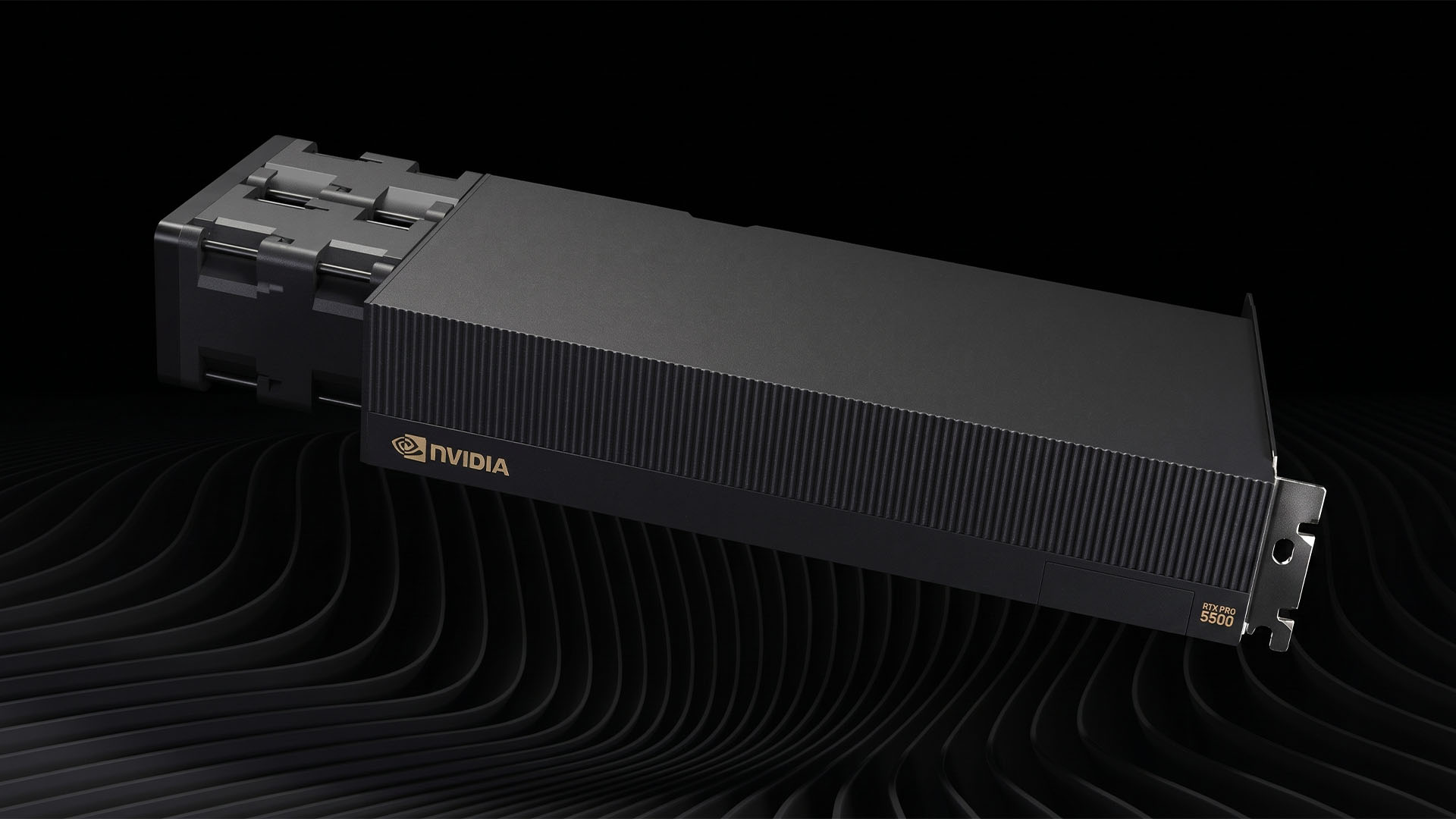
Chinese technology giants Alibaba, Tencent, and ByteDance are facing significant delays in securing NVIDIA GPUs despite placing enormous orders for the RTX PRO 5500 Blackwell. According to Bloomberg, Chinese AI and cloud companies have collectively ordered approximately 6 million units, representing an estimated $70 billion in potential sales. However, these customers expect to receive only around 1% of their orders over the next 4 months as NVIDIA struggles to expand production capacity while prioritizing its more profitable AI accelerators.
The situation highlights NVIDIA's continued influence over China's AI infrastructure despite increasing investment in domestic alternatives from Huawei and other semiconductor manufacturers. Much of that advantage comes from CUDA, NVIDIA's established computing ecosystem, which supports widely used AI frameworks, inference engines, and development tools. Migrating existing workloads to alternative hardware can require substantial software optimization, compatibility testing, and infrastructure changes. Consequently, Chinese hyperscalers may prefer waiting for NVIDIA hardware rather than immediately replacing their existing computing environments with domestic solutions.
The RTX PRO 5500 Blackwell is particularly attractive because it combines 21,760 CUDA cores with 84GB of ECC GDDR7 memory, providing significantly greater memory capacity than consumer graphics cards. NVIDIA's official specifications also confirm 1,398GB/s of memory bandwidth, PCIe 5.0 connectivity, and a maximum power consumption of 600W. Although primarily designed for professional workstations, these capabilities make the GPU suitable for demanding AI inference workloads. Its position outside the strictest US export restrictions also makes it a practical alternative to more powerful data center accelerators that require additional authorization.
Supply limitations remain the biggest obstacle. Bloomberg reports that initial deliveries of several thousand GPUs are expected before the end of 2026, followed by tens of thousands around February 2027. Chinese buyers estimate that cumulative shipments could reach approximately 700,000 units by the end of 2027, although actual deliveries will depend on NVIDIA's manufacturing capacity and production priorities. With reported pricing exceeding $11,000 per GPU, the scale of these orders demonstrates just how aggressively Chinese companies are investing in AI computing infrastructure.
NVIDIA's biggest advantage is no longer determined by GPU performance alone. CUDA compatibility, established development environments, and infrastructure reliability have become powerful competitive advantages that domestic manufacturers cannot easily replicate. However, a reported $70 billion in demand does not guarantee equivalent revenue when production remains constrained. China's continued investment in alternative accelerators could eventually weaken NVIDIA's position, particularly if domestic hardware achieves greater software compatibility and manufacturing scale. For now, even substantial delivery delays appear insufficient to discourage demand.
Would you wait months for NVIDIA GPUs and CUDA compatibility, or invest in alternative hardware to reduce dependence on a single manufacturer?
