
NVIDIA DLSS 5 Doubles Neural Rendering Speed, Cuts VRAM Usage by 20% and Expands to More Games
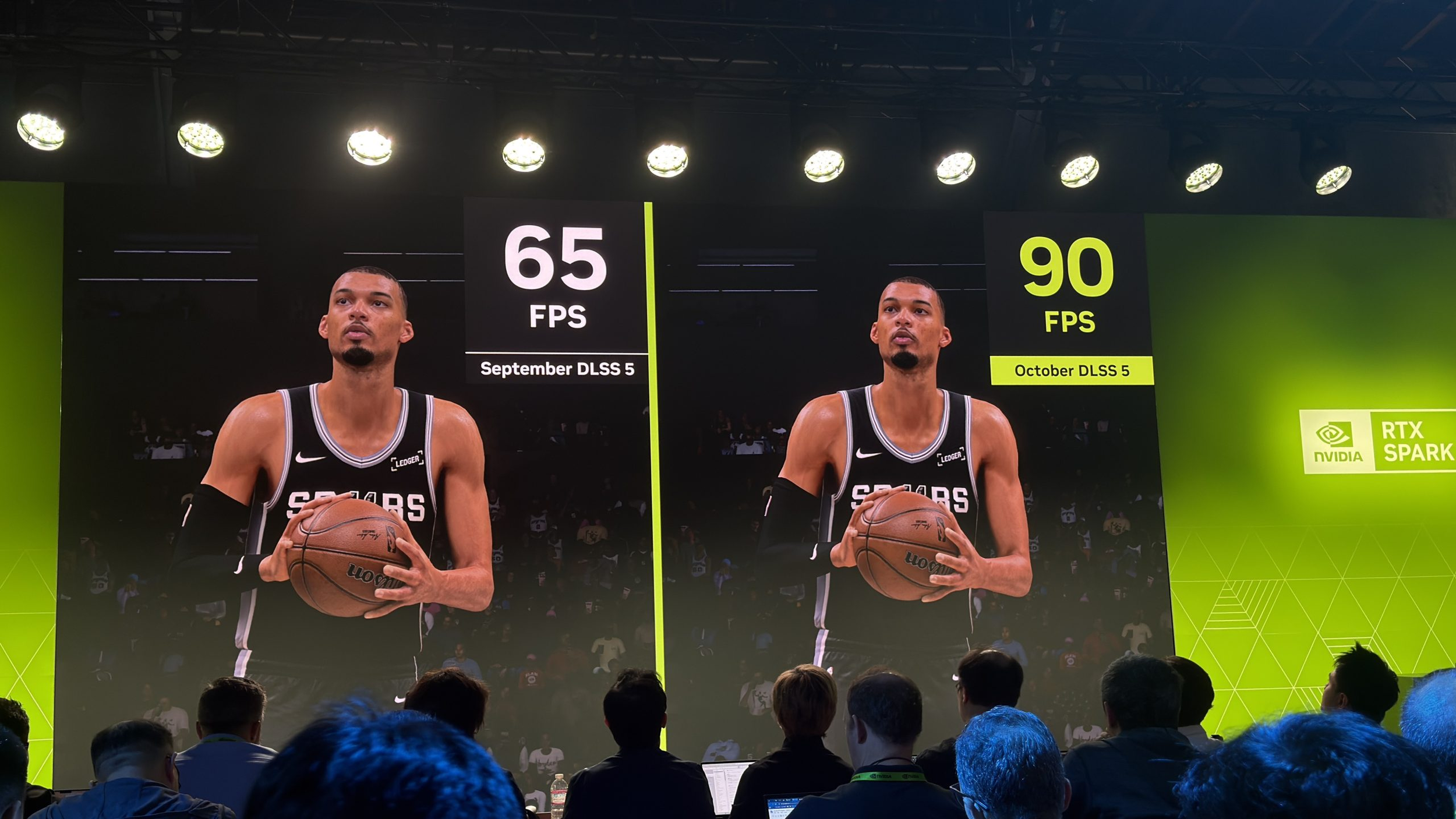
NVIDIA has announced a major optimization update for DLSS 5, doubling the execution speed of its 3D Guided Neural Rendering model while reducing VRAM consumption by 20% at 4K resolution. The improvements arrive alongside confirmed support for Hogwarts Legacy and Where Winds Meet, expanding the technology beyond its initial debut in NBA 2K27. According to NVIDIA's official announcement, the October update delivers substantially lower GPU overhead without significantly compromising visual quality.
The updated neural model contains approximately 118 million parameters, representing a 24% reduction compared with its September implementation. Combined with pipeline optimizations, this reduces the computational cost of Neural Rendering by half. NVIDIA also claims that DLSS 5 is now approximately 10 times faster than its original March 2026 demonstration, which initially required 2 GeForce RTX 5090 graphics cards.
NVIDIA DLSS 5 October Performance Improvements
| Metric | October Update |
|---|---|
| Neural Rendering Execution | 2 times faster |
| Model Size | 118 million parameters |
| Model Size Reduction | 24% |
| VRAM Usage at 4K | 20% lower |
| GPU Processing Overhead | 50% lower |
| NBA 2K27 Performance | 65 FPS to 90 FPS |
| Improvement Since March | 10 times faster model |
The performance improvement is demonstrated in NVIDIA's NBA 2K27 comparison video, where frame rates increase from 65 FPS to 90 FPS, representing approximately 38% higher performance. The distinction is important because doubling the neural model's execution speed does not automatically double gaming frame rates. Actual improvements depend on the graphics card, resolution, and overall rendering workload. The 20% VRAM reduction also applies specifically to the Neural Rendering implementation rather than total game memory consumption.
The optimized model will become available on October 16 through NBA 2K27, supporting GeForce RTX 50 Series GPUs, NVIDIA RTX Spark laptops, and GeForce NOW. It will also serve as the default implementation for future DLSS 5 games.
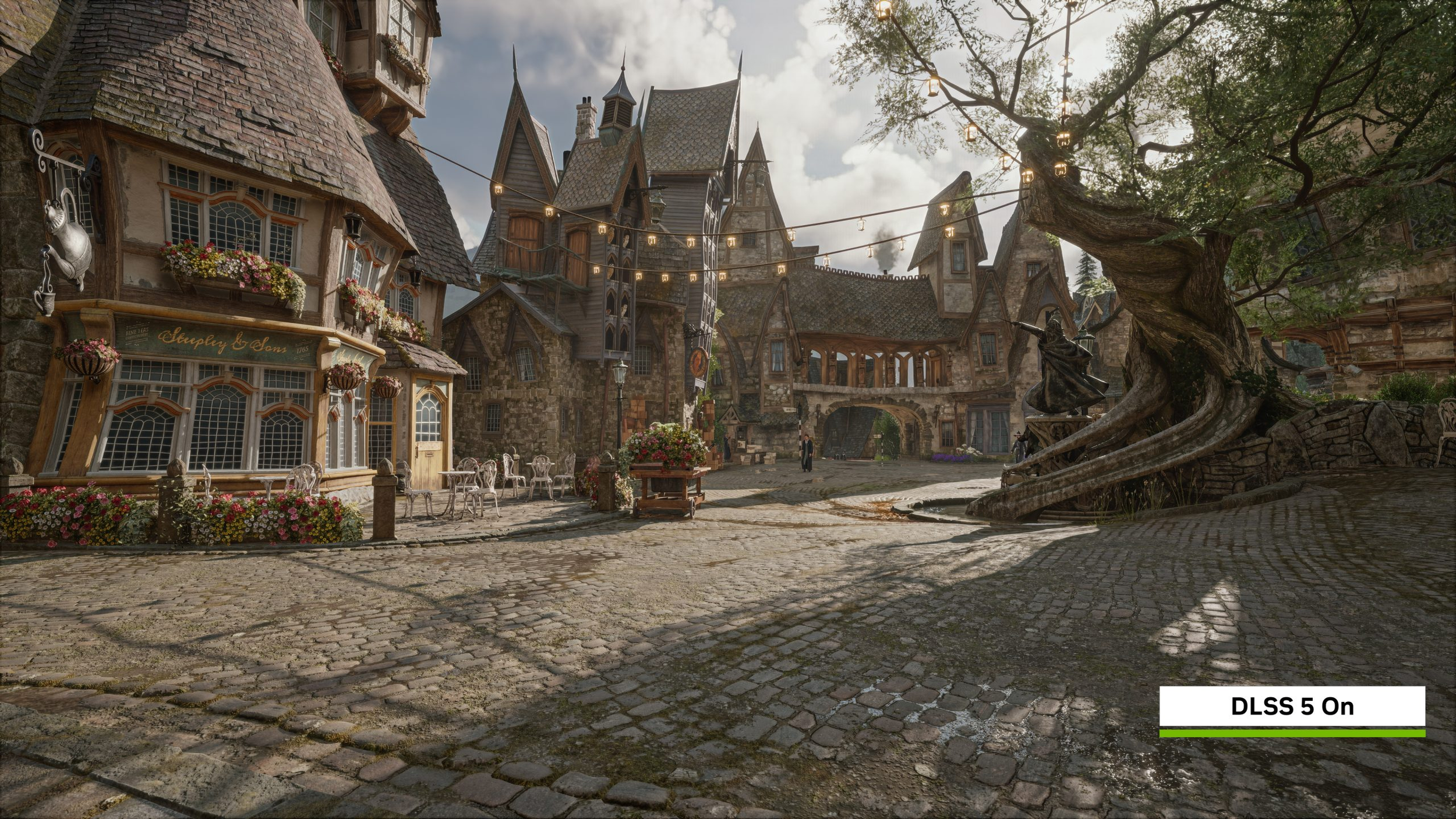
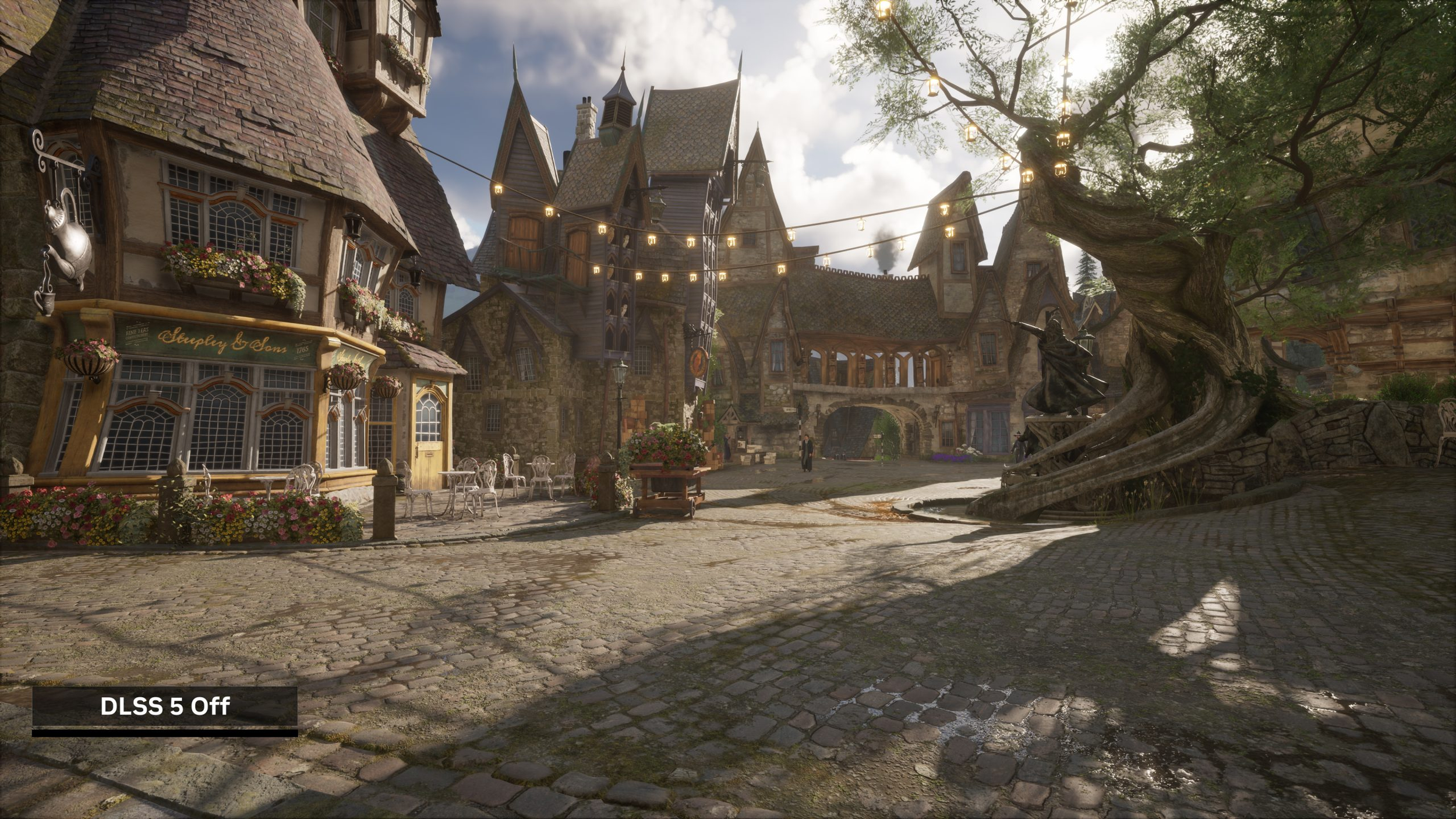
Hogwarts Legacy will receive DLSS 5 on November 5, introducing enhanced lighting, materials, and environmental details through neural rendering. Developer Avalanche Software has adjusted the implementation using NVIDIA's SDK controls to preserve the game's original artistic direction, an important consideration following criticism of earlier DLSS 5 demonstrations that substantially altered character appearances.
Meanwhile, Where Winds Meet will receive DLSS 5 in late November, expanding its existing DLSS Super Resolution and Multi Frame Generation support. NVIDIA has released a dedicated gameplay comparison demonstrating the visual changes to characters, environments, and lighting.
Beyond these releases, NVIDIA will bring DLSS 5 and the optimized Frame Generation Performance Mode to RTX Remix on October 23, giving modders additional tools for enhancing older PC games. A separate NVIDIA app beta also introduces Frame Generation Preset C, which can increase performance by up to 35% on an RTX 5060 with minor image quality tradeoffs.
Although official Neural Rendering support currently targets the RTX 50 Series and RTX Spark, NVIDIA has also confirmed plans to expand DLSS 5 compatibility to RTX 40 Series GPUs. A release date for that expansion has not been announced.
The most important development is not simply the increase in frame rates, but how quickly NVIDIA is reducing the computational cost of Neural Rendering. Cutting GPU overhead and VRAM consumption simultaneously could make DLSS 5 more practical on graphics cards with limited resources, particularly as modern games continue demanding more video memory.
However, performance is only part of the equation. Neural Rendering modifies lighting and material presentation rather than simply reconstructing resolution, making developer control essential. The adjustments demonstrated in Hogwarts Legacy suggest NVIDIA is responding to concerns about preserving the original artistic vision.
If NVIDIA maintains this optimization pace while expanding compatibility to RTX 40 Series hardware, DLSS 5 could become a more accessible graphics feature rather than remaining primarily a showcase for high end GPUs.
Would you enable DLSS 5 for improved lighting and materials if it changed the original appearance of a game, or do you believe preserving the developer's artistic vision should always take priority?
