
NVIDIA CEO Jensen Huang Says Accelerated Computing Remains the Company’s Core Advantage Beyond AI
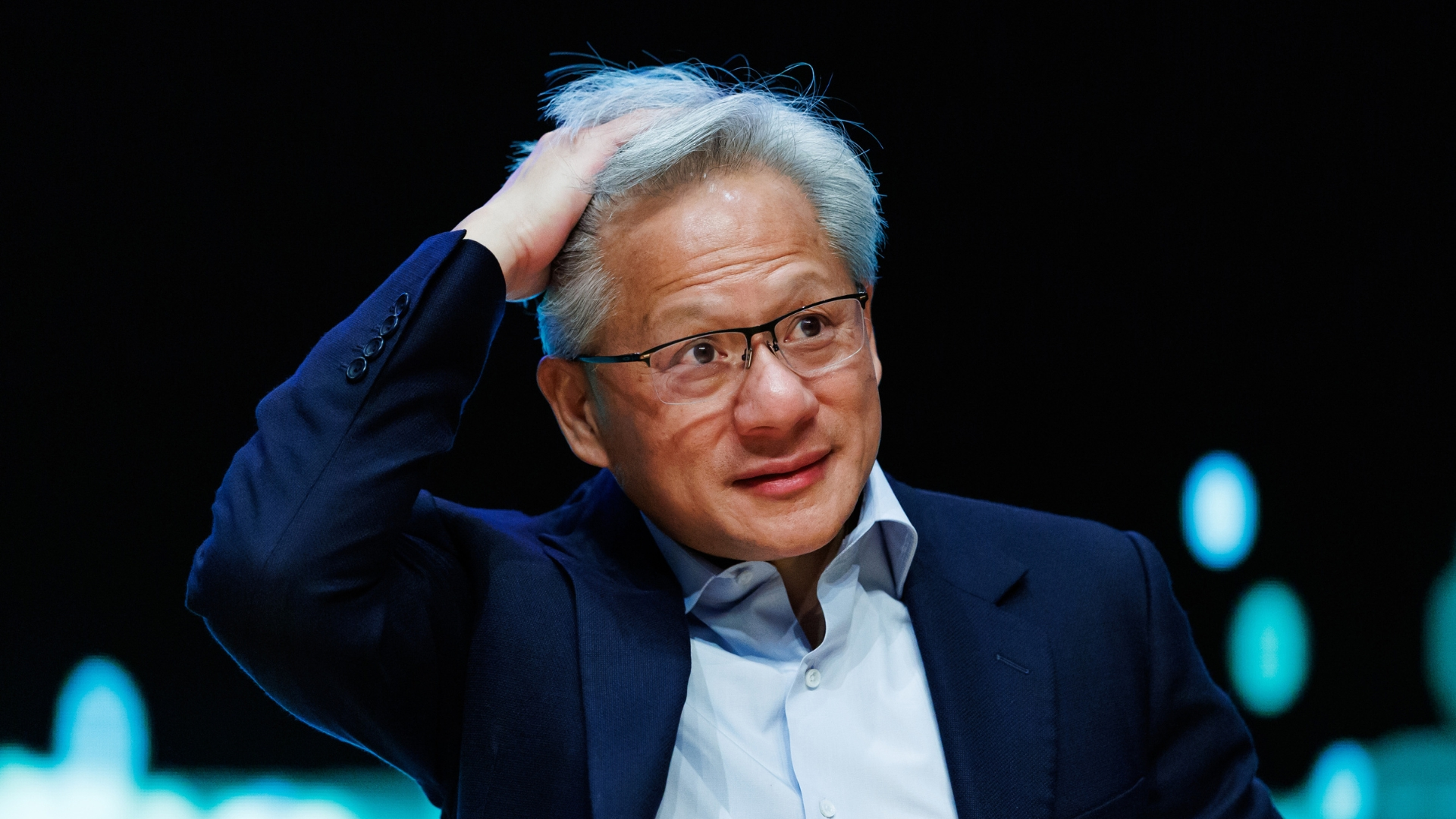
In a wide ranging conversation on Dwarkesh Patel’s podcast, NVIDIA CEO Jensen Huang laid out a broader view of the company that goes beyond the usual AI headline cycle. While artificial intelligence remains the engine driving NVIDIA’s historic growth, Huang made it clear that he does not see AI as the only reason the company became one of the most powerful names in technology. In his view, NVIDIA’s deeper foundation has always been accelerated computing, the idea that a GPU paired with software and a CPU can massively speed up workloads that general purpose computing alone cannot handle efficiently. The episode itself was framed around TPU competition, China, AI chip exports, and NVIDIA’s supply chain moat, showing just how many strategic fronts the company is now managing at once.
Huang’s most important message from a long term technology standpoint is that NVIDIA would still be an enormous company even if the modern AI boom had never happened. He said the company would still be focused on accelerated computing, which he described as the core premise NVIDIA has pursued all along. That means combining GPUs, CUDA, and CPU based systems so code kernels and algorithms can be offloaded into massively parallel hardware, generating dramatic performance gains for engineering, scientific computing, physics, graphics, data processing, and image generation. In other words, AI may have become NVIDIA’s dominant commercial narrative, but Huang is arguing that the company’s real secret sauce was established much earlier through the broader compute model it built around parallel acceleration.
That distinction matters because it reinforces how NVIDIA wants to be understood in the market. The company is no longer just selling graphics chips or even just selling AI hardware. It is selling an integrated computing model built on chips, interconnects, software, networking, systems, and developer lock in. That is why discussion around NVIDIA’s moat increasingly goes far beyond pure silicon leadership. The company’s strength now sits in how tightly all the pieces fit together, from CUDA and system design to the manufacturing and supply chain relationships needed to deliver increasingly complex products at scale. The podcast’s own framing explicitly highlighted this as one of the central questions around NVIDIA’s future.
Huang also addressed one of the most politically sensitive areas in the global semiconductor market: China. According to the interview summary and quoted excerpts circulating around the episode, Huang argued that many Western assumptions about China’s AI limitations are too simplistic. His position was that China already has enormous compute capacity, a vast energy base, and major infrastructure headroom, meaning that even if it lacks the very latest manufacturing access available elsewhere, it can still aggregate huge amounts of compute by deploying more chips at scale. He also described China as the second largest computing market in the world, underlining why it remains strategically important regardless of export controls or process node gaps.
That line of argument is especially notable because it reframes the competitive discussion away from process leadership alone. Huang’s comments suggest that when AI becomes a massively parallel infrastructure problem, energy and deployment scale can compensate for not always having the very newest chip. Whether one agrees fully with that position or not, it reflects how NVIDIA sees the global AI race: not as a single node battle, but as a layered systems competition involving energy, manufacturing, infrastructure, data centers, and software ecosystems. It is a more expansive view of competition than the usual focus on nanometer leadership and benchmark charts.
Another revealing part of the discussion involved NVIDIA’s missed chance to invest earlier in OpenAI and Anthropic. Huang acknowledged that when those labs first needed major capital, NVIDIA was not yet prepared to make that kind of external bet, and the opportunity instead went to hyperscalers such as Microsoft, Google, and Amazon. A post by Dwarkesh Patel on X highlighted Huang’s regret over that decision and his view that NVIDIA would be better prepared the next time a similar opportunity appears. Business Insider also reported on Huang’s broader explanation that NVIDIA tends to invest across the ecosystem rather than trying to pick a small set of winners, a philosophy shaped by the company’s own history as an underestimated player.
Jensen regrets that when Anthropic and OpenAI first needed billions to scale, Nvidia wasn't in a position to invest. So these labs went to hyperscalers like Microsoft, Google, and Amazon instead, and in return committed to using their compute.
— Dwarkesh Patel (@dwarkesh_sp) April 15, 2026
“I'm not going to make that same… pic.twitter.com/1Fj7I156UA
That admission is significant because it shows how even NVIDIA, now one of the defining companies of the AI era, was still adapting in real time to the scale of the foundation model boom. It also highlights a key structural truth of the market. While NVIDIA became the infrastructure provider powering the modern AI race, the hyperscalers were often the ones in position to lock in the deepest commercial relationships with frontier model labs through capital, cloud access, and compute commitments. Huang’s remarks suggest he sees that dynamic clearly now and does not intend to be caught flat footed again.
Taken together, the podcast presents a CEO who is confident that NVIDIA’s current dominance is not just a lucky byproduct of generative AI timing. Huang is making the case that the company’s rise was built on a longer and more durable thesis around accelerated computing, one that can support AI, scientific computing, graphics, robotics, and future workloads still taking shape. At the same time, he is acknowledging that the next phase of competition will be tougher, more global, and more dependent on infrastructure, energy, and ecosystem control than on chips alone. That is a strong signal that NVIDIA is no longer thinking merely like a semiconductor vendor. It is thinking like a computing platform with geopolitical and industrial scale reach.
For the wider tech industry, that may be the most important takeaway of all. Jensen Huang is not presenting NVIDIA as a company that won because AI appeared. He is presenting it as a company that spent decades building the architecture, software, and supply relationships that made it uniquely ready when AI exploded. Whether competitors can meaningfully challenge that model in the coming years may define the next stage of the global compute race.
Do you think NVIDIA’s long term moat is still CUDA and accelerated computing, or is the real advantage now its grip on infrastructure and the supply chain?
