
Lexar Says Smaller SSD Capacities Are Losing Appeal While Lower Capacity RAM Kits Still Find Buyers
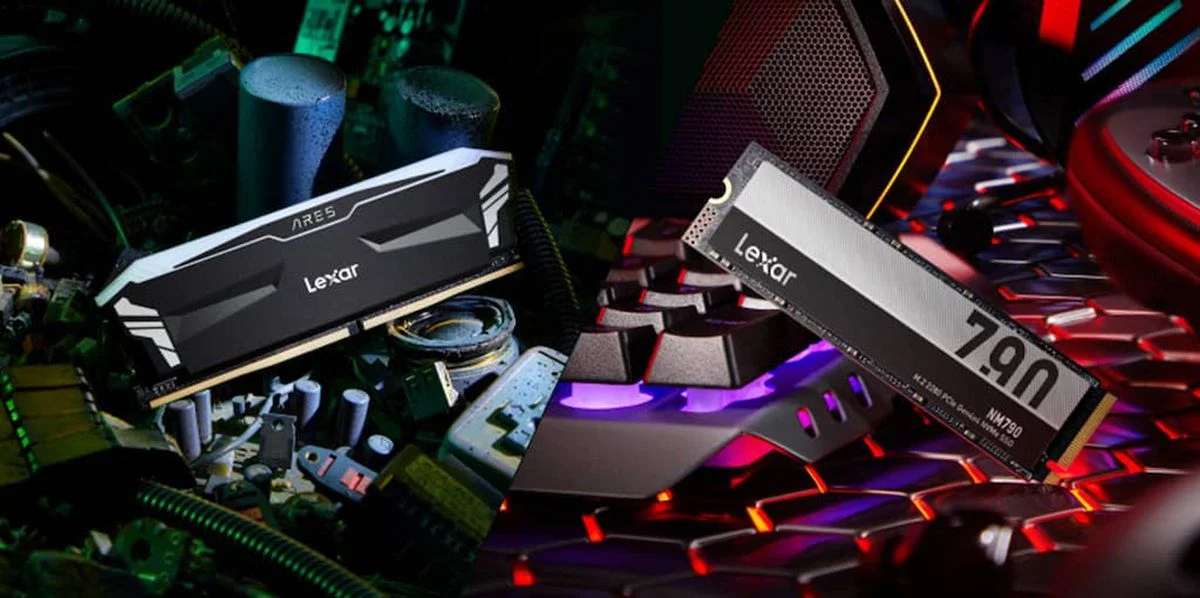
Lexar has shared an interesting snapshot of current PC component buying behavior, suggesting that gamers and mainstream builders are far less willing to compromise on SSD capacity than they are on system memory. According to a Digital Foundry report based on comments from Lexar Europe General Manager Grace Su, lower capacity RAM kits continue to sell in line with expectations, while 512 GB and smaller SSDs have fallen to only a fraction of expected demand. That points to a clear shift in what buyers now consider the minimum acceptable baseline for a modern gaming or general purpose PC.
From a practical gaming perspective, the trend makes sense. RAM still matters, but 16 GB remains a survivable floor for a large part of the PC gaming market, even if 32 GB is increasingly seen as the more comfortable target. Storage is a different story. Once the operating system, applications, updates, and a few modern games are installed, a 256 GB or 512 GB SSD can feel restrictive very quickly. Lexar’s takeaway, as reported by Digital Foundry and echoed by other outlets, is that users are more willing to accept modest memory capacity than live with an SSD that does not leave enough room for real world game libraries and everyday data.
The key point here is not that gamers do not care about RAM. It is that SSD capacity has become harder to compromise on because of how modern PC usage works. Storage pressure is now constant. Big budget games regularly consume tens or even hundreds of gigabytes, and users often want several installed at once alongside media files, launchers, productivity apps, and Windows itself. In contrast, RAM can often be expanded later by adding another module, making it easier for budget conscious buyers to start lower and upgrade when needed. That flexibility likely explains why smaller RAM kits still move, while sub 1 TB SSDs are increasingly being ignored.
This trend also reflects how the market has evolved around value perception. A smaller memory kit can still feel like a reasonable short term compromise, particularly for entry level builds, office machines, or systems designed around lighter games. A 512 GB SSD, however, increasingly feels like a bottleneck from day one. That is especially true in gaming, where even one or two major titles can consume a significant share of available space before the user has added anything else. In that sense, Lexar’s observation is less surprising than it first sounds. It highlights that capacity pressure on storage is now more immediate and visible to buyers than the performance penalty of starting with less RAM.
For the broader PC hardware market, the message is clear. Buyers still care about pricing, and both memory and storage have become more expensive, but not all compromises are equal. Storage capacity has crossed into essential territory for many users, while RAM remains an area where people still feel they can make a temporary concession. That may shape how vendors package future entry level systems, bundle memory and SSD combinations, and position budget upgrades in the months ahead.
Do you agree with Lexar’s view, or would you rather cut SSD capacity before dropping to a smaller RAM kit in a new PC build?
