
NVIDIA Brings RTX Acceleration to ComfyUI with App View, FP4, and RTX Video Super Resolution
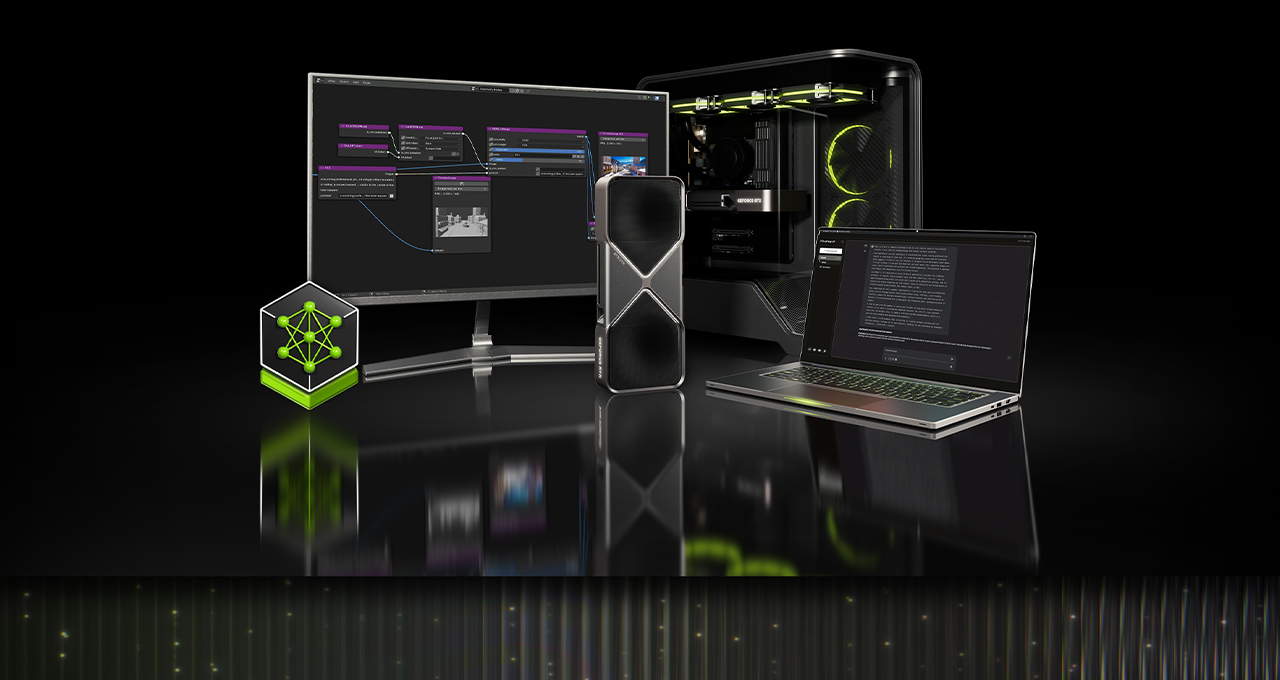
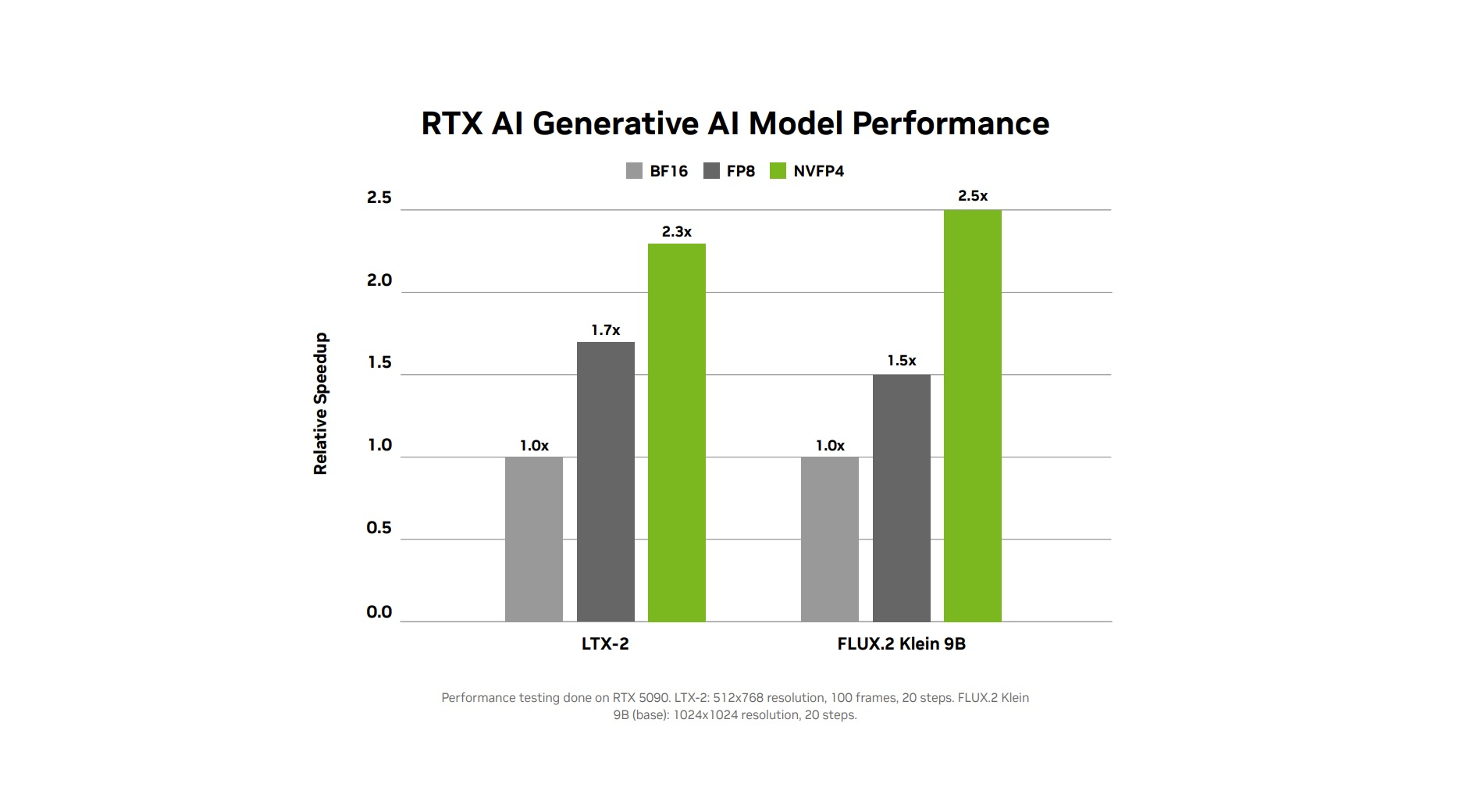
NVIDIA has unveiled a notable expansion of its AI creator ecosystem at GDC 2026, this time focusing on ComfyUI and local AI video generation on RTX hardware. The company’s latest update introduces a new App View interface, native NVFP4 and NVFP8 support, and RTX Video Super Resolution integration, all aimed at making video workflows faster, lighter on VRAM, and easier for creators to use. According to NVIDIA, these changes can push RTX GPU performance up to 2.5 times faster while reducing VRAM usage by as much as 60%, a meaningful step for creators working with increasingly demanding video generation models.
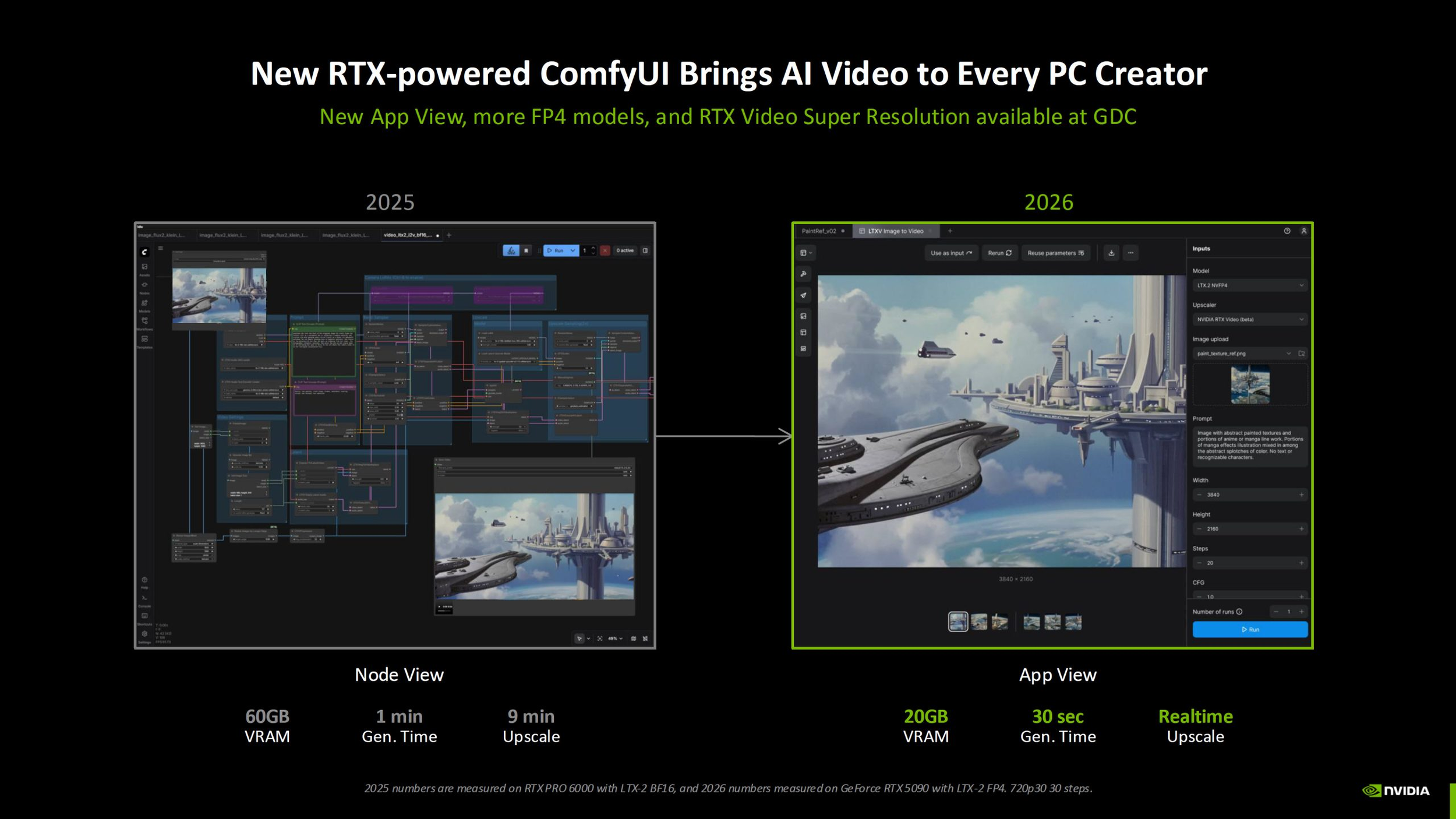
The most immediately visible change is App View, a simplified panel based interface built into ComfyUI. Traditionally, ComfyUI has relied on graph based node workflows that are powerful but often difficult for new users to approach. NVIDIA’s App View is intended to lower that barrier by hiding much of the complexity behind a cleaner front end. In practice, users can choose a model, enter prompts, and launch a workflow without needing to manually build or interpret an elaborate node graph. NVIDIA is clearly positioning this as a bridge between accessibility and power, since users can still move back into the traditional node interface whenever deeper customization is needed.
That usability upgrade is only one part of the broader push. Under the hood, NVIDIA says it has added native support for NVFP4 and NVFP8 formats, which are designed to improve throughput and reduce memory pressure on supported RTX GPUs. These lower precision formats are especially important for local generative AI workloads because they allow more efficient inference without demanding the same memory footprint as higher precision alternatives. For creators trying to work with larger video models on consumer hardware, that matters. NVIDIA’s pitch here is straightforward: faster output, less VRAM overhead, and a smoother path toward high quality video generation on local RTX systems.
One of the more practical additions is RTX Video Super Resolution support inside ComfyUI. NVIDIA says creators often face a familiar tradeoff between speed, quality, and control, with many preferring to generate smaller preview clips first and upscale them later. The company is now bringing RTX Video Super Resolution into ComfyUI as a dedicated node, allowing generated video to be upscaled to 4K much more quickly. NVIDIA also states that this AI upscaling runs directly on RTX Tensor Cores and can deliver 4K upscaling up to 30 times faster than popular local alternatives, while using only a fraction of the VRAM those tools typically require. That is a strong efficiency claim, and if it holds in real world creator workflows, it could make local 4K AI video pipelines significantly more practical.
NVIDIA is also targeting developers, not just end users. Alongside the ComfyUI integration, the company released a free Python package through PyPI as well as a sample script, giving AI developers programmatic access to the same RTX Video upscaling technology. This suggests NVIDIA is thinking beyond a single front end and is instead trying to seed its acceleration stack across broader creator and development pipelines. That strategy fits with the wider direction of the RTX AI PC initiative, where local inferencing, creator tooling, and workflow acceleration are being tied more closely to NVIDIA’s hardware ecosystem.

From a market perspective, this announcement is less about flashy consumer spectacle and more about pipeline efficiency. ComfyUI has become a serious tool in the local generative AI community, but it has also carried a reputation for being powerful at the cost of accessibility. NVIDIA’s App View directly addresses that friction point, while the FP4 and FP8 additions target one of the biggest constraints in AI video generation: memory. Combine that with faster integrated 4K upscaling, and the result is a more streamlined path from concept generation to polished output. For creators, modders, technical artists, and even game development teams building storyboards or prototype cinematics, this is the kind of quality of life improvement that can materially change how often local workflows get used.
The broader message from NVIDIA at GDC 2026 is that RTX hardware is being positioned not just as a gaming platform, but as a local AI production engine. In that context, ComfyUI is becoming a more strategic part of the stack. Easier onboarding, faster inference, lower VRAM usage, and real time friendly 4K upscaling all point toward the same outcome: making AI video creation on desktop RTX systems more viable for a wider range of users. That may not fully replace cloud workflows for every creator, but it does continue to narrow the gap.
What do you think about NVIDIA’s latest ComfyUI push? Do you see App View and RTX powered 4K upscaling making local AI video creation more practical for everyday creators?
