
NVIDIA Brings MFG 6X on March 31 as 007 First Light and CONTROL Resonant Join the DLSS 4.5 Push
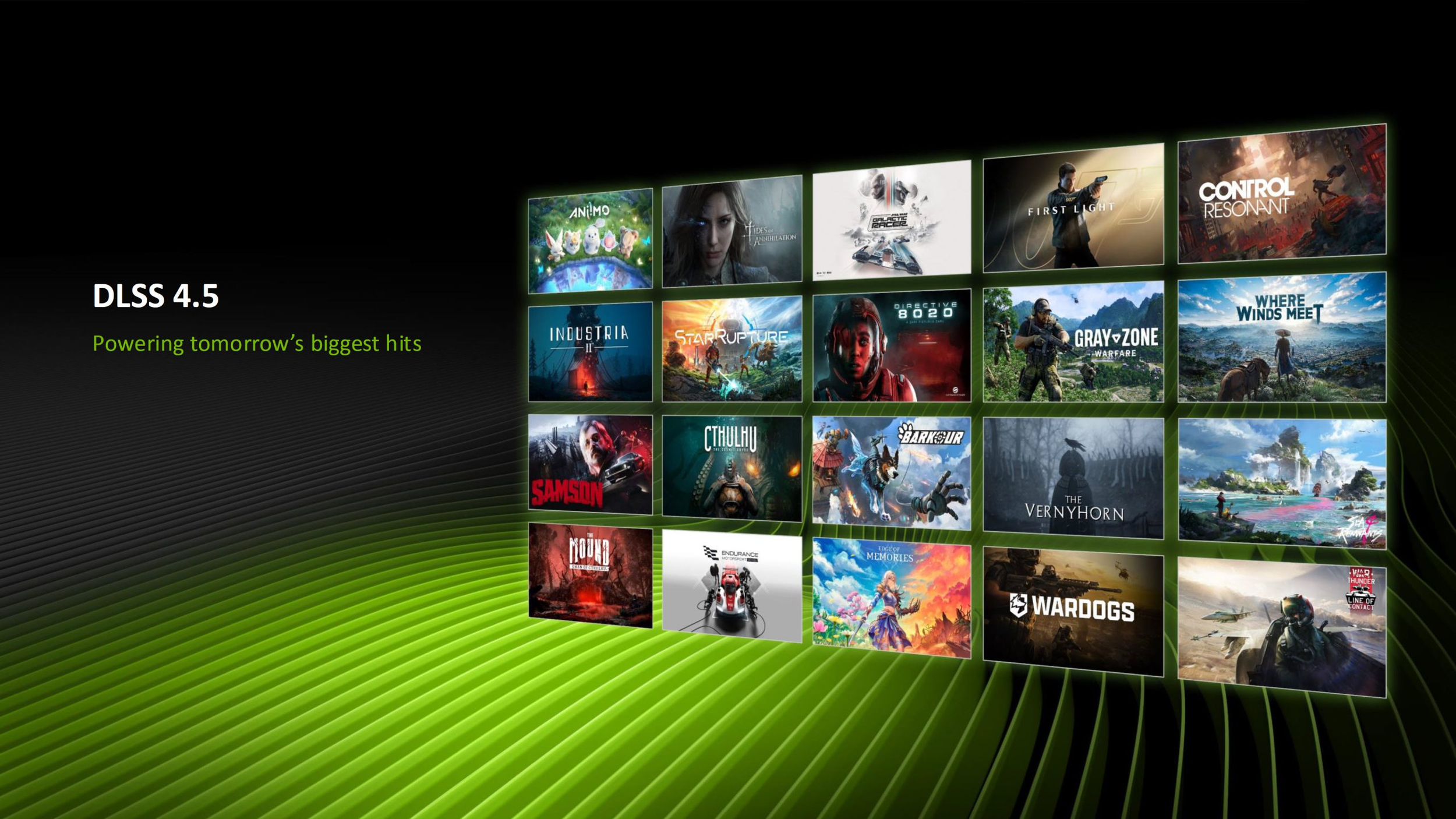
NVIDIA has confirmed another major step in its DLSS roadmap at GDC 2026, with DLSS 4.5 Dynamic Multi Frame Generation and the new Multi Frame Generation 6X mode set to debut on March 31 through a new opt in beta in the NVIDIA app. According to NVIDIA, the new rollout will be available for GeForce RTX 50 Series owners, and it will require GeForce Game Ready Driver 595.79 WHQL or newer. The company is also expanding DLSS 4.5 and path tracing support across 20 upcoming titles, including 007 First Light, CONTROL Resonant, and Tides of Annihilation.
The headline feature is the arrival of Multi Frame Generation 6X. NVIDIA says DLSS 4.5 will push frame generation even further for high refresh rate gaming, particularly in demanding 4K path traced workloads. Officially, NVIDIA states that the 6X mode increases 4K frame rates in path traced titles such as 007 First Light, while Dynamic Multi Frame Generation is designed to intelligently adjust the number of generated frames during gameplay in order to hit a target frame rate selected by the user. That makes this update especially relevant for players using 240Hz and higher refresh rate displays, where keeping frame output close to panel refresh is increasingly part of the premium PC gaming experience.
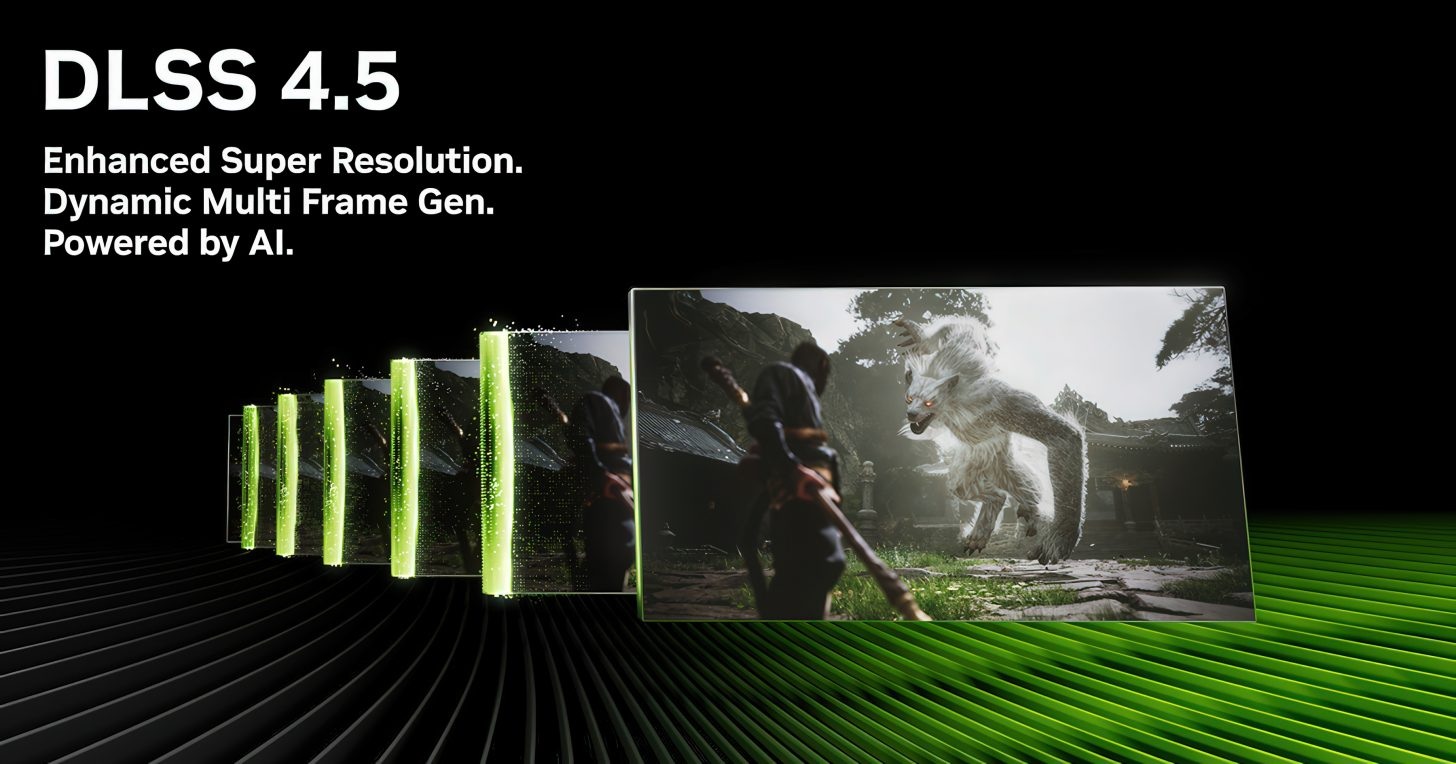
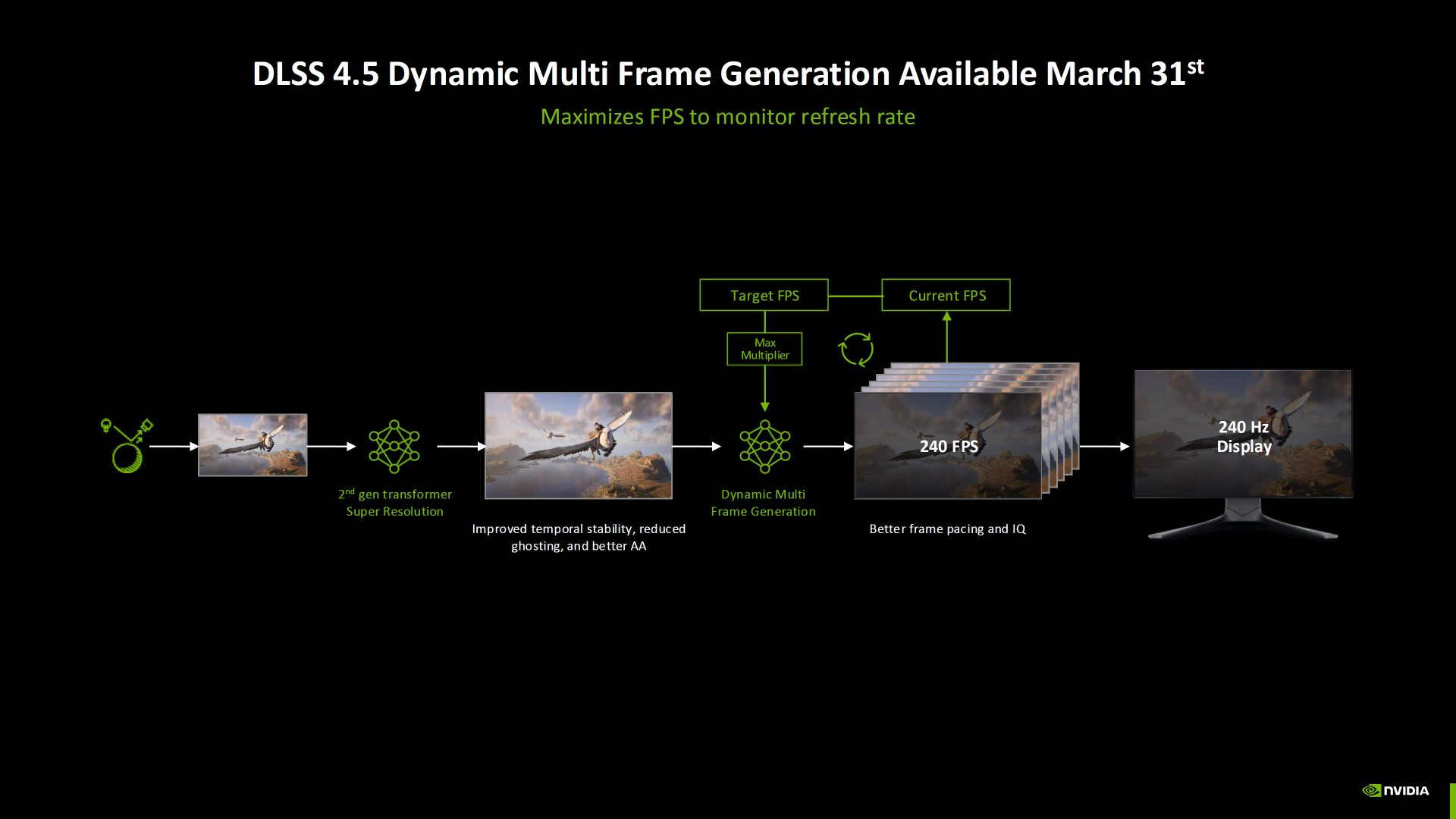
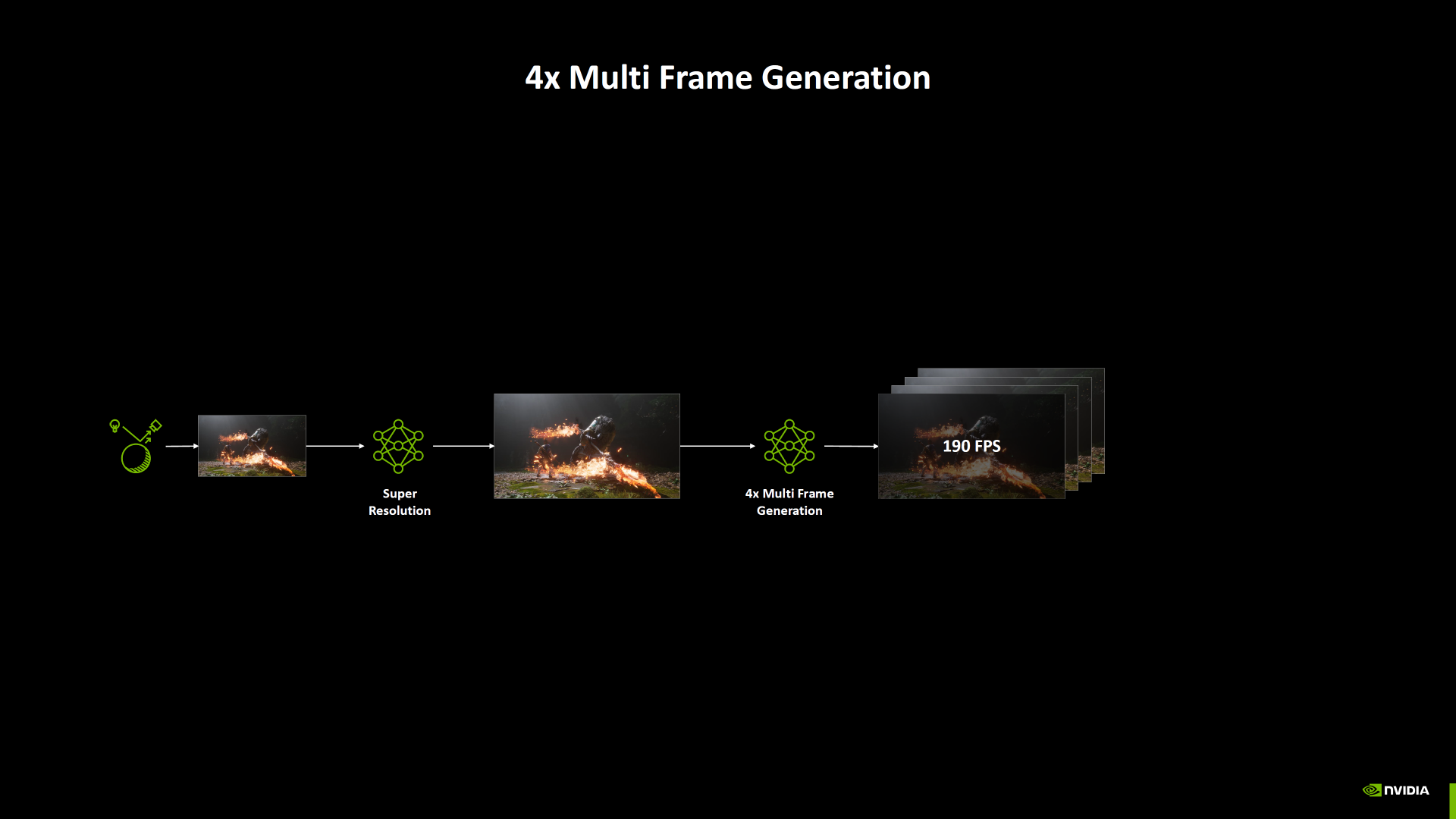
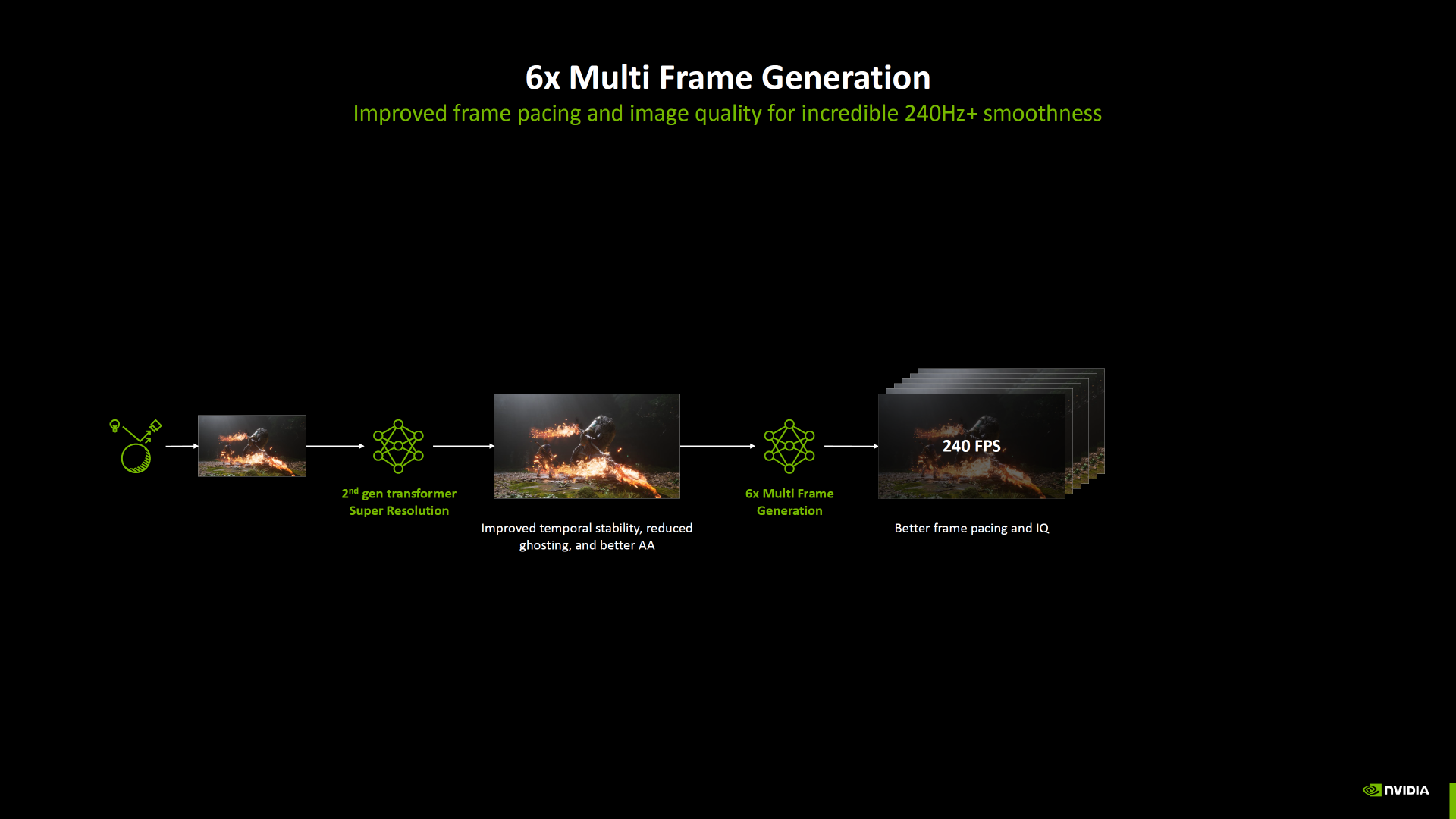
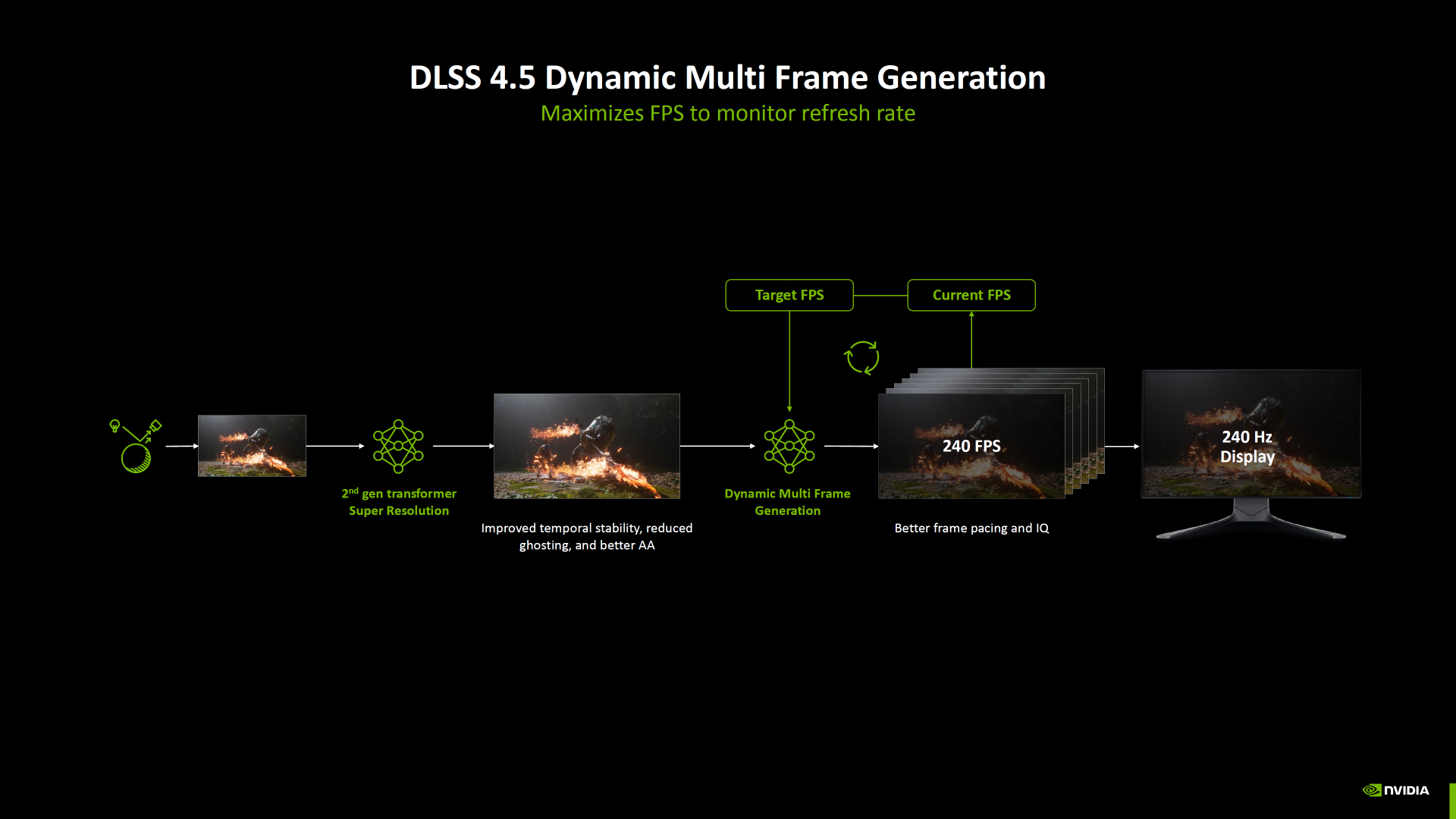
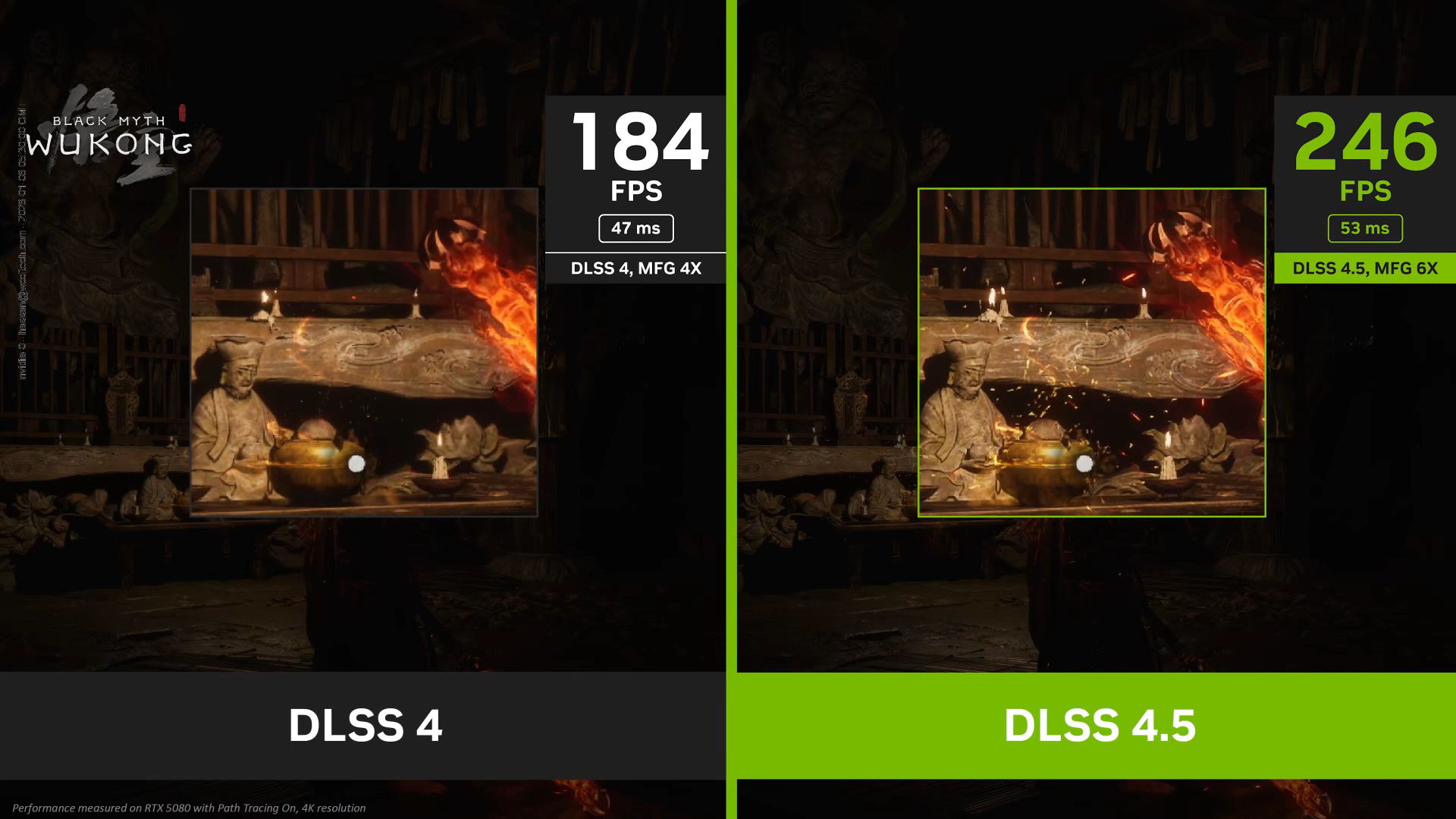
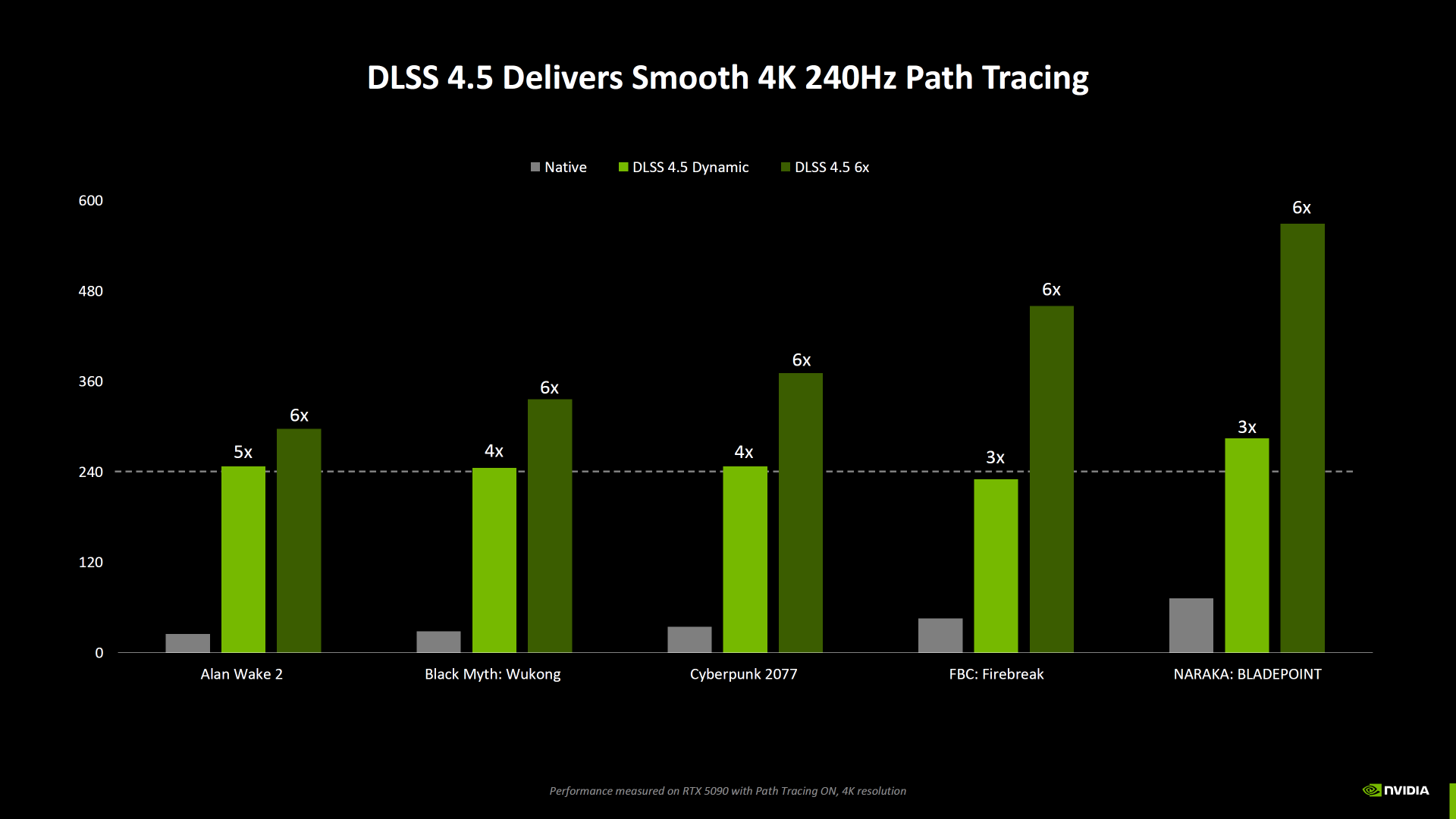
From a technology positioning standpoint, this is an aggressive extension of the frame generation strategy NVIDIA started with DLSS 3 and then pushed further with DLSS 4. Instead of treating frame generation as a fixed setting, NVIDIA is now moving toward a more adaptive approach, where the software can shift behavior depending on performance targets and scene complexity. For enthusiasts running flagship GPUs and ultra high refresh monitors, that could become one of the most important quality of life improvements in the entire DLSS stack, especially in titles that combine advanced lighting with dense geometry and heavy rendering loads. This is also where NVIDIA is clearly trying to separate the premium RTX 50 Series experience from more conventional upscaling alone.
NVIDIA is pairing that performance message with a broader content push. The company confirmed that 007 First Light will launch on May 27 with both path tracing and DLSS 4.5 support, while CONTROL Resonant is scheduled to launch this year with DLSS 4.5 and path tracing as well. NVIDIA also notes that CONTROL Resonant will integrate RTX Mega Geometry to render detail more efficiently, extending the same technology direction the company has already highlighted elsewhere during GDC 2026. For cloud players, NVIDIA has also confirmed that GeForce NOW Ultimate members will be able to play 007 First Light and CONTROL Resonant with DLSS 4.5 from the cloud.

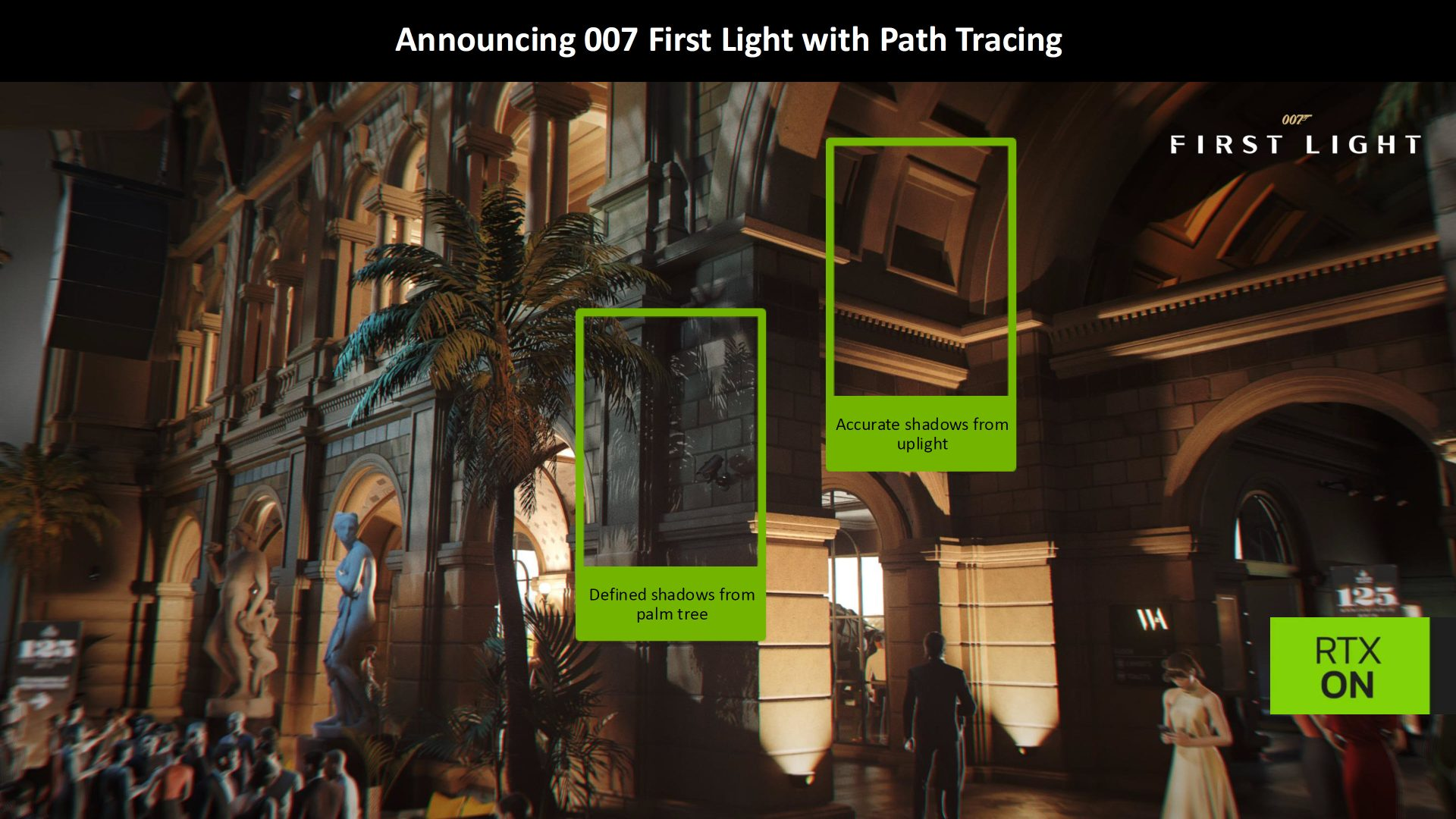
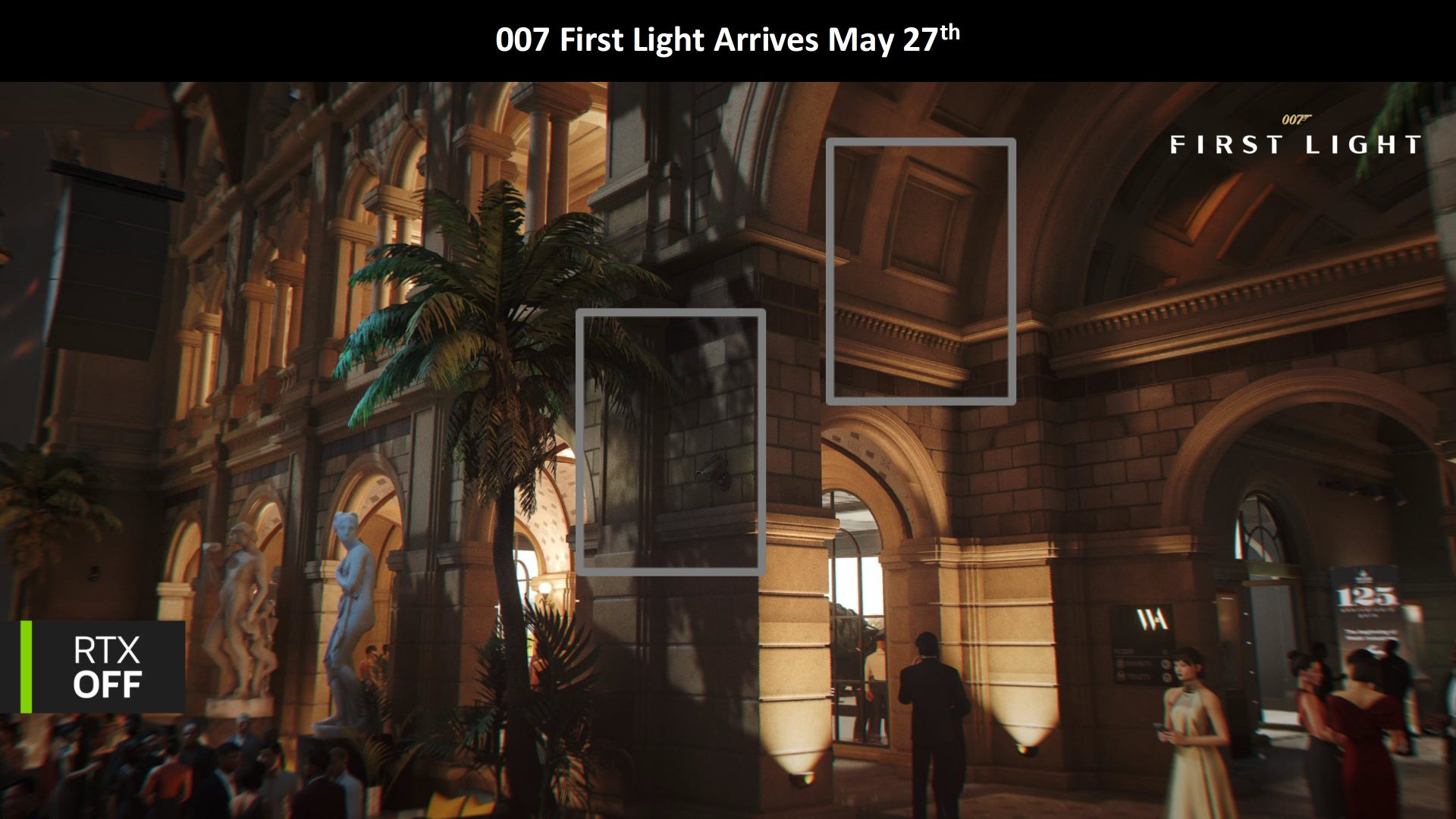
In practical terms, 007 First Light looks positioned as one of the clearest showcases for the full DLSS 4.5 stack. NVIDIA is emphasizing how path tracing sharpens shadows, improves lighting accuracy, and adds more physically convincing scene depth. CONTROL Resonant appears to be playing a similar role, with path tracing and RTX features used to improve reflections, shadow clarity, and indirect lighting. From a visual presentation angle, both games fit the type of cinematic, detail heavy production where NVIDIA’s rendering technologies tend to have the strongest marketing impact. For players who prioritize image quality and next generation lighting, these are exactly the kinds of titles that help justify the continued evolution of DLSS beyond pure performance uplift.
Beyond those two headliners, NVIDIA published a broader list of upcoming DLSS 4.5 titles. The lineup includes Aniimo, Barkour, Cthulhu: The Cosmic Abyss, Directive 8020, Edge of Memories, Endurance Motorsport Series, Gray Zone Warfare, INDUSTRIA 2, Samson, Sea of Remnants, StarRupture, STAR WARS: Galactic Racer, The Mound: Omen of Cthulhu, The Vernyhorn, Tides of Annihilation, WARDOGS, War Thunder, and Where Winds Meet. Several of these projects are also gaining ray tracing or path tracing support alongside DLSS 4.5, which reinforces NVIDIA’s current strategy of linking AI rendering, lighting quality, and high frame rate delivery into one package rather than marketing them as separate pillars.
For the wider PC gaming market, this announcement is important because it shows NVIDIA continuing to build DLSS as a layered ecosystem rather than a single feature. Super Resolution is already broadly deployed, Frame Generation has become a key differentiator in modern AAA releases, and now Dynamic Multi Frame Generation introduces a more responsive tuning layer aimed at enthusiast displays and more demanding rendering scenarios. If the transition between generated frame modes proves smooth in real world use, this could become one of the more meaningful updates for RTX 50 Series users this year, especially as more high end titles adopt path tracing at launch.
For now, March 31 is the key date to watch. That is when NVIDIA plans to make DLSS 4.5 Dynamic Multi Frame Generation and Multi Frame Generation 6X available through its next opt in NVIDIA app beta, ahead of a wider official release at a later date. Combined with the growing list of DLSS 4.5 enabled releases, NVIDIA is making it clear that the next phase of PC graphics is no longer just about rendering more pixels, but about orchestrating how AI, frame generation, and advanced lighting work together to deliver a smoother and more visually rich experience.
What do you think about NVIDIA’s new 6X Multi Frame Generation approach? Is this the kind of upgrade that can really push high refresh rate 4K gaming forward, or do you care more about the growing list of DLSS 4.5 and path traced games?
