
MSI RTX 5090 Replacement Reveals Power Connector Fault as GPU Safeguard+ Detects Dangerous Current Imbalance
An MSI GeForce RTX 5090 owner has discovered a potentially serious power connector defect in a replacement graphics card after installing a power supply equipped with GPU Safeguard+ monitoring technology. Although the card initially appeared to operate normally, real time monitoring revealed that 1 of the 6 power contacts in its 12V 2x6 connection was carrying no current, triggering an alarm and potentially preventing further damage.
The incident was documented by Reddit user junon, who explained that their original RTX 5090 had already undergone multiple warranty service attempts. After the first return failed to resolve the original problem, MSI supplied a different RTX 5090 model. The replacement no longer displayed the previous errors, leading the owner to believe the issue had finally been resolved.
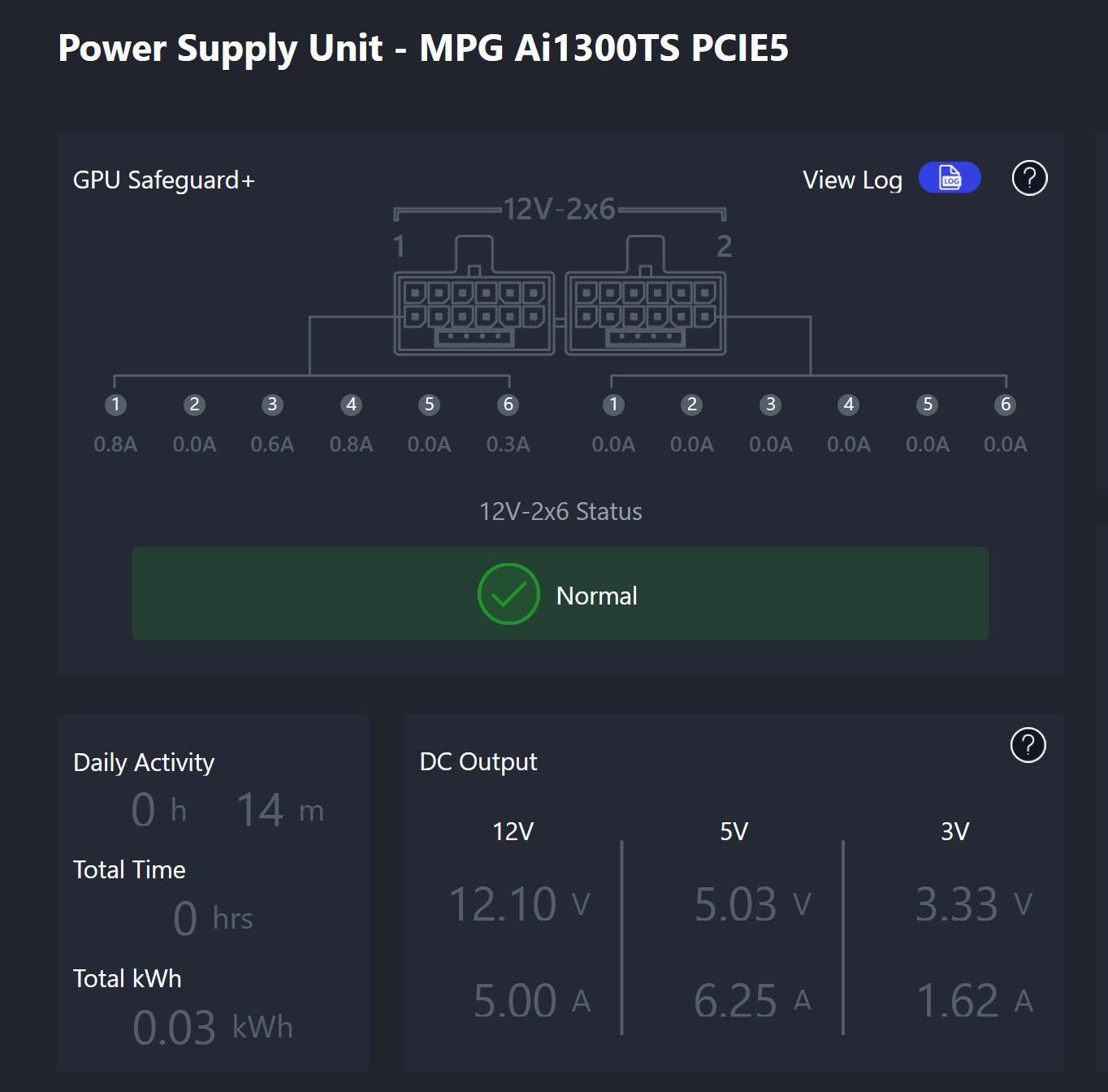
However, the customer decided to upgrade to an MSI MPG Ai1300TS PCIE5 power supply, featuring GPU Safeguard+, a protection system designed to monitor current distribution across individual GPU power contacts. Shortly after installation, MSI Center reported that Pin 2 was carrying 0 A. When the owner applied a graphics workload, the PSU triggered a current imbalance warning within approximately 5 seconds.
The owner initially suspected an improperly connected cable or faulty PSU connection. However, replacing the power cable and switching to the second 12V 2x6 output on the power supply produced identical results. Further inspection revealed that the graphics card's power socket appeared slightly lifted from its circuit board when connected. The owner later shared additional photographs indicating that a sense contact on the GPU connector was also damaged.
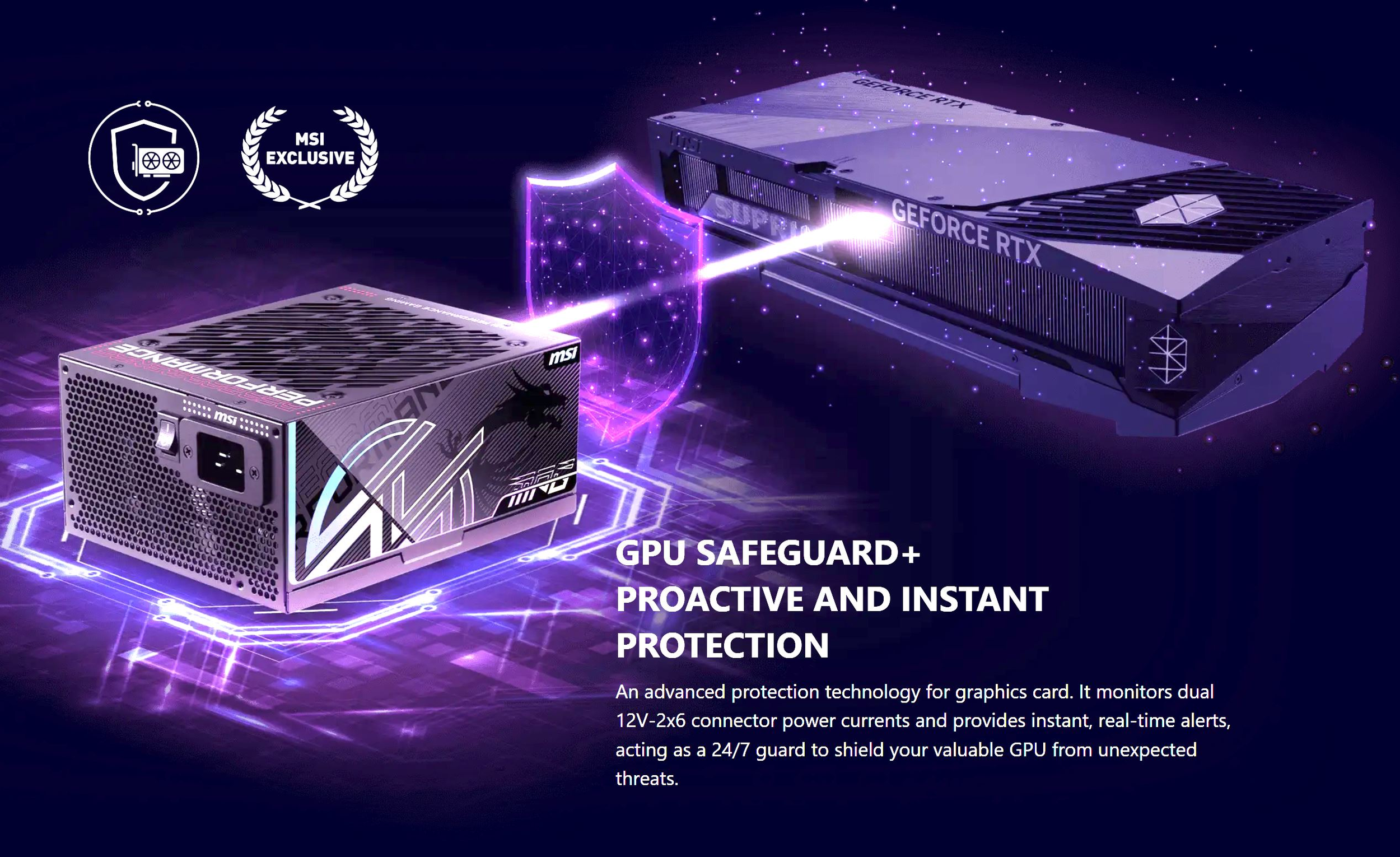
According to MSI's official documentation, GPU Safeguard+ continuously monitors the current flowing through each power contact rather than relying exclusively on total power consumption. When an abnormal condition is detected, the system can issue audible warnings and notifications through MSI Center. With compatible MSI Afterburner settings, it can also reduce the GPU power limit to 75%, while persistent abnormalities can eventually trigger a protective PSU shutdown.
This approach addresses an important limitation of conventional power supplies. Even when total GPU consumption remains within specifications, poor contact or uneven current distribution can force additional electrical load through the remaining connections, increasing the possibility of localized heating.
The situation is particularly relevant given previous RTX 5090 connector failures involving melted power contacts, which have raised concerns about the reliability of high power GPU connections. However, the latest MSI incident differs because the electrical abnormality was detected before any melting was reported.
The owner now expects another warranty return, potentially extending the total time without a functioning RTX 5090 to approximately 9 weeks. Although the experience raises questions about replacement unit quality control, there is no independent confirmation of a widespread manufacturing defect or evidence that this particular connector was about to melt.
This incident demonstrates why monitoring total GPU power consumption is no longer sufficient for identifying every potential electrical issue in high performance graphics cards. A system can appear stable while individual power contacts experience abnormal current distribution, creating risks that conventional monitoring software may overlook.
MSI's GPU Safeguard+ provides a valuable additional protection layer, particularly for graphics cards such as the RTX 5090, where connector reliability remains an important concern. However, monitoring should complement proper connector design and manufacturing quality control rather than compensate for defective hardware.
The most concerning aspect is that the replacement GPU reportedly appeared functional until detailed electrical monitoring exposed the problem. For enthusiasts investing thousands of dollars in flagship graphics hardware, reliable power connections and thoroughly inspected warranty replacements should be standard expectations.
Would you invest in a power supply with individual GPU power pin monitoring to protect an expensive RTX 5090, or should NVIDIA and its board partners integrate these protections directly into their graphics cards?
