
MSI Reportedly Replaces Failed RTX 5090 After Blaming AI Software
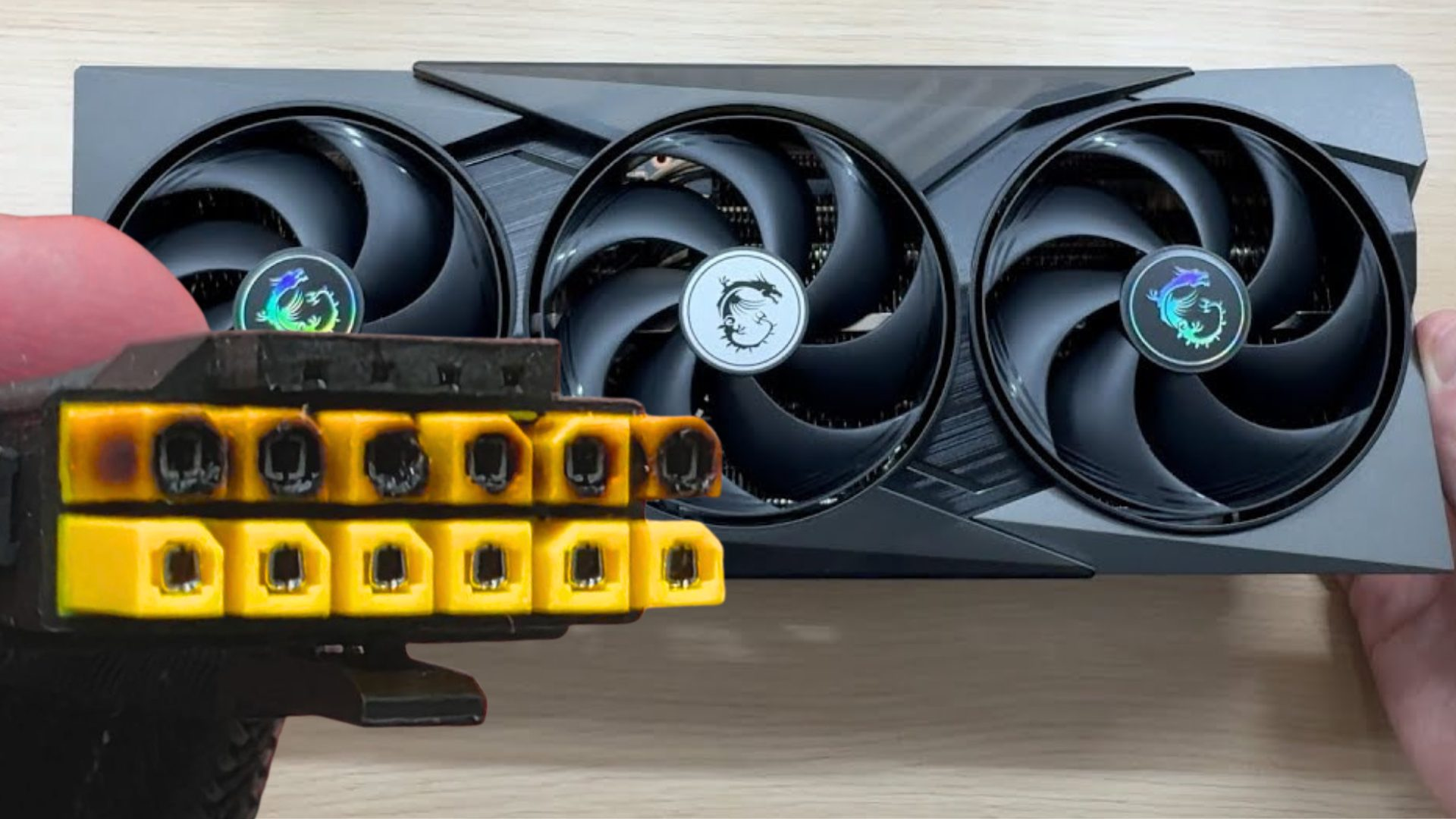
An MSI customer says the company replaced an RTX 5090 from a prebuilt PC after the graphics card suddenly stopped being detected, despite allegedly telling the owner that their AI software had caused a chip on the GPU to burn. MSI reportedly had no replacement inventory available locally and brought another RTX 5090 in from Taiwan to complete the RMA.
The unusual case was shared by Reddit user u/crystalshower in the LocalLLaMA community. According to the owner, the MSI prebuilt was purchased in August 2026 and was used primarily for local AI inference rather than gaming. Their typical workload involved running Ollama with a 4 bit quantized Qwen 3.8 27B model on Fedora 44 using NVIDIA drivers distributed through RPM Fusion.
The RTX 5090 reportedly operated at GPU temperatures between approximately 30°C and 50°C during inference, with idle temperatures around 10°C to 18°C. About 2 weeks before the Reddit post, however, the graphics card stopped appearing in the system entirely. Power cycling the machine and removing the graphics driver did not restore it, while installing Windows and repeating the troubleshooting process produced the same result.
After the system was sent for RMA service, the owner says MSI told them that the AI software they had been using had caused a chip to burn. The customer questioned that explanation and asked MSI to identify the specific software responsible but said they had not received an answer by the time the account was published.
"They told me my AI software burned out the chip."
— Quote by: Reddit user u/crystalshower
Despite that alleged diagnosis, MSI replaced the GPU. According to the owner, the company had no RTX 5090 inventory available in their local market and imported another unit from Taiwan for the replacement. The customer did not identify the country where the RMA occurred, and no service documentation or photographs of the failed hardware were published with the original post. As a result, neither the exact failed component nor the technical cause can currently be independently verified.
That distinction is particularly important because running a local language model does not by itself demonstrate why a GPU failed. AI inference can place sustained load on the GPU and its memory subsystem, but the reported 30°C to 50°C GPU temperatures only describe the monitored temperature values provided by the owner. They do not establish the condition of every component on the board, including memory, voltage regulation circuitry, individual hotspots, or the power delivery system.
There is also no evidence in the original report that Ollama or Qwen directly damaged the card. MSI has not issued a public technical statement about this individual case, and the owner's description of the diagnosis remains the only available account connecting the failure to AI software.
MSI's published warranty policy excludes damage caused by improper use, external causes, unauthorized modifications, and several other forms of customer induced damage. The company also states that hardware or software incompatibility issues are not covered under its standard warranty terms. Its graphics card service documentation notes that individual service centers ultimately assess whether physical damage qualifies as customer induced damage.
In this case, however, MSI reportedly proceeded with the replacement even after giving the customer an explanation that appeared to associate the failure with their workload. That makes the RMA outcome more notable than the unverified diagnosis itself.
The incident arrives amid wider attention around high end Blackwell GPU reliability and warranty handling, although there is currently no evidence connecting this failure to previously documented power connector problems.
The replacement is the strongest part of this story. The alleged explanation that AI software burned a chip is much harder to evaluate without MSI's diagnostic report, photographs of the board, or identification of the failed component.
Running Ollama on a GeForce RTX 5090 is fundamentally a GPU compute workload. Sustained AI inference can stress different parts of the hardware compared with gaming, particularly memory and power delivery, but that does not make the software itself evidence of misuse or establish a direct cause of failure.
MSI ultimately replacing the card despite limited local inventory is therefore a positive RMA outcome. The technical diagnosis, however, should remain treated as an unverified account until more information becomes available.
Should sustained local AI inference on a consumer GPU be treated any differently from gaming or rendering when manufacturers evaluate warranty claims?
