
Gears of War E Day Sells 230K Copies but 722K Game Pass Players Bought the Premium Upgrade
Gears of War: E Day may have sold an estimated 230,000 full copies during its opening period, but that number only tells part of the story. New data from Alinea Analytics estimates that 1.7 million players accessed the game through Xbox Game Pass, with approximately 722,000 of those subscribers also paying $30 for the Premium Edition Upgrade.
Alinea estimates that Gears of War: E Day sold around 168,000 copies through Steam and 62,000 through Xbox consoles and the Xbox PC store between the beginning of Premium early access on October 1 and the days immediately following its October 6 full release. The figures are third party estimates rather than official Microsoft sales data and represent an unusually early snapshot of the game's commercial performance.
| Metric | Alinea Estimate |
|---|---|
| Full Game Sales | 230,000 |
| Steam Sales | 168,000 |
| Xbox and Xbox PC Sales | 62,000 |
| Game Pass Players | 1.7 million |
| Premium Upgrade Buyers | 722,000 |
| Estimated Total Revenue | $37 million |
| Estimated Xbox Revenue | $26 million |
| Estimated Steam Revenue | $11 million |
The $30 Premium Edition Upgrade was available to players who owned the base game or had an eligible Game Pass membership. It provided up to 5 days of early access beginning October 1 alongside the Bravo Squad Signature Weapon Pack, 5 seasonal customization packs, and 1,000 Iron. Microsoft lists the Standard Edition at $69.99 and the complete Premium Edition at $99.99.
Alinea estimates that the 722,000 Premium Upgrade purchases generated approximately $21.7 million on their own. Combined with conventional game purchases, the firm places Gears of War: E Day at roughly $37 million in revenue during the measured period, with around $26 million attributed to the Xbox ecosystem and $11 million to Steam. That means Xbox generated most of the estimated revenue despite accounting for only 62,000 full game purchases.
The numbers highlight how difficult traditional unit sales have become to interpret for a major Day One Game Pass release. Looking only at the estimated 230,000 copies would make the launch appear substantially smaller than the paying audience actually was. When Premium Upgrade customers are included, Alinea estimates that close to 950,000 players paid directly for either the game or additional access and content.
At the same time, the data also supports Alinea analyst Rhys Elliott's argument that Game Pass can reduce conventional premium sales on Xbox. The subscription provided access to the complete game on October 6, meaning subscribers interested in Gears did not need to purchase the $69.99 Standard Edition. For hundreds of thousands of players, the $30 upgrade became the additional purchase instead.
That does not mean all 722,000 upgrade customers would otherwise have purchased Gears of War: E Day for $70. Alinea modeled a scenario in which a large percentage of those users converted into traditional buyers, but that remains hypothetical. Game Pass lowers the barrier to entry, and some subscribers may never have purchased the game at full price without subscription access.
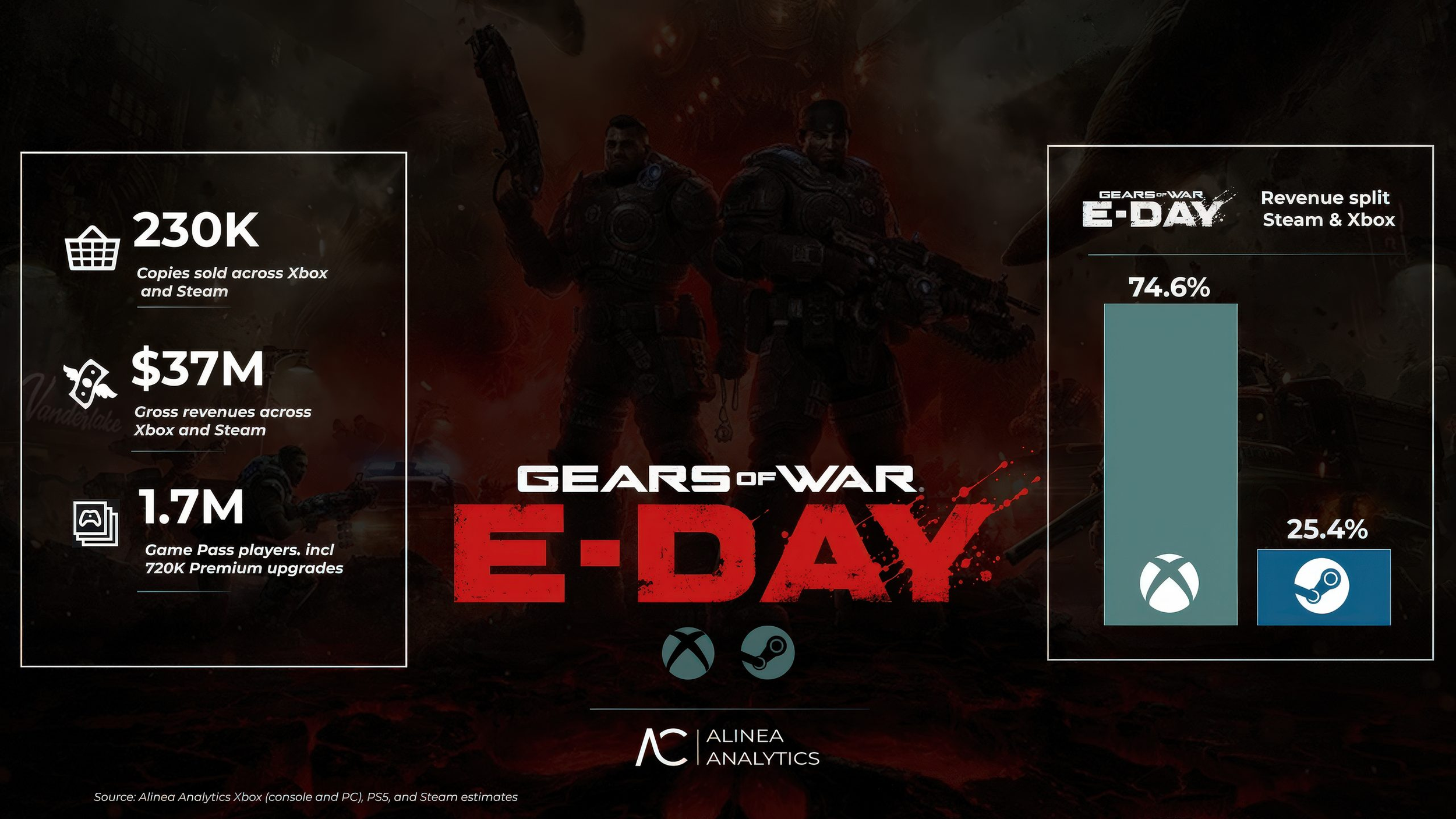
The subscription also dramatically increased the game's initial audience. Alinea estimates 1.7 million Game Pass players compared with 230,000 conventional purchases, meaning the subscription audience was more than 7 times larger during the measured launch period. Playtime data also showed the familiar subscription effect, with 54% of Xbox players spending 5 hours or less with the game compared with 32% on Steam. Conversely, 33% of Steam players had exceeded 15 hours compared with 19% on Xbox.
The launch follows Microsoft's decision to keep Gears of War: E Day as an Xbox console exclusive, with the game available across Xbox Series X|S and PC but not PlayStation 5. That makes its early commercial performance particularly relevant as Microsoft reassesses which first party franchises should remain exclusive and how Game Pass fits into its wider software strategy.
There is also an unresolved question surrounding the project's development cost. Industry insider Tom Henderson claimed during a June livestream that he had heard the budget for Gears of War: E Day was above $400 million. Microsoft and The Coalition have never confirmed that figure, and it remains unclear whether such an estimate would include development, marketing, internal technology costs, or other expenses. It should therefore be treated as an unverified insider claim rather than a confirmed production budget.
That distinction matters when comparing the estimated $37 million launch revenue against development costs. Alinea's figures cover only the opening period, while Gears of War: E Day is designed to continue generating revenue through full game sales, Game Pass economics, Premium upgrades, Iron, and seasonal content. Microsoft also does not publicly disclose how subscription revenue is allocated internally to individual first party games.
The commercial model therefore makes Gears of War: E Day difficult to judge through copies sold alone. It launched with relatively modest estimated premium unit sales, but simultaneously reached a much larger subscription audience and convinced hundreds of thousands of those players to spend additional money before the full release.
The most interesting number here is not 230,000 copies. It is the 722,000 Game Pass players who were apparently willing to spend another $30 on a game already included with their subscription.
That demonstrates both the strength and the complication of Microsoft's model. Game Pass almost certainly reduces the need to purchase a $70 Xbox copy, but it can also create a much larger audience that Microsoft can monetize through upgrades, DLC, and continued engagement.
Alinea's data does not prove that Xbox sacrificed hundreds of thousands of full price purchases. There is no reliable way to know how many Game Pass users would have bought E Day without the subscription. What it does show is that the traditional copies sold metric no longer captures the entire commercial picture for Xbox's largest first party releases.
For one of Xbox's most important console exclusives, the longer term question will be whether the combination of Game Pass engagement, Premium upgrades, and continued sales can generate enough revenue to justify the scale of modern AAA development.
Would you rather pay $70 to own Gears of War: E Day, or use Game Pass and spend $30 on the Premium Upgrade for early access and additional content?
