
MSI Pushes 128 GB DDR5 to 9400 MT/s on X870E Unify-X MAX, Signaling More Headroom Ahead for AMD Memory OC
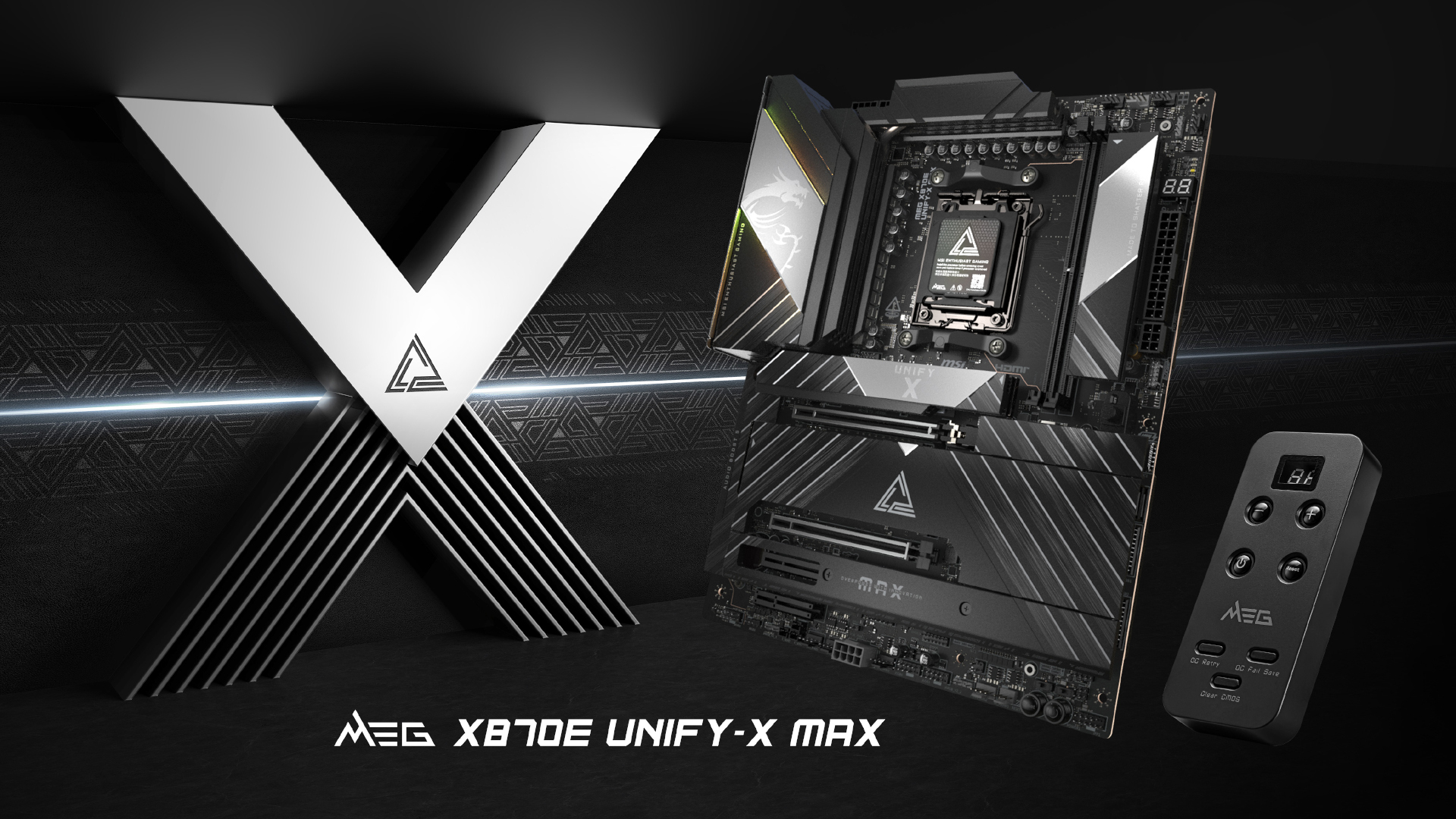
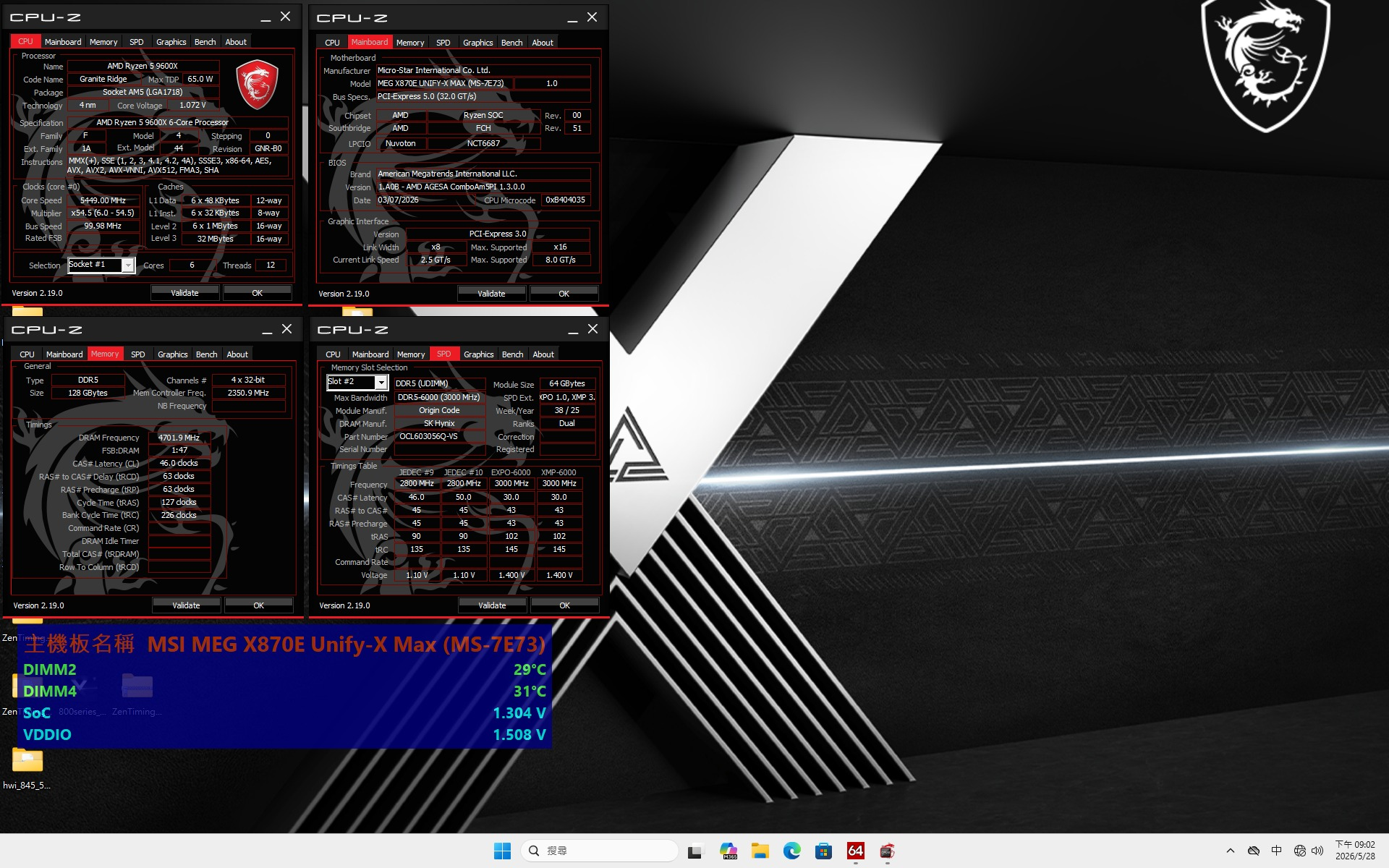
MSI has once again put AMD memory overclocking in the spotlight, this time demonstrating a 128 GB DDR5 configuration running at 9400 MT/s on its MEG X870E Unify-X MAX motherboard. The result was shared by MSI overclocker Toppc through a Facebook post, where he stated that a dual sided 64 GB x2 setup had finally booted at DDR5 9400 on the AM5 platform, with the BIOS expected to release next week. Multiple reports covering the post also identify the setup as using a Ryzen 5 9600X and an upcoming 1.A0B BIOS based on AGESA 1.3.0.0.
What makes this result stand out is not just the frequency, but the capacity and memory layout involved. Pushing small capacity DDR5 kits to extreme speeds has become increasingly common on enthusiast class boards, but doing it with 128 GB using 2 dual rank 64 GB DIMMs is far more demanding on the memory controller and motherboard trace design. That is exactly why this demonstration matters. MSI’s own MEG X870E Unify-X MAX is a 2 DIMM overclocking focused board, and the company markets it with support for DDR5 speeds above 10600 MT/s in ideal scenarios, but reaching 9400 MT/s with a 128 GB dual rank kit is a much tougher workload than a lighter 24 GB or 32 GB per DIMM configuration.
The motherboard itself is clearly built for this kind of showcase. The MEG X870E Unify-X MAX uses a 2 slot memory layout instead of the more common 4 DIMM design, a choice that typically improves signal integrity and helps maximize memory overclocking headroom. MSI also pairs that layout with enthusiast focused BIOS options, a larger 64 MB BIOS ROM, and dedicated tuning features aimed squarely at overclockers and high end AMD builders. In other words, this is not a mainstream AM5 board trying to stretch beyond its comfort zone. It is exactly the kind of platform designed to chase big memory numbers.
Toppc’s comment also adds an interesting forward looking angle. In the shared message, he suggested that this may be the last major memory related jump for the current AM5 CPU generation, and that the next big gains are expected to arrive with AMD’s next generation Ryzen processors. That does not serve as official AMD confirmation of future specifications, but it does hint that MSI sees additional memory scaling potential once new CPUs arrive with updated memory controller behavior or better firmware maturity. For platform watchers, that is arguably just as important as the 9400 MT/s result itself.
From a broader market perspective, this is another sign that AMD’s AM5 memory ecosystem keeps closing the gap with the highest end Intel overclocking results. For a while, Intel platforms held a clearer advantage in the ultra high DDR5 range, especially when talking about extreme validation numbers. But recent AGESA and board level tuning improvements have helped AM5 climb steadily higher, and MSI’s latest demo reinforces that motherboard vendors are still extracting more out of the platform through BIOS work, layout optimization, and better memory training.
For enthusiasts, the practical takeaway is not that every 128 GB kit is about to run anywhere near DDR5 9400. This is still an overclocking showcase on a flagship 2 DIMM motherboard using an unreleased BIOS. But it does show that high capacity DDR5 on AM5 is moving into territory that would have looked unrealistic not that long ago. That matters for users building high end creator systems, AI workstations, and gaming rigs that want both heavy memory capacity and aggressive tuning potential on the same platform.
If MSI’s next BIOS release brings even part of this progress to the wider user base, and if the next Ryzen generation extends that ceiling further, AMD memory overclocking could become one of the more interesting platform stories to watch heading into the next upgrade cycle.
What do you think matters more for future AM5 systems: higher maximum DDR5 speeds, or better high capacity memory tuning for 64 GB and 128 GB kits?
