
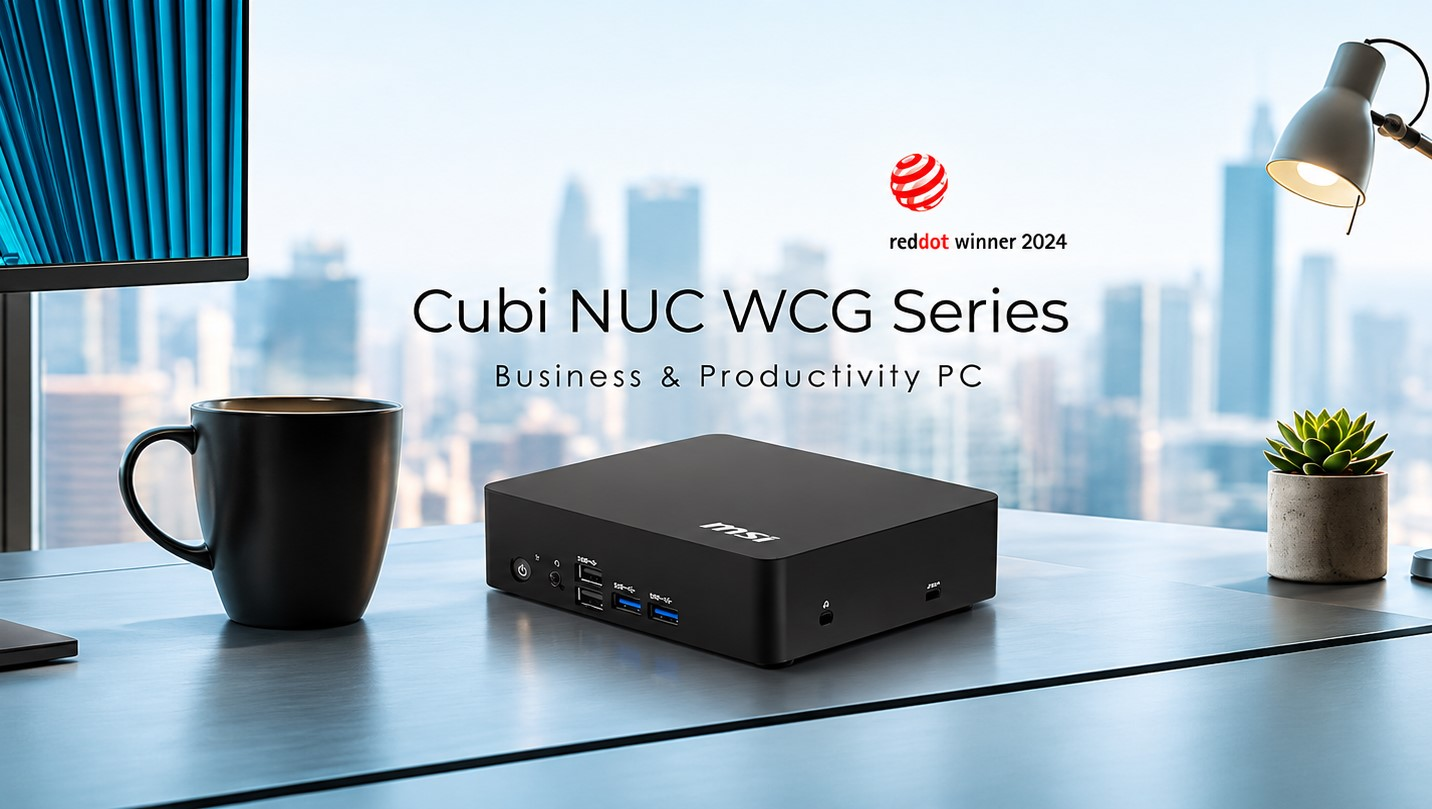
MSI has officially introduced the Cubi NUC WCG, a compact desktop powered by Intel's latest Wildcat Lake Core Series 3 processors, offering modern connectivity, upgradeable memory, and support for multiple displays inside a 0.55 liter chassis. Announced on November 5, 2026, the new mini PC targets business environments, productivity applications, and space constrained installations, combining Thunderbolt 4, dual Ethernet connectivity, and a simplified maintenance design. According to MSI's official announcement, the system measures just 135.6 × 112.6 × 40.1 mm, making it suitable for desktop workstations, digital signage, retail installations, and compact computing deployments.
The Cubi NUC WCG is available with 3 processor options: Intel Core 3 304, Core 5 315, and Core 7 350. Built on Intel's Wildcat Lake architecture, these processors focus on power efficiency and everyday productivity rather than enthusiast gaming performance. The entry level Core 3 304 features 5 CPU cores, consisting of 1 Performance core and 4 Low Power Efficient cores, while the higher configurations offer up to 6 cores. The system includes integrated Intel Graphics, 2 DDR5 SO DIMM memory slots, and an M.2 2280 NVMe SSD slot. MSI has not disclosed the final memory capacities or storage configurations.
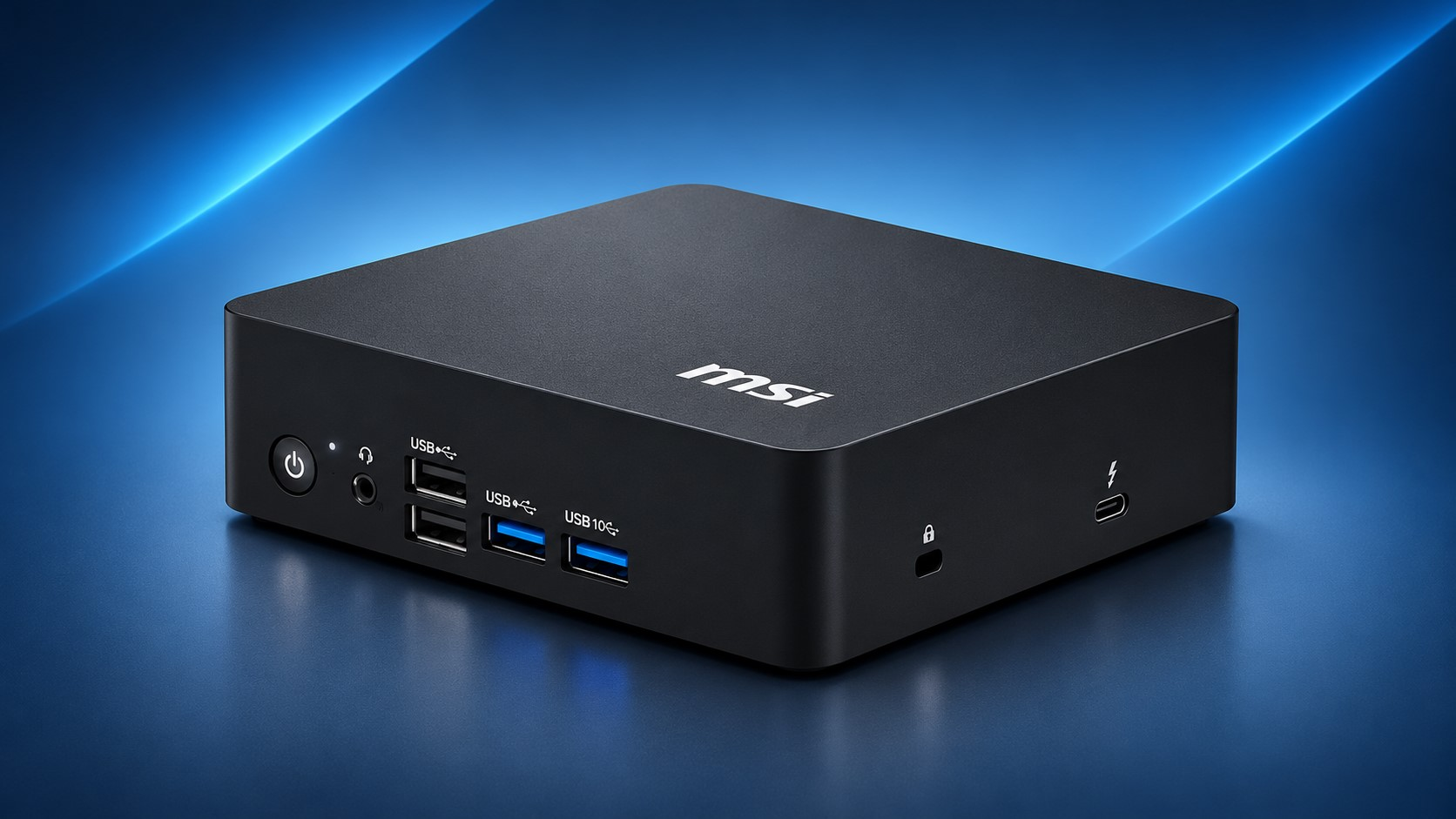
Connectivity is a major highlight, particularly for such a small desktop. The Cubi NUC WCG includes Thunderbolt 4 with 40 Gbps transfer speeds and support for up to 98W power delivery input, allowing compatible setups to operate through a single cable. The system also provides a separate 20 Gbps USB Type C connection, 6 USB Type A ports, dual Ethernet connections with 2.5 GbE and 1 GbE speeds, WiFi 6E, and Bluetooth 5.4. Display connectivity includes 2 HDMI outputs and DisplayPort functionality through Thunderbolt 4, enabling up to 3 simultaneous 4K displays at 60 Hz.
MSI Cubi NUC WCG Specifications
| Specification | Details |
|---|---|
| Processor | Intel Core 3 304, Core 5 315, Core 7 350 |
| Architecture | Intel Wildcat Lake |
| Graphics | Integrated Intel Graphics |
| Memory | 2 × DDR5 SO DIMM slots |
| Storage | 1 × M.2 2280 NVMe SSD |
| Thunderbolt | 1 × Thunderbolt 4, 40 Gbps |
| USB Type C | 1 × 20 Gbps |
| USB Type A | 2 × 10 Gbps, 4 × USB 2.0 |
| Display Outputs | 2 × HDMI 2.1 TMDS, 1 × Thunderbolt 4 |
| Maximum Display Support | 3 × 4K at 60 Hz |
| Ethernet | 1 × 2.5 GbE, 1 × 1 GbE |
| Wireless | WiFi 6E, Bluetooth 5.4 |
| Security | fTPM, Kensington Lock |
| Power Adapter | 120W |
| Thunderbolt Power Input | Up to 98W |
| Dimensions | 135.6 × 112.6 × 40.1 mm |
| Volume | 0.55 liters |
| Mounting | VESA 75 × 75 mm and 100 × 100 mm |
| Operating System | Windows 11 Home, Windows 11 Pro recommended for business |
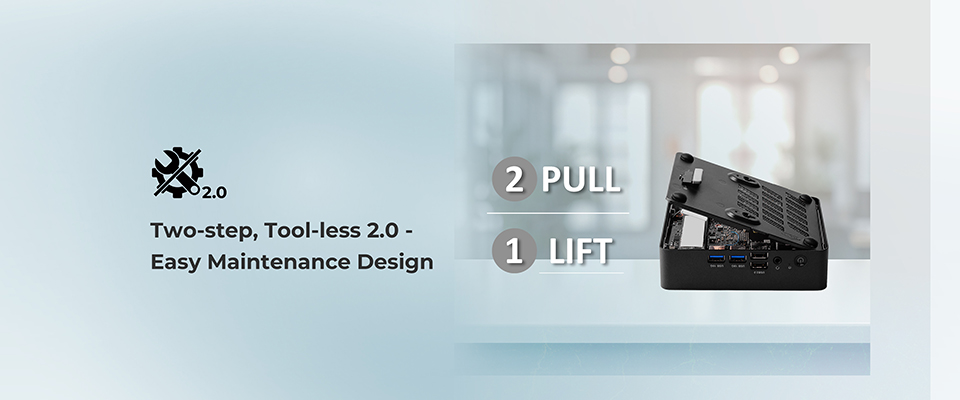
MSI has also introduced its Tool Less 2.0 chassis design, allowing users to access internal components through a simple 2 step opening mechanism without requiring a screwdriver. Additional features include a cable organizer, an optional external power switch, MSI Power Link functionality, and support for VESA mounting. MSI states that the system has undergone reliability testing for continuous 24/7 operation, making it suitable for commercial environments requiring extended uptime.
Compared with the more powerful MSI Cubi NUC AI+ 3MG, which features Intel Panther Lake processors and a slightly smaller 0.51 liter chassis, the Cubi NUC WCG focuses on mainstream computing requirements and practical connectivity. Its integrated graphics and compact design make it better suited for productivity, media consumption, lightweight server tasks, and office applications than demanding modern gaming workloads. MSI has not announced official pricing or retail availability.
The MSI Cubi NUC WCG demonstrates how compact desktop systems are becoming increasingly practical alternatives to traditional office PCs. Its combination of dual Ethernet, Thunderbolt 4, upgradeable DDR5 memory, and accessible internal storage makes it particularly interesting for users who prioritize flexibility and long term hardware ownership.
For technology enthusiasts, the dual networking connections could also make the system attractive for lightweight home server applications, network services, and dedicated management systems. However, the single M.2 storage slot limits its usefulness for storage intensive server configurations, while integrated graphics restrict its gaming potential.
More importantly, MSI's decision to retain replaceable memory and storage is a welcome approach as increasingly compact systems adopt soldered components. The Cubi NUC WCG could become a compelling option for business users and home enthusiasts, provided its final pricing remains competitive with other Wildcat Lake mini PCs.
Would you consider an Intel Wildcat Lake mini PC for everyday productivity or a lightweight home server, or would you prefer a more powerful system with additional storage expansion and better integrated graphics?
