
Microsoft wants to turn idle gaming GPUs into an AI training network, potentially paying PC owners for their unused computing power. A newly granted patent outlines a distributed system that uses spare GPU resources from gaming PCs, laptops, and mobile devices to train AI models while prioritizing gaming performance. Participants could receive monetary compensation, software, or AI service credits, although Microsoft has not announced plans to commercialize the technology.
The patent, titled Opportunistic Micro Training on Edge Devices Using Spare GPU Utilization, was originally filed on April 30, 2025, published on November 5, 2026, and officially granted on November 10 as US Patent 12,792,414 B2. The proposed architecture divides large AI training workloads into smaller computational tasks distributed across participating devices, reducing reliance on centralized data centers and expensive dedicated accelerators.

Microsoft's system would continuously monitor GPU utilization, memory consumption, temperatures, and power draw to determine when additional workloads can safely execute. Training tasks could automatically pause when users launch demanding applications or games, prioritizing the owner's activities. The technology also incorporates validation mechanisms to verify completed calculations and prevent unreliable devices from compromising training results.
Participation would require explicit authorization from hardware owners. The patent describes a potential reward mechanism that tracks completed computations and provides credits redeemable for software, AI model access, or monetary compensation. However, payments are not guaranteed, as the compensation mechanism appears in the patent description rather than its 20 formal claims. Microsoft has not announced a commercial service, payment rates, supported hardware, or launch date.
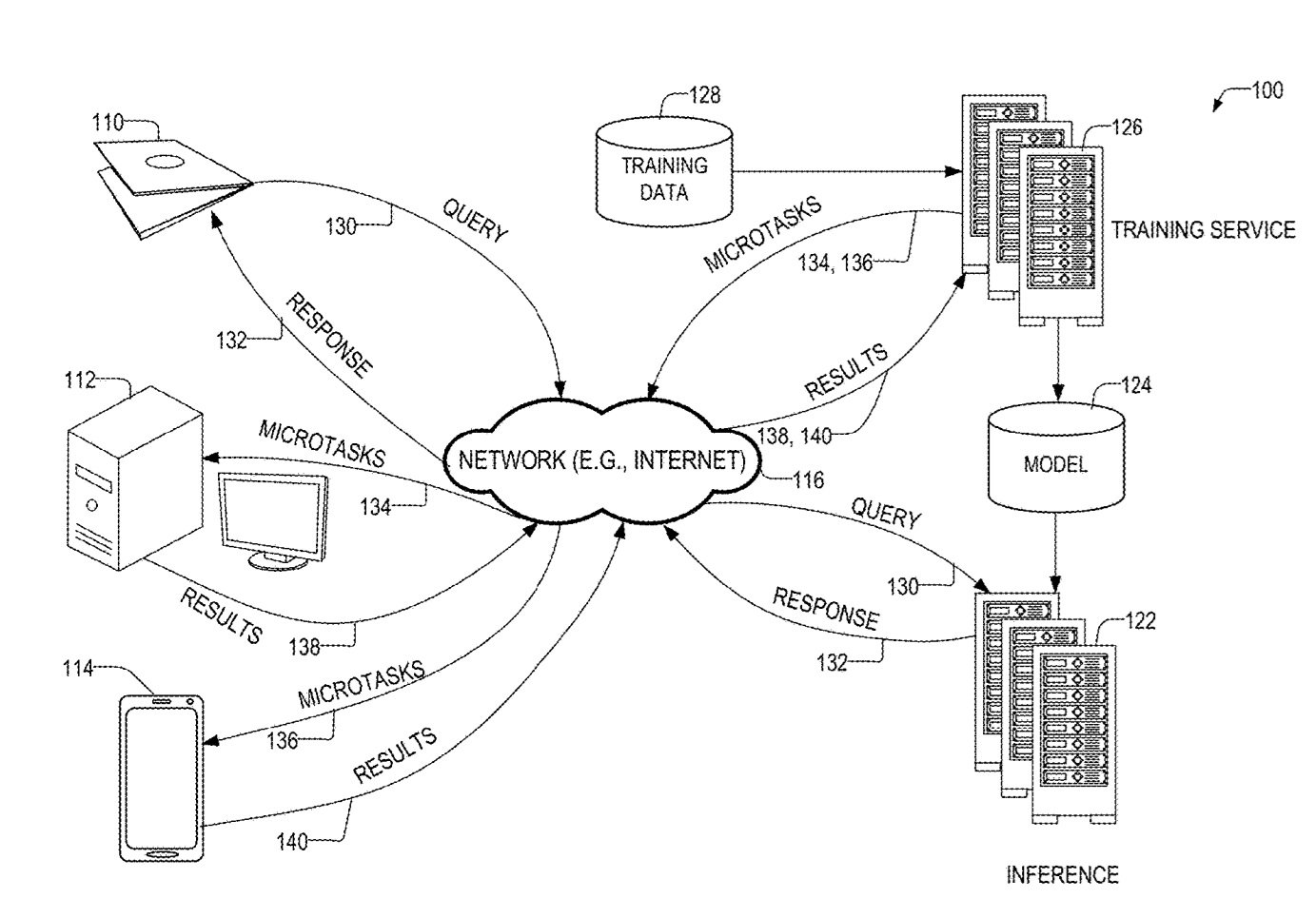
The concept resembles distributed computing initiatives such as Folding@home, although Microsoft's implementation would target commercial AI training. It also follows the growing interest in utilizing existing consumer hardware for artificial intelligence, including NVIDIA PAIR, which connects idle PCs for local AI inference. Unlike NVIDIA's local inference approach, Microsoft's proposed technology would distribute training operations across participating computers.
Profitability remains a significant consideration. A GPU consuming an additional 250 W for 4 hours daily would require approximately 30 kWh of electricity per month, excluding other system components. Any compensation would need to account for electricity costs, cooling requirements, hardware depreciation, and the additional operating hours accumulated by expensive graphics cards.
Microsoft's proposal could create an interesting opportunity for PC enthusiasts to monetize hardware they already own. However, gamers should not become a source of inexpensive computing power for major corporations without meaningful compensation. Any commercial implementation must provide transparent payments, complete user control, clear privacy protections, and the ability to disable training immediately. With GPU prices and component availability already under pressure from AI infrastructure demand, hardware ownership and gaming performance must remain the priority rather than serving corporate AI workloads.
Would you allow Microsoft to use your gaming GPU for AI training in exchange for money, or would electricity costs, hardware wear, and privacy concerns make the opportunity unattractive?
