
Lucebox Zero 495 Pairs Ryzen AI MAX Plus PRO 495 With Radeon AI PRO R9700
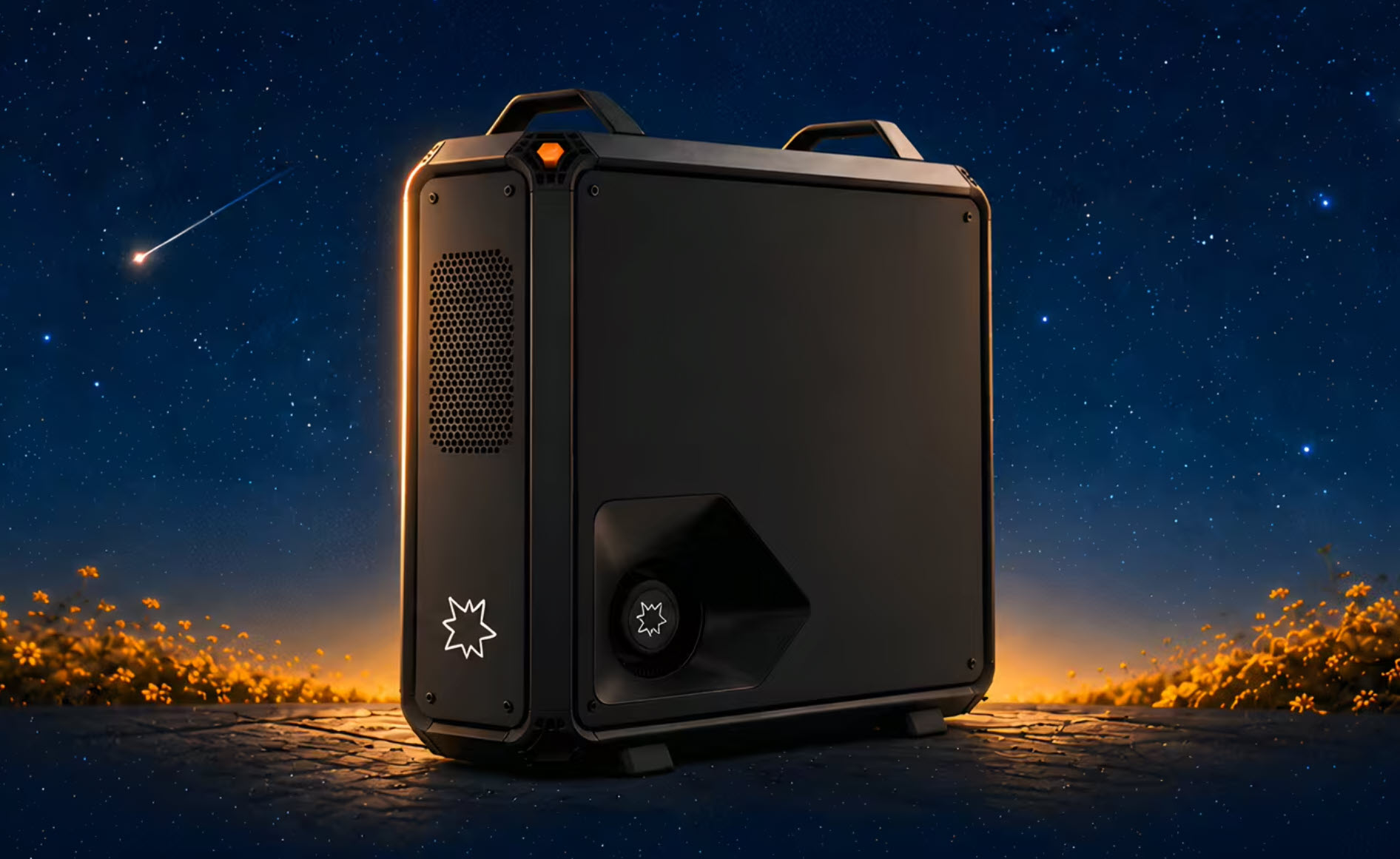
The local AI desktop race is moving beyond gaming PCs repurposed for inference, and Lucebox is stepping directly into that gap with the Zero 495. Built around AMD’s Ryzen AI MAX Plus PRO 495 and a Radeon AI PRO R9700 graphics card, the system is designed for users who want serious AI memory capacity, private local execution and a ready to use software stack without building a custom machine from scratch.
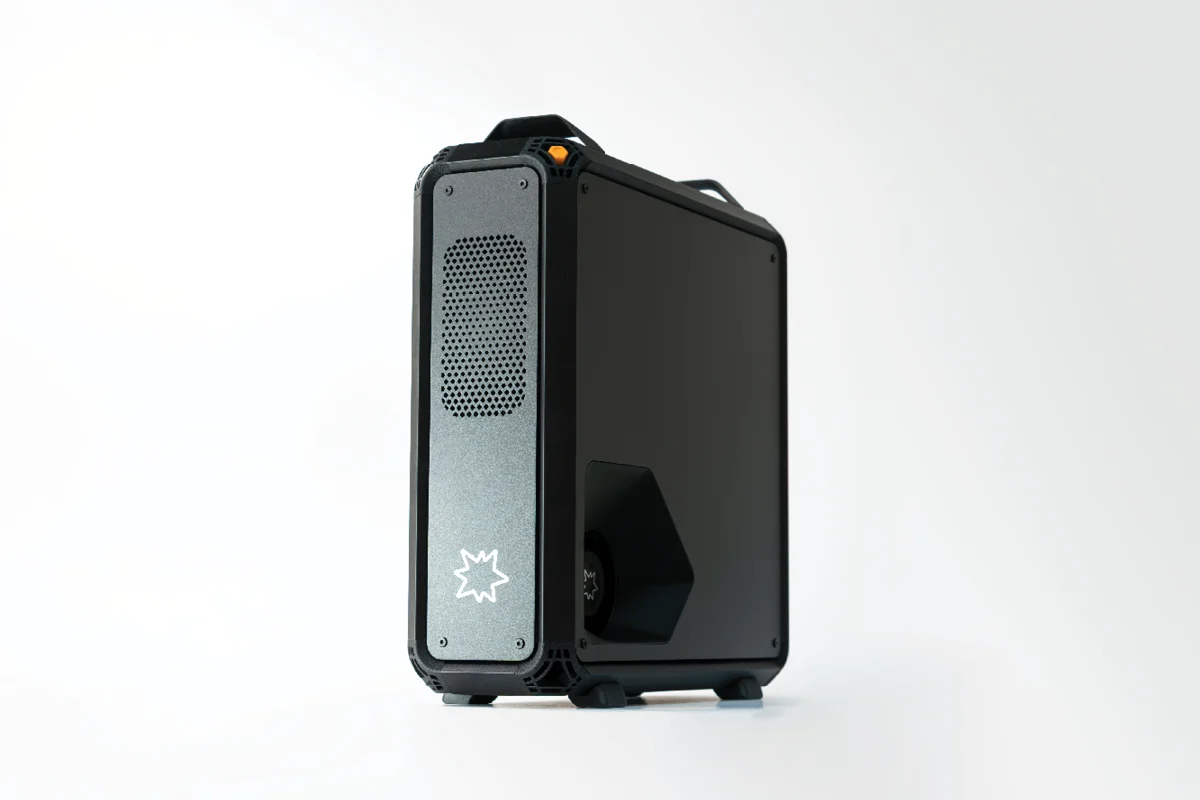
The main hardware story is memory capacity. Lucebox offers the Zero 495 in 128 GB and 192 GB unified memory configurations on the Ryzen AI MAX Plus PRO 495 platform, while the Radeon AI PRO R9700 adds another 32 GB of dedicated GDDR6 graphics memory. That creates 160 GB or 224 GB of combined memory across the system, but it should not be read as one single unified pool. The APU memory and the discrete GPU VRAM remain separate resources, so real world usable capacity depends on how the software stack places model weights, context, cache and workload data across each memory domain.
| Specification | 128 GB Configuration | 192 GB Configuration |
|---|---|---|
| Ryzen AI MAX Unified Memory | 128 GB | 192 GB |
| Radeon AI PRO VRAM | 32 GB GDDR6 | 32 GB GDDR6 |
| Combined Memory | 160 GB across system memory and GPU VRAM | 224 GB across system memory and GPU VRAM |
| Storage | 2 TB NVMe | 2 TB or 4 TB NVMe |
The system also shows how quickly AMD based local AI hardware is evolving. The Ryzen AI MAX Plus PRO 495 provides the high capacity unified memory foundation, while the Radeon AI PRO R9700 adds a dedicated GPU with 640 GB/s memory bandwidth over a PCIe 4.0 x4 link. Lucebox lists a 1000 W 80 PLUS Platinum SFX power supply, around 500 W under load, around 40 W idle, 5 GbE Ethernet, Wi Fi 7, Bluetooth, 2 USB4 ports, 2 USB A ports, HDMI 2.1, 2 DisplayPort 2.1 outputs and 4 additional display outputs through the GPU.
| Core Specification | Lucebox Zero 495 |
|---|---|
| Processor Platform | AMD Ryzen AI MAX Plus PRO 495 |
| Graphics | AMD Radeon AI PRO R9700 with 32 GB GDDR6 |
| Memory | 128 GB or 192 GB unified memory, plus 32 GB dedicated GPU VRAM |
| Combined Memory | 160 GB or 224 GB across separate system and GPU memory resources |
| Storage | 2 TB or 4 TB NVMe |
| Networking | 5 GbE Ethernet, Wi Fi 7 and Bluetooth |
| Expansion Option | Optional 100 GbE cluster kit |
| Power Supply | 1000 W SFX, 80 PLUS Platinum |
| Chassis | 340 × 110 × 320 mm, 11.97 L, 6 kg |
| Software | Ubuntu Server, Lucebox Engine and AI workloads preinstalled |
| API Support | OpenAI and Anthropic compatible API, root access over SSH |
| Starting Price | €6,499 for the first 200 units |
| Shipping Target | January 2027 |
The price is the part that separates this from a normal enthusiast desktop. At €6,499 for the first 200 units, the Zero 495 is clearly not targeting mainstream PC builders or casual local AI users. It sits closer to a compact professional AI appliance, where the value comes from high memory capacity, preconfigured software, local data control and reduced setup friction. For individuals, that price is steep. For small teams, labs or studios paying for repeated cloud inference and development time, the calculation becomes more practical if the system replaces ongoing rental costs and keeps sensitive data on site.
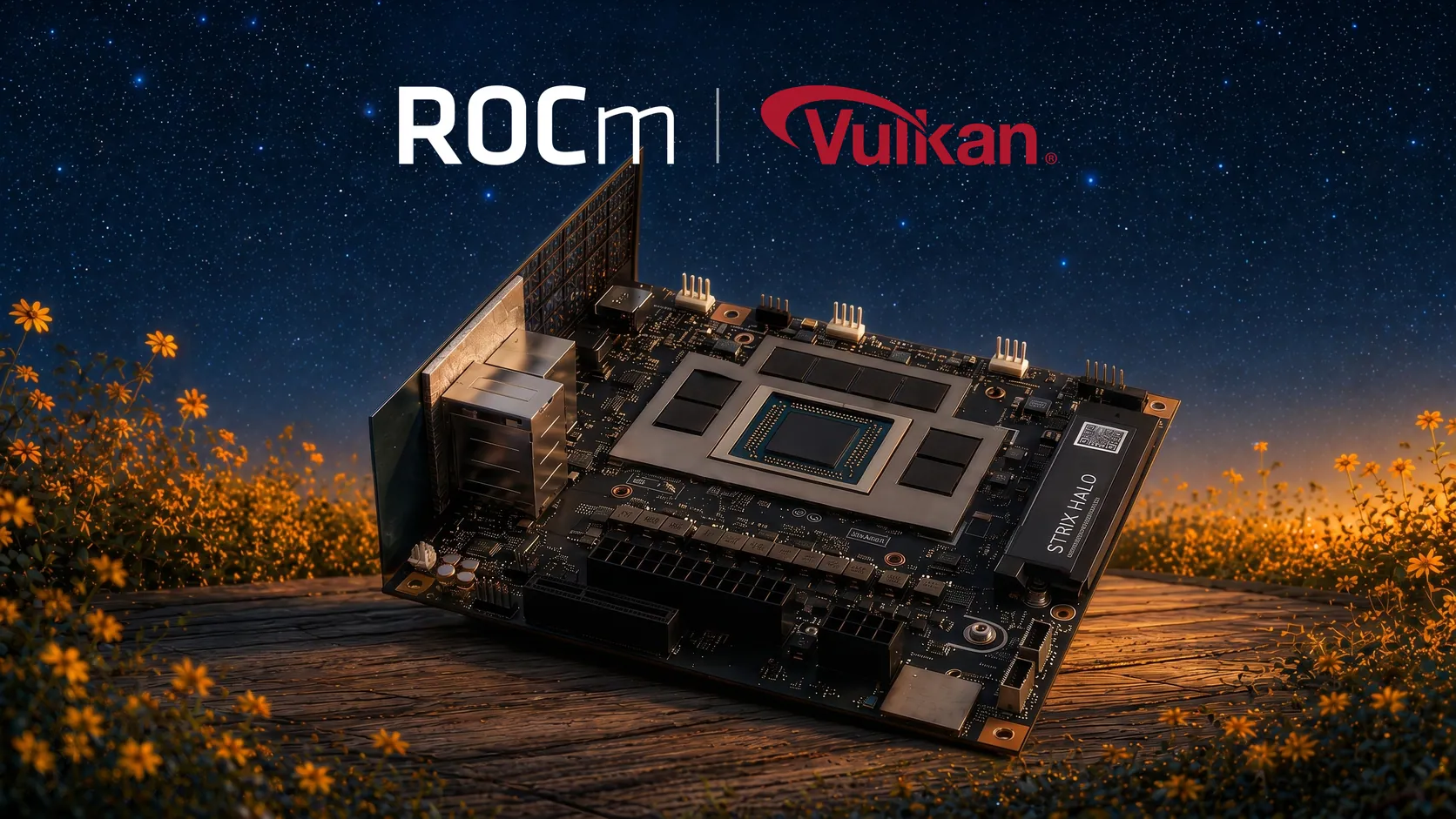
The performance angle comes from Lucebox’s own ROCm beats Vulkan on Strix Halo testing. Using the same Strix Halo system and the same prompt, Lucebox says its ROCm path outperformed llama.cpp Vulkan v0.7.5 by 17% to 47% in prefill and 28% to 47% in speculative decode. At 123K prompt tokens, Lucebox reports 283.9 tok/s prefill and 38.0 tok/s speculative decode, compared with 193.6 tok/s prefill and 28.1 tok/s decode on the Vulkan path.
| Performance Metric | 8K | 32K | 123K |
|---|---|---|---|
| Lucebox ROCm Prefill | 283.3 tok/s | 306.6 tok/s | 283.9 tok/s |
| Vulkan Prefill | 241.1 tok/s | 237.2 tok/s | 193.6 tok/s |
| Lucebox ROCm Decode | 41.9 tok/s | 41.4 tok/s | 38.0 tok/s |
| Vulkan Decode | 28.5 tok/s | 32.3 tok/s | 28.1 tok/s |
The important caveat is that this is not a universal ROCm versus Vulkan verdict. Lucebox notes that the comparison used each engine as configured, rather than identical arithmetic, and the test was limited to 1 Strix Halo box with 1 retrieval prompt setup. Even so, the result is notable because it shows how much performance can depend on the software path, quantization format, speculative decoding strategy and engine level optimization rather than only the hardware specification.
This also connects to the wider AMD local AI push. the AMD Ryzen AI MAX 400 Brings 192 GB Memory For Local AI, larger unified memory configurations are becoming 1 of the platform’s biggest differentiators. Lucebox takes that concept further by pairing the Ryzen AI MAX Plus PRO 495 with a Radeon AI PRO R9700, giving users a large APU memory configuration alongside dedicated professional GPU memory in the same machine.
Lucebox Zero 495 is expensive, but the pricing makes more sense when viewed as a complete local AI platform rather than a premium desktop parts list. Buyers are paying for memory capacity, AMD silicon, a dedicated Radeon AI PRO card, server software, API compatibility, published engine benchmarks and less time spent configuring the stack manually.
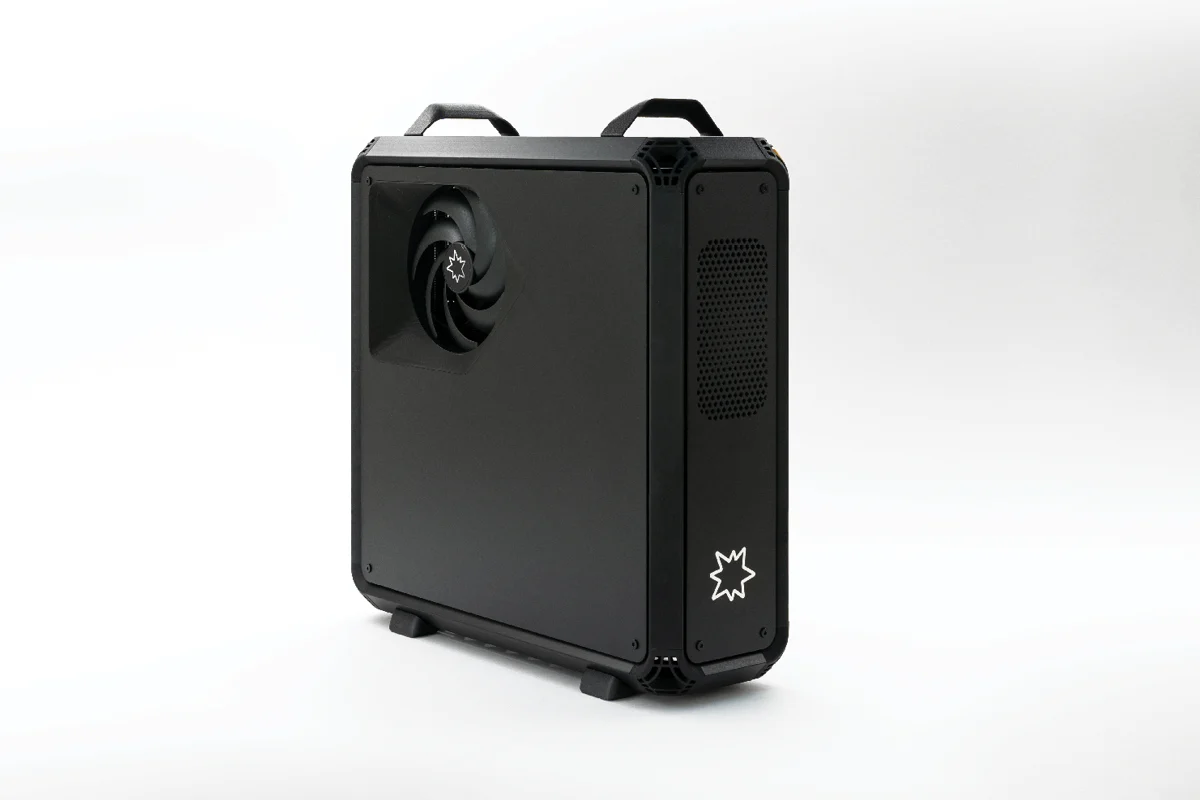
The real question is whether that package saves enough time or cloud spend to justify the entry price. For hobbyists, €6,499 will be hard to justify. For developers, small AI teams, research groups and studios that need private local inference with large memory headroom, the value proposition becomes stronger. The important detail is that the headline memory number is combined capacity, not one seamless memory space. Workloads still need software support to use the Ryzen AI MAX memory and Radeon AI PRO VRAM efficiently.
The ROCm versus Vulkan result also reinforces a key point for AMD’s AI ecosystem. Hardware alone is not enough. If AMD platforms are going to challenge NVIDIA in local inference, the software path must be fast, reproducible and simple for developers to deploy. Lucebox’s testing suggests ROCm can deliver strong results on Strix Halo when the engine is built around it, but broader adoption will depend on how consistently that performance translates across AI workloads, prompts and real developer workflows.
At €6,499, would you see the Lucebox Zero 495 as an expensive desktop or a practical alternative to ongoing cloud AI costs?
