
Loongson Targets DRAM And Android As Its 2027 CPU And GPU Roadmap Shows Modest Ambition
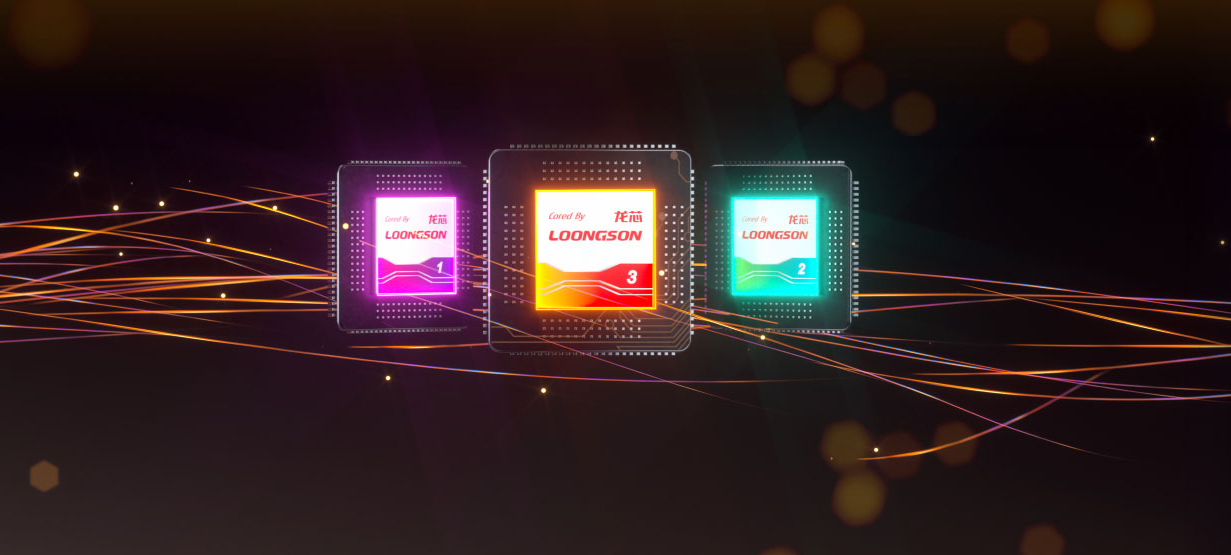
Loongson is continuing to expand its domestic semiconductor roadmap, and while its latest plans show clear technical progress, the performance outlook for its upcoming CPU and GPU products remains relatively modest when measured against the broader global market. Even so, the company’s long term strategy is becoming more ambitious, with new references to DRAM, HBM related development, and potential Android ecosystem expansion adding more depth to its future direction.
According to a recent report from ITHome, Loongson provided updates on several active projects, including the upcoming 3B6600 processor and the 9A1000 graphics chip. These products are being positioned primarily for China’s domestic PC ecosystem, where Loongson continues to build out a more self reliant computing stack across desktops, laptops, and servers.
The upcoming Loongson 3B6600 is expected to use the LA864 CPU core architecture alongside integrated LG200 graphics. This processor is being developed as a mainstream solution for local consumer PC deployments, and Loongson claims that, in pre silicon testing, it can deliver around 30% better performance than the 3A6000 at the same clock speeds. Internal projections also suggest that the 8 core 3B6600 could reach around 60 to 80 points in SPEC 2006 single core testing, placing its potential in the range of Intel 12th Gen class performance.
That is still far from the current cutting edge. As seen in Phoronix’s review of the Loongson 3B6000, the company’s existing architecture remains well behind modern processors such as AMD Ryzen 9000 and Intel Core Ultra 200 series parts. However, it does show more competitive behavior against older platforms, including Intel 10th Gen and AMD Zen 2 class CPUs, particularly in single core focused workloads. If Loongson’s projected 30% uplift for the 3B6600 holds true in shipping silicon, the chip could land closer to Intel 12th Gen and AMD Zen 3 territory, which would still represent a meaningful internal step forward for the company.
Beyond client systems, Loongson is also advancing its server roadmap. The company is working on 3C6000 server processors with up to 64 cores, while its future 3D7000 lineup is planned to move into 32 plus core chiplet designs with more than 128 cores. This shows that Loongson is not only trying to remain active in the entry and mainstream PC segment, but is also attempting to scale into more demanding infrastructure categories.
On the graphics side, Loongson’s 9A1000 GPU appears to be aimed at basic mainstream display and entry level compute duties rather than any serious gaming or workstation challenge. The company says performance will be comparable to the Radeon RX 550, a GPU originally launched in 2017. That makes the positioning very clear. This is not a disruptive graphics product, but rather a practical domestic solution for broad system deployment, where stable display output, lower power consumption, and local platform integration matter more than raw gaming performance.
Loongson states that the 9A1000 will bring a 25% increase in clock speed, a 20% reduction in core area, and a 70% reduction in power consumption compared with earlier internal designs. The company also says the GPU will offer 5 times the performance of the older 2K3000 solution and provide up to 40 TOPS of AI compute. It also promised Windows compatible drivers, which is a notable point if the company wants broader software usability across domestic enterprise and consumer systems.
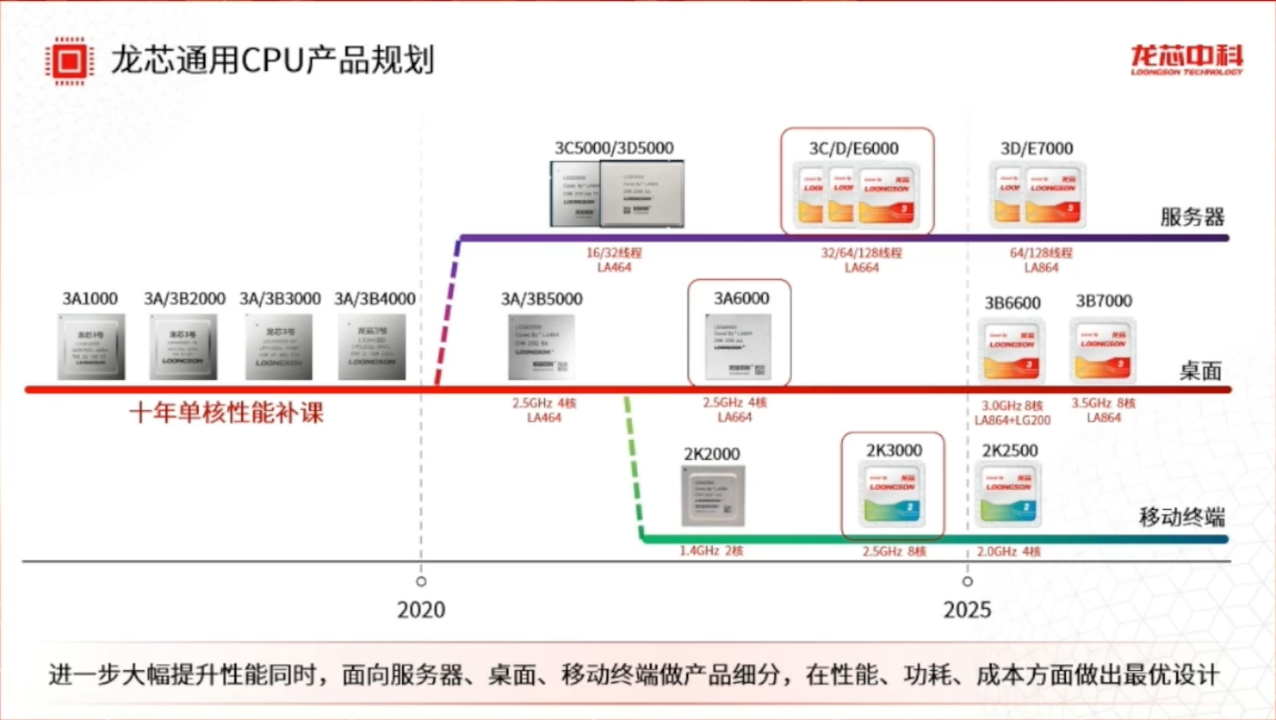
In terms of development timing, Loongson says the 9A1000 taped out in September 2025, while the 3B6600 has completed design and is expected to tape out by the 3rd quarter of 2026. Engineering samples for both products are planned for the 2nd half of 2026, with launches expected in 2027. That gives the company a defined commercial window, though it also means these products will arrive into a market that will be even more competitive by the time they officially ship.
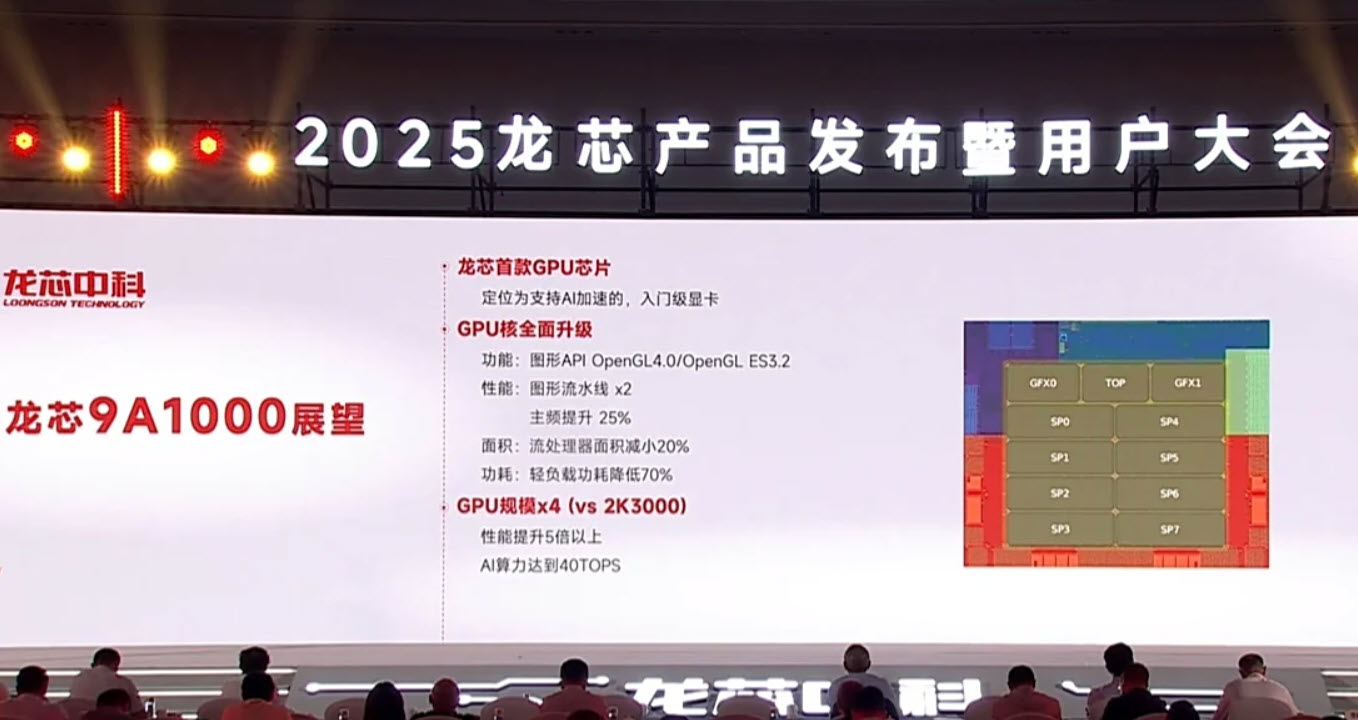
Loongson also shared some early direction for what comes next. The future 9A2000 GPU is expected to target a higher performance class, while the 9A3000 is planned around a sub 10nm process. That project is expected to require much more development time and investment, particularly because it will need custom PHY design, memory interfaces, and PCIe interfaces. In other words, Loongson is aware that moving up the graphics stack demands a much deeper engineering commitment than what its current products target.
One of the most interesting takeaways from the update is Loongson’s apparent interest in entering the DRAM segment. The company says it is already researching the memory market and has partnered with domestic manufacturers on logic silicon wafers for HBM chips. While this does not mean Loongson is about to become a full scale DRAM supplier overnight, it does suggest a strategic effort to participate more directly in the memory side of future accelerator and GPU platforms. If that work matures, Loongson could eventually push toward more vertically integrated domestic compute products that combine its processors, graphics, and memory technologies more closely.
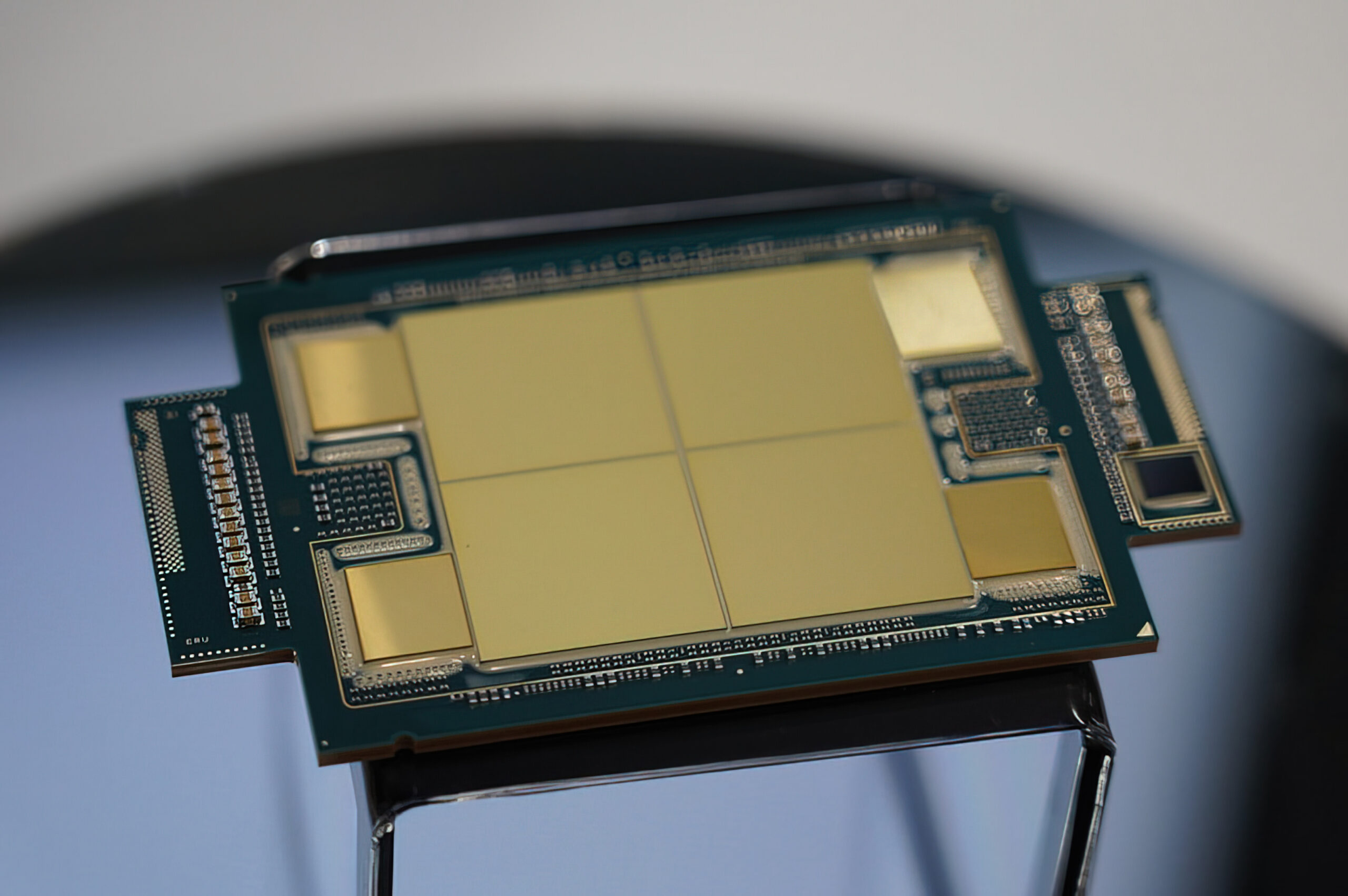
The company also revealed that it is studying the Android ecosystem and waiting for the right opportunity to enter that market. Loongson says it is evaluating this direction with support from the open source HarmonyOS ecosystem. That could give the company another path into mobile, embedded, or lightweight consumer computing segments, especially if it sees room to align domestic silicon with a more locally controlled software foundation.
Overall, Loongson’s roadmap paints a mixed picture. The company’s near term CPU and GPU products do not appear especially aggressive from a performance standpoint, and in global terms they still look several generations behind the leading competition. At the same time, the broader roadmap shows a more calculated long term strategy that extends beyond just catching up in desktop CPUs. With expansion plans touching server processors, future graphics, HBM related development, DRAM research, and Android adjacent software opportunities, Loongson is clearly building toward a larger domestic ecosystem play.
For the gaming and enthusiast audience, the 9A1000 is unlikely to generate much excitement given its Radeon RX 550 class target. But from an industry perspective, the bigger story is not about frame rates. It is about Loongson trying to extend its footprint across more layers of the technology stack at a time when domestic Chinese semiconductor independence remains a major strategic priority.
What do you think about Loongson’s direction? Is its slow but steady platform expansion the right strategy, or does the company need a much stronger performance leap to stay relevant?
