
Lisuan 7G100 Discrete GPUs Begin First Customer Deliveries With Initial Focus On Digital Twin And Professional Deployments
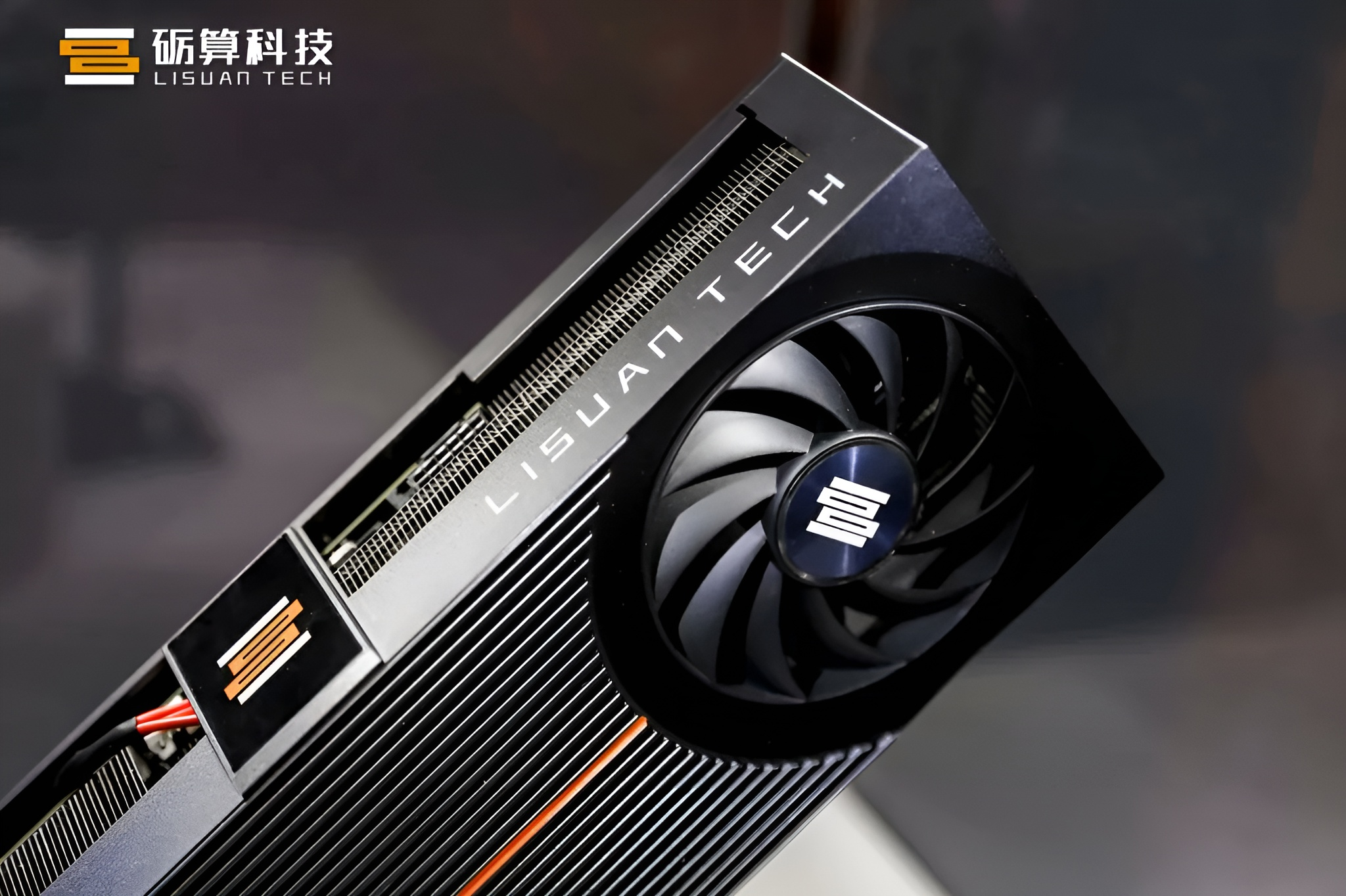
Lisuan is taking another concrete step toward commercialization of its domestically developed discrete GPU roadmap, with reports indicating that the company’s 7G100 series has completed its first batch of customer deliveries. According to the ITHome report, the initial shipment is being delivered to customers in the digital twin segment, signaling that the first wave is prioritizing professional workloads before any broader consumer retail push in China.
This first delivery milestone matters because China’s discrete GPU story has historically struggled to produce a credible alternative to established NVIDIA and AMD offerings at meaningful scale. Lisuan’s G100 direction has been positioned as a distinct attempt to change that narrative, combining a modern process node with a self built architecture and software stack aimed at moving beyond proof of concept and into real production deployments.
The same report states that mass production of the 7G100 series began on 2025/09/15 and that the silicon is built on a 6 nm process. With production already underway since 2025/09, it is reasonable to expect domestic channel availability to become clearer as 2026 approaches, but the current signal is that Lisuan is first locking in professional use cases where validation cycles, workload targeting, and procurement planning can better absorb early lifecycle constraints.
On the product positioning side, Lisuan has previously shown the G100 platform in gaming focused contexts, which keeps the consumer angle on the table. However, leading with digital twin customers is a classic enterprise GTM play: establish credibility through professional deployments, build a track record for stability and performance consistency, then expand the addressable market once drivers, tooling, and ecosystem readiness mature.
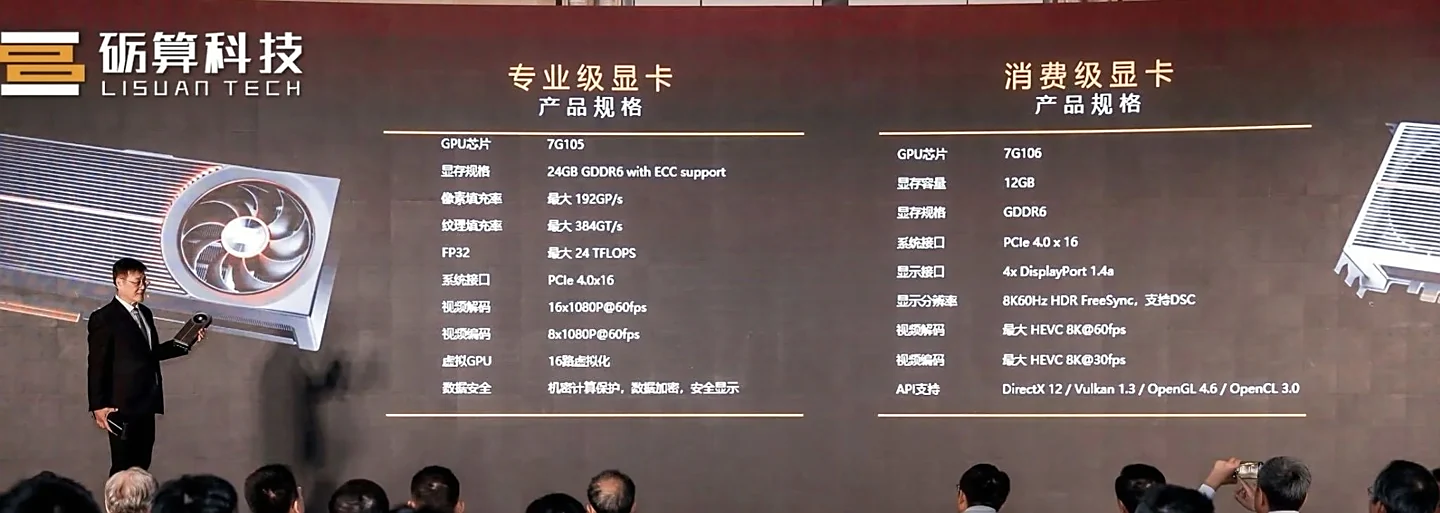
From the technical narrative being discussed around Lisuan’s roadmap, the 7G106 configuration has been described with 12 GB GDDR6 on a 192 bit bus, PCIe 4.0 x16 support, 192 TMUs, 96 ROPs, and a 225 W maximum TDP powered by a single 8 pin connector. The broader platform message centers on a self developed architecture, an in house upscaler called NRSS, and a full internal stack that aims to improve control over performance tuning, compatibility, and long term iteration.
One of the more strategic differentiators being floated is potential alignment with Windows on ARM workflows, where pairing ARM based SoCs with a discrete GPU could become a meaningful local market lever if execution is solid. That is still an area that needs clear real world proof through shipping hardware, drivers, and sustained workload validation, but it is exactly the kind of ecosystem wedge that can accelerate adoption if Lisuan delivers stable support and predictable performance.
For gamers watching from the sidelines, the headline is not that a brand new competitor is ready to dethrone incumbent giants overnight. The real signal is that Lisuan is moving into customer delivery and commercialization, which is the phase where software maturity, driver reliability, and long run stability become the deciding factors. If Lisuan can turn professional footholds like digital twin deployments into a steady cadence of validated releases, it could gradually build credibility for broader consumer availability, especially inside China’s domestic PC ecosystem.
Do you want to see Lisuan push a gamer first launch in 2026, or do you prefer this professional first strategy where drivers and stability are proven before these GPUs hit mainstream retail builds?
