
Jensen Huang Says Kimi K3 Will Drive More AI Compute Demand, Not Less
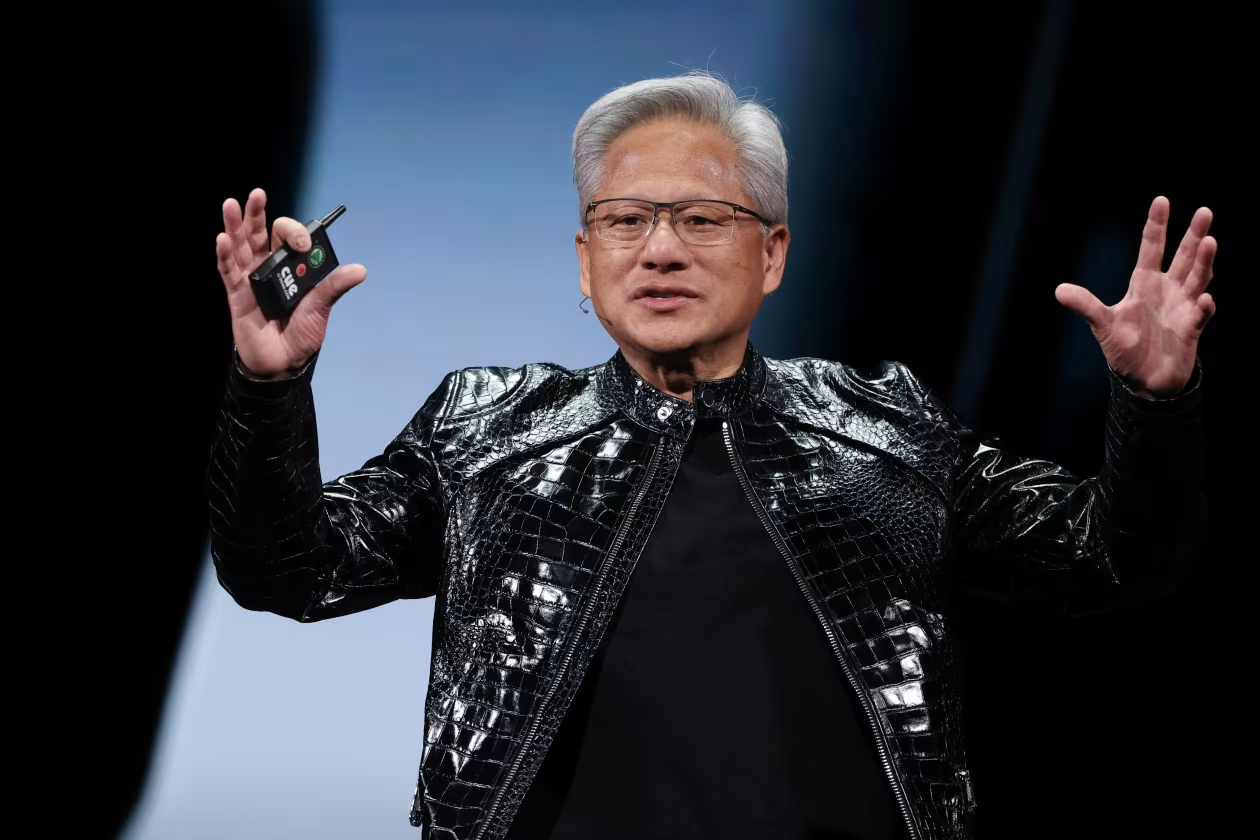
NVIDIA CEO Jensen Huang has dismissed concerns that increasingly efficient artificial intelligence models such as Moonshot AI’s Kimi K3 could reduce demand for AI infrastructure or prove that technology companies have invested too heavily in data centers. Speaking to the media following the July 21 opening of Wistron’s new manufacturing facility in Dallas, Huang argued that improved model efficiency will expand AI adoption and ultimately require significantly more computing capacity.
Kimi K3 has drawn widespread industry attention after Moonshot AI introduced it as a 2.8T parameter open weight model with a 1 million token context window, native vision capabilities, and a Mixture of Experts architecture that activates 16 of its 896 experts for each token. Moonshot says architectural improvements including Kimi Delta Attention and Attention Residuals provide approximately 2.5 times greater scaling efficiency compared with Kimi K2.
The model also demonstrated its long duration agent capabilities by autonomously designing, optimizing, and verifying a simulated inference chip within 48 hours. Using open source electronic design automation tools and the Nangate 45nm library, the resulting design reportedly reached 100MHz and delivered more than 8,700 tokens per second of simulated decoding throughput within an area below 4mm². These figures remain Moonshot AI claims rather than independently validated silicon performance, since the design was simulated and not manufactured as a physical processor.
Kimi K3’s strong benchmark results and competitive pricing have renewed concerns that leading companies such as OpenAI, Anthropic, Google, Meta, and Microsoft may be spending more than necessary on AI infrastructure. Huang rejected that conclusion, comparing the response to the market reaction surrounding DeepSeek and arguing that more accessible models encourage more people and businesses to adopt artificial intelligence.
"Everyone’s got it backwards, just like they did with DeepSeek. Kimi K3 is useful and very smart. More people will use it, and because of that, more AI computing power will be needed. That’s the logical conclusion." Quote by: Jensen Huang
Huang also argued that the industry requires both proprietary models from companies such as OpenAI and Anthropic and open models from developers including Moonshot AI. From NVIDIA’s perspective, competition across both ecosystems strengthens demand for training, reasoning, inference, networking, and data center infrastructure regardless of which individual model provider gains market share.
That position directly supports NVIDIA’s broader strategy, more efficient models do not eliminate infrastructure requirements. Instead, they reduce the cost of individual AI tasks, making it practical to deploy more agents, process longer contexts, serve more users, and integrate artificial intelligence across additional enterprise workloads. NVIDIA has also expanded its presence at the model layer through projects such as Nemotron 3 Super, reinforcing its ambition to operate as a complete AI platform rather than only a GPU manufacturer.
NVIDIA is also gaining renewed access to China’s AI market. Limited shipments of H200 accelerators to approved Chinese customers reportedly began in July 2026 following months of regulatory uncertainty, potentially restoring an important revenue channel as demand for large scale AI infrastructure continues to grow.
Jensen Huang’s argument follows a familiar technology pattern known as the Jevons paradox. When a resource becomes more efficient and less expensive to use, total consumption can increase because more applications become economically viable. A model that uses fewer resources for each request may lower the cost of inference, but it can also enable millions of additional users, autonomous agents, coding systems, research tools, and enterprise services.
The real risk for NVIDIA is therefore not model efficiency itself. It is whether future AI workloads continue running primarily on NVIDIA hardware or increasingly migrate toward custom accelerators from Google, Microsoft, Amazon, Meta, Chinese semiconductor developers, and specialized AI chip companies. Kimi K3 may strengthen Huang’s argument about expanding compute demand, but the long term battle will focus on which hardware ecosystem captures that growth.
Will more efficient models such as Kimi K3 increase global demand for AI computing, or could they eventually reduce the need for massive data center investments?
