
Intel Targets AMD’s Handheld Lead With New Arc G3 Chips Built Specifically for Portable Gaming
Intel has officially entered the gaming handheld segment with a new processor family designed specifically for portable systems, introducing the Arc G3 Extreme and Arc G3 as part of its broader Panther Lake roadmap. Rather than adapting a low power laptop chip for handheld use, Intel says these new SoCs were purpose built around handheld power targets, thermal needs, and gaming focused software features, signaling a much more direct challenge to AMD’s current strength in this category.
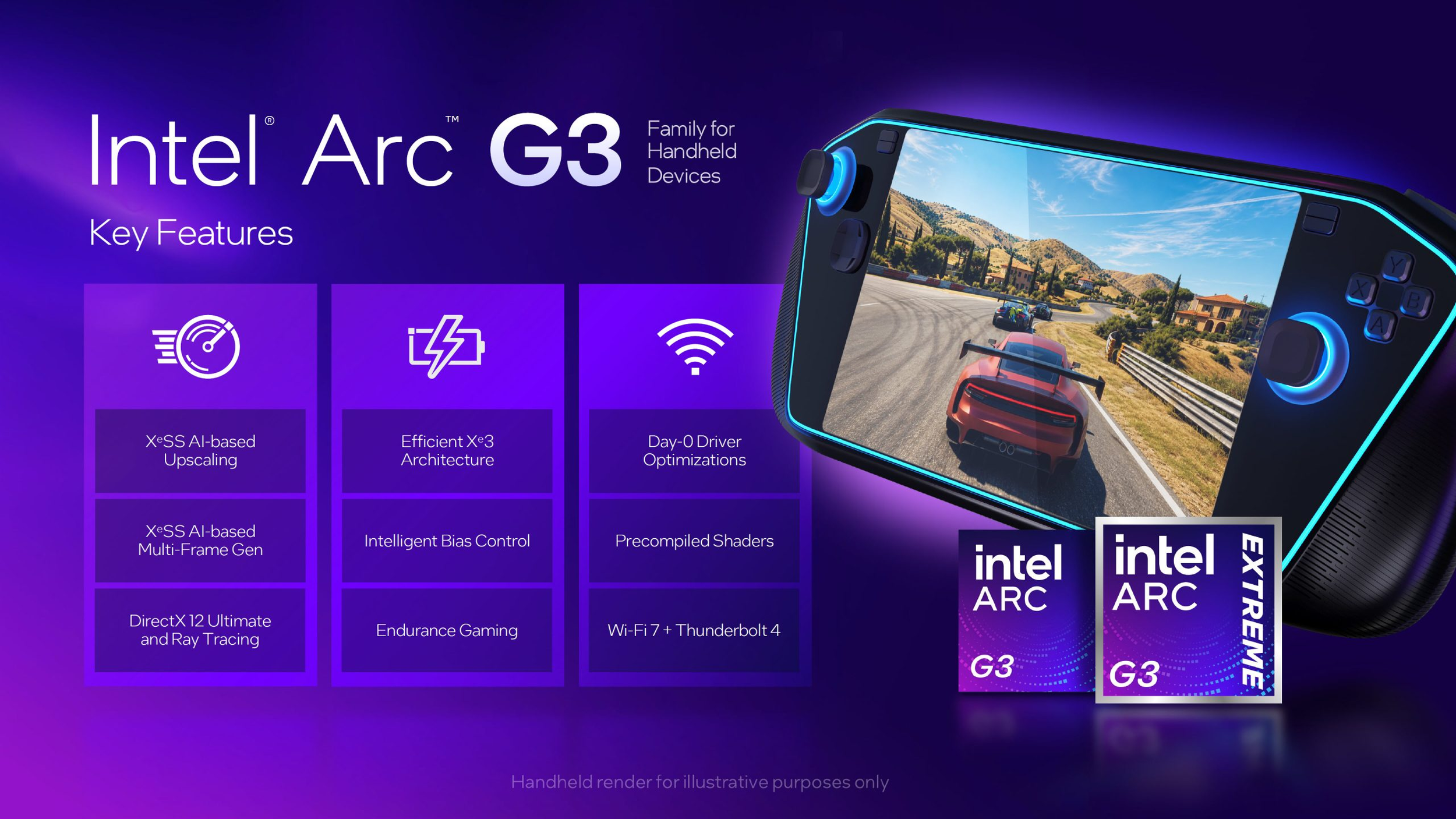
The new Arc G3 lineup centers on 2 Performance cores, 8 Efficient cores, and 4 Low Power Efficient cores, giving both chips a total of 14 CPU cores. Intel positions the platform around PC class gaming performance in a smaller form factor, while also emphasizing mobility focused features such as XeSS 3, Endurance Gaming, and precompiled shader delivery intended to reduce stutter and improve game startup behavior on supported titles.
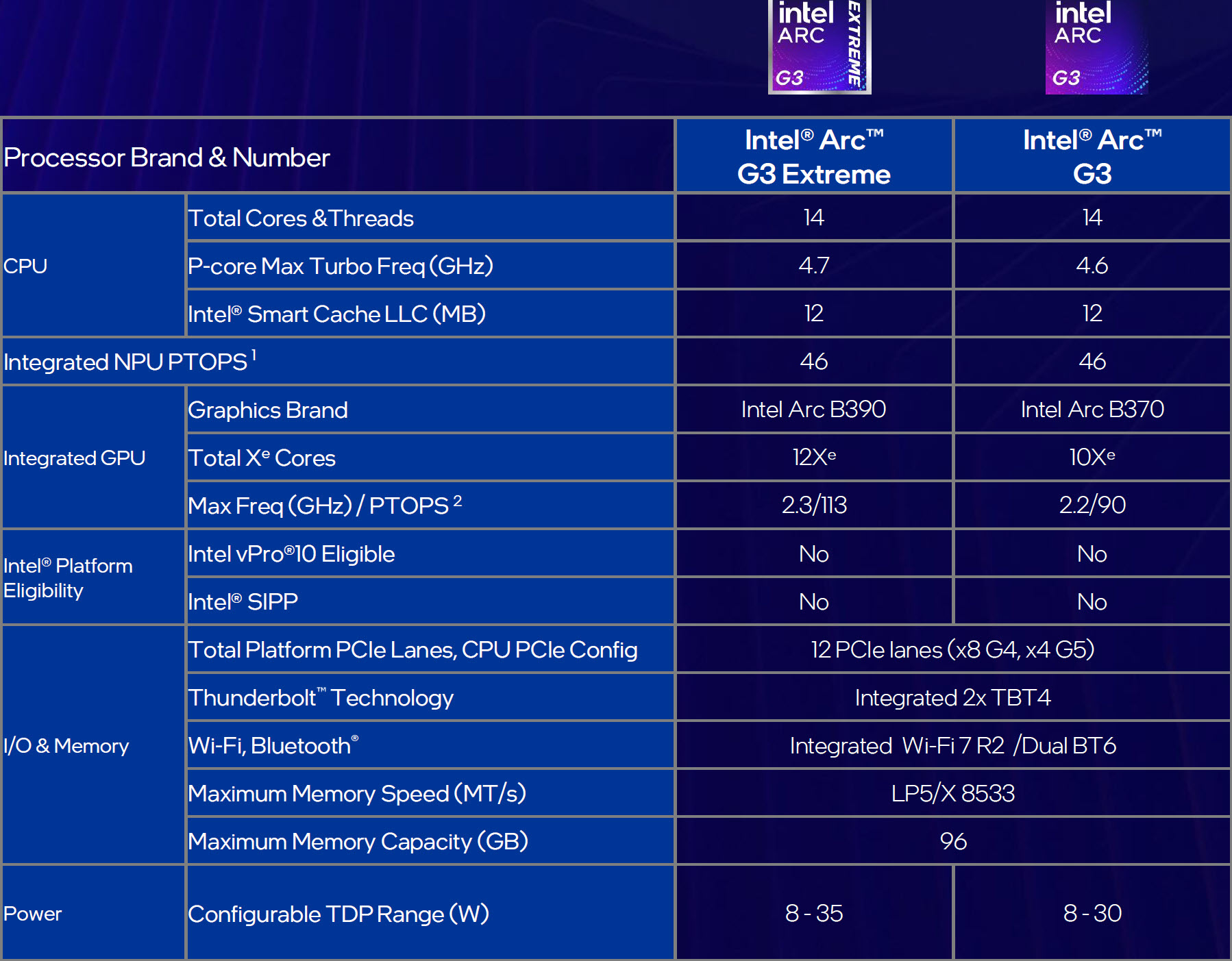
At the top of the stack is the Intel Arc G3 Extreme, which carries a maximum P core boost clock of 4.7 GHz, 12 MB of cache, support for LPDDR5X 8533 memory up to 96 GB, and a configurable TDP range of 8 W to 35 W. Intel’s specification pages also show 12 PCIe lanes, dual Thunderbolt 4 connectivity, and integrated wireless support that includes Wi Fi 7 capabilities. On the graphics side, the Arc G3 Extreme uses a 12 Xe3 configuration, with Intel and partner coverage associating it with Arc B390 class graphics running at up to 2.3 GHz.
The standard Arc G3 keeps the same overall CPU core arrangement but steps down the graphics configuration to 10 Xe3 cores, commonly described as Arc B370 class graphics, with clocks up to around 2.2 GHz and a lower configurable TDP range of 8 W to 30 W. That makes it the more efficiency and cost focused option in the family, while still preserving most of the platform level feature set Intel is using to define its handheld strategy.
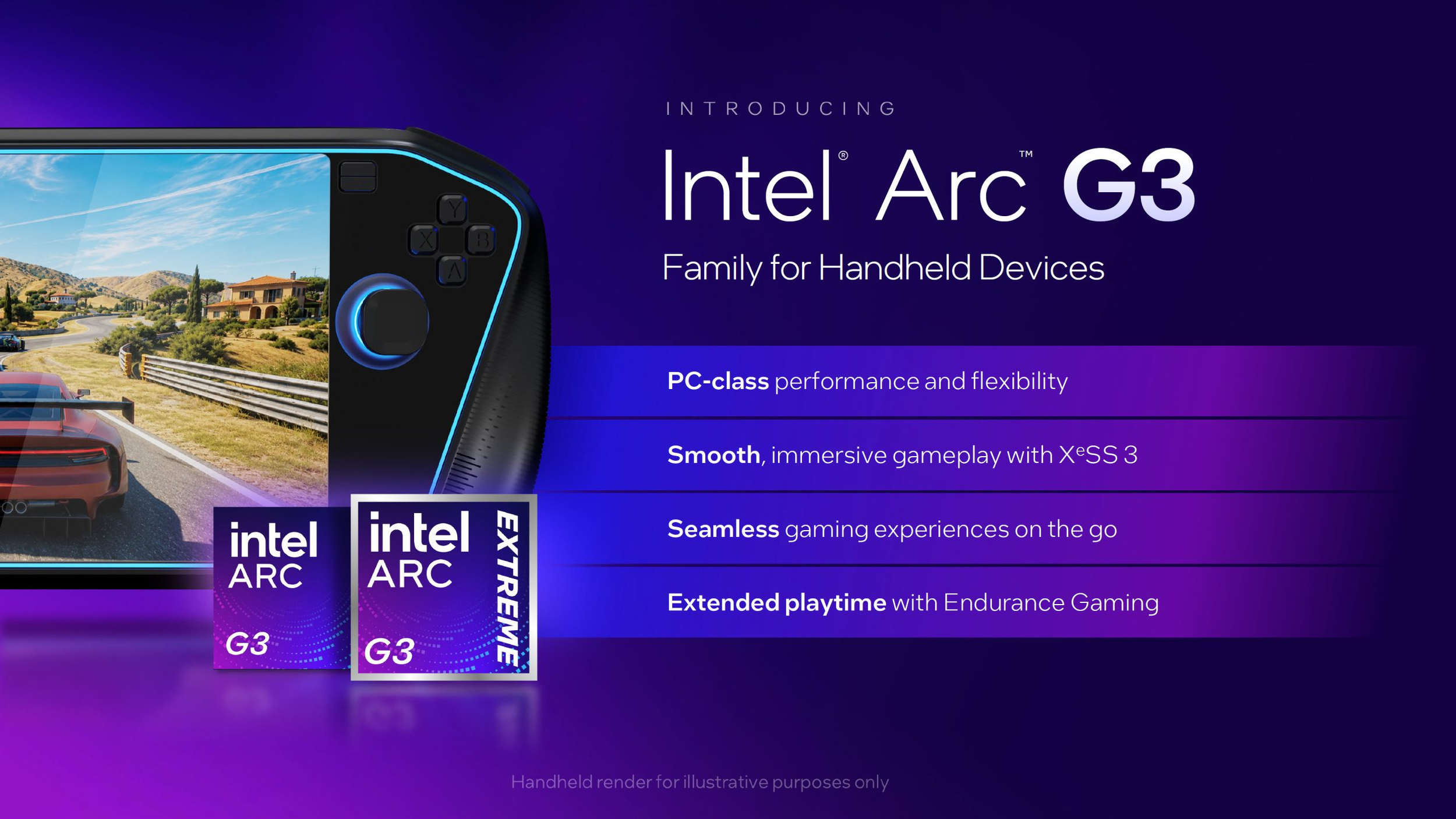
What makes this announcement more significant is the software layer Intel is attaching to the hardware. The company is highlighting XeSS 3, multi frame generation, day 0 Game On drivers, precompiled shader distribution, and compatibility with Microsoft’s full screen Xbox mode for Windows 11 handheld experiences. Intel is also leaning heavily on Endurance Gaming as a differentiator, aiming to improve battery conscious play sessions without forcing users into constant manual tuning.
Intel is not launching the Arc G3 family in isolation either. The company says partner handhelds are arriving in the coming months, with the first wave including the Acer Predator Atlas 8, MSI Claw 8 EX AI+, and OneXPlayer devices. Acer has already confirmed the Predator Atlas 8 with up to Arc G3 Extreme, while MSI has also revealed a new Claw model built around the Arc G3 Extreme processor ahead of Computex 2026. That immediate ecosystem backing gives Intel a stronger opening than some of its earlier mobile gaming efforts.
From a market perspective, Intel’s move is strategically important. AMD has spent the last several years becoming the default choice for most Windows gaming handhelds, largely because of its strong balance of integrated graphics performance, efficiency, and ecosystem availability. With Arc G3, Intel is clearly trying to reset that narrative by offering a handheld first platform instead of another repurposed mobile chip. Whether that translates into real competitive momentum will depend on retail pricing, battery life under sustained loads, driver consistency, and how these first devices actually perform once full reviews arrive. But on paper, this is Intel’s most deliberate push yet to become a serious force in handheld gaming.
For handheld gamers, this announcement could mark the beginning of a much more competitive phase in the segment. More vendors, more silicon choices, and better software support are exactly what the category needs as portable PC gaming moves further into the mainstream. Intel still has to prove execution, but Arc G3 looks like a much more focused step than anything the company has tried before in this space.
What do you think, can Intel’s Arc G3 platform truly challenge AMD in gaming handhelds, or will Ryzen remain the safer choice for most players?
