
Intel Sets Wind Down Timelines for 12th Gen Alder Lake and 4th Gen Xeon Scalable Sapphire Rapids via Product Change Notices
Intel has started formalizing the phase out runway for 2 major CPU families through its Product Change Notification process, signaling how long partners can keep ordering and receiving shipments before availability tightens across the channel. The updates cover select 12th gen Intel Core processors under the Alder Lake umbrella plus 4th gen Intel Xeon Scalable parts known as Sapphire Rapids, and they provide concrete milestones that matter for OEM planning, distributor stocking, and anyone building long lifecycle platforms around these SKUs.
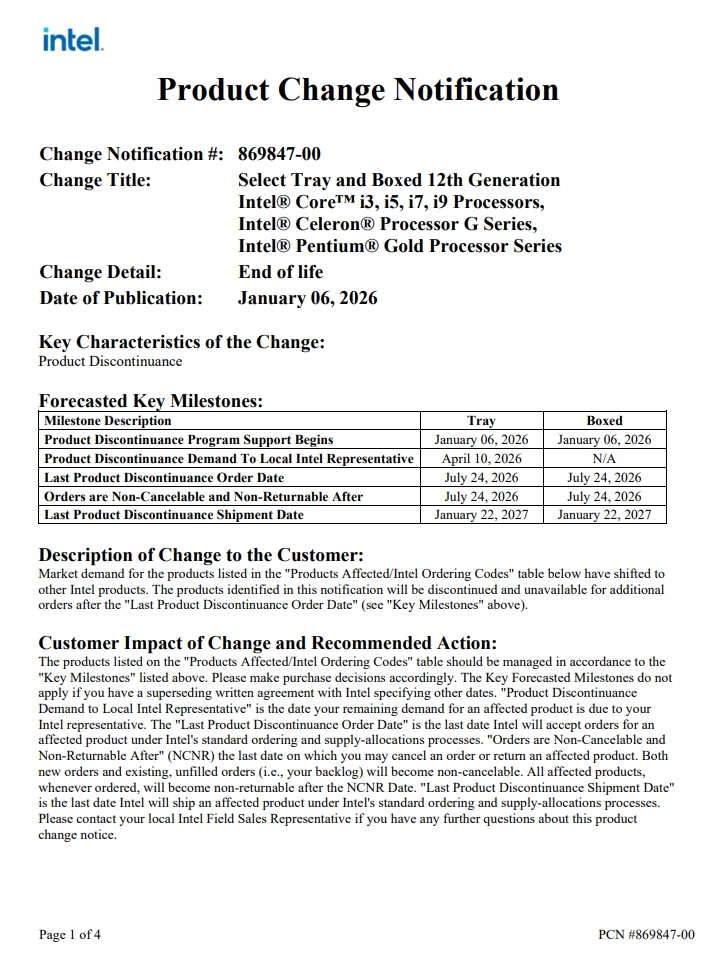
For Alder Lake, Intel’s notice centers on select 12th gen Intel Core i3, i5, i7, i9 processors plus Intel Celeron G series and Intel Pentium Gold models, with a timeline that effectively marks the ramp down window under standard client channel expectations. The key dates in the notice outline April 10, 2026 as the last demand due date to Intel representatives, July 24, 2026 as the last order date, and January 22, 2027 as the last shipment date prior to the product support change. Practically, this is the point where the mainstream supply pipeline for these parts becomes increasingly constrained, and it is the real deadline that system builders and channel partners care about when planning replenishment, warranty coverage strategies, and upgrade options for LGA 1700 era systems.
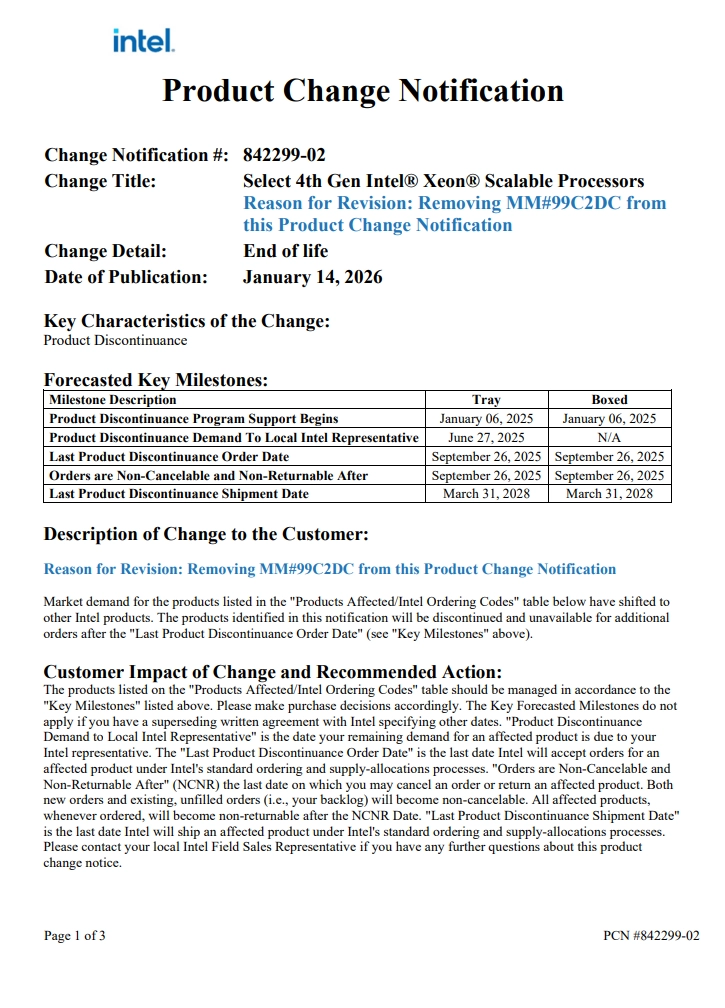
On the data center side, Intel’s Sapphire Rapids notice provides a longer tail, but with an important detail: the last product discontinuance order date is September 26, 2025, while the last product discontinuance shipment date extends out to March 31, 2028. This kind of extended shipment horizon is typical for enterprise silicon where customers demand predictable availability windows for qualification, validation, and fleet deployment, but the closed ordering window still means procurement teams must align supply commitments earlier than many would expect if they have ongoing platform builds tied to these Xeon Scalable SKUs.
The bigger takeaway is that Intel is continuing to tighten focus around newer platform generations while giving the ecosystem a structured off ramp for older families. For consumers and enthusiasts, the Alder Lake timeline is a clear signal that value friendly 12th gen builds remain viable in the near term, but the safe move for anyone who needs guaranteed sourcing into 2027 is to plan inventory, not assume perpetual availability. For enterprise buyers, Sapphire Rapids remains obtainable through 2028 shipments, but the purchasing leverage shifts heavily toward already placed commitments rather than fresh orders.
If you are tracking platform longevity, which matters more to you right now: maximizing value with proven LGA 1700 era parts while they are still easy to source, or waiting for newer platforms to avoid any end of lifecycle turbulence?
