
Intel Says Core Ultra 200S Plus Is Now Its Fastest Gaming Desktop Line Yet, With Core Ultra 7 270K Plus Moving Past Core i9 14900K
Intel has officially launched the Core Ultra 200S Plus desktop family, and the company is making a bold claim right out of the gate. According to Intel, the new Core Ultra 7 270K Plus is now its fastest desktop gaming processor ever, with internal testing showing it outperforming not only the earlier Core Ultra 7 265K, but also the Core i7 14700K and even the former flagship Core i9 14900K in average gaming performance. Intel announced the Core Ultra 7 270K Plus and Core Ultra 5 250K Plus on March 11, with retail availability starting March 26 at suggested prices of $299 and $199 respectively.
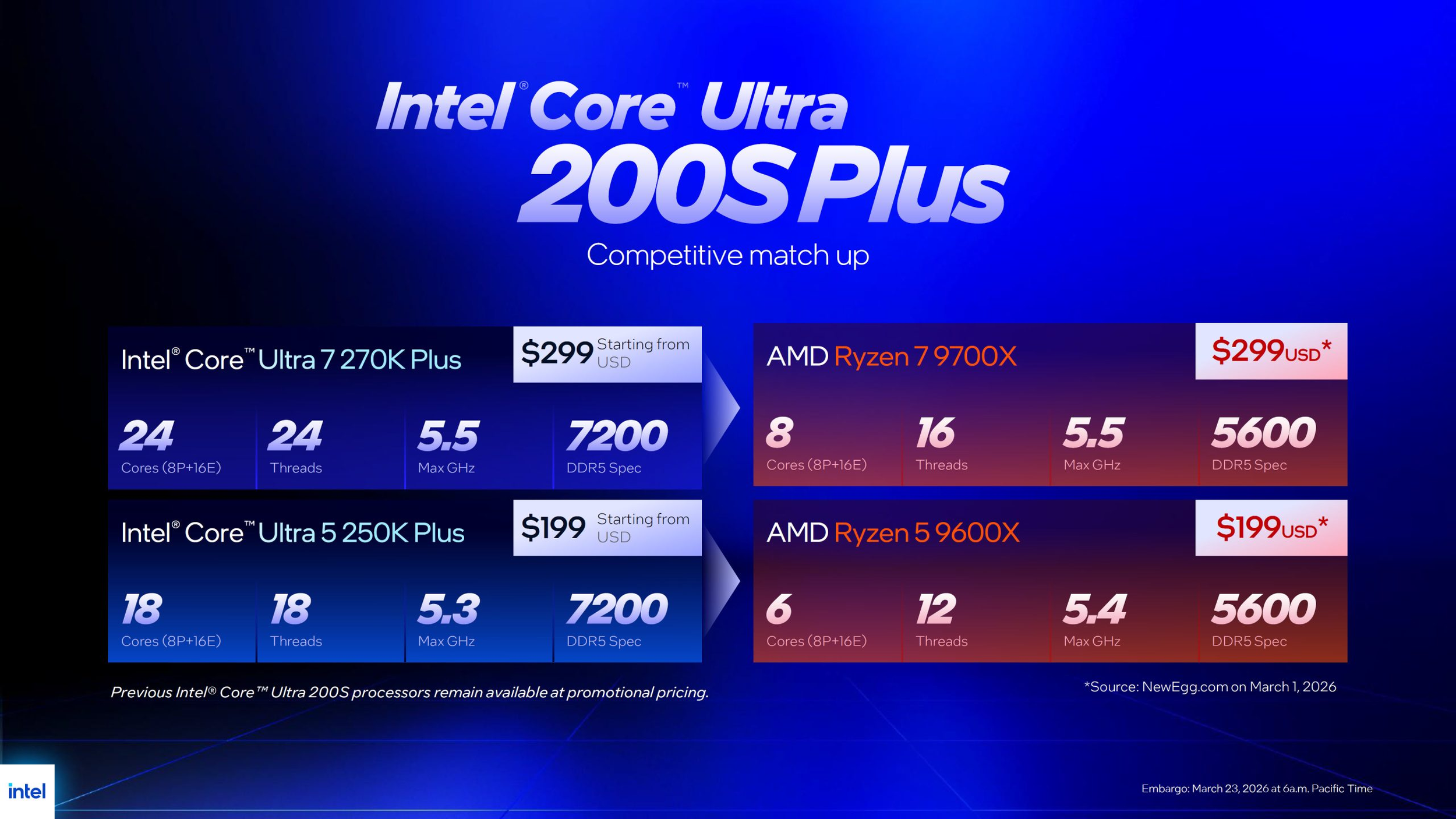
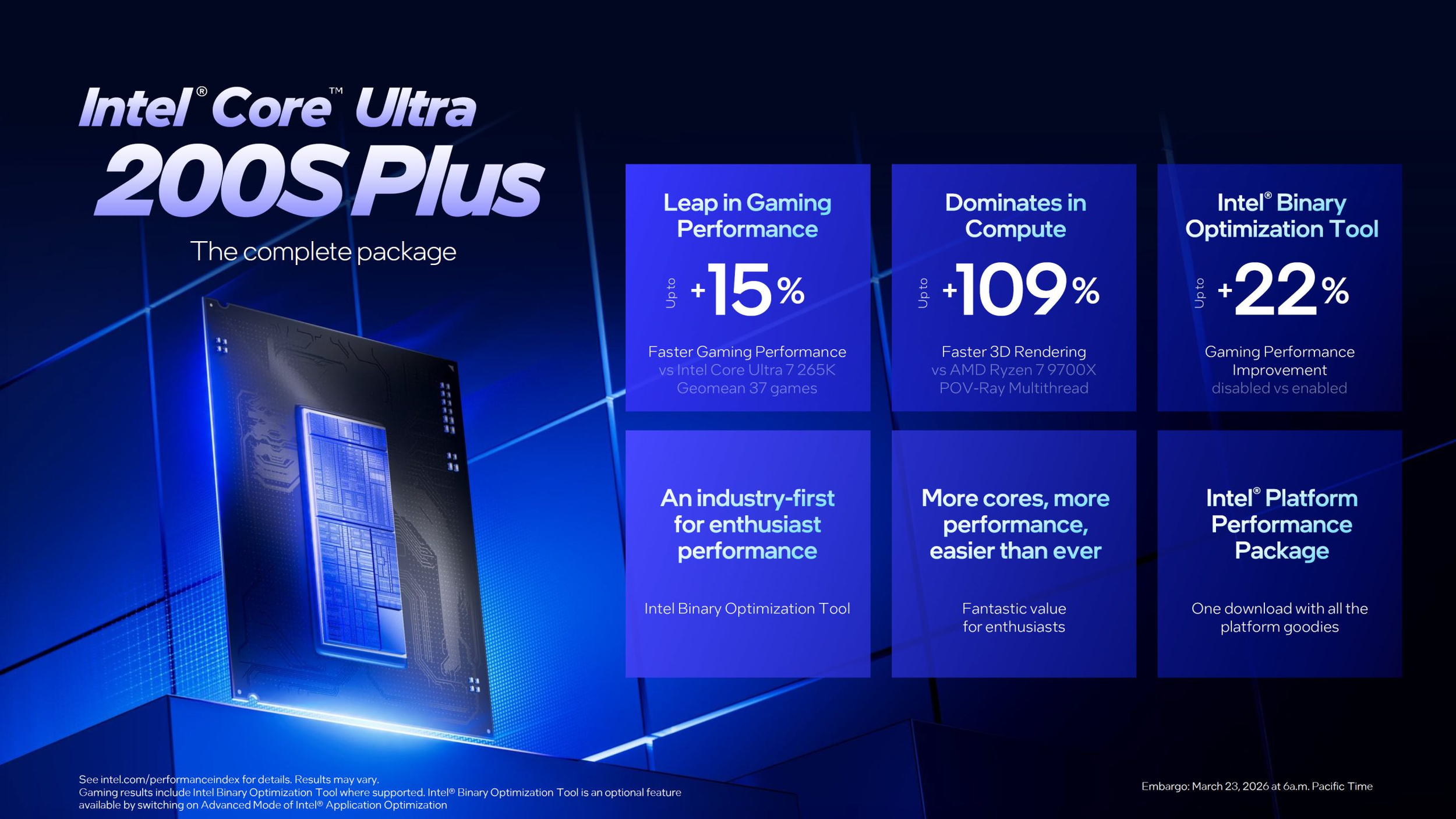
The uplift, at least on paper, is meaningful for what is effectively a refined Arrow Lake desktop refresh rather than an entirely new architecture. Intel says the Core Ultra 7 270K Plus delivers up to 15% faster geomean gaming performance versus existing Core Ultra Series 2 desktop processors, while also bringing 4 more efficiency cores, a die to die frequency increase of up to 900 MHz, DDR5 7200 support, and a new Binary Optimization Tool aimed at improving native performance in select games. The company also says the chips remain compatible with existing 800 series motherboards, which gives current LGA 1851 users a simpler upgrade path than a full platform jump.
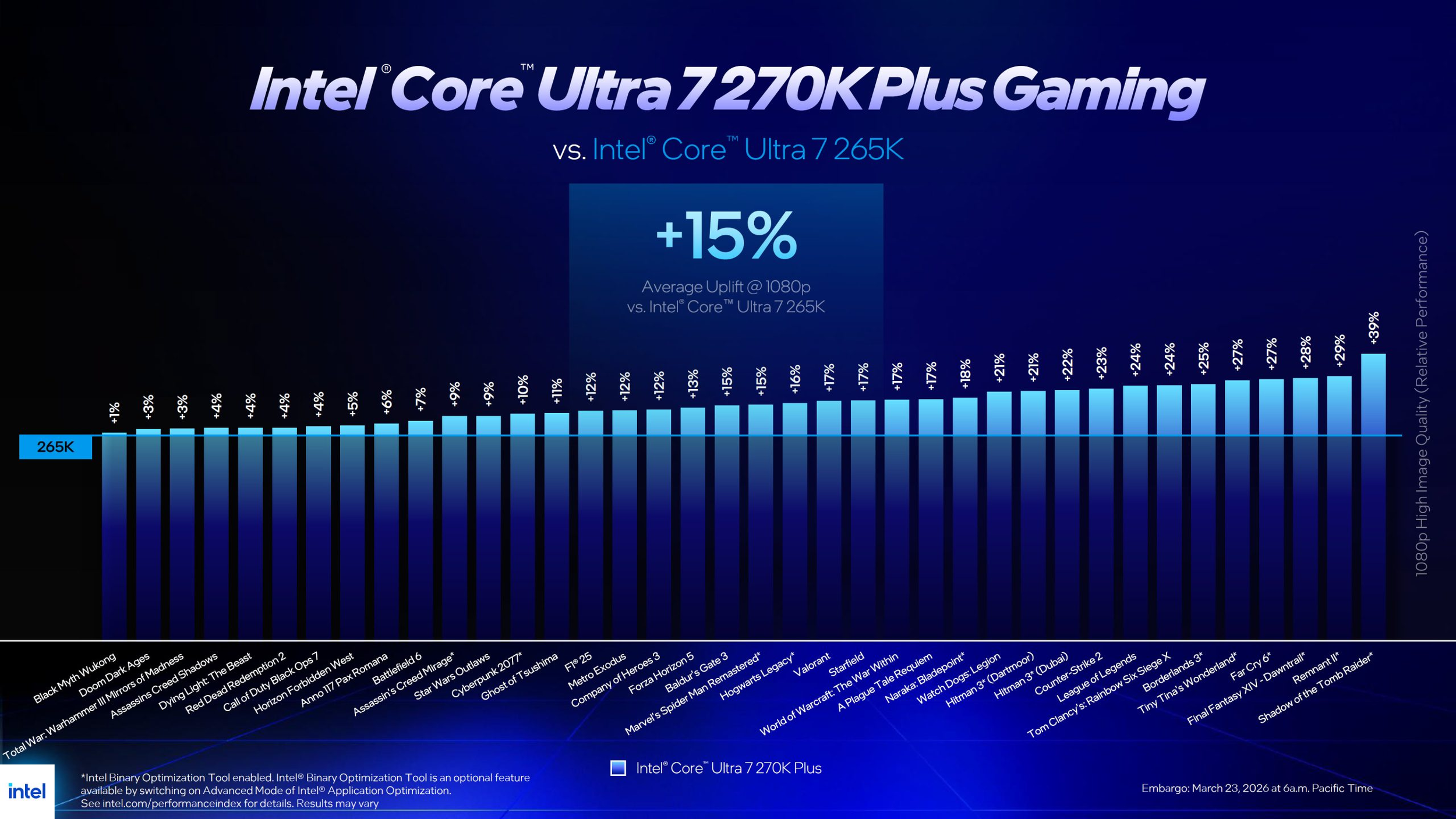
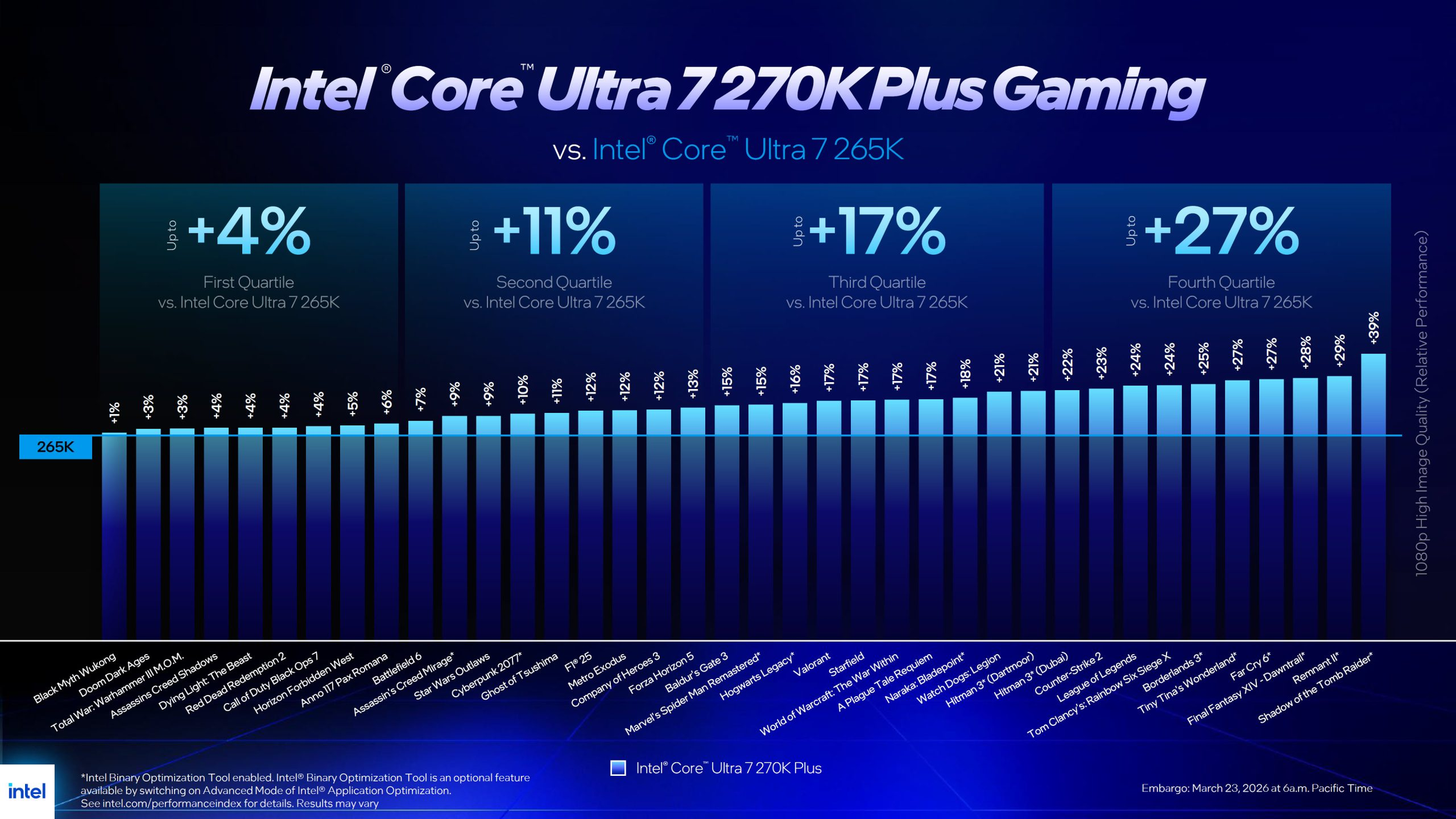
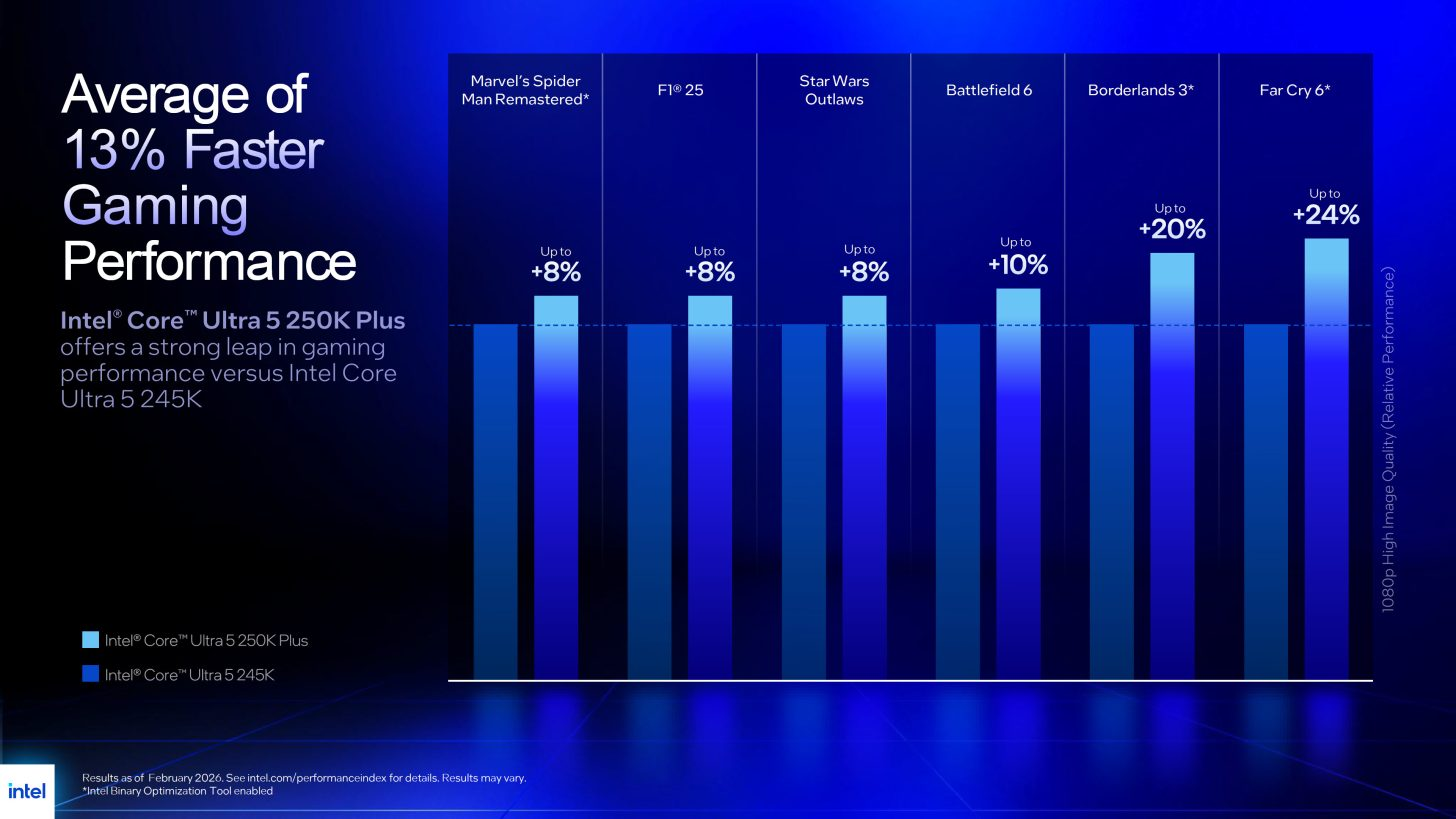
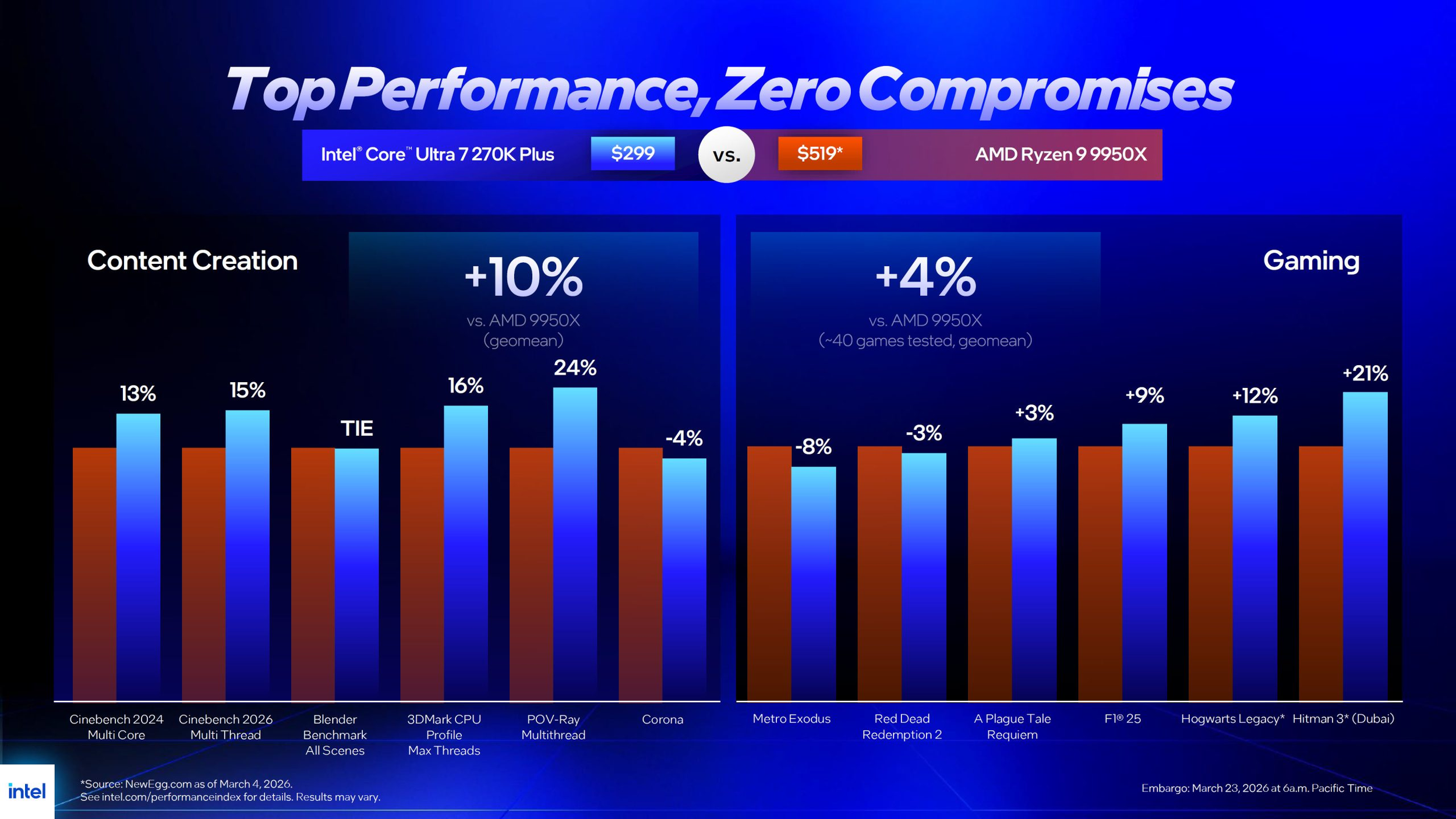
In Intel’s own performance deck, the Core Ultra 7 270K Plus is presented as 15% faster on average in gaming than the Core Ultra 7 265K, 9% ahead of the Core i7 14700K, 5% ahead of the Core i9 14900K, and 4% ahead of the Ryzen 7 9700X in its segment. The Core Ultra 5 250K Plus is positioned similarly against the Ryzen 5 9600X, with Intel leaning heavily on stronger application and multi core throughput as part of the value argument. These are all Intel supplied numbers, so they should be read as vendor benchmarks rather than final market consensus, but they clearly show how aggressively Intel is trying to reposition its mainstream desktop stack.
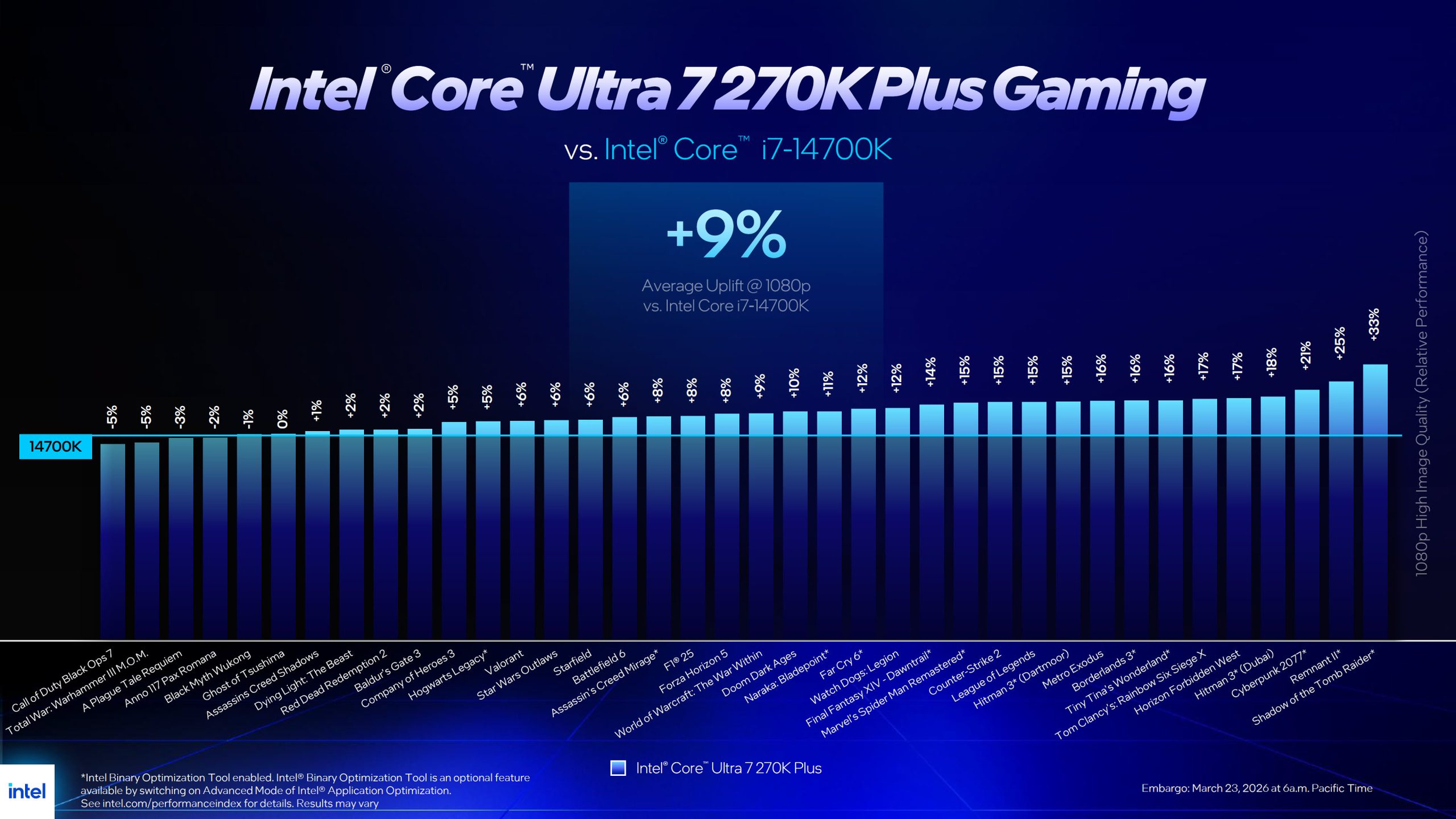
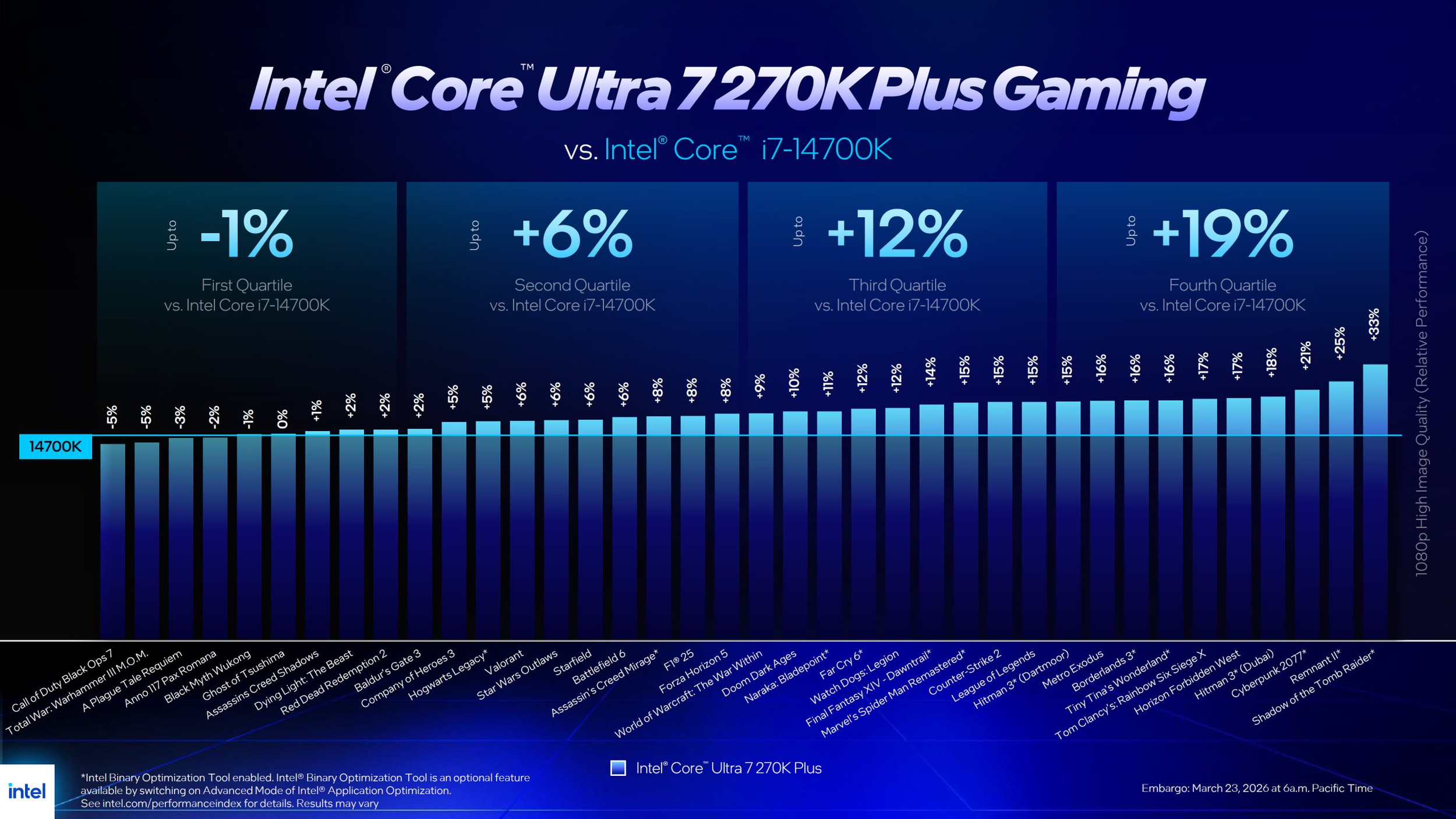
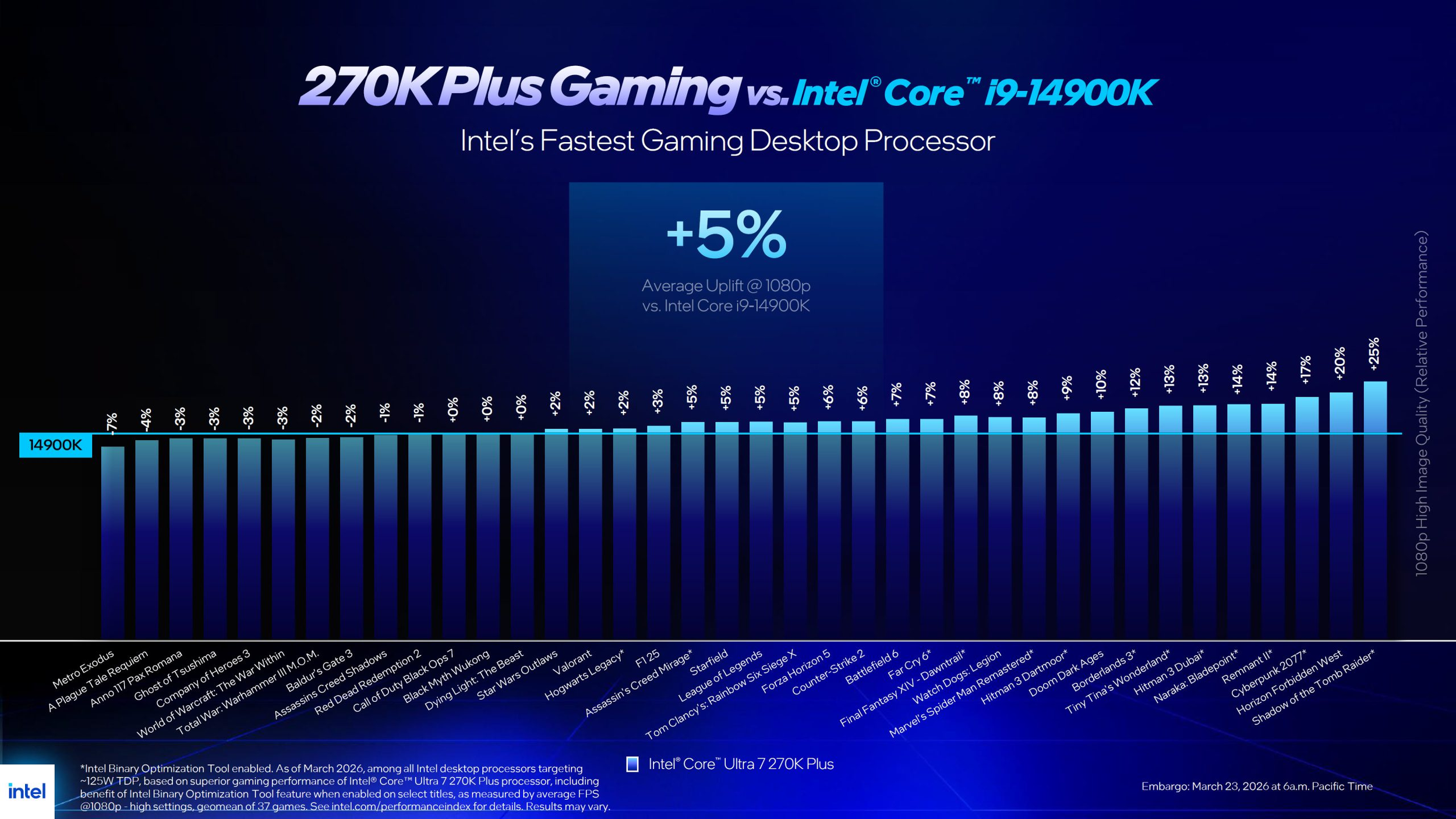
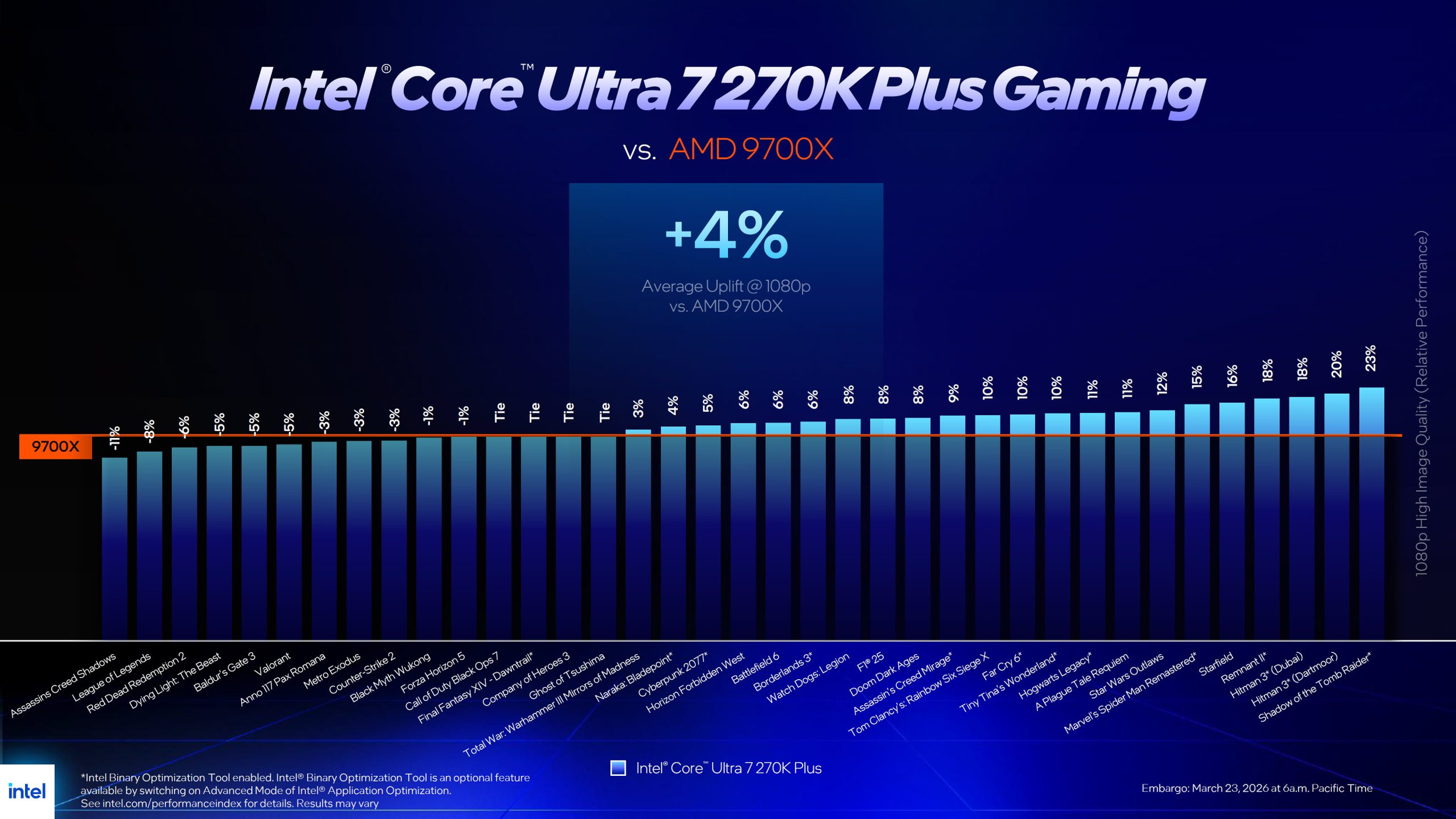
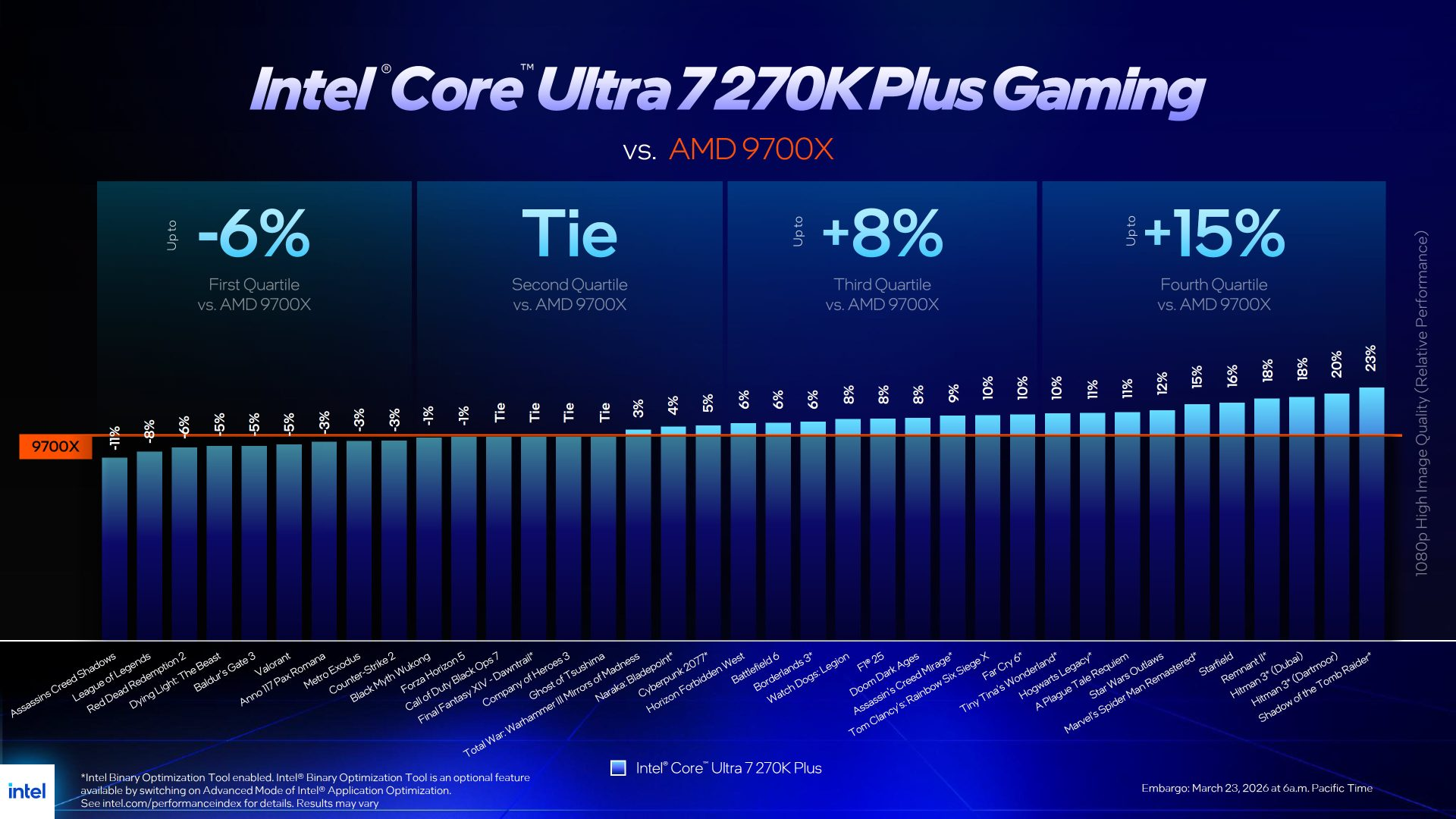
What strengthens Intel’s case is that the early independent picture appears broadly positive, even if it is not identical to Intel’s own framing. Notebookcheck’s review describes the Core Ultra 200S Plus launch as a strong overall package with attractive price to performance, especially in rendering and productivity, while also noting that gaming results are more mixed depending on the title. It specifically says the Core Ultra 7 270K Plus and Core Ultra 5 250K Plus make a convincing impression overall, but also notes that some scenarios still leave the Core i9 14900K ahead. That matters, because it suggests Intel’s “fastest gaming CPU” positioning is rooted in averaged internal results rather than universal dominance across every workload and game.
The platform story is where things get more complicated. Intel is clearly offering stronger value than before with the new Plus parts, especially for users already on Z890 or another 800 series motherboard, but LGA 1851 still looks like a shorter term platform than AMD’s AM5 from a buyer confidence perspective. Intel has kept these chips on the same socket and board ecosystem today, but public discussion around Nova Lake and future socket plans continues to create uncertainty around how much runway this platform still has. That does not weaken the chips themselves, but it does affect the buying calculus for new builders deciding between Intel’s stronger near term value and AMD’s longer term platform continuity. This last point is partly an inference based on current market context, rather than a newly confirmed Intel roadmap statement.
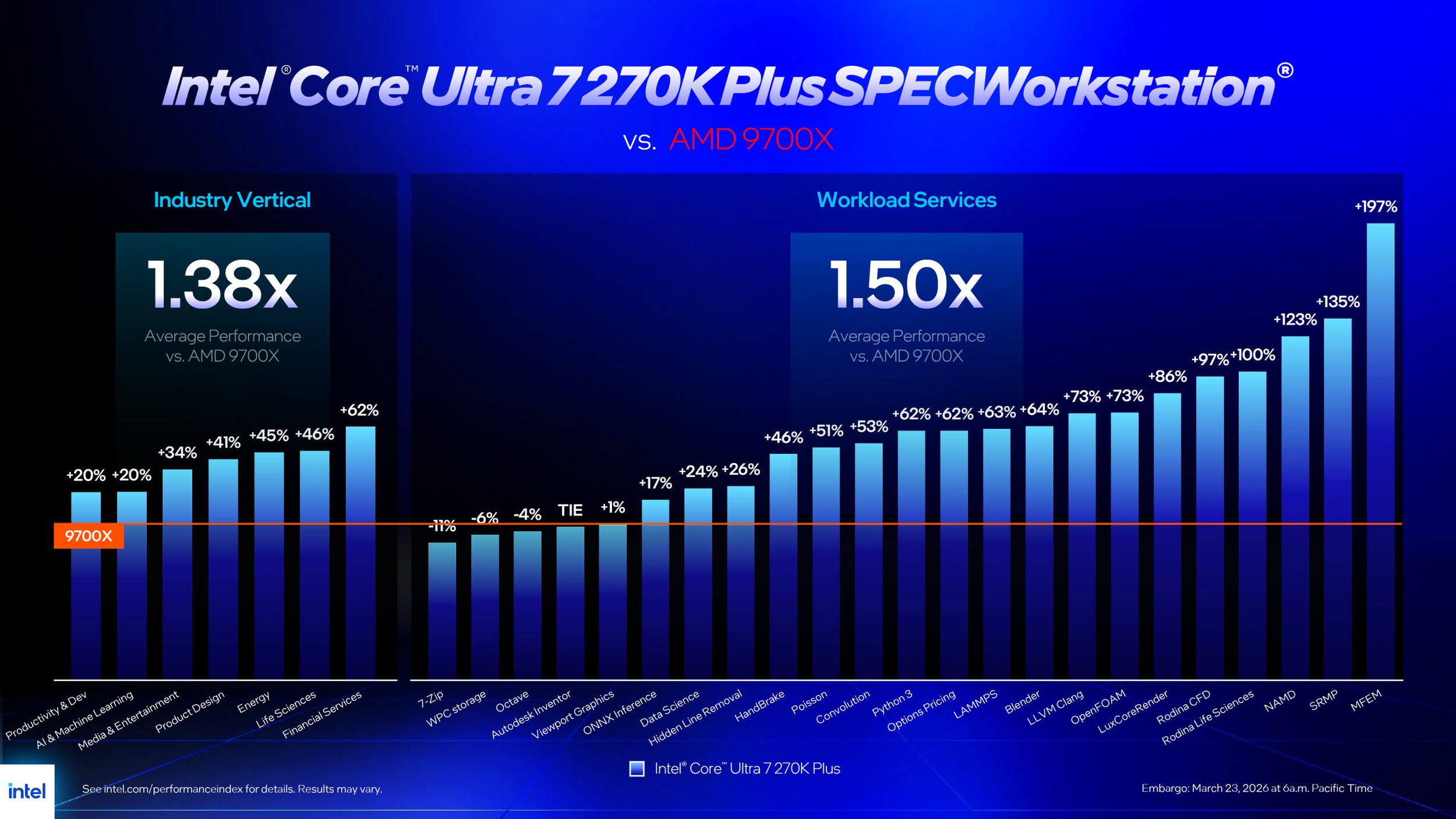
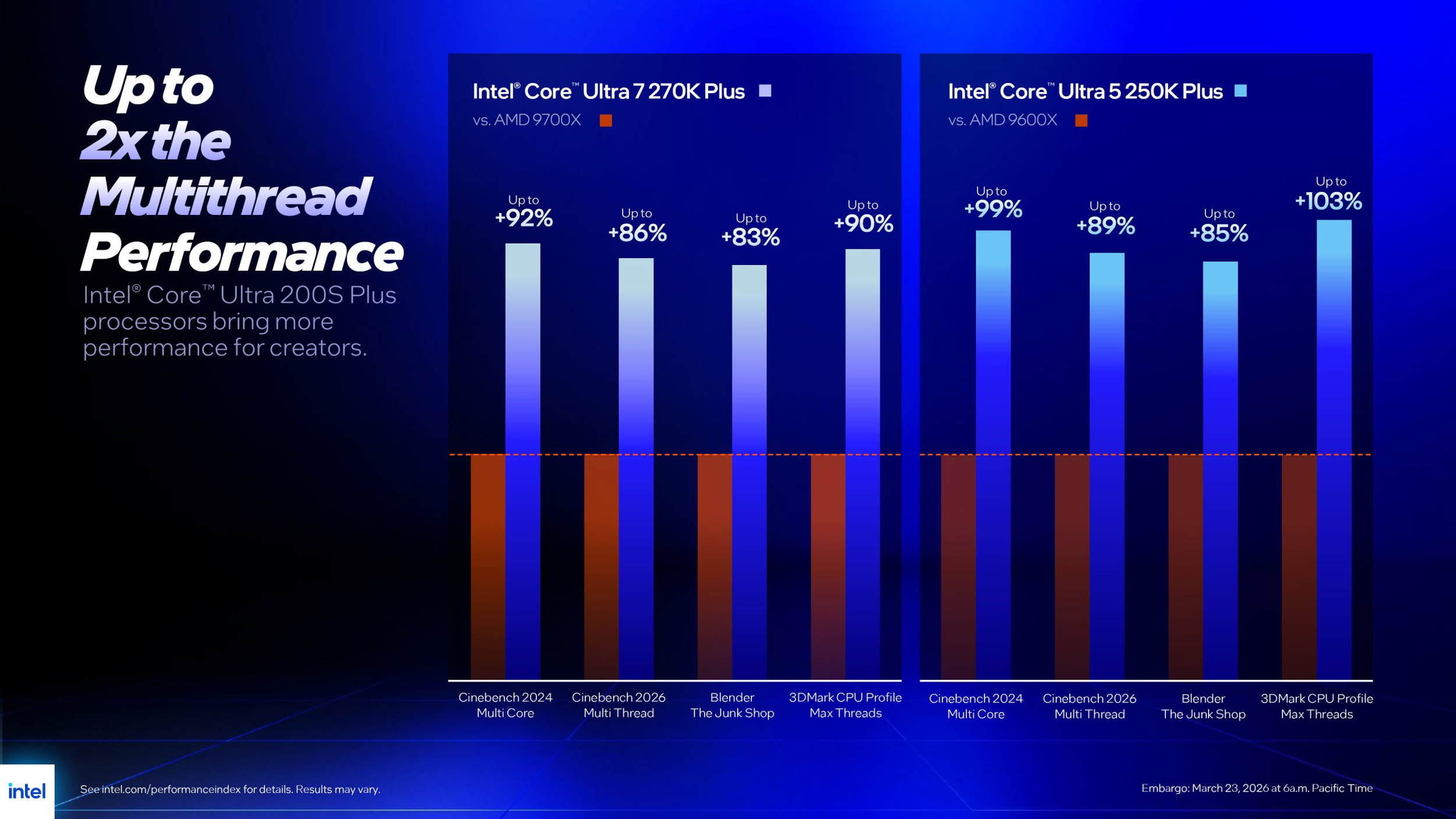
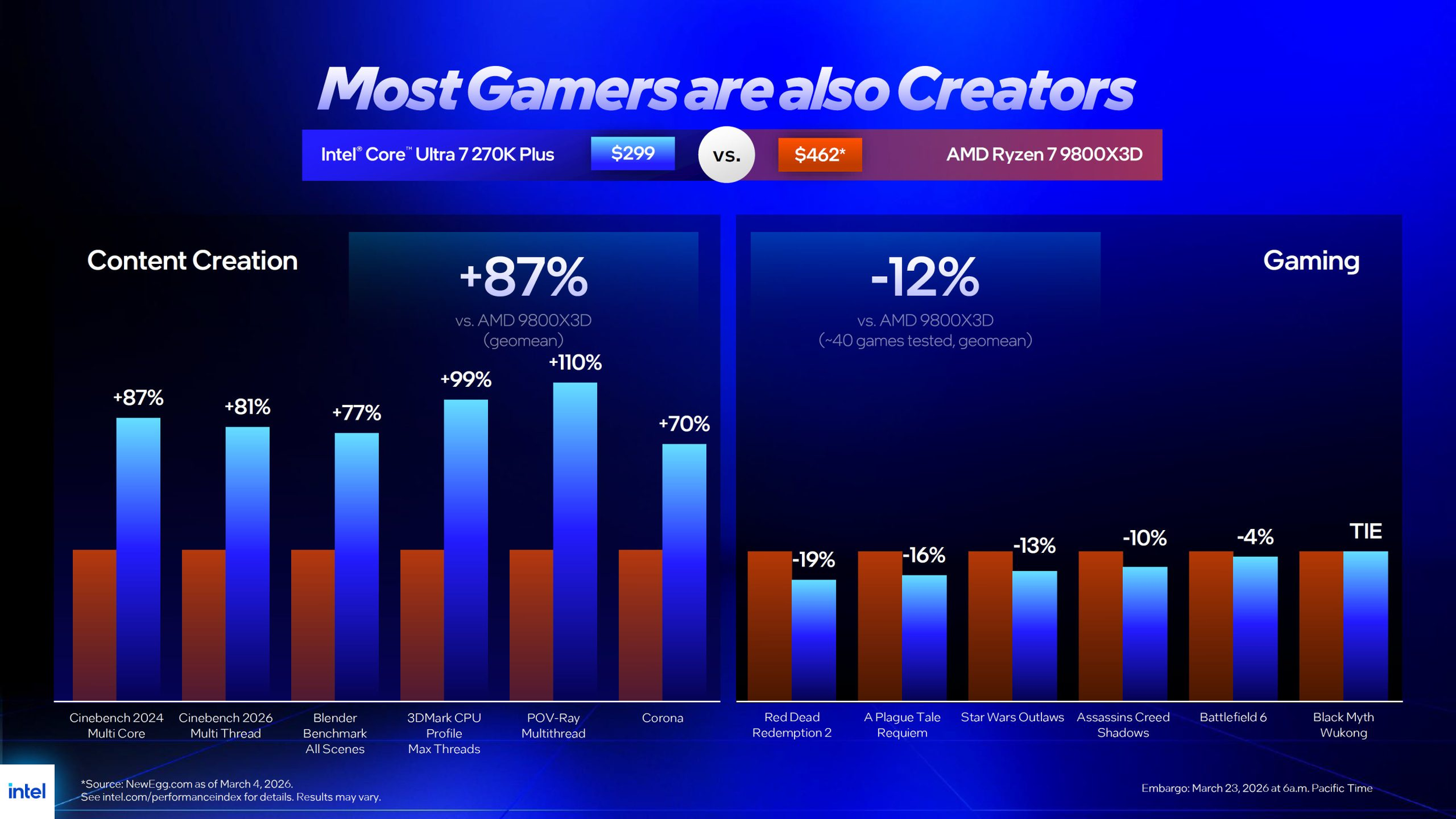
For creators and mixed use buyers, however, Intel’s message is straightforward. The company is not trying to beat AMD’s X3D chips purely on cache driven gaming leadership. Instead, it is pitching the Core Ultra 200S Plus family as a more balanced proposition where gaming is now much closer, while multi core and creator workloads can swing much harder in Intel’s favor at the same price tiers. If those internal numbers hold up across broader review coverage, the Core Ultra 7 270K Plus in particular could become one of Intel’s strongest desktop value plays in a long time.
Below are the official benchmark figures Intel shared for the Core Ultra 7 270K Plus and Core Ultra 5 250K Plus against the Ryzen 7 9700X and Ryzen 5 9600X. These are Intel’s own results, not third party aggregate testing.
| Benchmark | Intel Core Ultra 7 270K Plus | AMD Ryzen 7 9700X | Intel Core Ultra 5 250K Plus | AMD Ryzen 5 9600X |
|---|---|---|---|---|
| Cinebench 2024 Single Core CPU (10 Min) | 145 | 136 | 140 | 134 |
| Cinebench 2024 Multi Core CPU (10 Min) | 2515 | 1307 | 1872 | 943 |
| Cinebench 2026 Single Core (10 Min) | 596 | 551 | 572 | 543 |
| Cinebench 2026 Multi Core (10 Min) | 10081 | 5421 | 7427 | 3933 |
| Geekbench 6.3 Single Core | 3325 | 3376 | 3220 | 3343 |
| Geekbench 6.3 Multi Core | 23966 | 17020 | 20643 | 14672 |
| CrossMark Overall Score (Extended) | 2610 | 2291 | 2355 | 2204 |
| Procyon Office Productivity Overall | 10088 | 9551 | 9490 | 9555 |
| PugetBench for Creators Premiere Pro (v25.1) Overall Score | 157607 | 132212 | 149663 | 125901 |
| PugetBench for Creators Photoshop (v26.2) Overall Score | 11478 | 13562 | 11298 | 13050 |
| Blender Benchmark CPU (v4.3) Monster | 281 | 148 | 199 | 104 |
| Blender Benchmark CPU (v4.3) Junkshop | 187 | 103 | 135 | 73 |
| Blender Benchmark CPU (v4.3) Classroom | 141 | 79 | 100 | 55 |
| Cyberpunk 2077 | 229 | 219 | 219 | 207 |
| Shadow of the Tomb Raider | 364 | 296 | 287 | 289 |
| Total War: Warhammer III Mirrors of Madness Benchmark | 171 | 167 | 165 | 142 |
| Final Fantasy XIV: Dawntrail Benchmark | 281 | 281 | 244 | 286 |
For Intel, this launch is less about reclaiming every absolute crown and more about resetting the conversation around desktop value. The Core Ultra 200S Plus lineup looks like a practical correction to the original 200S family, with more cores, higher memory support, better gaming, and much stronger creator positioning at aggressive prices. That may not fully erase AMD’s platform advantage or X3D halo, but it absolutely makes Intel’s mainstream desktop lineup much more competitive than it looked a few months ago.
Do you think Intel’s new value focused approach with Core Ultra 200S Plus is enough to win back desktop builders, or does AM5 still remain the smarter long term platform bet?
