
Intel Misses Another AI Opportunity With SambaNova as Acquisition Talks Cool Off, Settling for Xeon CPU Collaboration Instead
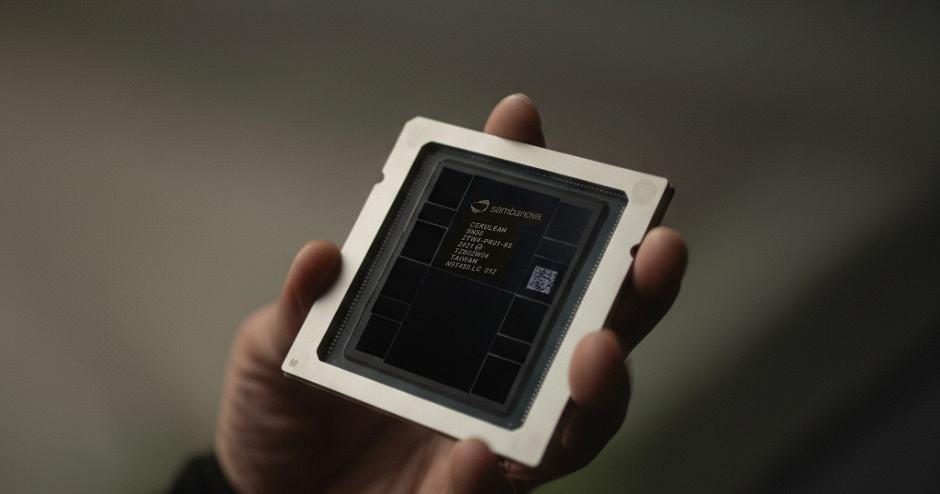
Intel’s AI narrative keeps drifting into a familiar pattern: big strategic intent, followed by a narrower execution lane that looks more like damage control than disruption. The latest signal is Intel’s decision to move forward with a multiyear collaboration with SambaNova Systems centered on Xeon based AI inference infrastructure, rather than pursuing the acquisition path that many in the market viewed as a shortcut to a credible inference focused platform.
In Intel’s own announcement, the company frames the partnership as part of a broader push toward heterogeneous AI data centers, pairing Intel Xeon processors with Intel GPUs, networking, storage, and SambaNova systems to pursue what it calls a multibillion dollar inference market opportunity. The message is calibrated to reassure investors that Intel is still investing across GPU IP, architecture, products, software, and systems, while also positioning SambaNova as a complementary acceleration layer rather than a replacement strategy.
From a technology lens, SambaNova’s value proposition is not subtle. The company’s Reconfigurable Data Unit architecture targets end to end neural network graph mapping directly into hardware, aligning with the current industry swing toward inference efficiency, agentic workloads, and serving economics rather than only raw training throughput. In the narrative provided, SambaNova’s newer SN50 chip is positioned as delivering 3x lower costs than GPUs in agentic AI workloads and 5x more compute per accelerator than its prior generation, which is precisely the kind of inference leverage Intel has been missing while competitors built stronger platform gravity across silicon plus software plus ecosystem.
The capital story makes this even more interesting. SambaNova is reportedly raising 350M in a Series E round, backed by major names including SoftBank and Intel Capital, and Intel CEO Lip Bu Tan is described as an early investor through Walden Capital. Net net, Intel gets strategic proximity and optionality without paying an acquisition premium, while SambaNova gets enterprise distribution power and a data center CPU anchor that can reduce friction in procurement conversations. It is a pragmatic alignment, but it also highlights Intel’s current posture: partner into relevance rather than buy into leadership.
If Intel and SambaNova execute cleanly, the near term win is straightforward: inference stacks that look enterprise friendly on paper, with Xeon as the control plane and SambaNova systems as a targeted accelerator tier where workloads justify it. That is the safe play. The higher impact play, and the one Intel is clearly hinting at, is a repeatable heterogeneous reference architecture where Intel CPUs, Intel GPUs, and SambaNova systems are deployed with clear workload partitioning and predictable performance per dollar.
The risk is timing and cohesion. Intel has already been late to the training narrative, and inference is moving fast, with buyers increasingly demanding measurable total cost of ownership proof rather than roadmap promises. If this partnership stalls at marketing language without tight deployment recipes and verified benchmarks, Intel will have effectively rented AI credibility instead of building it.
For this partnership to translate into real market momentum, 3 checkpoints will matter more than slogans:
Independent performance and cost validation for targeted inference workloads, including end to end serving metrics, not just accelerator side throughput.
Reference designs and deployment playbooks that make it easy for enterprises to replicate the stack, including networking, storage, and software orchestration details.
Clear workload segmentation explaining where Intel GPUs are the right fit versus where SambaNova acceleration is the right fit, so customers do not see a confusing internal competition story.
If Intel can turn this into a repeatable platform motion with measurable wins, this is a smart pivot. If not, it will read like another missed inflection point where Intel chose collaboration optics over decisive platform consolidation.
If you were building an AI inference cluster today, would you rather bet on a tightly integrated Intel plus SambaNova heterogeneous stack, or go all in on a single vendor platform for simplicity and ecosystem depth, and why?
