
Intel Core Series 3 Wildcat Lake Laptops Begin Arriving in China as Mainstream AI PC Competition Expands
Intel’s Core Series 3 Wildcat Lake laptops are beginning to appear through Chinese retail channels, signaling the first wave of mainstream systems built around Intel’s more affordable AI capable processor platform. According to a retail listing spotted on JD.com and shared by Victor_M, several Intel Core Series 3 laptops from brands including Honor and ASUS have appeared online with preorder appointment windows ending on May 18 and May 22.
Wildcat Lake laptops available on May 18? pic.twitter.com/OZsCRvuL9r
— 孤城Hardware (@realVictor_M) May 17, 2026
The first listings include 14 inch and 16 inch laptop designs, with more OEM models expected to follow as Intel’s new entry and mainstream class processors move into broader retail availability. While the Honor model was listed at 9999 RMB, that pricing currently appears to be a placeholder rather than a final retail price. The listed models appear to use the Intel Core 5 320, placing them in the mainstream productivity category rather than the higher end Core 7 or lower tier Core 3 segments.
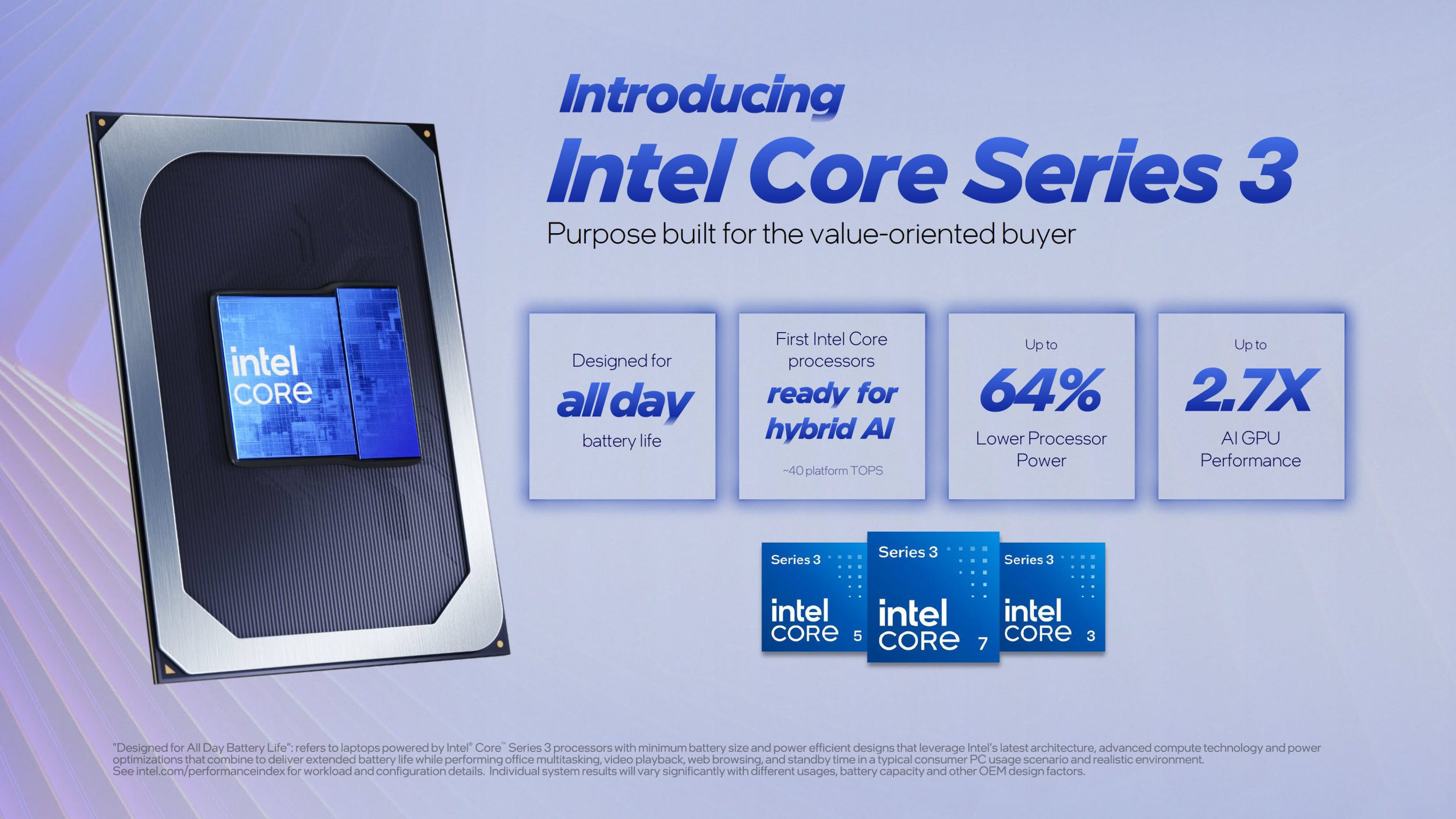
Wildcat Lake is Intel’s Core Series 3 platform, designed to bring several technologies from the Panther Lake generation into more affordable laptops. Intel positions Core Series 3 as its first hybrid AI ready Core Series processor family, with support for AI workloads through up to 40 platform TOPS. The platform also includes modern connectivity features such as up to 2 integrated Thunderbolt 4 ports, Intel WiFi 7 R2, and Intel Bluetooth 6. Intel also claims improved battery life and efficiency, with up to 64% lower processor power and up to 2.7X AI GPU performance compared with previous generation Intel Core 7 150U processors.
From a platform strategy perspective, Wildcat Lake is built for users who need modern everyday performance without the premium pricing of higher end Core Ultra Series 3 laptops. These systems are aimed at students, office users, content light creators, and mainstream consumers who want AI PC features, better battery life, and stronger integrated graphics without moving into the high cost ultrabook segment.
The comparison with MacBook Neo is especially interesting because both products target value focused mobile computing, but their technical direction is very different. MacBook Neo is expected to rely on a smartphone class SoC approach, while Intel is bringing a scaled version of its Panther Lake technology stack into Wildcat Lake. That gives Intel a more conventional PC platform with x86 compatibility, broader Windows software support, and stronger flexibility for OEM design.
In terms of architecture, Intel Core Series 3 uses the same general processor building blocks as Panther Lake, including Cougar Cove P cores, Darkmont E cores, Xe3 integrated graphics, and the NPU5 AI engine. The difference is that Wildcat Lake reduces the overall specifications to fit lower cost, lower power, and mainstream laptop designs. This is the typical strategy for a value focused product line, where the goal is not to compete with the highest end mobile processors, but to deliver enough modern performance for the largest part of the notebook market.
Wildcat Lake Core Series 3 chips offer up to 6 CPU cores in a 2 P core and 4 E core configuration. The integrated GPU is more limited than Panther Lake, with up to 2 Xe3 graphics cores, while Panther Lake can start with 4 Xe3 cores and scale much higher depending on the model. Even with that reduction, Intel is still positioning Wildcat Lake as a meaningful upgrade for everyday users, especially for light AI acceleration, browser based work, office tasks, media, video conferencing, and casual content workflows.
The product lineup includes 6 consumer SKUs across Core 7, Core 5, and Core 3 branding. Most models feature a 6 core layout, while the Core 3 304 uses a 5 core configuration and includes only 1 Xe3 graphics core. The Core 5 320 seen in the early Chinese listings is positioned as one of the mainstream options, offering 6 cores, up to 4.6 GHz, a 16 TOPS NPU, and Xe3 integrated graphics. Industry coverage has also noted that these processors are aimed at lower cost laptop designs rather than premium Core Ultra systems.
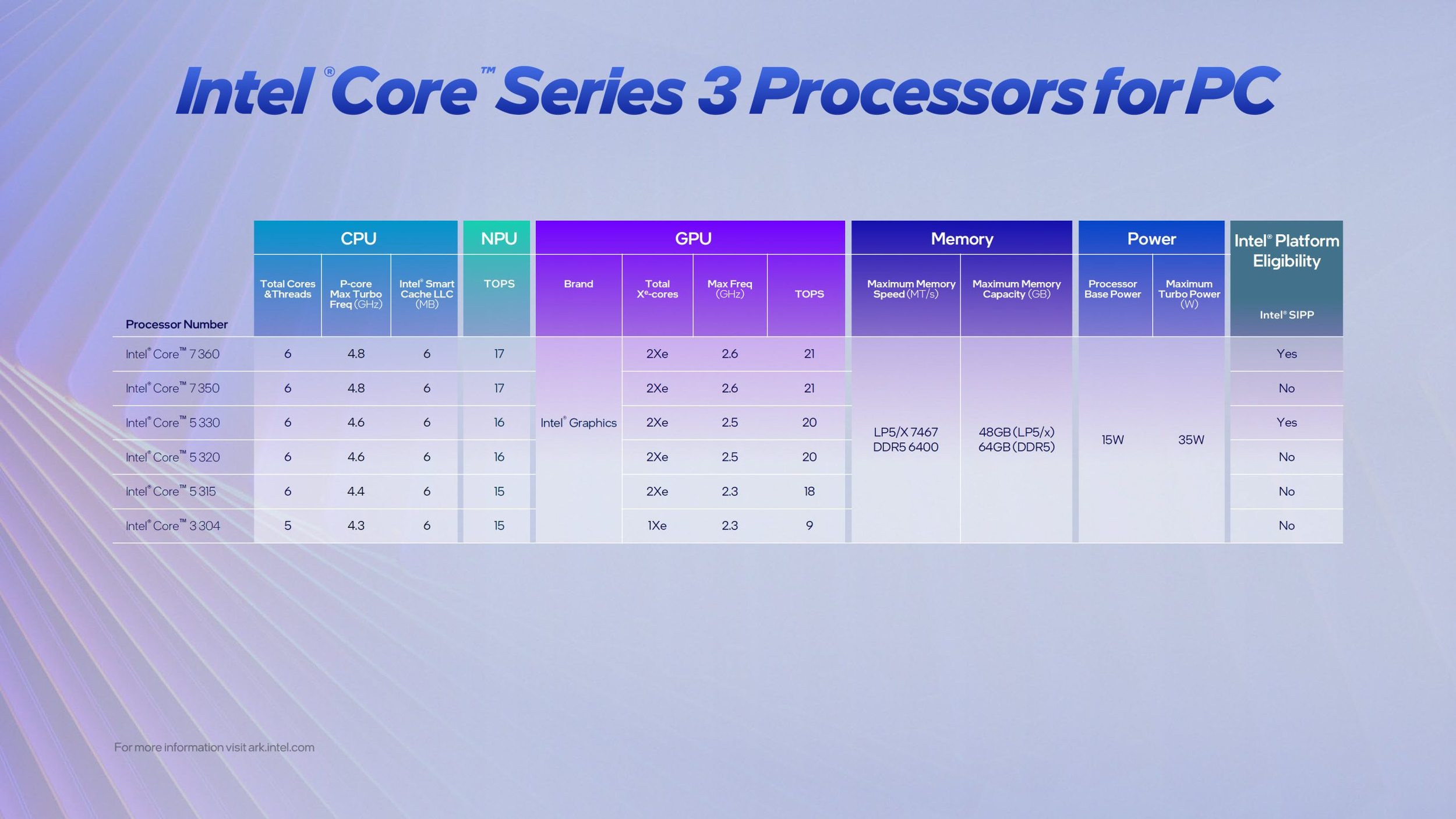
All Core Series 3 SKUs are expected to operate with a 15W base power rating and a maximum power rating of 35W. That makes them suitable for thin and light notebooks, mainstream productivity laptops, and affordable AI PC designs where battery life and system cost are just as important as peak performance.
For Intel, this launch is strategically important because the company needs a strong answer in the affordable laptop space. Premium AI PCs have generated attention, but the larger volume opportunity is still in mainstream devices where price, availability, and battery life matter most. If Wildcat Lake laptops can deliver balanced performance at competitive pricing, Intel could strengthen its position against both Windows on Arm designs and Apple’s lower cost MacBook strategy.
For ASUS, Honor, and other OEM partners, these chips give manufacturers a way to refresh everyday laptops with newer connectivity, AI support, and modern platform features without moving directly into expensive flagship designs. That could make Wildcat Lake one of Intel’s most important mobile launches for users who want modern specifications but do not need a gaming laptop or premium creator system.
The first Chinese listings suggest that retail availability is moving quickly, and more models are expected to appear in the United States, Europe, and other major markets. Final pricing will be the key factor. If Core Series 3 laptops arrive at aggressive mainstream prices, they could become a practical alternative for students, office users, and buyers looking for a Windows laptop with AI ready capabilities and long battery life.
For gamers, Wildcat Lake is not expected to replace dedicated gaming laptops or higher end Core Ultra systems. However, the Xe3 graphics architecture could still provide a better casual gaming experience than older entry level laptop chips, especially for esports titles, cloud gaming, retro games, and lighter PC releases. The real value will come from whether OEMs pair these chips with good displays, adequate memory, fast storage, and fair pricing.
Intel’s Wildcat Lake strategy is clear. Instead of reserving its newest technologies only for premium laptops, the company is bringing a scaled version of Panther Lake into the mainstream market. With Core Series 3 laptops now appearing through Chinese retailers, the next phase will be global pricing, real world battery testing, and whether Intel can turn AI PC messaging into a practical value proposition for everyday buyers.
Would you consider a Core Series 3 Wildcat Lake laptop if the price is right, or would you still prefer waiting for a more powerful Core Ultra model?
