
NVIDIA RTX PRO 6000 Blackwell Pushes Past the $10,000 US Barrier as AI Demand Reshapes GPU Pricing
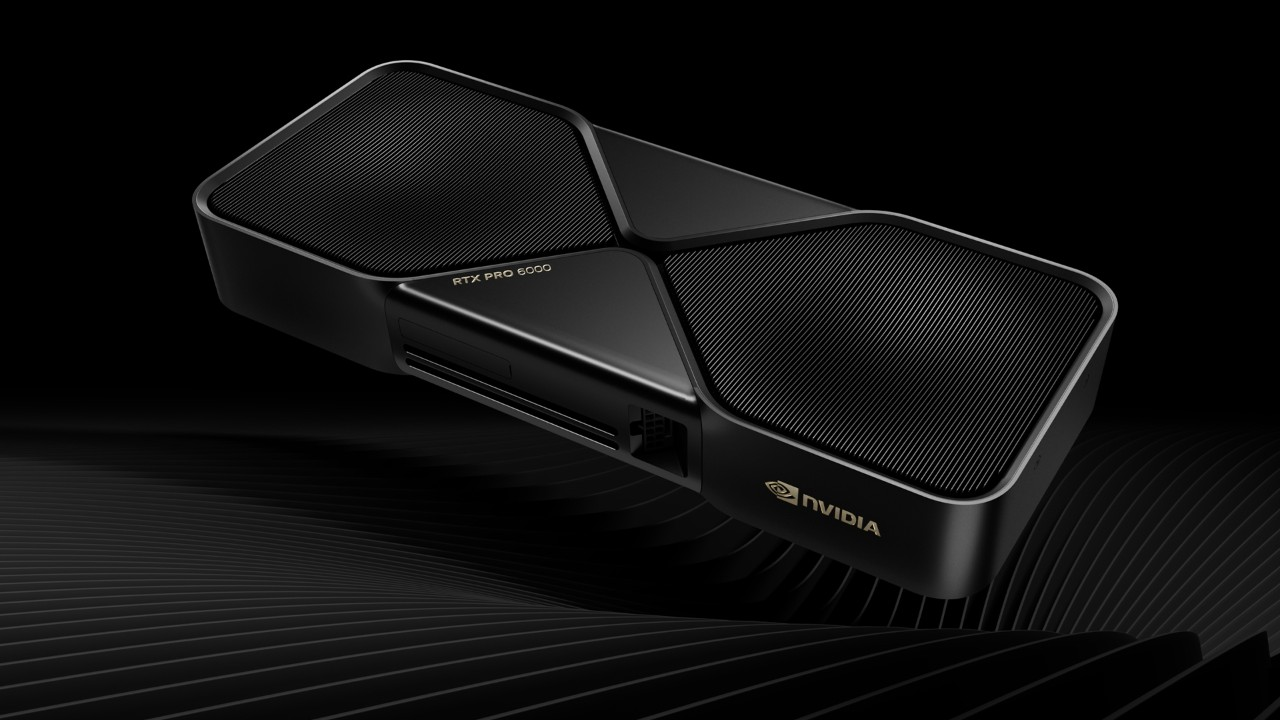
NVIDIA’s fastest professional workstation graphics card, the RTX PRO 6000 Blackwell, is reportedly moving beyond the $10,000 US price barrier at several retailers as demand for AI focused hardware continues to pressure the high end GPU market. The card originally appeared closer to the $8,000 US range, but recent listings now show a steady climb toward 5 figure pricing, with some models already exceeding that threshold.
The price movement was highlighted by Loktar00, who pointed out that the RTX PRO 6000 Blackwell has continued rising in retail channels. NVIDIA’s own store has listed the card around $8,900 US, although availability for the standard workstation model remains limited, with the Max Q version appearing as the available option. Other retailers are showing even higher numbers. Micro Center has reportedly listed the card at $9,999 US after a $1,000 US discount from $10,999 US, while Amazon has shown limited availability around $9,499 US. Server Edition variants are reportedly positioned above $10,000 US, and B&H has been seen listing the workstation model at $11,500 US.
Unfortunately knew it was just a matter of time the rtx 6000 pro just jumped at Microcenter from $8699 to $9999. $9999 is the highest they've ever had it listed at. pic.twitter.com/3xV8Thd4dC
— Loktar 🇺🇸 (@loktar00) May 16, 2026
Newegg currently appears to be one of the lower priced options, with the RTX PRO 6000 Blackwell listed around $9,077 US as part of a deal that includes a free Gigabyte BRIX Mini PC valued near $700 US. Newegg’s product page also lists the card with 96 GB of GDDR7 ECC memory, 24,064 CUDA cores, PCI Express 5.0 x16, 4 DisplayPort 2.1b outputs, 1.8 TB/s memory bandwidth, and a 600 W maximum power rating.
The reason behind the price surge is clear. AI demand continues to absorb every high memory GPU that can handle large models, local inference, development workloads, simulation, rendering, and enterprise class content creation. The RTX PRO 6000 Blackwell is not a mainstream gaming card. It is a professional workstation product designed for users who need massive VRAM capacity, high AI throughput, and driver support for professional software environments.
NVIDIA officially positions the RTX PRO 6000 Blackwell Workstation Edition as its most powerful desktop GPU, built on the Blackwell architecture and equipped with 96 GB of GDDR7 memory for advanced AI and creative workloads. That 96 GB memory capacity is the key reason the card is being targeted by AI developers and professional users. While GeForce cards can offer excellent raw performance, they cannot match the RTX PRO 6000 Blackwell’s memory footprint in a single card design.
The RTX PRO 6000 Blackwell features 24,064 CUDA cores, 752 Tensor cores, 188 RT cores, up to 125 TFLOPS of FP32 performance, and up to 4,000 AI TOPS. It uses 96 GB of GDDR7 ECC memory on a 512 bit interface, delivering up to 1,792 GB/s of memory bandwidth. Compared with the GeForce RTX 5090, which carries 32 GB of GDDR7 memory, the RTX PRO 6000 Blackwell offers 3 times the VRAM capacity, making it much more attractive for AI models and professional workloads that are limited by memory size rather than only compute speed.
Power consumption is also significant. The RTX PRO 6000 Blackwell Workstation Edition is rated at 600 W, using the full power envelope allowed by a single 12V 2x6 16 pin connector. Cooling such a GPU requires serious thermal engineering, and NVIDIA has used a dual slot, dual fan professional design to manage the thermal load inside workstation environments.
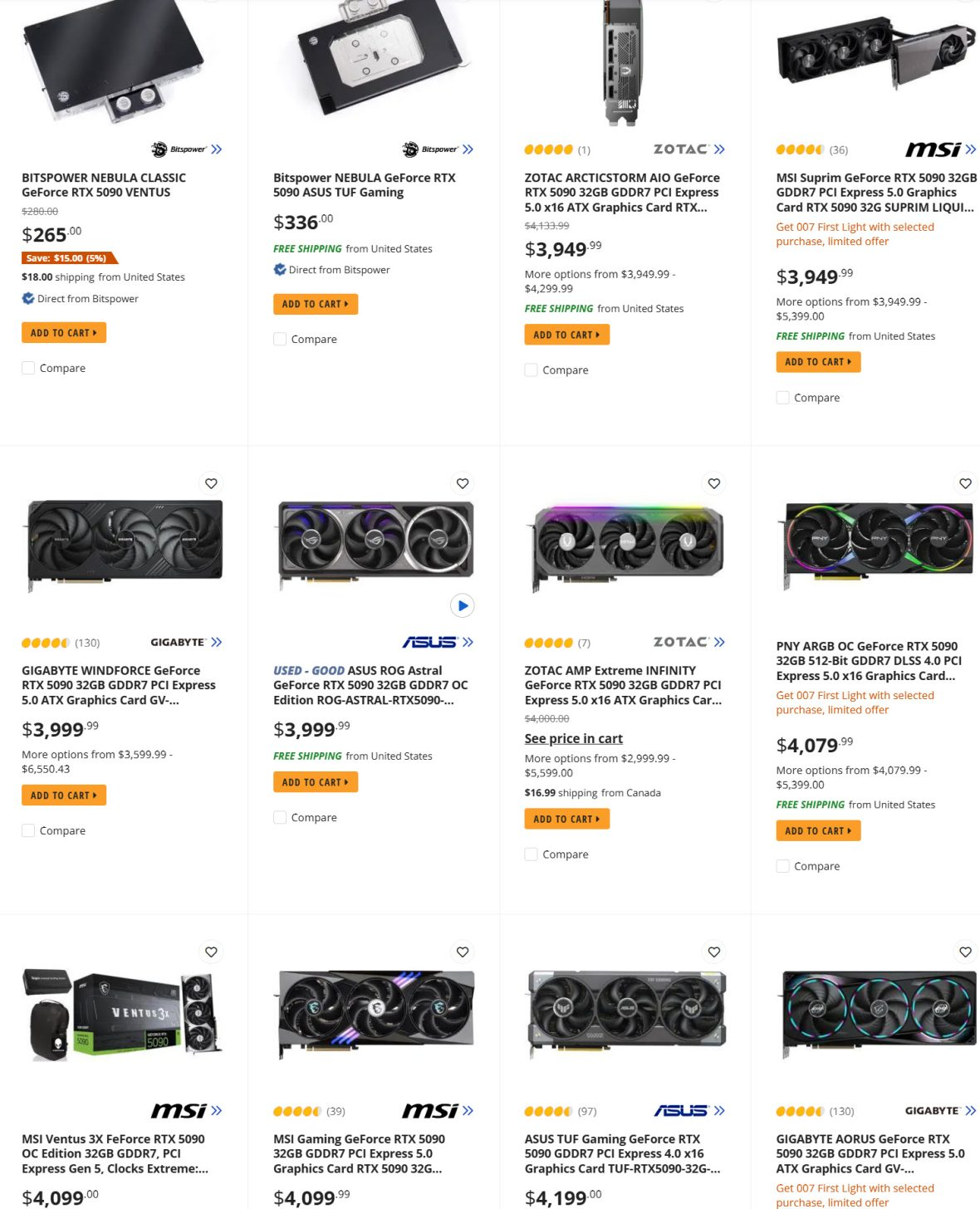
The consumer GPU market is facing a similar pricing challenge. GeForce RTX 5090 cards are now reportedly starting around $4,000 US, with many third party seller listings pushing beyond $6,000 US. While those prices are already far beyond what most PC gaming enthusiasts would consider reasonable, they are still significantly lower than the RTX PRO 6000 Blackwell. For AI focused buyers, a $5,000 US RTX 5090 may still look like a lower cost alternative, but the 32 GB VRAM limit makes it much less practical for certain professional AI workloads.
This is where the RTX PRO 6000 Blackwell becomes uniquely positioned. It is expensive, power hungry, and clearly outside the reach of mainstream users, but it also gives AI developers, visualization teams, engineers, and content professionals a single GPU option with 96 GB of ECC memory. For local AI, model testing, large scene rendering, simulation, 3D production, and workstation based research, that amount of memory can be the difference between running a workload directly or being forced into a more complex multi GPU or cloud based setup.
For the gaming industry, the impact is indirect but important. AI demand is not only affecting data center products. It is also reshaping the pricing of professional GPUs, workstation hardware, and even high end consumer graphics cards. Game developers, 3D artists, technical artists, modding teams, and small studios that rely on powerful local workstations may face higher costs as professional GPU pricing continues to rise.
The RTX PRO 6000 Blackwell is currently unmatched in NVIDIA’s workstation lineup, but the pricing trend shows how fragile the GPU market remains in 2026. As AI demand continues to grow and memory supply stays tight, high capacity graphics cards are becoming strategic hardware rather than ordinary PC components. The result is a market where GPUs with large VRAM pools are being priced less like enthusiast hardware and more like critical infrastructure.
For now, the RTX PRO 6000 Blackwell remains one of the most powerful professional GPUs available, but its climb beyond $10,000 US highlights a broader industry problem. AI acceleration, memory capacity, and workstation performance are becoming increasingly expensive, and that cost pressure is now reaching far beyond data centers.
What do you think about the RTX PRO 6000 Blackwell crossing the $10,000 US price range? Is the 96 GB VRAM capacity enough to justify the cost, or has AI demand pushed professional GPU pricing too far?
