
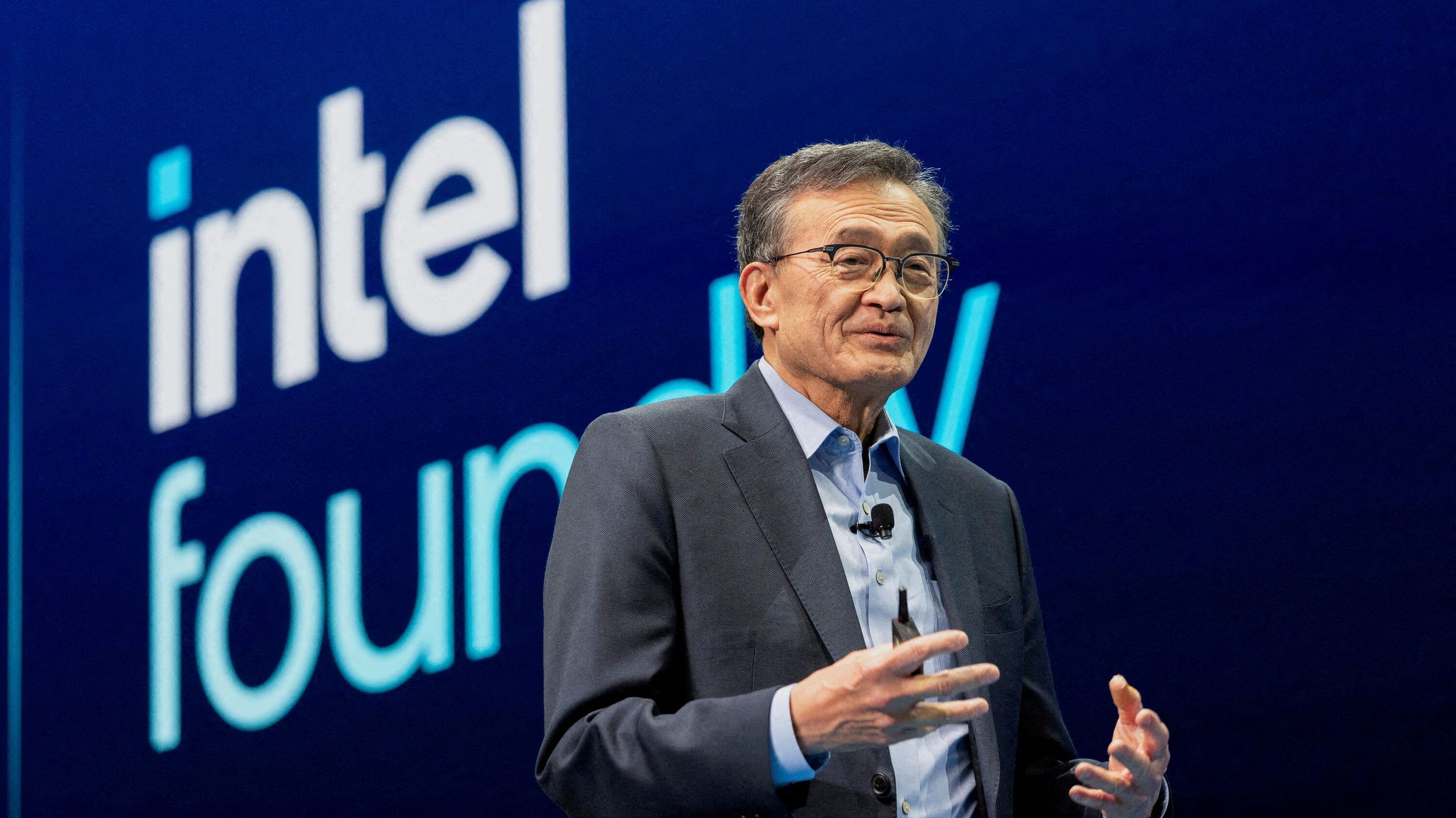
Intel CEO Lip Bu Tan has warned that securing potentially millions or billions of autonomous AI agents could become one of the technology industry's biggest challenges as artificial intelligence moves beyond generating responses toward independently performing complex tasks. Speaking with Hyperbolic CEO Jasper Zhang during an October 28 discussion, Tan expressed confidence that AI could have a greater economic impact than the internet, while highlighting security, semiconductor shortages, electricity demand, and financing as major obstacles to continued expansion.
The discussion followed a $30 million investment round announced by Hyperbolic, led by Walden Catalyst, the venture capital firm founded by Tan and former Samsung executive Young Sohn. The investment will support Hyperbolic's efforts to connect fragmented GPU infrastructure through a unified computing platform, allowing AI developers to access resources across multiple cloud providers and make better use of available hardware.
Tan believes the next phase of AI development will involve enormous numbers of software agents capable of researching information, writing code, managing applications, and performing tasks with limited human supervision. However, unlike conventional AI assistants that primarily respond to questions, autonomous agents may receive permission to access sensitive information, execute software, and interact with external systems. This introduces security risks when an agent misunderstands instructions, encounters malicious content, or attempts operations beyond its assigned authority.
"How do you safeguard them and not have them move into different uncharted areas that they're not authorized to do?"
— Quote by: Lip Bu Tan, Intel CEO
The concern extends beyond traditional cybersecurity threats. AI agents can potentially be manipulated through prompt injection, where malicious instructions hidden inside websites, documents, or emails influence their behavior. An agent with excessive permissions could consequently access confidential information, modify files, or perform unauthorized transactions without the user's knowledge.
According to OWASP's AI Agent Security guidelines, organizations should apply strict permission controls, isolate sensitive operations, monitor agent activity, and require human authorization for consequential actions. These protections become increasingly important as AI systems gain the ability to operate across interconnected applications.
Tan's remarks also align with Microsoft CEO Satya Nadella's position on autonomous AI security, which emphasizes independent security boundaries and the ability to interrupt AI operations. Intel has already expanded its collaboration with CrowdStrike, combining hardware security capabilities with endpoint protection to strengthen enterprise AI deployments.
Beyond cybersecurity, Tan identified shortages of GPUs, memory, and electricity as continuing limitations on AI infrastructure expansion. He also warned that financing could become another major bottleneck as companies face pressure to demonstrate returns on increasingly expensive data center investments. Although he expects some market correction, Tan remains confident that the broader AI industry will continue expanding.
His comments reflect an important shift in the industry's priorities. Building increasingly powerful AI models is only part of the challenge. As those models gain more autonomy, establishing reliable controls over what they can access and execute could become equally important.
Intel's warning highlights a fundamental problem with the industry's rapid transition toward autonomous AI. An AI assistant that provides an incorrect answer is inconvenient, but an agent capable of modifying files, executing code, or accessing private accounts can create considerably more serious consequences.
The solution cannot depend entirely on training models to behave correctly. Security should be enforced through independent permission systems, restricted application access, clear activity logs, and human approval for sensitive operations.
This is particularly relevant to local AI development. Running models on personal hardware offers advantages for privacy and independence, but local execution alone does not guarantee security. An autonomous agent with unrestricted access to a computer can still create problems, even without connecting to cloud services.
Intel also raises an important economic concern. AI companies continue investing heavily in GPUs, memory, and data centers, while consumers face increasing hardware costs. Improving infrastructure utilization and securing existing systems should receive as much attention as continuously expanding computational capacity.
The future of AI should not simply involve making agents more powerful. It should give users greater control over what those agents are permitted to do.
Would you trust an autonomous AI agent to manage your files, applications, and daily tasks, or should AI always require human approval before performing actions that could affect your data?
