

Intel is preparing to transform its quantum computing research into a commercial business, with CEO Lip Bu Tan confirming that the company's planned acquisition of Israeli quantum software developer Classiq will allow it to expand beyond traditional CPUs, GPUs, and AI accelerators. During Intel's Q3 2026 earnings conference, Tan explained that the acquisition represents a major step toward building an integrated quantum computing platform capable of generating revenue from both hardware and software technologies.
The company announced its agreement to acquire Classiq on October 26, 2026, combining Intel's existing silicon spin qubit technology, cryogenic control electronics, and semiconductor manufacturing expertise with Classiq's quantum algorithm development platform. The transaction is reportedly valued at approximately $2.3 billion, although Intel has not officially disclosed the purchase price. Regulatory approval remains pending, with the acquisition expected to close during the first half of 2027.
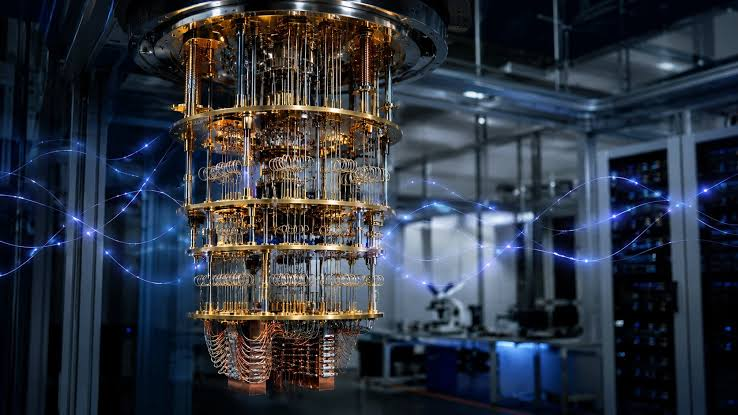
"It is a wonderful complement to our already strong internal quantum hardware and software stacks"
— Quote by: Lip Bu Tan, Intel CEO
Classiq specializes in software that allows developers to create quantum algorithms without manually programming complex quantum circuits. Its platform automatically converts abstract mathematical models into optimized quantum programs compatible with different hardware architectures. Intel believes this approach could significantly reduce development complexity, allowing enterprises and researchers to explore quantum computing without requiring extensive expertise in the underlying hardware. Importantly, Classiq will continue supporting quantum processors from other manufacturers rather than becoming exclusive to Intel's technology.
Intel has invested in quantum computing since 2015, focusing on silicon spin qubits that could eventually be manufactured using processes similar to those employed for conventional semiconductor production. Combining these capabilities with Classiq's software would allow Intel to offer Quantum Processing Units (QPUs) alongside CPUs, GPUs, and Application Specific Integrated Circuits (ASICs). The strategy aligns with Intel's broader efforts to expand its computing and accelerator portfolio.
Tan also outlined the company's expectations for agentic AI, predicting that the global server CPU addressable market could expand from approximately $40 billion to more than $200 billion over the next 5 years. He argued that CPUs can provide considerable efficiency advantages for certain deterministic AI tasks, while GPUs remain essential for computationally intensive reasoning workloads. However, this $200 billion forecast applies to the server CPU market rather than quantum computing.
Despite its ambitions, Intel has not announced a commercial release date for its quantum processors or provided revenue projections for the combined business. Quantum computing still faces substantial technical challenges involving qubit stability, error correction, manufacturing scalability, and practical applications. While the acquisition could accelerate commercialization, the development of reliable large scale quantum systems remains a longer term objective.
Intel's acquisition of Classiq represents a strategic move beyond conventional semiconductor competition. Rather than focusing exclusively on developing quantum processors, Intel is attempting to establish the software ecosystem required to make those processors commercially useful. This could provide an advantage as quantum computing matures, particularly if Intel can leverage its manufacturing capabilities to scale silicon spin qubits. However, owning both hardware and software does not guarantee commercial success. The real challenge will be delivering reliable quantum systems that solve practical problems more efficiently than conventional computing. For now, this acquisition positions Intel for a potential future market rather than delivering an immediate technological breakthrough.
Could Intel become a major player in quantum computing through its acquisition of Classiq, or will companies already specializing in quantum hardware maintain their advantage?
