
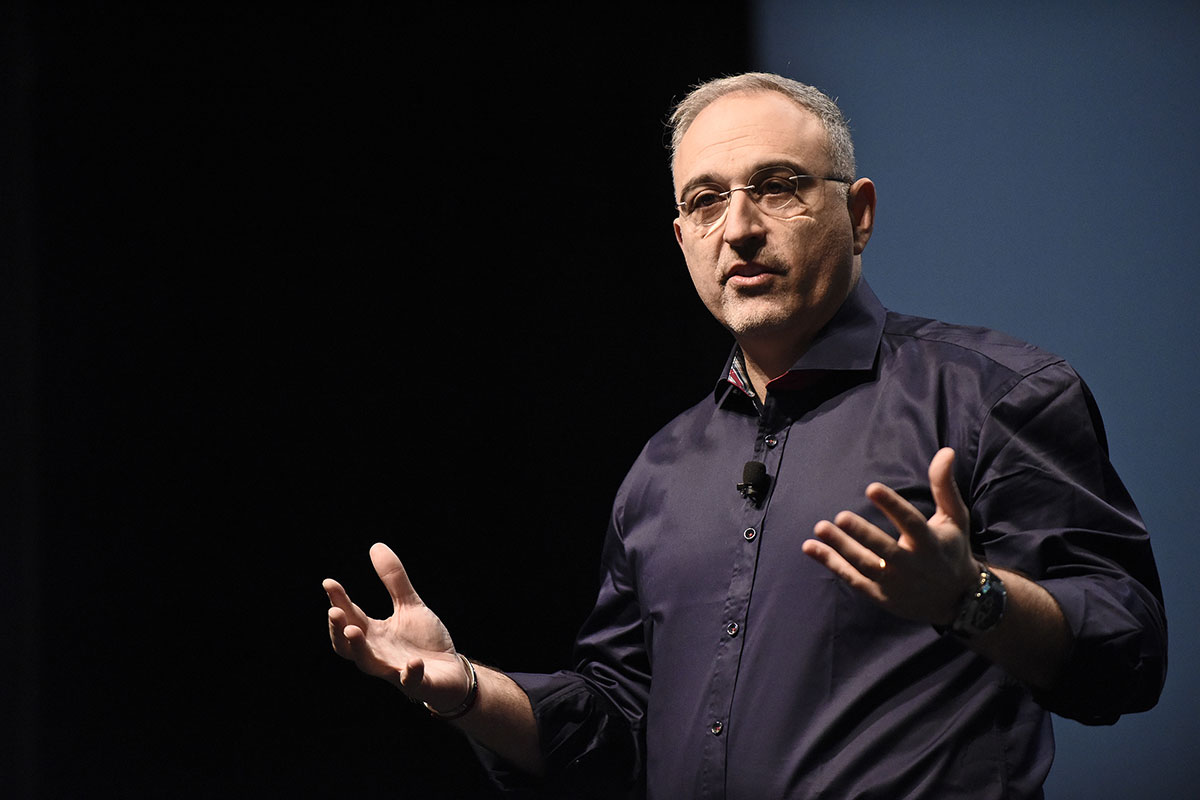
Hewlett Packard Enterprise (HPE) CEO Antonio Neri has expressed concerns over the financial structure of emerging AI cloud infrastructure providers, confirming that HPE has no intention of allocating its capital toward financing these businesses. Instead, the company will continue selling equipment to AI cloud operators under commercial agreements requiring financial guarantees and advance payments.
Speaking during an interview with Yahoo Finance on November 25, 2026, Neri explained that HPE prefers financing enterprise customers with established creditworthiness while prioritizing enterprise computing and sovereign AI infrastructure.
"We believe that's not a use of our capital."
— Quote by: Antonio Neri, President and CEO of HPE
Neri highlighted the financial performance of HPE's enterprise financing operations, which currently generate a 25% return on equity while maintaining a loss ratio of just 0.3%. These results reinforce the company's preference for established enterprise customers rather than assuming additional financial exposure to emerging AI infrastructure providers.
Neocloud companies, including CoreWeave, specialize in providing GPU computing infrastructure for AI training and inference. However, their business models frequently depend on substantial borrowing to acquire expensive accelerators, secure data center capacity, and expand operations ahead of anticipated customer demand.
HPE's approach contrasts with financing arrangements previously introduced by NVIDIA, which reportedly provided credit support to smaller AI cloud operators in exchange for a share of future revenue. Such arrangements have attracted increasing scrutiny regarding financial exposure and the sustainability of AI infrastructure demand.
Elon Musk has also warned that more than 200 neocloud companies could face business failures and consolidation as access to debt financing becomes increasingly restrictive.
The growing financial uncertainty comes as NVIDIA reportedly prepares to reduce consumer GPU supply by 20% to 30% through January 2027, further highlighting the imbalance between enterprise AI investment and consumer hardware availability.
HPE's decision represents a disciplined approach to an AI infrastructure market increasingly dependent on debt, financing guarantees, and projected future revenue. Selling hardware to cloud providers without assuming their financial risks allows the company to participate in AI expansion while limiting its exposure to potential market corrections.
However, the broader semiconductor industry continues allocating substantial manufacturing capacity toward AI infrastructure companies whose financial sustainability remains uncertain, while consumers face rising GPU and memory prices.
Manufacturers should recognize the value of established consumer markets, where gamers, independent developers, and local AI enthusiasts purchase hardware directly. Sustainable growth should prioritize genuine computing demand, responsible investment, and affordable hardware ownership rather than increasingly speculative infrastructure expansion.
Do you believe HPE's cautious financing strategy signals growing concerns over an AI infrastructure bubble, and should hardware manufacturers redirect more production capacity toward consumers?
