

Higgsfield has introduced Miracle, a new artificial intelligence technology designed to transform existing video footage into independently editable layers, allowing creators to modify individual objects, lighting, textures, and backgrounds without regenerating entire scenes. Announced on November 6, 2026, the technology promises real time, pixel level editing directly during video playback, potentially simplifying some of the most demanding tasks in professional video production.
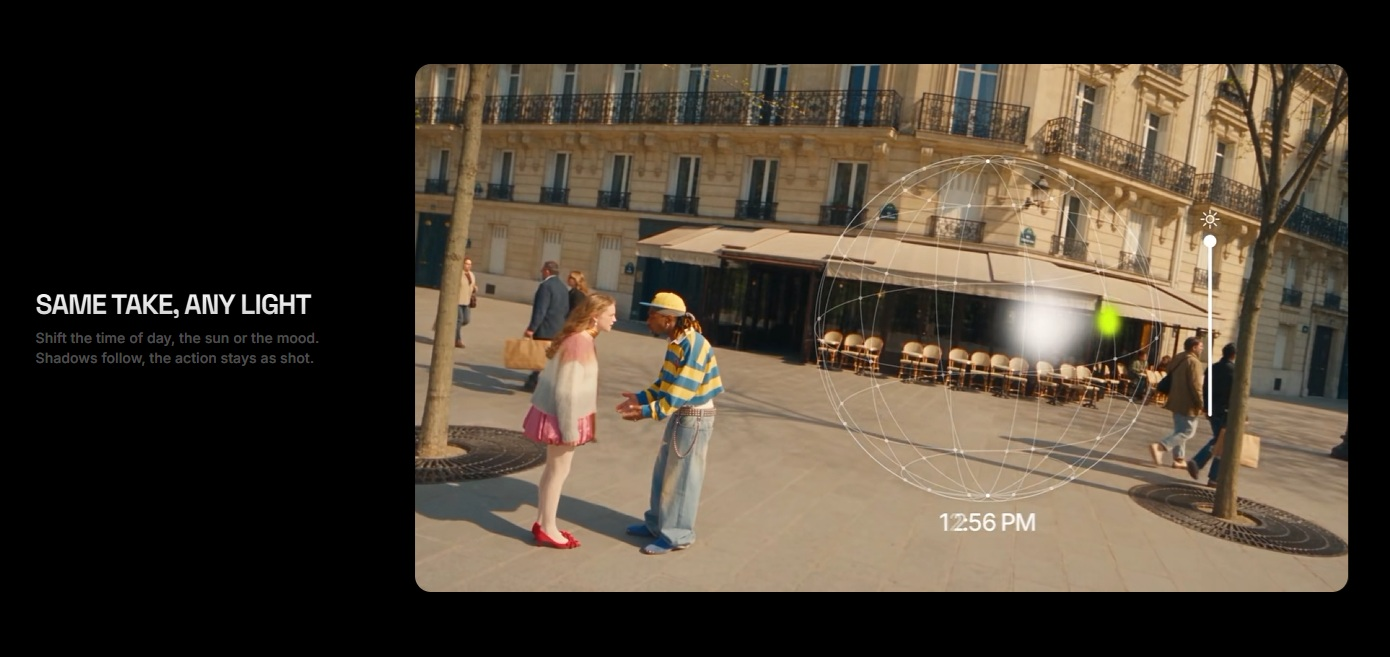
According to Higgsfield's official announcement, Miracle uses proprietary technology to analyze video footage and separate visual elements into editable layers while retaining depth information across frames. This would allow editors to change the color of clothing, remove unwanted objects, replace backgrounds, modify lighting conditions, and adjust material textures without affecting surrounding elements. For example, a creator could transform a daytime scene into nighttime while preserving the original camera movement, subject appearance, and animation.
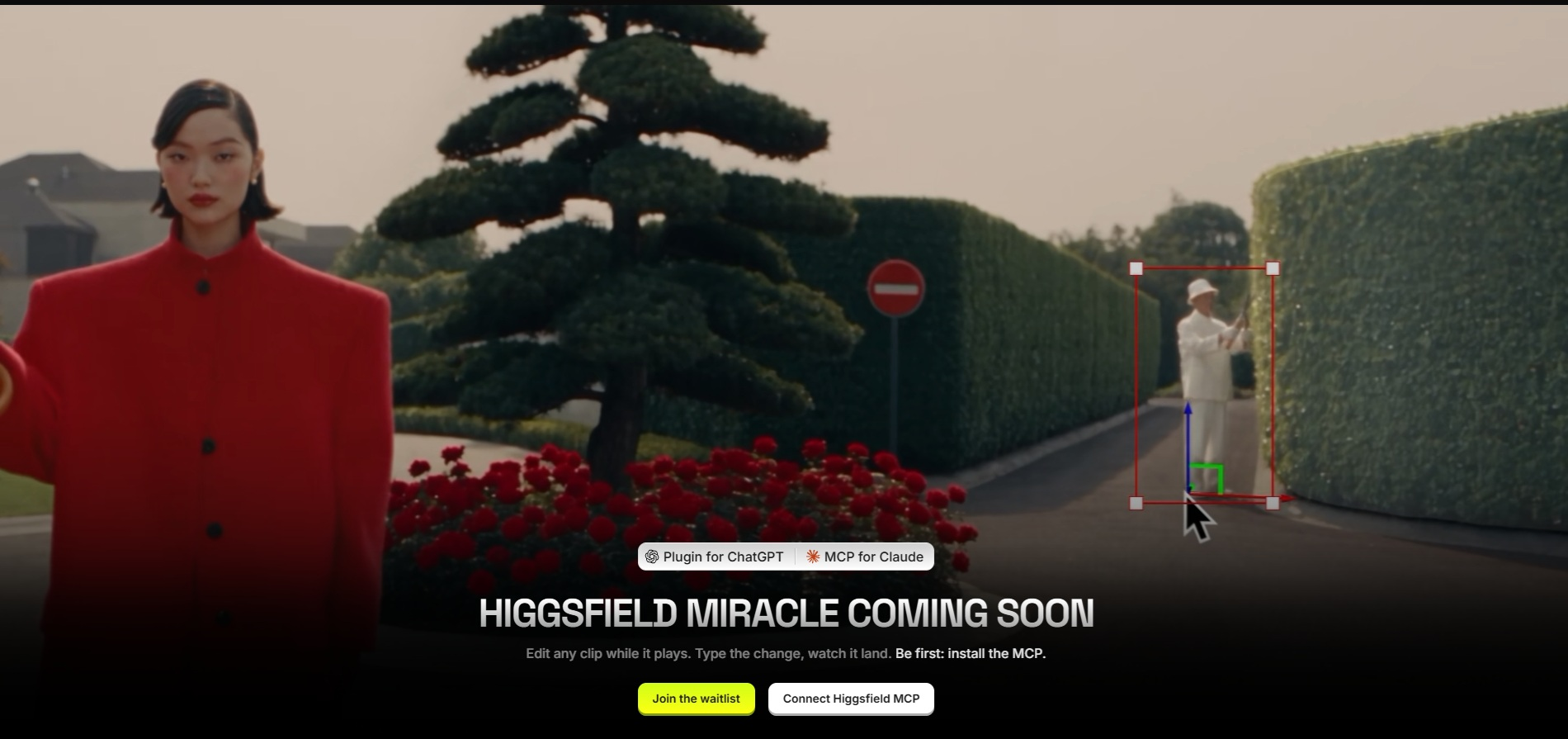
Introducing Higgsfield Miracle. Our latest proprietary post-production technology vectorizes any video into layers for localized, pixel-level editing in real time, with world knowledge built in. Every frame holds the image depth needed for cinema-grade post-production. Now in private beta with select testers. Coming soon to Higgsfield MCP. Set up Higgsfield MCP in Claude to be the first to try it.
— Higgsfield AI 🧩 (@higgsfield) November 6, 2026
The most significant feature is its promised real time performance. Unlike conventional AI video editing workflows that require users to submit modifications and wait for a new render, Miracle aims to display changes immediately as footage plays. Higgsfield also emphasizes temporal consistency, meaning edited objects should maintain their appearance across consecutive frames rather than introducing flickering, distortion, or unwanted changes. The technology could reduce the need for manual masking, rotoscoping, and complex compositing in professional editing applications.
Miracle builds upon Higgsfield Layers, introduced in August 2026, which allows users to separate individual elements from static images for editing. Extending this concept to video introduces additional challenges, particularly maintaining consistent lighting, movement, and object boundaries across thousands of frames. The technology also enters an increasingly competitive market alongside Adobe's generative video editing tools and Runway's AI powered video modification systems.
However, Miracle remains in private beta with selected testers, and its technical capabilities have not been independently verified. Higgsfield has not disclosed supported resolutions, maximum video lengths, hardware requirements, processing latency, or pricing. The company has also not confirmed whether the technology will be available for local processing or require cloud infrastructure.
Higgsfield plans to introduce Miracle through its existing platform and upcoming integration with Higgsfield MCP for Claude, allowing users to interact with its creative tools through AI assistants. Interested creators can already register through the official waitlist, although no public release date has been announced.
Higgsfield Miracle could represent an important advancement in AI assisted video production, particularly for independent creators, marketing teams, and video editors who need to make frequent adjustments without rebuilding entire scenes.
The ability to modify individual elements while preserving the original footage would be especially valuable for product advertisements, social media campaigns, and professional postproduction. However, the real challenge will be delivering consistent results without compromising image quality or creative control.
Performance and accessibility will also determine its long term value. As local AI video generation continues improving on consumer RTX hardware, creators should have greater flexibility over how their content is processed, stored, and edited.
If Higgsfield delivers its promised capabilities, Miracle could substantially simplify video editing. Until independent testing becomes available, however, its real time performance and professional reliability remain unproven.
Would you replace traditional video editing workflows with AI tools capable of modifying footage in real time, or do you believe professional editing still requires greater manual control?
