
Final Fantasy VII Revelation Will Finally Answer The Remake Or Sequel Debate
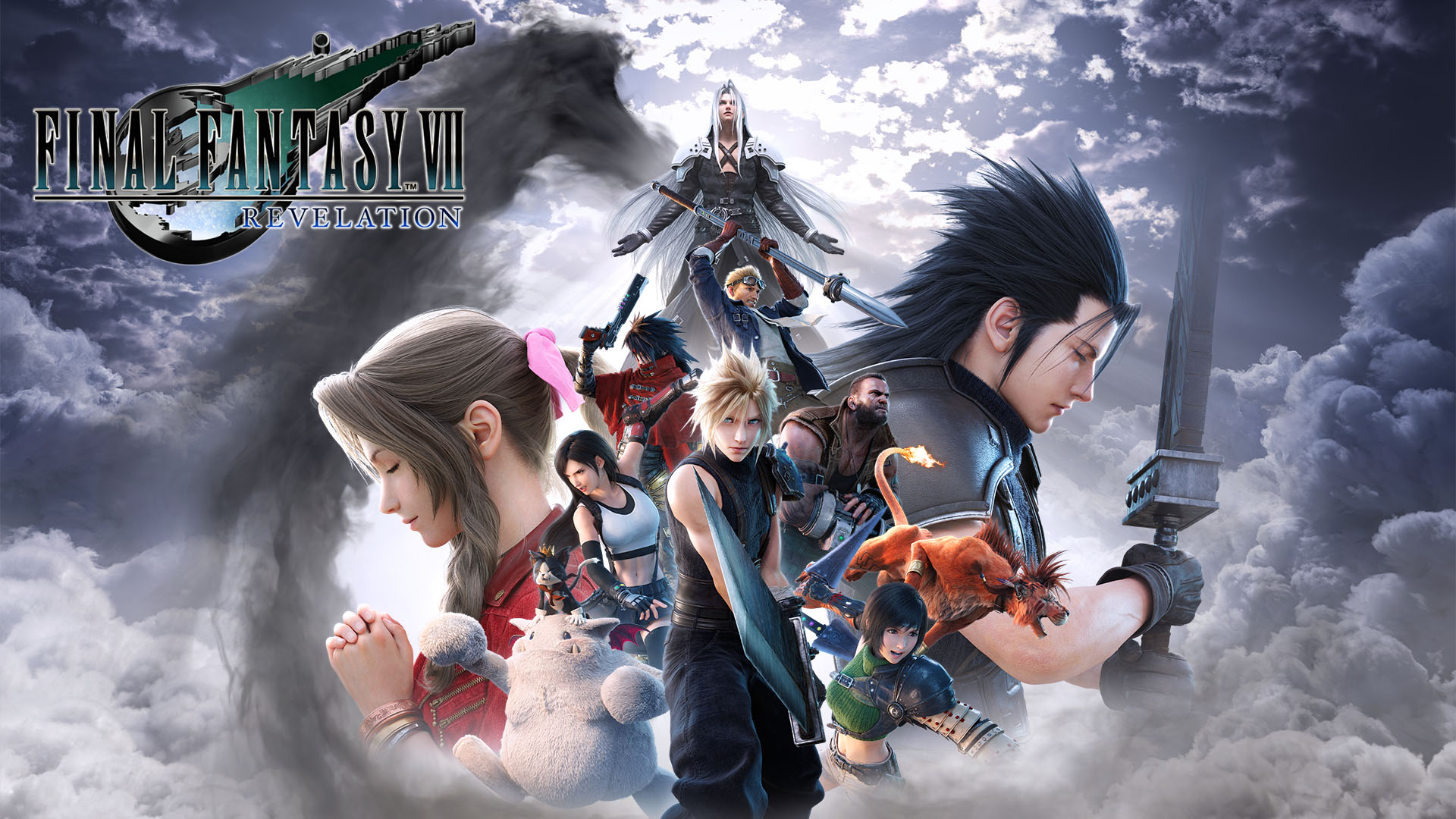
Final Fantasy VII Revelation is preparing to answer one of the biggest fan debates surrounding Square Enix’s Remake trilogy: is this project simply a modern retelling of Final Fantasy VII, or is it secretly a sequel built on top of the original game’s events? Since Final Fantasy VII Remake launched on PlayStation 4 in 2020, players have argued over the role of the Whispers, the story changes, the ending of Remake, and the way Final Fantasy VII Rebirth pushed those questions even further. With the trilogy now heading toward its final chapter, director Naoki Hamaguchi is refusing to spoil the answer, but he is making it clear that Revelation was designed to bring the discussion to a conclusion.
Speaking with Hobby Consolas, Hamaguchi said it would be better not to confirm or deny anything yet because Final Fantasy VII Revelation will arrive next year as the final chapter of the trilogy. He explained that the concept behind the Final Fantasy VII Remake saga is to create a new world and a new narrative that includes elements previously shown across Final Fantasy VII spin off material. When asked whether the Remake saga is connected to the original story in a way that could make it a sequel, Hamaguchi avoided a direct answer and said the truth is more complicated. "Both answers are possible." Quote by: Naoki Hamaguchi.
That short answer is exactly why the debate has lasted for 6 years. Final Fantasy VII Remake did not behave like a traditional remake. It recreated Midgar with a much larger scope, but it also introduced story elements that suggested the characters were pushing against fate itself. Final Fantasy VII Rebirth then followed much of the expected structure from the original journey while still ending in a way that kept the larger mystery alive. For many fans, the trilogy has always felt like it is walking between 2 identities at once: a faithful reconstruction of one of gaming’s most iconic RPGs and a new timeline that is aware of the old one.
Hamaguchi said that his focus as director is not only on how Revelation connects with the original game or other Final Fantasy VII projects, but on delivering a satisfying conclusion to the saga. That point matters because 2027 marks the 30th anniversary of the original Final Fantasy VII, giving Square Enix a powerful symbolic window to close the trilogy. Revelation will not only need to resolve the Sephiroth conflict, Cloud’s fractured identity, Aerith’s fate, Zack’s role, and the wider multiverse style questions created by the first 2 games. It also needs to satisfy players who came into the trilogy from completely different angles, including original 1997 fans, Remake era newcomers, and players joining through Xbox Series X|S, Nintendo Switch 2, and PC.
The official Square Enix announcement confirmed that Final Fantasy VII Revelation will launch in Spring 2027 for PlayStation 5, Nintendo Switch 2, Xbox Series X|S, and PC through Steam and the Epic Games Store. That simultaneous release is a major shift for a trilogy that began as a PlayStation focused project, and it gives the finale a much wider launch footprint than Remake or Rebirth had at release. It also means the answer to the sequel debate will not be locked behind one platform when the game arrives.
Hamaguchi’s comments also fit with Square Enix’s broader goal of making Revelation feel like a true final chapter rather than just another expansion of Rebirth. We previously covered how Final Fantasy VII Revelation gives players the Highwind early, which shows how Square Enix is expanding the trilogy’s scale for the finale. The Highwind is not only a vehicle. It is a design statement that Revelation is moving toward a more global structure where players can revisit locations, explore freely, and experience the world of Final Fantasy VII as a connected planet rather than a sequence of large regions.
The ending debate is not the only fan focused detail Hamaguchi has teased. In a recent conversation with content creator Jess Capricon, the director said players may really enjoy one of the Synergy Abilities between Cid and Barret. That small tease matters because Rebirth used Synergy Skills and Synergy Abilities not only as combat tools, but also as character building moments. One of the best examples was the Sweet and Sour interaction between Aerith and Barret, which worked because it turned a mechanical move into a personality moment. If Revelation continues that approach with Cid and Barret, it could give the final game more of the humor, warmth, and party chemistry that made Rebirth’s character interactions stand out.
Final Fantasy VII Revelation is now carrying several expectations at once. It needs to answer whether this trilogy is a remake, sequel, or something more unusual. It needs to deliver the Highwind, expand the world, handle new playable characters, provide meaningful endgame content, and close a story that Square Enix has been rebuilding for almost 10 years. Square Enix appears to be cracking the AAA trilogy code with Final Fantasy VII Revelation, largely because the studio has maintained strong staff continuity and an iterative development pipeline across Remake, Rebirth, and Revelation. That production stability could be one of the reasons the final entry is arriving in 2027 rather than disappearing into a longer development gap.
The most interesting part of Hamaguchi’s answer is that Square Enix is not trying to shut down the debate early. The studio knows this question has become part of the trilogy’s identity. By refusing to confirm or deny it now, Hamaguchi is protecting the finale’s most important narrative hook. The risk is that the answer needs to be clear enough to satisfy fans who have spent years dissecting every timeline clue, Whisper appearance, Zack scene, and Aerith moment. A vague ending would keep the debate alive, but it could also weaken the emotional payoff.
If Revelation succeeds, it could become one of Square Enix’s most important modern RPG conclusions. It would not only close the Remake trilogy, but also define how fans interpret the entire project. Whether the answer is remake, sequel, alternate timeline, spiritual continuation, or something uniquely Final Fantasy VII, the final reveal needs to make the journey feel intentional. Hamaguchi is asking fans to wait for the ending. After 6 years of debate, that ending now has to carry the weight of the entire trilogy.
Do you think Final Fantasy VII Revelation will confirm the Remake trilogy as a sequel, or do you expect Square Enix to deliver a more complex answer?
