
Square Enix Cracks the AAA Trilogy Code With Final Fantasy VII Revelation
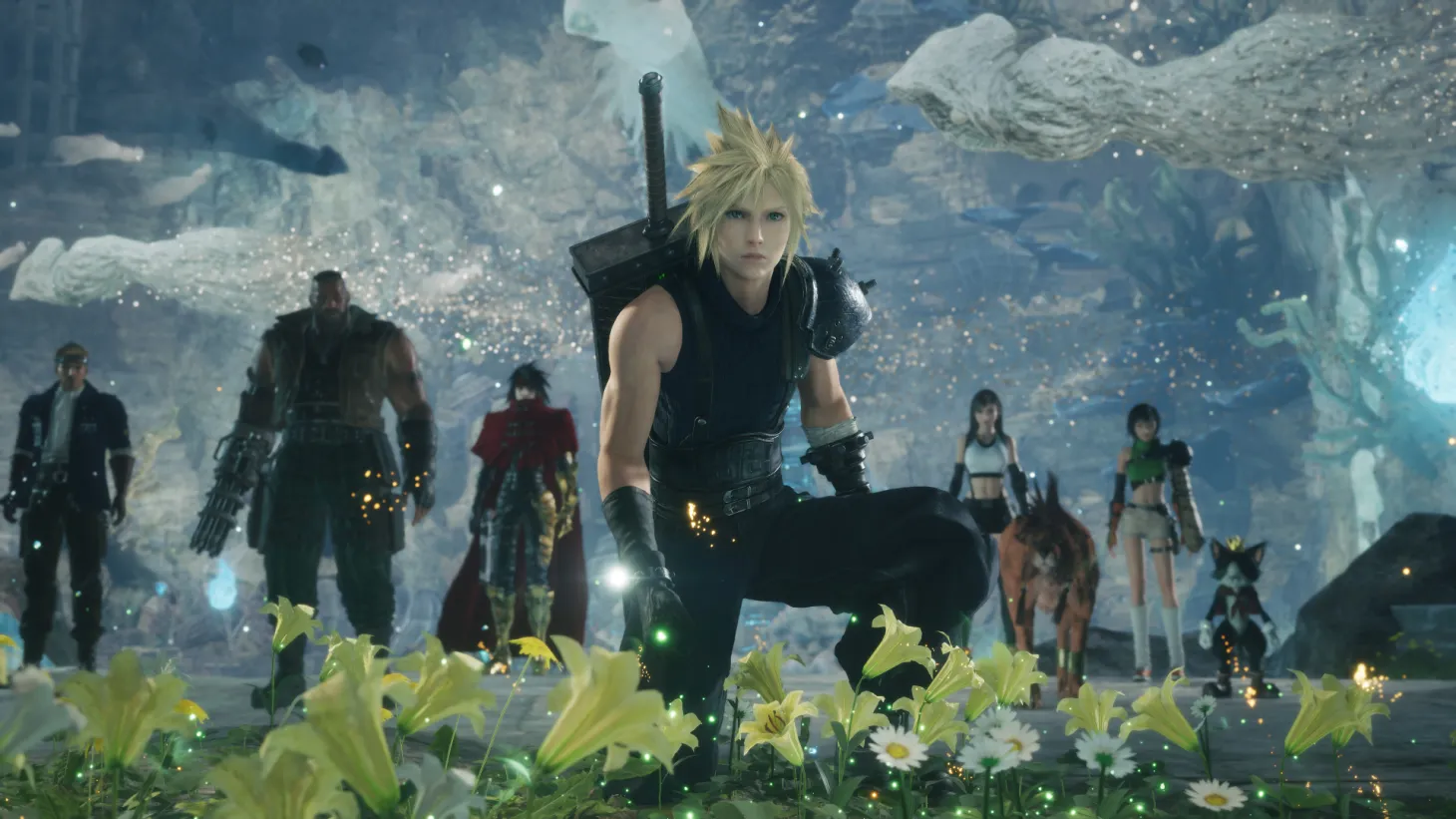
Final Fantasy VII Revelation is officially set for a Spring 2027 launch across PC, PlayStation 5, Nintendo Switch 2, and Xbox Series X|S, closing out Square Enix’s ambitious Final Fantasy VII Remake trilogy in roughly 10 years. In an industry where many modern AAA games now take 6 to 7 years to develop, Square Enix is preparing to deliver 3 major entries, including 2 large open world releases, within the same timeframe that some studios need for a single sequel.
Following the game’s major Summer Game Fest showcase, director Naoki Hamaguchi explained how Creative Studio 1 managed to avoid the production delays that have slowed many modern franchises. Speaking with Restart.run, Hamaguchi pointed directly to a stable development structure and strong staff continuity between Final Fantasy VII Rebirth and Final Fantasy VII Revelation.
"That's definitely true, and I think that we were also trying to answer the fans' desires to have the next title come to them as soon as possible, and really enter the game and continue with the journey. But I think in terms of development, when we were working towards the end of Remake, we already had an idea of how to develop Rebirth, and then so on from Rebirth, toward the end of development of Rebirth, we kind of had an idea of how to approach Revelation. So in that sense, I think also having, kind of a constant alignment within the staff, and so the same staff, or most of the staff, also worked on Revelation from Rebirth as well, and so we were able to maintain that same type of flow, and I think that really helped development to create this in that span of time."
— Naoki Hamaguchi
That explanation is important because staff continuity has become one of the biggest hidden challenges in AAA development. Large projects often lose momentum when teams change between entries, tools shift, design leads rotate, or new developers need time to understand existing systems. By keeping most of the same staff from Rebirth into Revelation, Square Enix avoided many of the onboarding issues that can slow down sequels.
The Final Fantasy VII Remake trilogy also benefits from a highly iterative development structure. Rather than rebuilding everything from scratch with every entry, Creative Studio 1 has continued expanding the foundation established in the previous game. Remake built the modern combat and cinematic structure. Rebirth expanded that into a large open world format. Revelation is now taking that framework further with the Highwind airship, greater player freedom, and the final stage of the trilogy’s world design.
That kind of iteration is increasingly rare in modern AAA development. Many studios try to reinvent their tools, mechanics, pipelines, or design direction between entries, which can extend production schedules and weaken franchise momentum. Square Enix appears to have taken the opposite path with Final Fantasy VII, improving and expanding the same core structure while keeping the creative team aligned across all 3 games.
The approach is similar to the development philosophy used by SEGA’s Ryu Ga Gotoku Studio for the Like a Dragon series. That franchise has maintained steady momentum by reusing and evolving technology, systems, cities, combat ideas, and narrative frameworks across mainline games and spin off projects. The result is a production model that keeps releases moving without sacrificing identity or quality.
For Square Enix, Final Fantasy VII Revelation may become more than the ending of a trilogy. It could become proof that the company has found a healthier way to produce large scale AAA RPGs. Delivering a full trilogy in about 10 years is already impressive, but doing so while expanding scope across each entry makes it even more notable.
That success could influence the future of other Square Enix franchises. Kingdom Hearts is the most obvious example. Kingdom Hearts 4 is expected to take close to 10 years to arrive after Kingdom Hearts 3, which shows how long the gap between single entries can become when development pipelines are not built around continuity and iteration. If Square Enix can apply lessons from Final Fantasy VII Revelation to Kingdom Hearts and other major series, future releases may avoid such massive waiting periods.
The lesson is not simply that games should be made faster. The real takeaway is that long term planning, staff retention, shared tools, iterative design, and early alignment can help big games arrive more consistently. Fans do not necessarily need annual releases, but they do need confidence that major franchises will not disappear for most of a console generation.
Final Fantasy VII Revelation is also arriving with major expectations. It must conclude the story, expand the combat, deliver the Highwind, bring back key content from Rebirth, provide meaningful postgame challenges, and satisfy both longtime fans and newer players who entered the series through Remake. That is a difficult creative challenge, but the development model behind it may already be one of Square Enix’s biggest wins.
If Creative Studio 1 delivers, Final Fantasy VII Revelation could stand as more than a finale. It could become a blueprint for how modern AAA RPG trilogies can be built without losing a decade per game.
Do you think Square Enix should use the Final Fantasy VII Remake trilogy pipeline for future franchises like Kingdom Hearts, or should each major series keep its own development structure?
