
Despite Massive TSMC Investments, the United States Will Not Receive the Most Advanced Chips
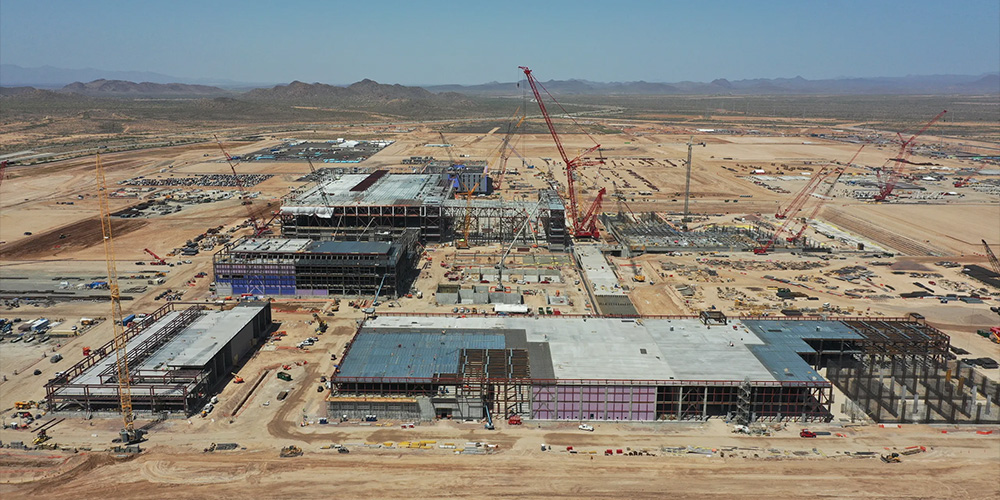
Despite unprecedented capital commitments and long term manufacturing plans in the United States, TSMC will not bring its most advanced semiconductor process nodes to American soil. Taiwan’s regulatory framework and political consensus continue to enforce a technology gap that ensures the island remains at least two generations ahead in leading edge chip production.
Over the past several years, TSMC has accelerated its US expansion in response to geopolitical risk, customer demand, and sustained pressure from Washington to localize advanced semiconductor manufacturing. However, domestic laws in Taiwan remain a decisive factor, limiting how far the company can go when it comes to exporting cutting edge fabrication technology.
Taiwan Reinforces Its N minus two Technology Policy
According to a recent report by CNA, Taiwanese lawmakers have questioned the current administration over the pace and scope of TSMC’s overseas investments, particularly in the United States. Concerns center on potential technology leakage and the long term erosion of Taiwan’s strategic advantage in the global semiconductor ecosystem.
In response, Deputy Science Minister Fa cheng Lin reaffirmed Taiwan’s long standing N minus two policy. Under this framework, any overseas production by TSMC must trail domestic manufacturing by at least two technology generations. In practical terms, if TSMC is producing 1.2 nanometer or 1.4 nanometer class chips in Taiwan, overseas fabs would be limited to nodes such as 1.6 nanometer.
Lin emphasized that the majority of TSMC’s research and development personnel remain based in Taiwan and that the company operates in full compliance with national regulations. This policy is designed to preserve Taiwan’s technological leadership while still allowing controlled global expansion.
Why the United States Is Pushing for Domestic TSMC Capacity
The push from Washington, supported by major US fabless semiconductor firms, is driven by one overriding concern supply chain resilience. Successive US administrations, including that of Donald Trump, have argued that reliance on overseas advanced chip manufacturing exposes the country to unacceptable geopolitical risk, particularly amid rising cross strait tensions.
Beyond strategic concerns, TSMC has seen strong commercial demand from American customers for chips produced at its Arizona facilities. This demand, combined with tariff pressure and incentive programs, has encouraged the company to consider scaling its US investments to as much as three hundred billion US dollars over time.
Yet even with these commitments, parity with Taiwan remains off the table. TSMC’s Arizona fabs are currently preparing for three nanometer production, with high volume manufacturing targeted around 2027. By that stage, Taiwan is expected to be ramping next generation processes such as N2 at two nanometers and moving toward A16 class technology at approximately 1.6 nanometers.

In other words, the technology gap will persist by design.
Strategic Implications for the Global Foundry Market
The enforced separation between domestic and overseas node leadership has broader implications for the semiconductor industry. Analyst Dan Nystedt has noted that TSMC’s reluctance to deploy its most advanced nodes in the United States could create a meaningful opening for Intel.
Unlike TSMC, Intel develops and manufactures its most advanced process technologies within the United States. This positions Intel Foundry as a potentially attractive alternative for customers seeking leading edge production without offshore dependency. Interest in Intel’s upcoming 14A node reflects this shift, as supply chain security becomes as important as raw performance and density.
That said, it remains too early to declare a decisive realignment. TSMC continues to dominate advanced logic manufacturing, and its ecosystem scale, yield maturity, and customer trust are unmatched. However, the structural constraints imposed by Taiwan’s N minus two policy introduce new competitive dynamics that could reshape long term foundry strategies.
The Only Path Forward for US Semiconductor Sovereignty
If the United States seeks true autonomy in cutting edge semiconductor manufacturing, reliance on foreign foundries alone will not be sufficient. Achieving this goal requires sustained domestic investment across research and development, advanced lithography, materials science, and workforce development.
TSMC’s presence in Arizona strengthens supply chain diversity, but it does not replace the need for homegrown innovation. As long as Taiwan prioritizes technological leadership as a matter of national security, the most advanced chips will remain on the island.
The message is clear. Capital investment alone cannot override policy, talent concentration, and sovereign technology strategy.
What is your take on Taiwan’s N minus two policy? Should the United States double down on domestic foundry development or continue courting overseas leaders like TSMC? Share your perspective in the comments.
