
Computex 2026 Takes Shape as NVIDIA’s Jensen Huang and Intel’s Lip Bu Tan Move to the Center of the AI and PC Conversation
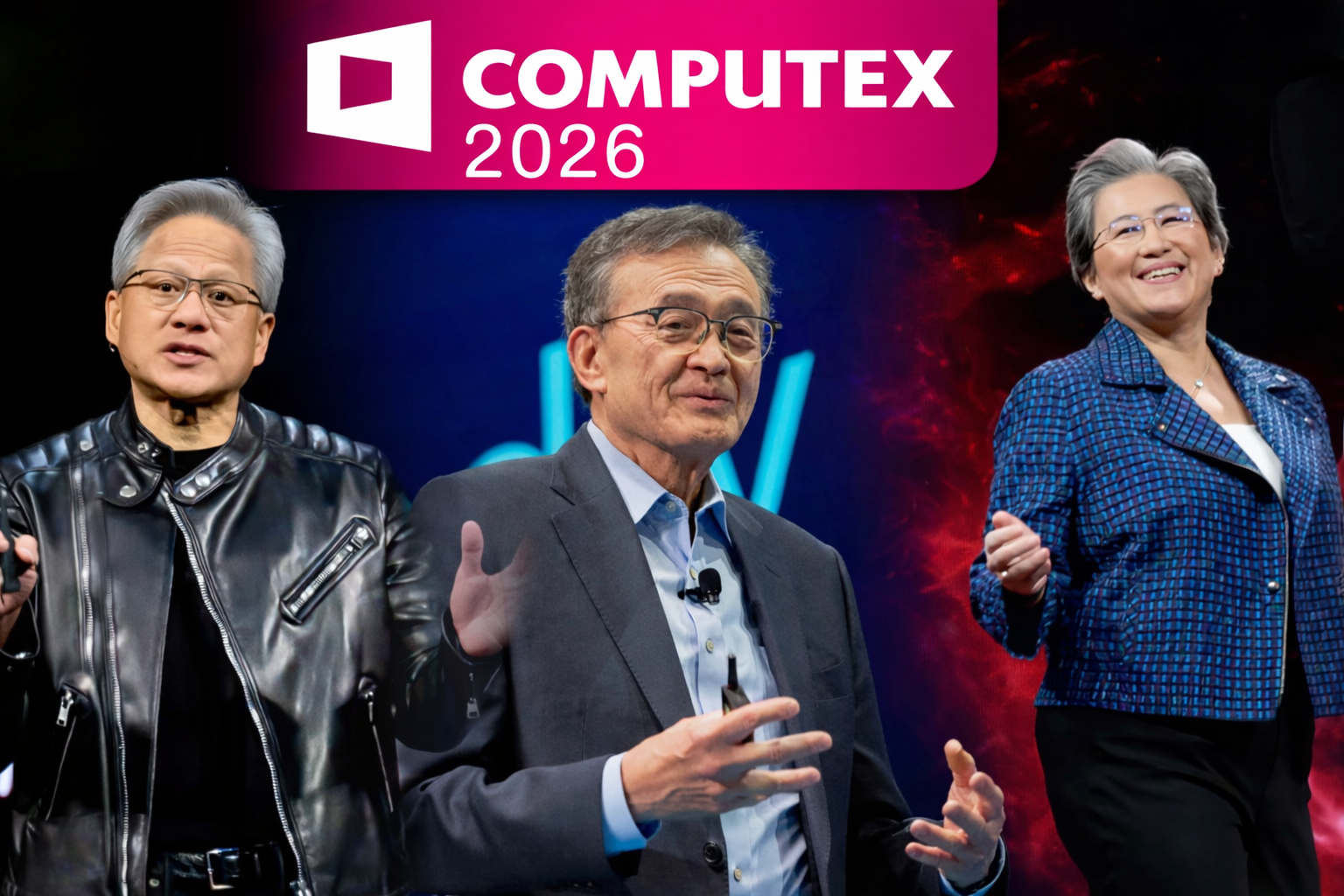
Computex 2026 is already building serious momentum months ahead of its June opening, and the early keynote picture shows exactly where the industry’s attention is heading. The official organizers have confirmed that Intel CEO Lip Bu Tan will deliver a keynote on June 2 at Taipei Nangang Exhibition Center Hall 2, where he is expected to outline Intel’s vision for the next era of computing in the age of artificial intelligence. Organizers have also confirmed that Computex 2026 will run from June 2 to June 5 under the theme “AI Together,” with the event expanding across Taipei Nangang Exhibition Center Halls 1 and 2, TWTC, and TICC.
That official framing matters because it shows Computex continuing its transition from a more traditional PC and component showcase into a broader strategic stage for AI infrastructure, edge computing, robotics, and next generation consumer hardware. According to the organizers, this year’s show will feature up to 1,500 exhibitors across as many as 6,000 booths, built around 3 main themes: AI and Computing, Robotics and Mobility, and Next Gen Tech. In other words, this is no longer just a venue for product refreshes and enthusiast launches. It is increasingly becoming one of the clearest annual snapshots of how the hardware industry plans to commercialize the AI boom.
Intel’s presence is especially important this year because it gives Lip Bu Tan one of the most visible regional stages yet to define where the company wants to go next. TAITRA says his keynote will focus on how breakthroughs across silicon, systems, and software, combined with ecosystem partnerships, are enabling new levels of performance, efficiency, and scale. The official wording also highlights heterogeneous computing and AI infrastructure, which strongly suggests Intel wants to use Computex to reinforce its relevance across both consumer and enterprise discussions rather than confining the message to one side of the market.
.@intel CEO @LipBuTan1 will deliver a keynote at #COMPUTEX2026.
— Intel News (@intelnews) March 24, 2026
As AI reshapes every industry, he’ll share how advancements across silicon, systems, and software—powered by strong ecosystem partnerships—are unlocking new levels of performance, efficiency, and scale.
Learn more:… pic.twitter.com/u3X1iE9F35
On the NVIDIA side, your provided report from CTEE says Jensen Huang will also appear at Computex 2026, which would again position him as one of the central figures of the show. I could not independently fetch that page directly, so that part should be treated as a reported appearance rather than an organizer confirmed keynote at this stage. Still, it would be entirely consistent with the shape of Computex in recent years, where NVIDIA’s roadmap, AI platform strategy, and ties to Taiwan’s supply chain have made Jensen one of the most watched voices on stage. Official Computex material also repeatedly emphasizes AI ecosystem leadership and notes how heavily the event has become associated with global AI development.
That broader context is what makes this year’s event especially important. Computex is happening at a moment when the PC industry is trying to define what AI hardware actually means beyond marketing. Edge deployments, AI enabled devices, inference systems, power efficient compute, and the next consumer wave of AI PCs are all starting to move from concept into product reality. Computex’s own 2026 forum messaging reflects that shift, highlighting topics such as robotics, autonomous machines, physical AI, AI compute infrastructure, generative AI applications, edge intelligence, and data governance. That suggests the event will not just be about what chips are coming next, but about which vendors can connect silicon, systems, software, and real world use cases into something commercially credible.
For enthusiasts, that also means Computex 2026 could become one of the most meaningful stages of the year for both gaming adjacent and AI adjacent hardware narratives. Intel has an opportunity to clarify its next consumer and AI positioning in public. NVIDIA, if the reported appearance holds, would likely use the show to reinforce its dominance in accelerated computing while keeping one eye on where consumer AI hardware and partner ecosystems are heading next. And because Computex sits at the center of Taiwan’s manufacturing and supply network, whatever gets emphasized there usually says as much about the direction of the broader ecosystem as it does about any single product.
So while it is still early, the outline is already clear. Computex 2026 is shaping up to be less about isolated launches and more about control of the narrative around the next phase of computing. With AI now driving strategy across desktops, notebooks, data centers, robotics, and software stacks, Taipei is once again becoming the place where the industry tries to explain what comes next.
Do you expect Computex 2026 to focus more on AI infrastructure, or will this finally be the year consumer AI hardware proves why it matters to gamers and mainstream PC users?
