
Bungie? No. DLSS 5 Debate Escalates as Veteran Game Dev Fires Back at Anti AI Critics
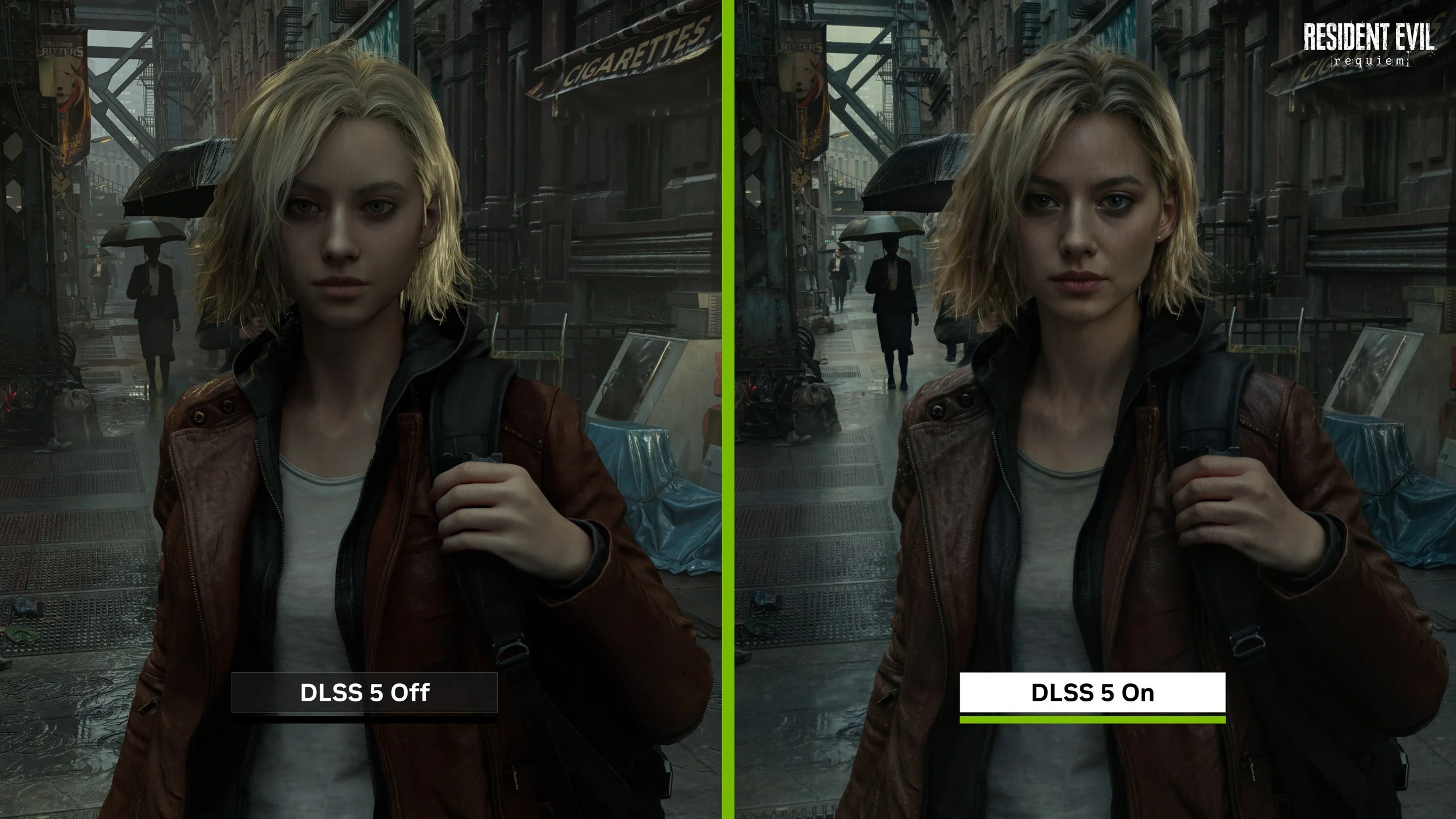
NVIDIA’s DLSS 5 reveal at GTC 2026 has quickly become one of the most divisive gaming technology stories of the week. What NVIDIA presented as a major visual leap for real time graphics has been met with both excitement and backlash, especially across social media, where critics have framed the technology as an AI driven “filter” that risks clashing with a game’s original art direction. NVIDIA, however, has positioned DLSS 5 very differently, calling it its biggest graphics breakthrough since real time ray tracing and saying the system is built around a real time neural rendering model that adds photoreal lighting and materials while preserving developer control.
The backlash has not gone unanswered. Veteran game developer Jean Pierre Kellams, known for work across Capcom, PlatinumGames, EA, and Harmonix, publicly pushed back against the criticism in a post on X. His argument was blunt: if the exact same visual leap had been shown as a traditional next generation rendering breakthrough rather than framed around AI, far more players would likely be celebrating it. That reaction captures a growing split in the industry, where some see AI branding itself as the issue, even when the result is presented as a rendering tool rather than content replacement.
NVIDIA’s official description gives some context to why the company believes DLSS 5 is different from the “AI filter” label now circulating online. According to NVIDIA, DLSS 5 takes frame color and motion vectors as input and uses a real time model to infuse scenes with lighting and material behavior that remains anchored to the game’s source 3D content and stable from frame to frame. The company also says developers get controls for intensity, color grading, and masking, allowing artists to determine where the enhancements are applied and how strongly they affect the final image. That is a key part of NVIDIA’s defense, because it frames DLSS 5 less as automated style override and more as a tunable rendering layer.
That artistic control message has also been reinforced by partners. Bethesda has already stated publicly that any use of DLSS 5 in Starfield will remain under artist control and be optional for players, a response that appeared aimed directly at the wave of criticism around facial changes and broader scene alteration in the early demos. At the same time, support from major publishers is already in place, with NVIDIA saying DLSS 5 is lined up for future support from Bethesda, Capcom, Ubisoft, Warner Bros. Games, Tencent, NetEase and others, with a fall 2026 rollout window currently planned.
Kellams is not the only industry voice defending the technology. Ryan Shrout also offered a more nuanced take in a post on X, arguing that the social media response is focusing too narrowly on facial changes when the broader visual improvements are much more substantial. Reporting that summarized his hands on reaction noted that he saw the DLSS 5 demo in person and came away convinced the gains were meaningful across entire scenes, not just character faces. In that framing, the faces became the lightning rod because they are the easiest thing for players to react to instantly, while environmental lighting, depth, water, materials, and foliage behavior tell the more important story once the full scene is considered.
That said, the criticism is not imaginary or baseless. Coverage from outlets such as The Verge, PC Gamer, and Windows Central shows a real wave of concern around how DLSS 5 can make some characters appear overly processed or push certain scenes toward an uncanny look. The strongest criticism is not really about the existence of AI in graphics, because DLSS has always relied on AI, but about where the new model sits on the spectrum between enhancement and reinterpretation. Once a rendering system begins visibly reshaping how skin, hair, or facial features are perceived, players start asking whether the technology is improving realism or imposing a new visual identity on top of the original work.
That is why this story matters beyond one NVIDIA keynote. The debate around DLSS 5 is really a debate about authorship in real time graphics. Supporters see it as the next logical jump after ray tracing, neural shaders, and upscaling. Critics see a tool that could blur the line between helping artists and quietly overriding them. NVIDIA’s answer is that the controls stay in developer hands, and early supporters like Kellams and Shrout believe the wider scene level gains justify the controversy. Whether players agree will likely depend less on keynote demos and more on how DLSS 5 actually ships inside finished games later this year.
For now, one thing is clear. DLSS 5 has already become more than a technical upgrade. It is now a culture war flashpoint inside the graphics space, and that may end up being just as important to its launch story as the technology itself.
Do you see DLSS 5 as the next major leap in game rendering, or does it cross the line too far into altering artistic identity?
