
ASUS Prime AP304 Combines Panoramic Glass With Dedicated GPU Airflow
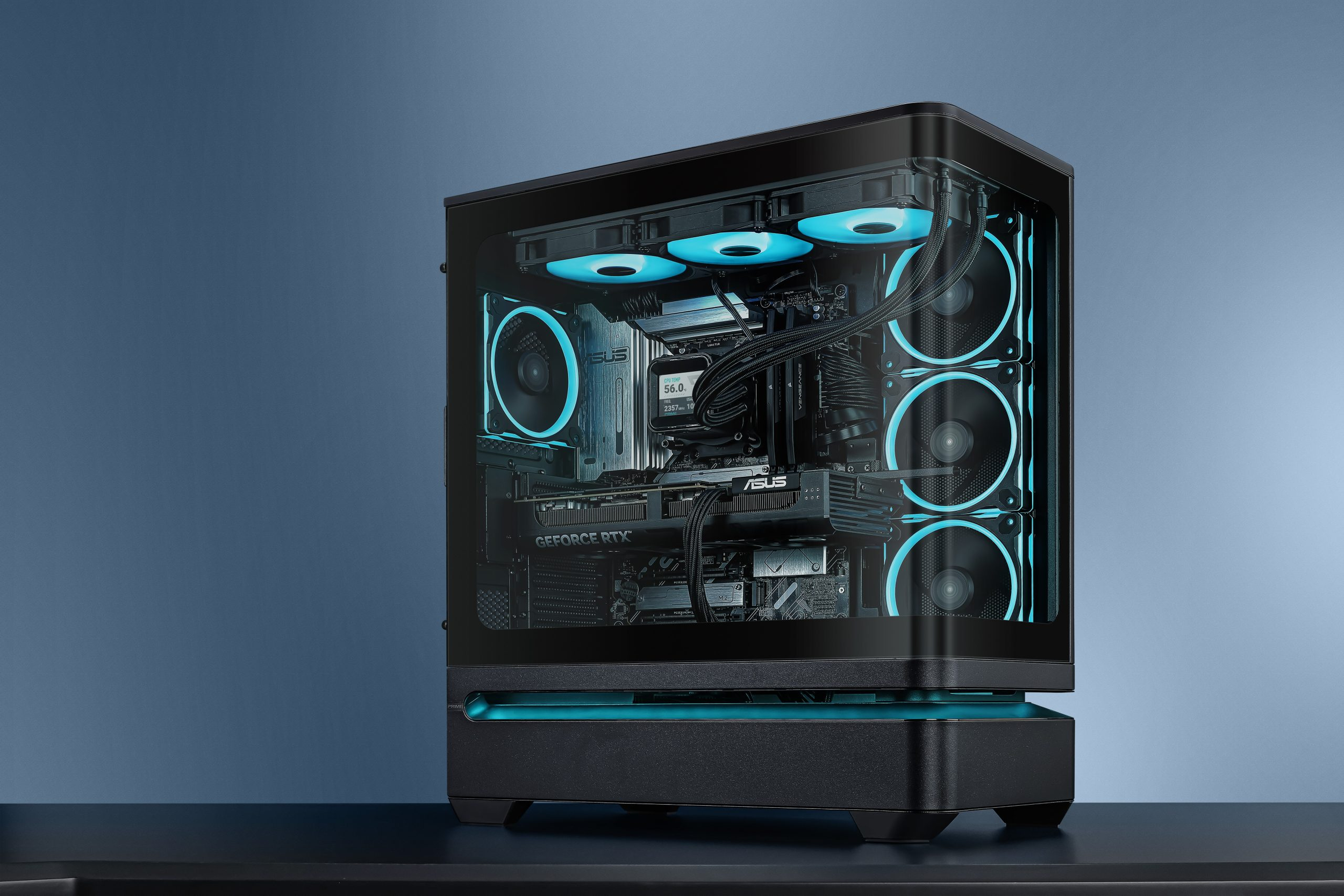
ASUS has introduced the Prime AP304, a panoramic ATX PC case designed to display high end hardware while directing additional airflow toward the graphics card. The chassis uses a curved tempered glass panel extending from the front into the side, creating an uninterrupted view of the internal components without placing cooling fans behind the front glass.
The design separates the main chamber from the lower section with a raised structure that ASUS describes as a patented 3 sided slot vent. This opening allows cool air from the bottom of the case to move directly toward the graphics card, addressing one of the main thermal challenges associated with glass focused showcase cases. The AP304 supports 3 additional 120 mm fans along the bottom and another 3 along the side, allowing builders to create a more direct airflow path around demanding gaming GPUs.
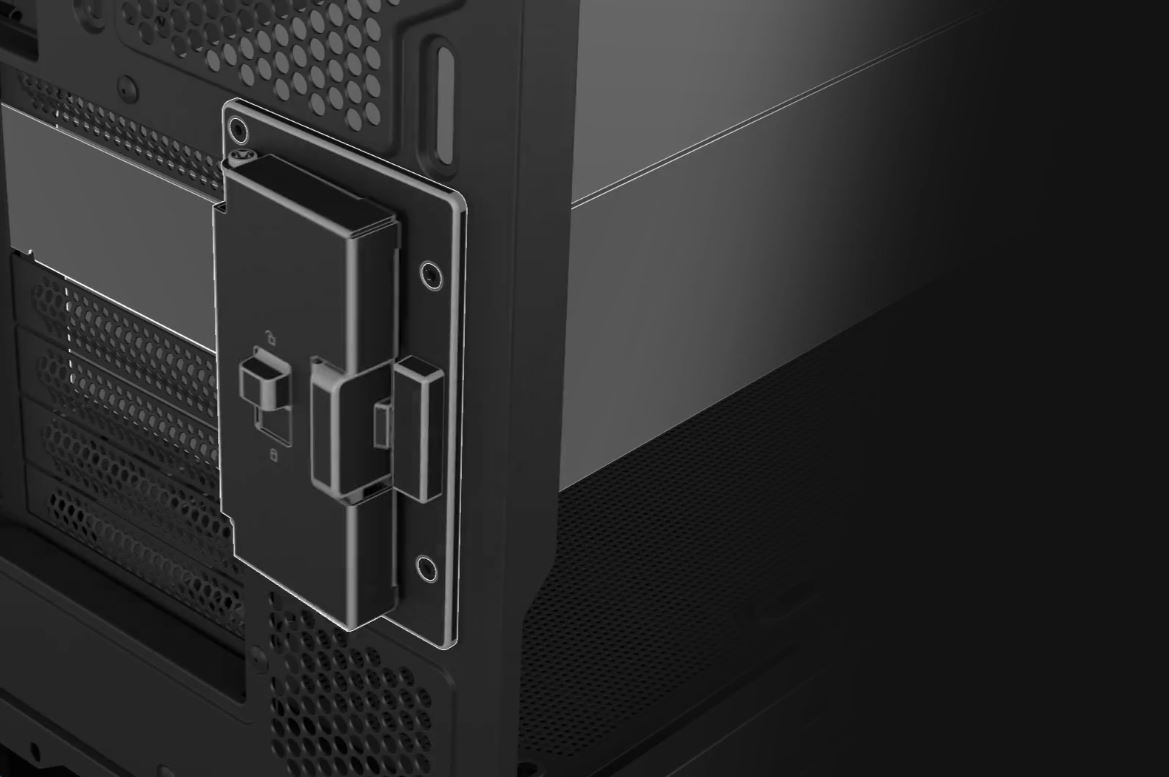
ASUS has also introduced a patented graphics card slot clamp that replaces conventional screws during installation. A reinforced graphics card bracket provides additional support for larger models, while the chassis accommodates cards measuring up to 420 mm. This gives the AP304 enough clearance for most flagship graphics cards, including oversized GeForce RTX 50 Series designs.
| ASUS Prime AP304 Specification | Details |
|---|---|
| Motherboard Support | ATX, Micro ATX, Mini ITX |
| Maximum Graphics Card Length | 420 mm |
| Maximum CPU Cooler Height | 175 mm |
| Maximum Power Supply Length | 200 mm |
| Radiator Support | Up to 360 mm at the top |
| Fan Support | Up to 10 x 120 mm fans |
| Storage | 2 x 3.5 inch drives or 3 x 2.5 inch drives |
| Expansion Slots | 7 |
| Cable Management Space | 33 mm |
| Front Connectivity | 1 x USB 20 Gbps Type C, 2 x USB 5 Gbps Type A, audio connection |
| Dimensions | 240 x 535 x 450 mm |
| Weight | 11 kg |
Cooling support includes up to 3 x 120 mm or 2 x 140 mm fans at the top, 3 x 120 mm fans at the side, 3 x 120 mm fans at the bottom, and 1 x 120 mm fan at the rear. ASUS recommends using the bottom fans as intake while exhausting heat through a 360 mm top radiator, the side fans, and the rear fan. Removable dust filters are installed at the top and bottom to simplify maintenance.
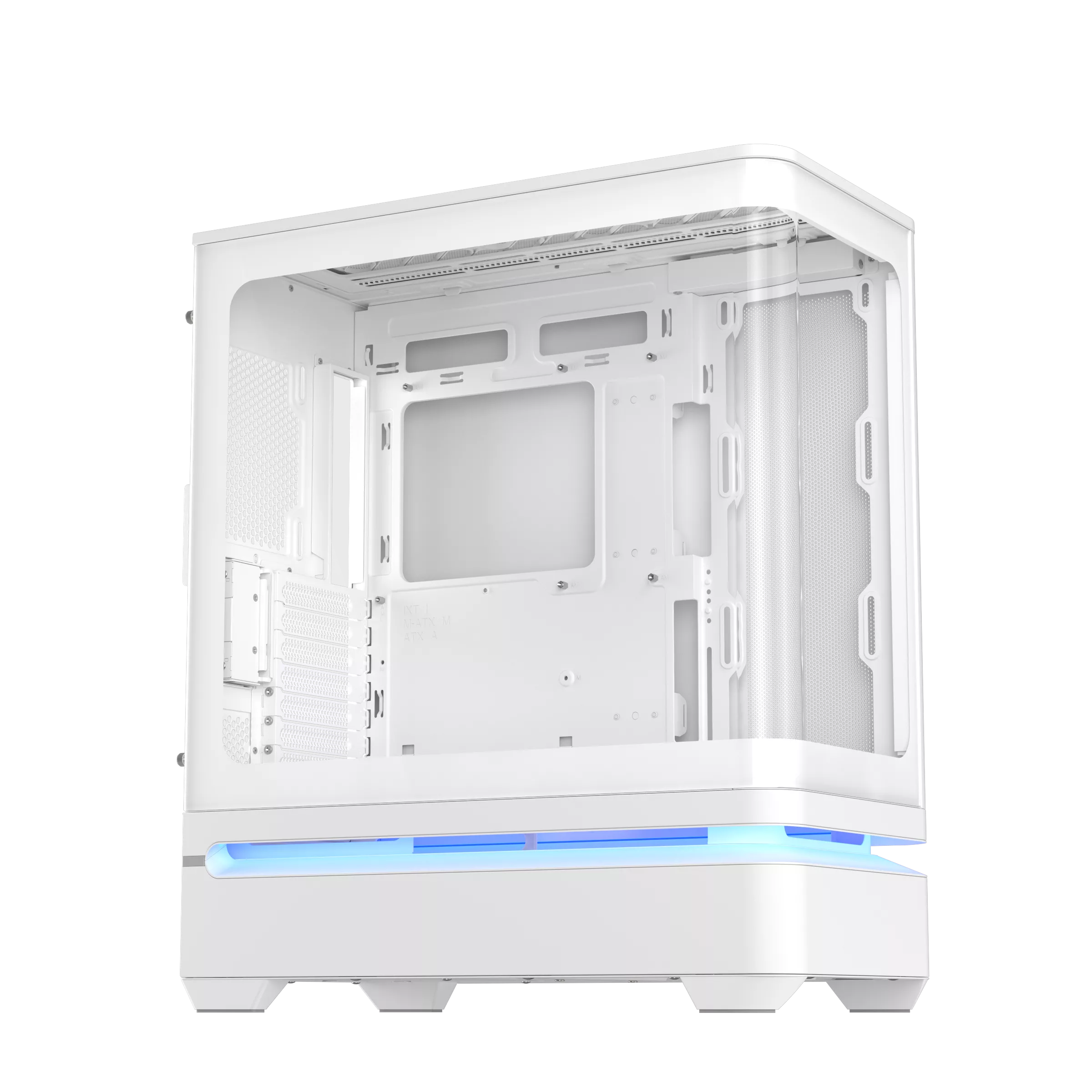
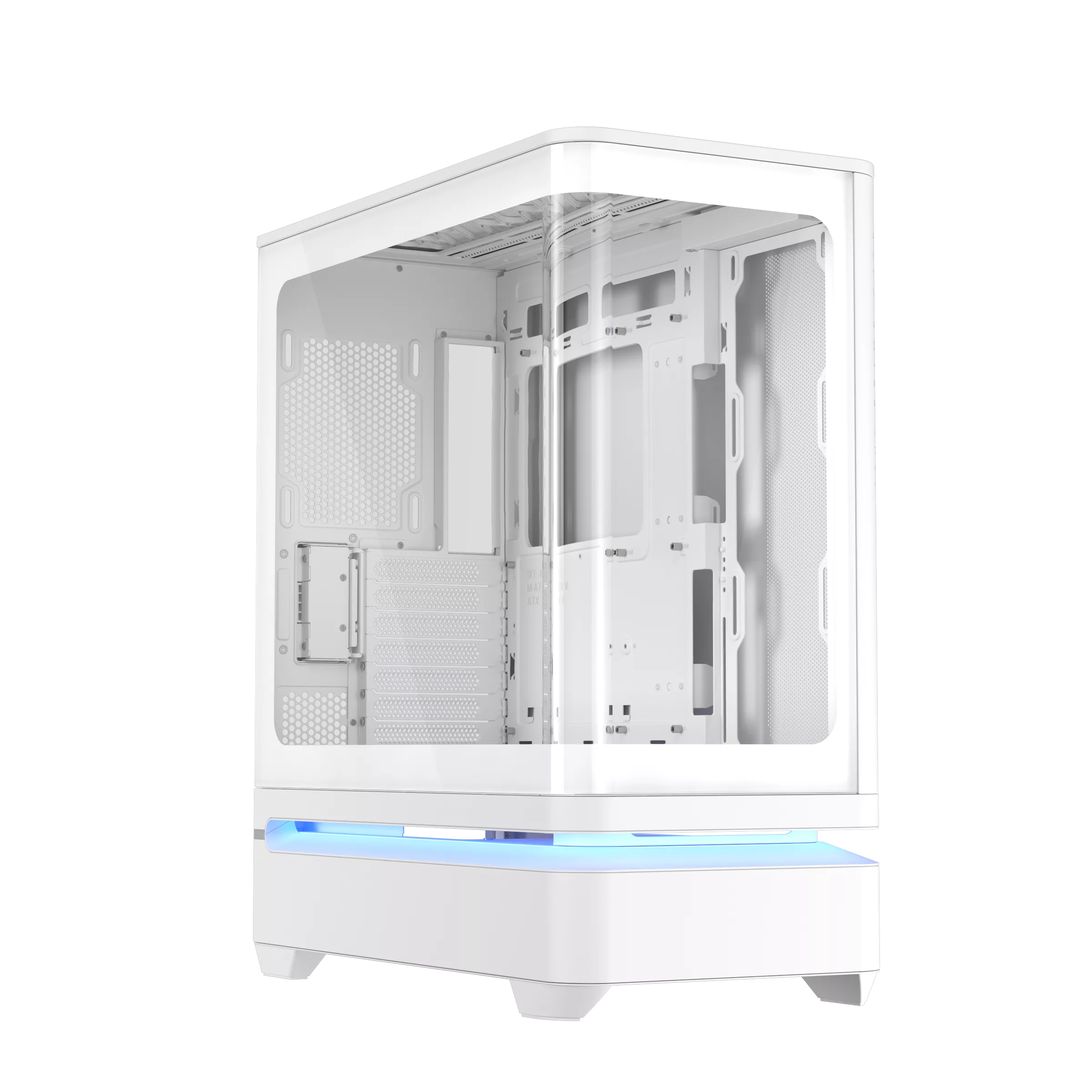
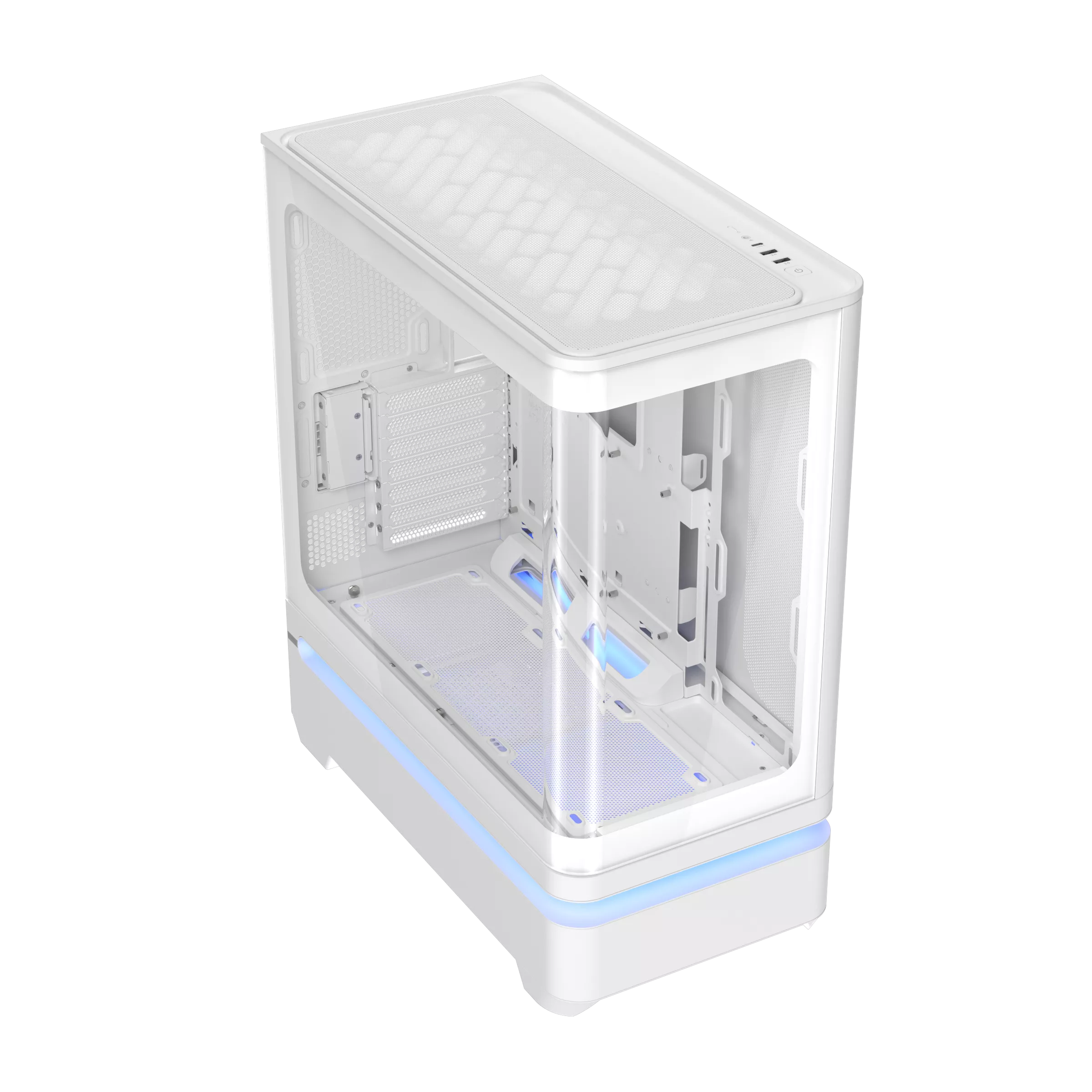
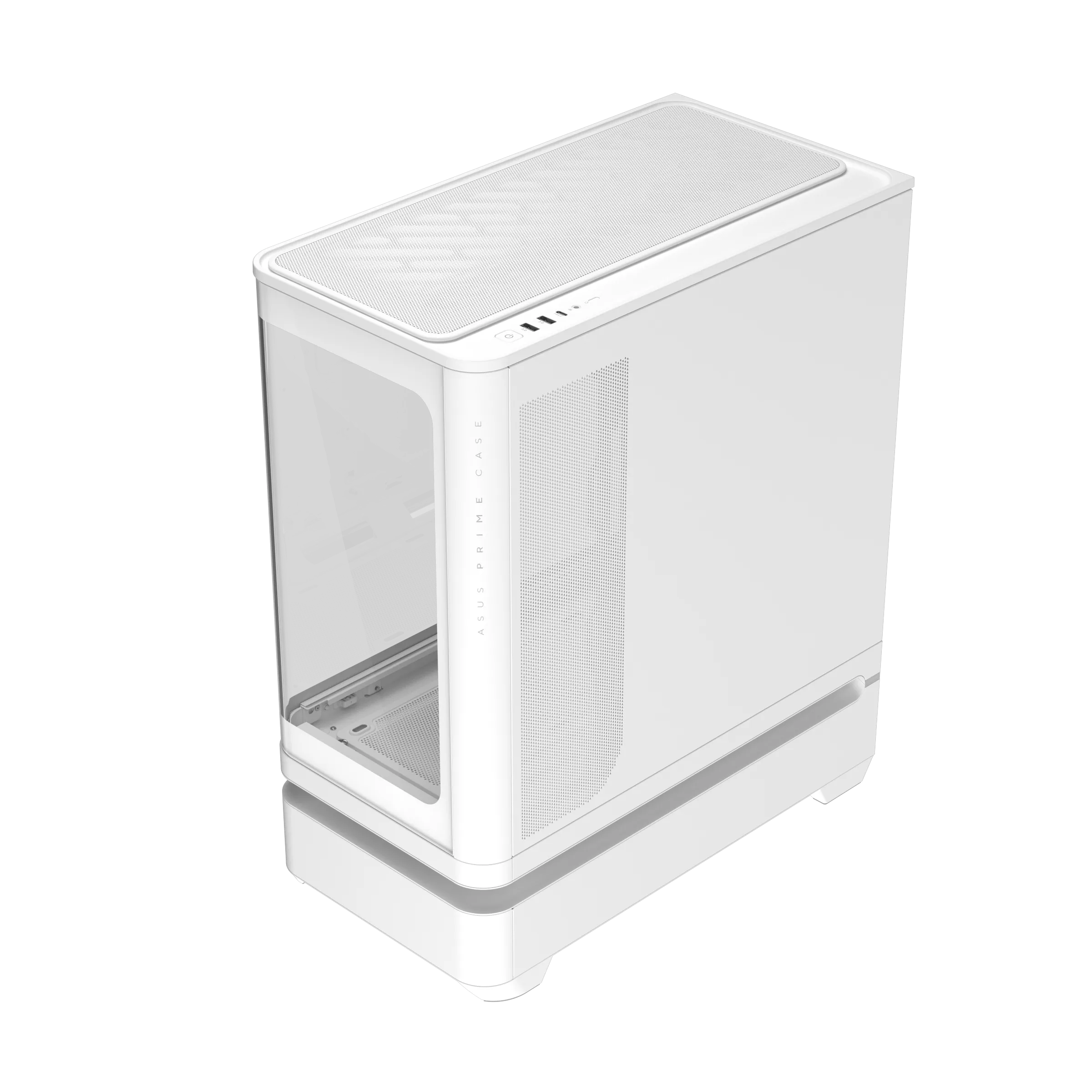
The standard Prime AP304 includes an integrated ARGB lighting band near the bottom that supports ASUS Aura Sync, but it does not list preinstalled case fans. The Prime AP304 ARGB version adds 4 Prime MR120 ARGB fans, with 3 installed at the side and 1 at the rear. Both models include tool free side panels, while the standard version also highlights an easy detach rail designed to simplify removing and reinstalling the curved glass panel.
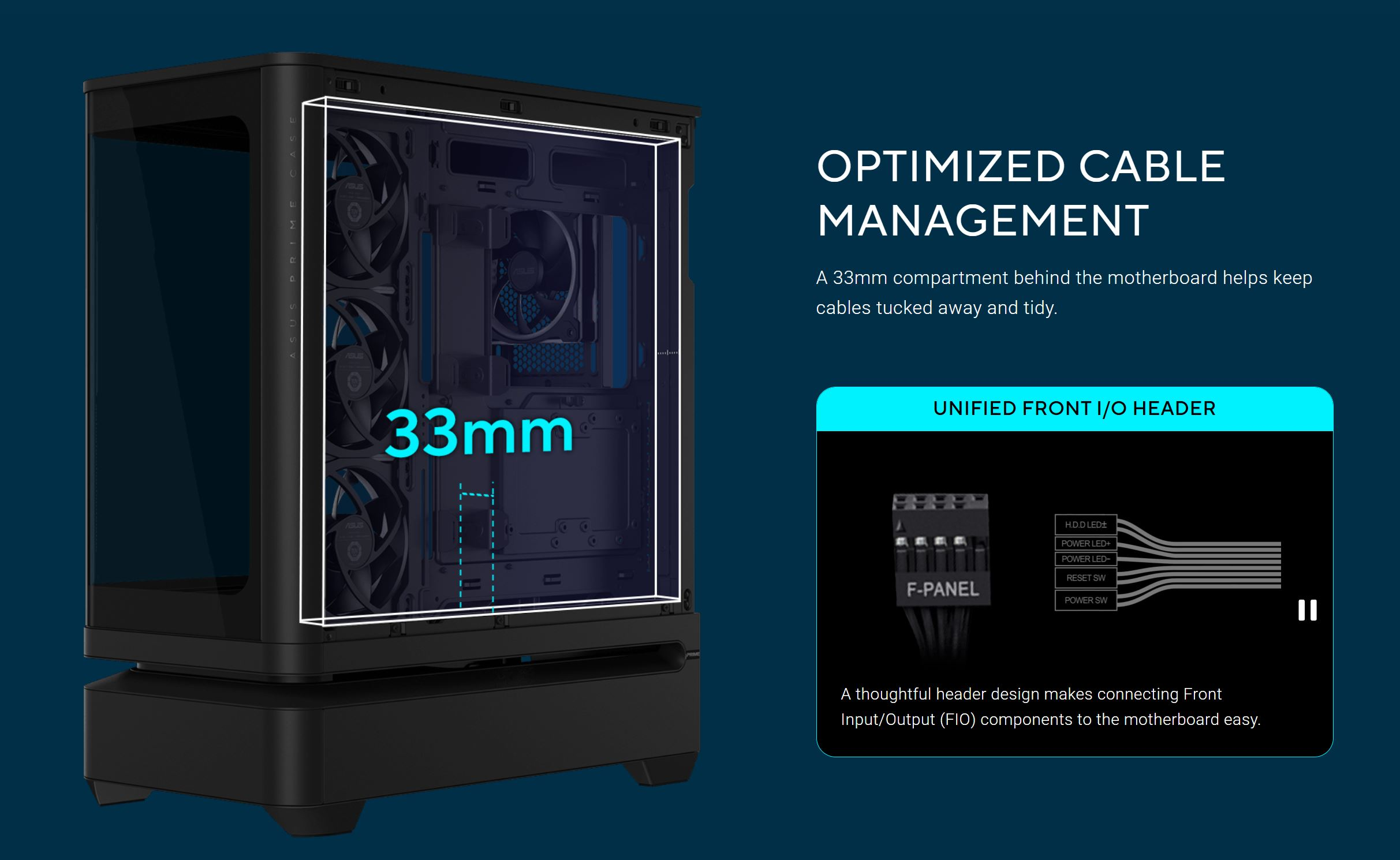
Behind the motherboard tray, builders receive 33 mm of cable management space and mounting positions for additional SATA storage. The front input and output panel includes a USB 3.2 Gen 2x2 Type C connection supporting speeds up to 20 Gbps, alongside 2 USB 5 Gbps Type A ports and a combined audio connection. ASUS will offer the chassis in black and white, although pricing and regional availability have not been announced.
The Prime AP304 enters an increasingly competitive panoramic case market alongside products such as the Antec C6 Curve Air, which also combines curved glass with a bottom focused airflow layout. ASUS differentiates its design through the dedicated slot vent, tool free graphics card clamp, and integrated Aura Sync lighting.
The Prime AP304 addresses the main weakness of panoramic cases by creating a dedicated airflow route beneath the graphics card instead of relying only on side mounted fans. Its support for 420 mm graphics cards, 360 mm radiators, and 175 mm air coolers also makes it suitable for high performance gaming and creator systems.
The standard model may require a significant additional investment in fans, especially because ASUS recommends using as many as 10. The ARGB version should offer a more complete starting configuration, but its value will depend heavily on pricing once regional listings become available.
Would you choose the Prime AP304 for its panoramic design and dedicated graphics card airflow, or would you still prefer a traditional mesh front case?
