
ARM CEO Says New AGI CPU Will Not Alienate NVIDIA, but Could Put Fresh Pressure on Intel and AMD

ARM’s move from a pure IP licensing company into a direct compute provider is one of the boldest shifts the semiconductor industry has seen in years, and CEO Rene Haas is already making clear who he believes will feel the pressure most. In a recent interview with WIRED, Haas argued that ARM’s new AGI CPU should strengthen the broader ARM ecosystem rather than damage relationships with partners like NVIDIA. At the same time, he openly suggested that Intel and AMD have more reason to worry as ARM steps more aggressively into the server CPU space.
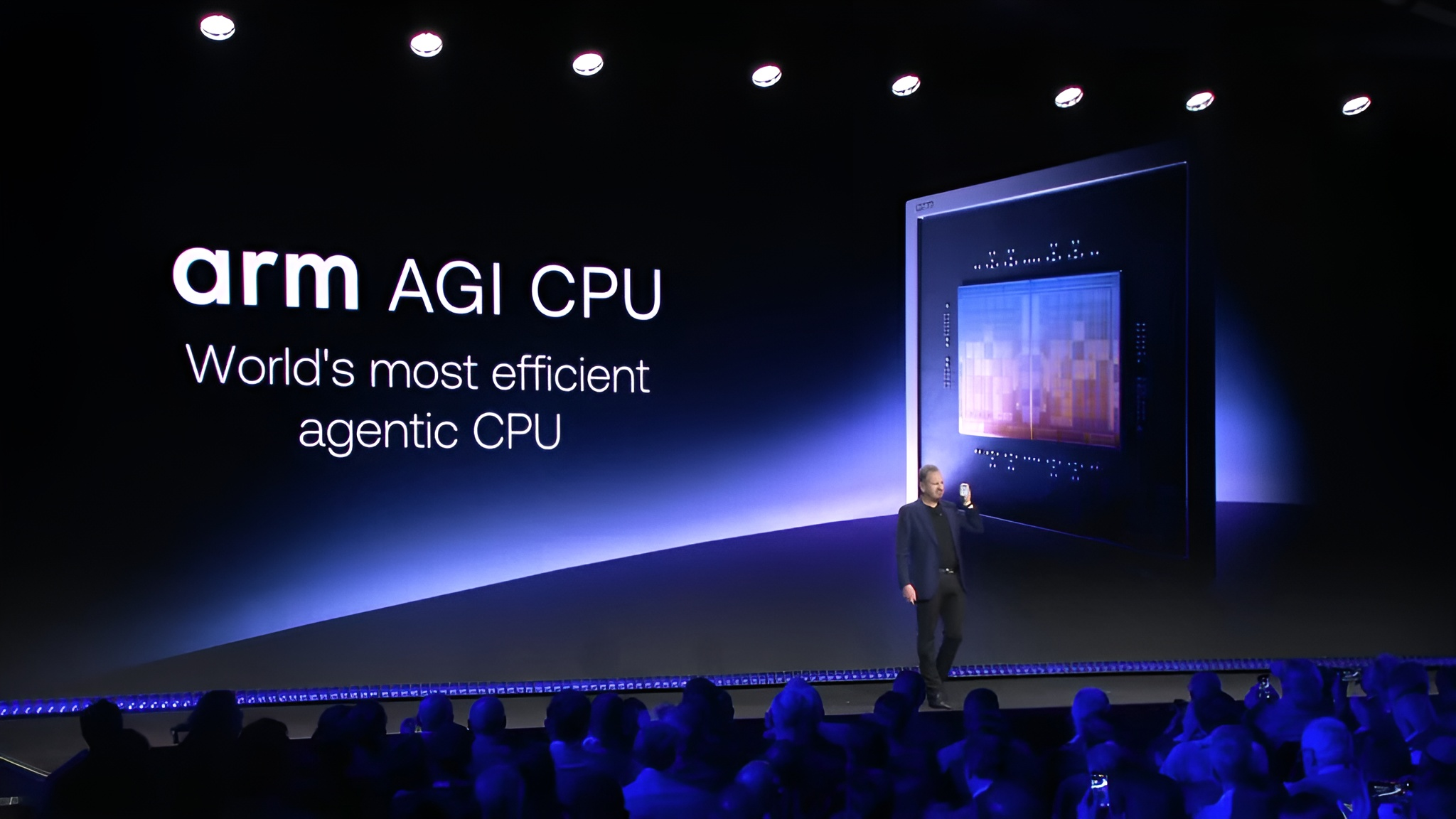
That confidence comes after ARM officially unveiled the AGI CPU as its first in house data center processor, marking a major strategic expansion beyond its traditional role as a supplier of architecture and platform technology to other chipmakers. ARM says the processor is aimed at agentic AI infrastructure and projects that the AGI CPU alone could generate around 15 billion dollars in annual revenue by 2031, a number that immediately signaled how seriously the company is treating this new business line. Reuters also reported that Meta is the lead partner for the product, with production expected to use TSMC’s 3 nanometer process.
Haas framed the decision in ecosystem terms. In the WIRED interview, he compared ARM’s move to Microsoft building Surface hardware or Google making Pixel phones, arguing that sometimes a platform company needs to build its own product to expand the market around its technology. That analogy is strategically smart, because it positions ARM’s direct silicon push as a catalyst rather than a betrayal of partners. The message is essentially that a stronger ARM hardware presence can lift the whole ecosystem, not just ARM’s own revenue.
The tension, of course, is that ARM is no longer just enabling some of the biggest names in compute. It is now also competing alongside them. That creates a more complicated dynamic in the server market, where ARM based designs already power products and platforms tied to companies such as NVIDIA, Amazon, and others. Haas was directly asked whether this might upset Jensen Huang and NVIDIA, and his answer was revealing. He said it would be beneficial to the ARM ecosystem and beneficial to Jensen as well, while adding that if NVIDIA has Vera and ARM has AGI CPU, then “it’s not great for Intel and AMD.” That is about as direct as a public competitive signal gets.
From a market standpoint, his logic is understandable. Intel and AMD remain the primary x86 incumbents in server CPUs, so any successful expansion of ARM’s direct silicon ambitions naturally targets their territory first. ARM is also claiming strong data center efficiency benefits, with its official launch materials saying the AGI CPU can deliver more than 2 times performance per rack versus x86 CPUs in certain AI infrastructure scenarios. That does not automatically guarantee market share, but it shows exactly how ARM intends to frame the value proposition.
Still, the skepticism around this move is not hard to understand. ARM’s historic strength came from being the neutral layer that empowered many different chip companies at once. Becoming a direct chip vendor changes that perception, especially when the company is now asking partners to keep building on ARM technology while also competing against ARM’s own finished product in some markets. That tension is likely to become one of the defining questions around the AGI CPU over the next few years, particularly if more hyperscalers or cloud customers start adopting it.
There is also the practical issue of scale. ARM may have a strong lead customer in Meta and a compelling AI narrative, but success in the server CPU market requires more than an impressive keynote and long term revenue targets. It requires sustained manufacturing access, design execution, software support, ecosystem trust, and real world deployment volume. With the AGI CPU reportedly being fabbed on TSMC 3 nanometer, capacity and supply become part of the story too, especially in a market where advanced node access remains highly competitive.
Overall, Haas is trying to sell a delicate message. He wants partners to believe ARM building its own chip is good for them, while competitors are expected to see it as a new threat. That balancing act may work if the AGI CPU truly expands the pie for ARM based computing. But if partners begin to view ARM less as an ecosystem architect and more as a rival with privileged visibility into the platform stack, then this strategy could become much harder to manage.
The AGI CPU may be a powerful next step for ARM, but the bigger question is no longer whether ARM can design a serious server chip. It is whether the company can do so without reshaping the trust that made its ecosystem so powerful in the first place.
What do you think, can ARM grow into a serious direct server CPU competitor without damaging partner confidence, or is this the start of a much more complicated rivalry inside the ARM ecosystem?
