
Apple and Google Reportedly Eye Intel Foundry 18A P and EMIB as Intel’s Next Gen Node Push Gains Momentum
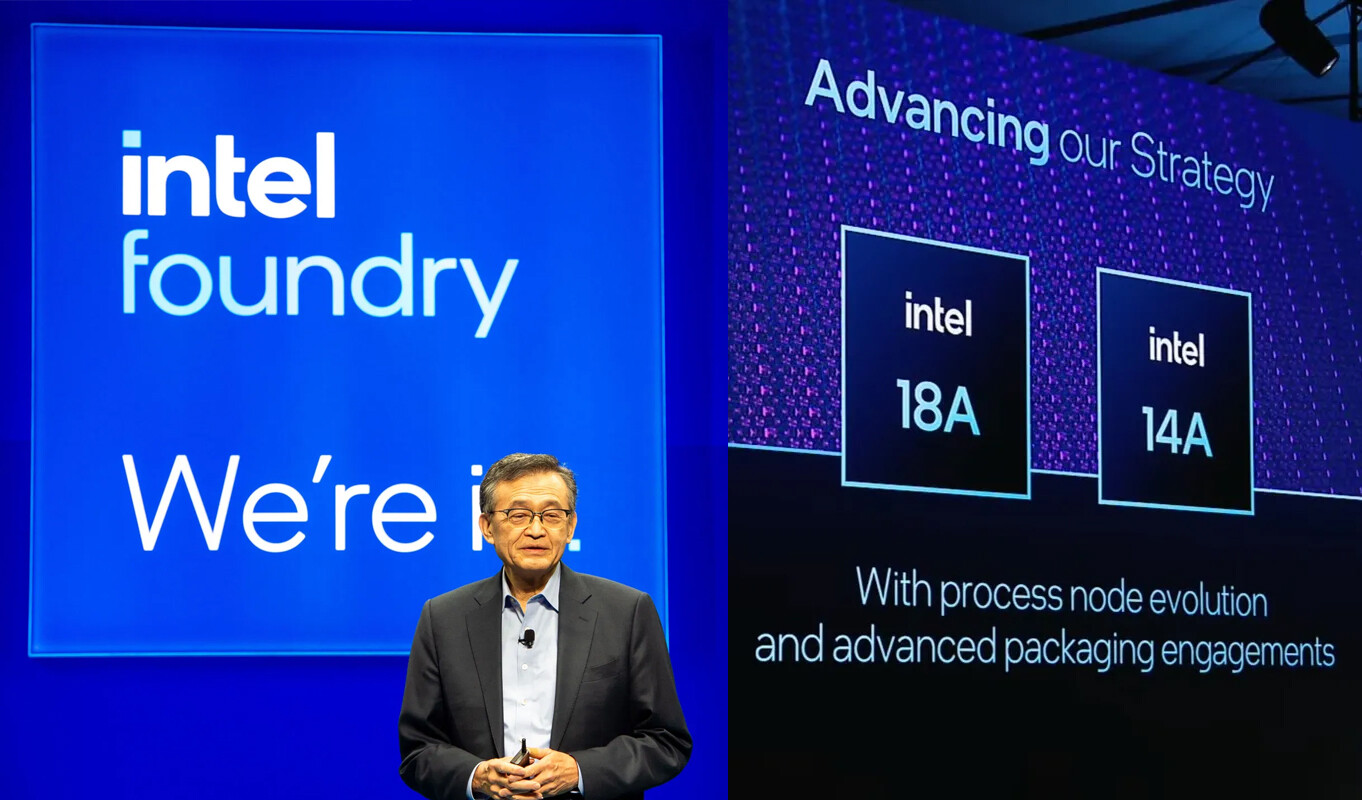
Intel’s foundry comeback narrative is getting another boost, this time from supply chain reporting that points to Apple and Google as potential future users of Intel’s advanced process and packaging technologies. According to a report from China Times, some customers have already started test chip verification on Intel’s 18A process, with 18A P deployment moving forward in parallel as the process design kit matures. The same report claims Apple is expected to use Intel’s 18A P process for some future M series client chips, while Google is reportedly interested in Intel’s EMIB packaging for an upcoming TPU v8e design.
At this stage, that should still be treated as supply chain reporting rather than a confirmed public customer announcement from Intel, Apple, or Google. Intel has not officially named either company as a foundry customer for 18A P or EMIB. That distinction matters, because this is the kind of story that can shift quickly depending on test results, internal roadmap changes, and broader customer sourcing strategy.
Even so, the timing of the report lines up with Intel’s own recent messaging. In its latest quarterly results, Intel said Foundry revenue reached 5.4 billion dollars in Q1 2026, up 16% year over year, while also noting that better yields across Intel 4, Intel 3, and 18A helped improve gross margins. Intel also said it intentionally increased 14A investments to support both internal and external customer evaluations. That does not confirm the Apple or Google claims, but it does support the broader picture that external customer engagement around Intel’s next generation nodes is actively progressing.
The China Times report also says Intel’s 18A P node offers about an 8% performance per watt gain over base 18A while maintaining the same density. If accurate, that would make 18A P a more attractive refinement node for customers who want a power efficiency uplift without waiting for a larger architectural jump. Intel has been publicly emphasizing 18A readiness around Panther Lake, saying during its recent earnings cycle that high volume manufacturing on 18A has already been achieved for that product family.
EMIB is the other major part of this story. If Google is indeed evaluating Intel’s packaging for TPU v8e, that would be a meaningful signal because EMIB is one of Intel’s clearest differentiators in advanced packaging. It allows multi die integration without requiring the same full interposer approach used in some competing solutions. Intel has spent years positioning EMIB as a scalable answer for increasingly complex AI and high performance compute designs, so any interest from a hyperscale AI customer would strengthen the technology’s commercial profile. This interpretation is an inference based on Intel’s longstanding EMIB positioning and the reported Google interest, not an official Google confirmation.
The report also says 14A customer momentum continues to build, with 14A PDK 0.9 expected by the end of this year. That also fits Intel’s official tone. Recent earnings coverage highlighted that customer engagement around 14A is progressing well and that Intel sees 14A as one of the most important future validation points for the foundry business.
Taken together, the picture is becoming more interesting. Officially, Intel is saying 18A is ramping, 14A customer evaluations are advancing, and foundry execution is improving. Unofficially, supply chain reports now suggest that Apple could be evaluating 18A P for future client silicon and Google could be exploring EMIB for a next generation TPU. That does not mean these are locked deals. But it does suggest Intel Foundry is moving from theoretical comeback talk into a stage where very large customers are at least willing to test the waters.
If even part of this report proves accurate, it would be one of the strongest external validations yet for Intel’s advanced node and packaging roadmap. For now, though, the safest conclusion is that Intel’s foundry story is gaining momentum, while the Apple and Google parts remain credible but unconfirmed reports.
If Apple or Google really do tap Intel Foundry for future products, do you see that as a turning point for Intel’s contract manufacturing business?
