
AMD Ryzen AI 400 Gorgon Point Goes Official As A Strix Point Refresh With 10% To 12% Gains, Higher Clocks and more
AMD has officially introduced the Ryzen AI 400 mobile family, codenamed Gorgon Point, positioning it as a refresh of the existing Ryzen AI 300 Strix Point lineup that has been in the market for roughly 1 year. The core value proposition is straightforward: AMD keeps the same underlying CPU, GPU, and NPU architectural foundation, Zen 5 for CPU, RDNA 3.5 for graphics, and XDNA 2 for AI, then extracts additional performance through platform optimizations, selective core configuration updates, and clock uplift across key SKUs.
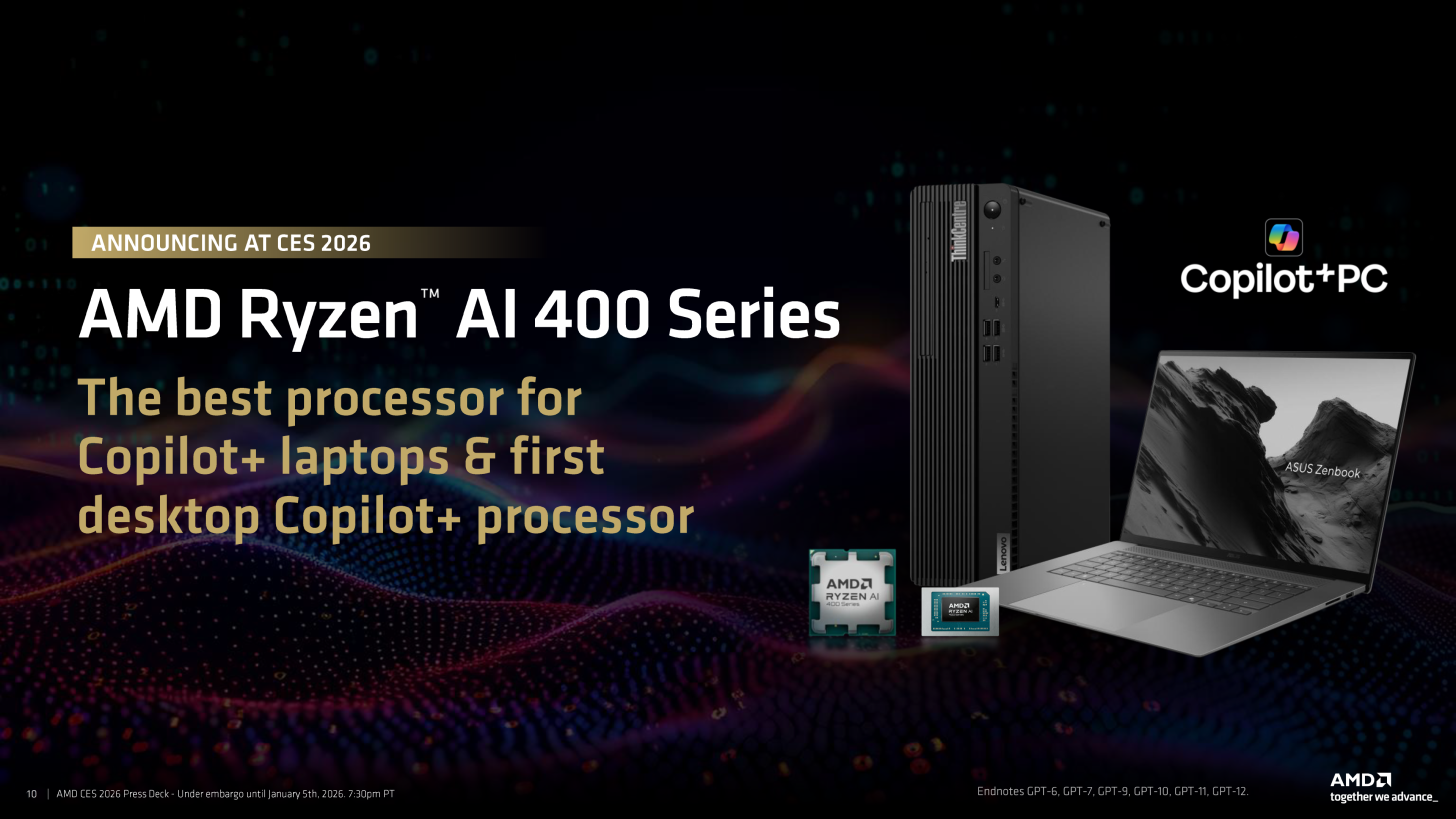
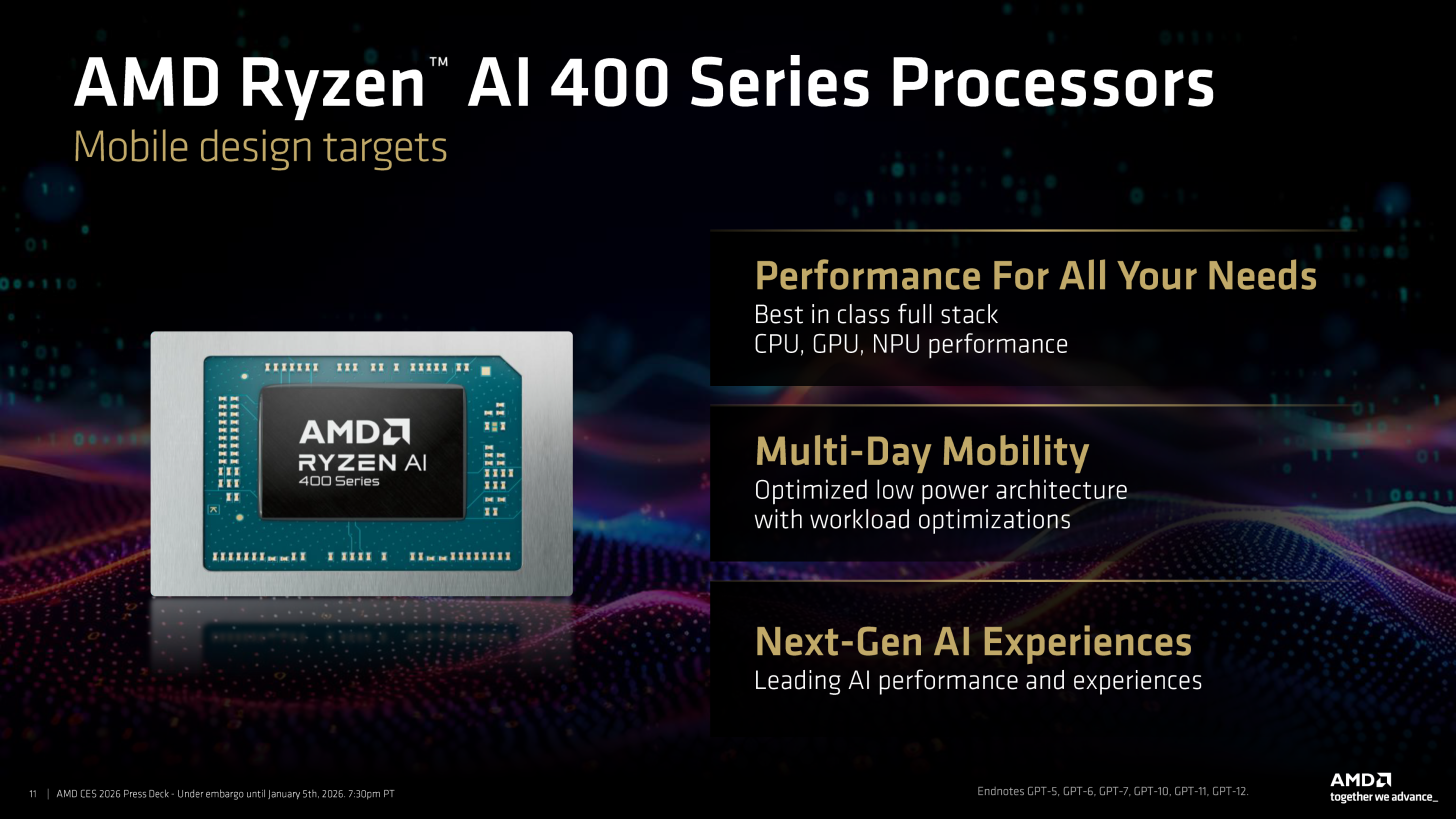
From a product strategy perspective, Ryzen AI 400 is designed to widen AMD’s coverage across mainstream, high end, and enthusiast class laptops while tightening the company’s Copilot Plus PC narrative. AMD is framing the lineup around best in class performance per watt, multi day mobility targets, and next gen on device AI experiences, which aligns well with where the portable gaming and creator markets are trending in 2026. Many buyers want a thin system that can run games, stream, edit, and still deliver meaningful battery life, and AMD is clearly aiming to make the iGPU and NPU story strong enough that more SKUs can stand on their own without forcing a discrete GPU in every configuration.
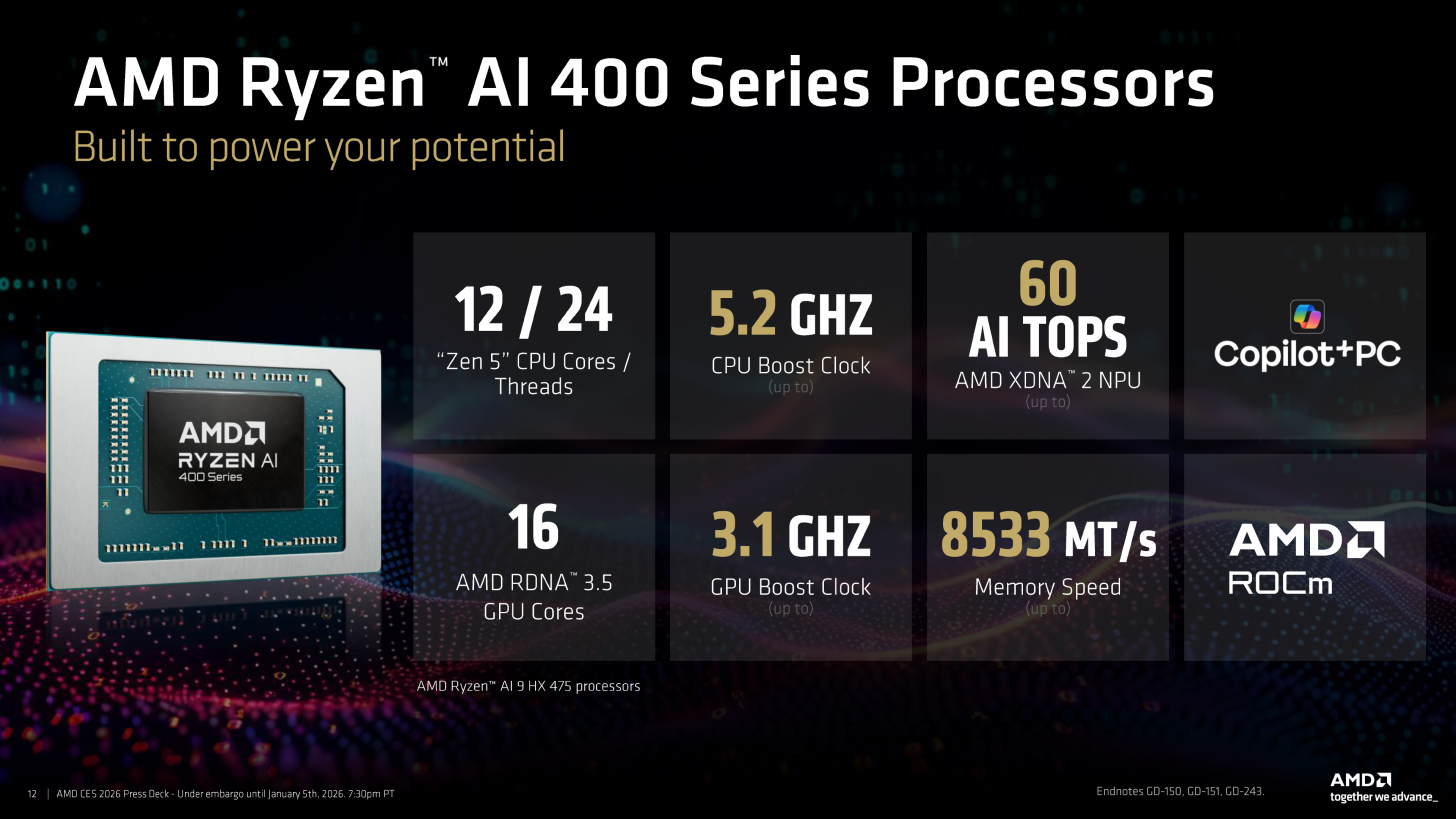
Key platform highlights AMD is emphasizing for Ryzen AI 400 include up to 12 Zen 5 cores, boost clocks up to 5.2GHz, up to 60 AI TOPS on the XDNA 2 NPU, up to 16 RDNA 3.5 graphics compute units, and iGPU boost clocks up to 3.1GHz. Memory support also ticks up to LPDDR5X 8533MT/s versus the prior 8000MT/s class support on Strix Point, and AMD is calling out ROCm support as an additional capability uplift that could matter for AI and creator workflows that benefit from a more coherent software enablement path.
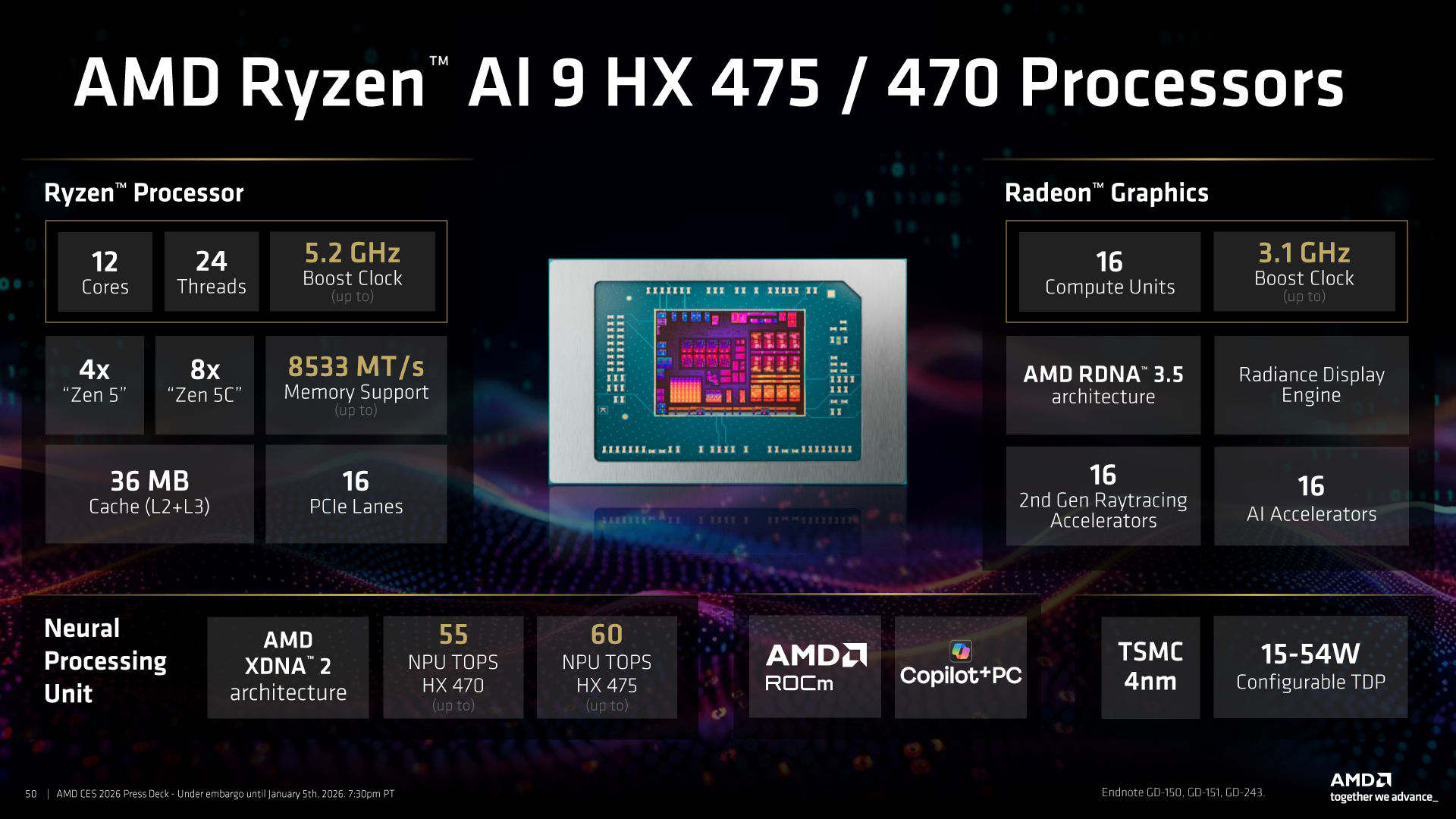
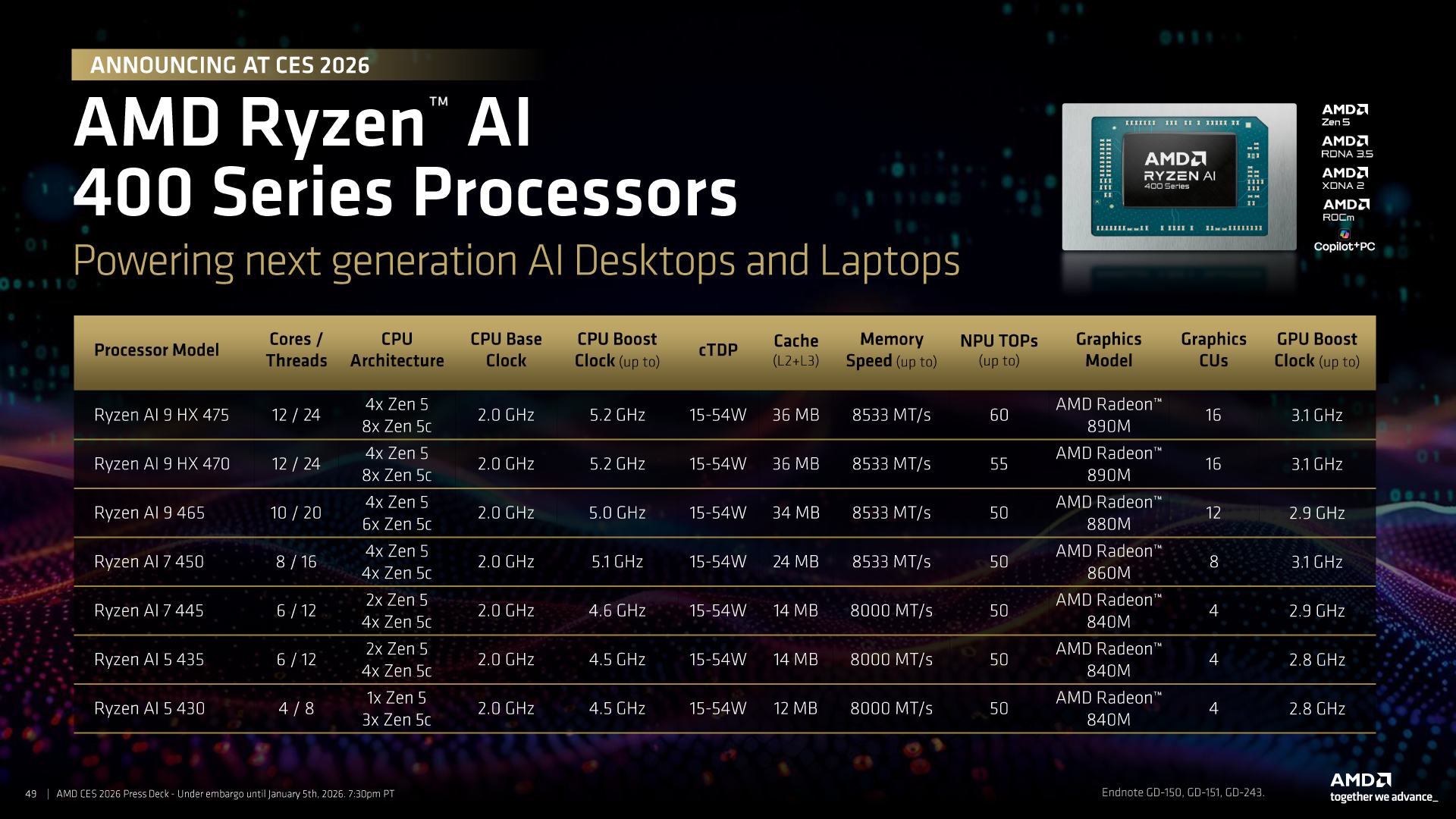
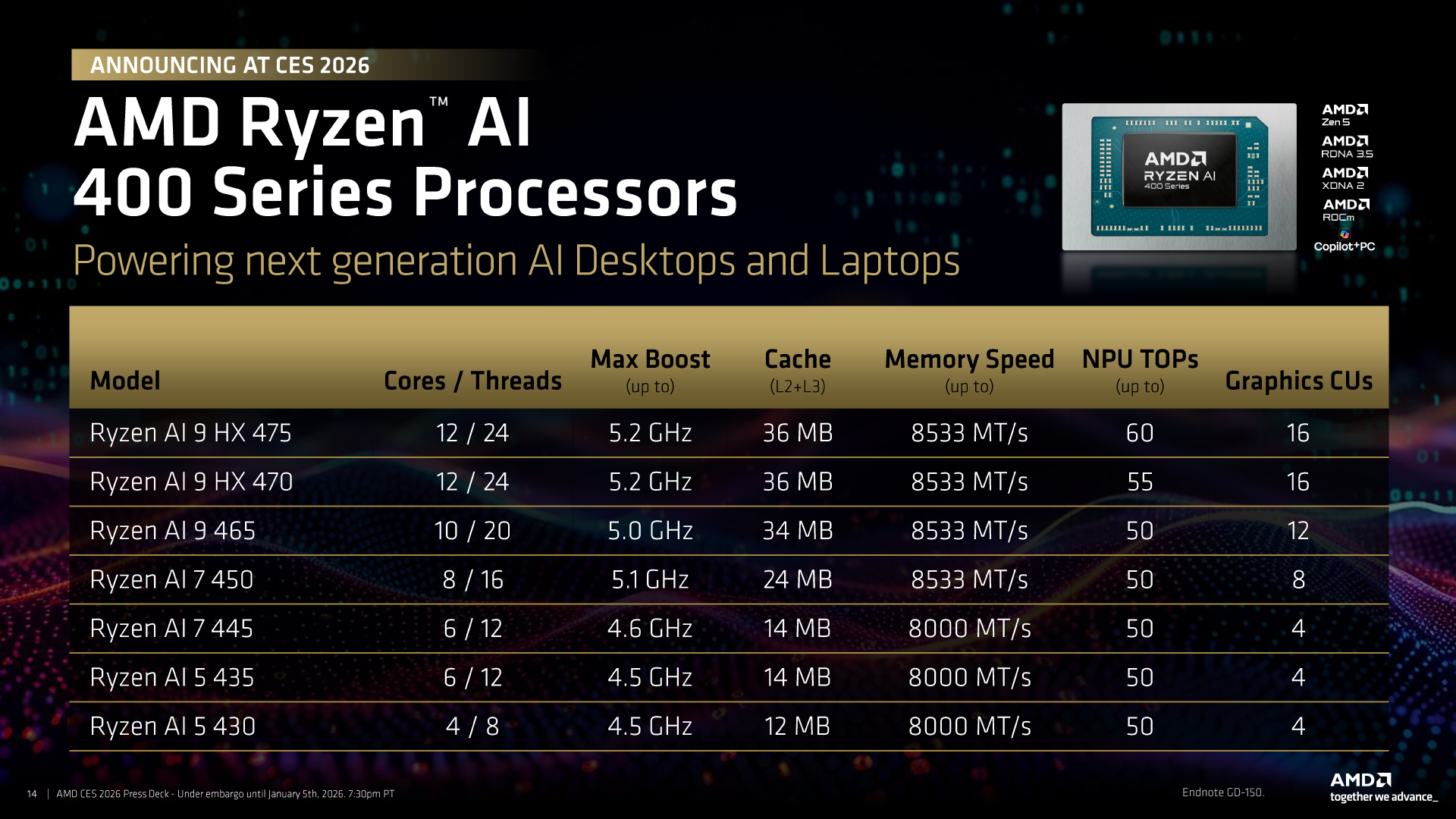
In terms of SKU stack, AMD describes a 7 processor lineup for Ryzen AI 400. The flagship is the Ryzen AI 9 HX 475, configured with 12 cores in a 4 Zen 5 plus 8 Zen 5C layout, 24 threads, up to 5.2GHz boost, 36MB combined cache, 60 NPU TOPS, and 16 RDNA 3.5 graphics compute units clocked up to 3.1GHz. AMD also highlights that 3.1GHz iGPU boost represents the fastest iGPU clock it has offered to date, and notes that some models receive an iGPU bump while 50 TOPS NPU performance is positioned as standard across the non HX models.
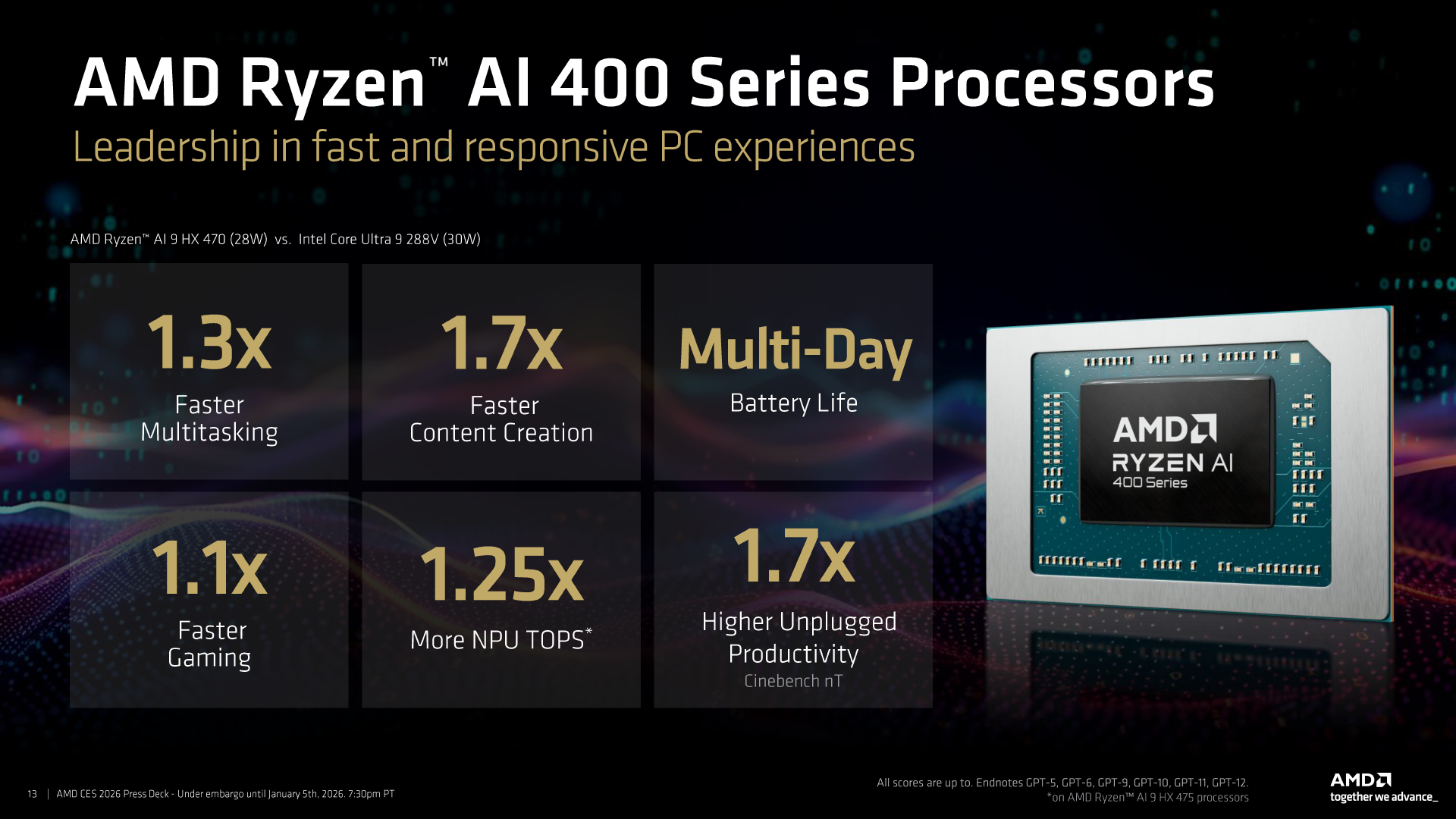
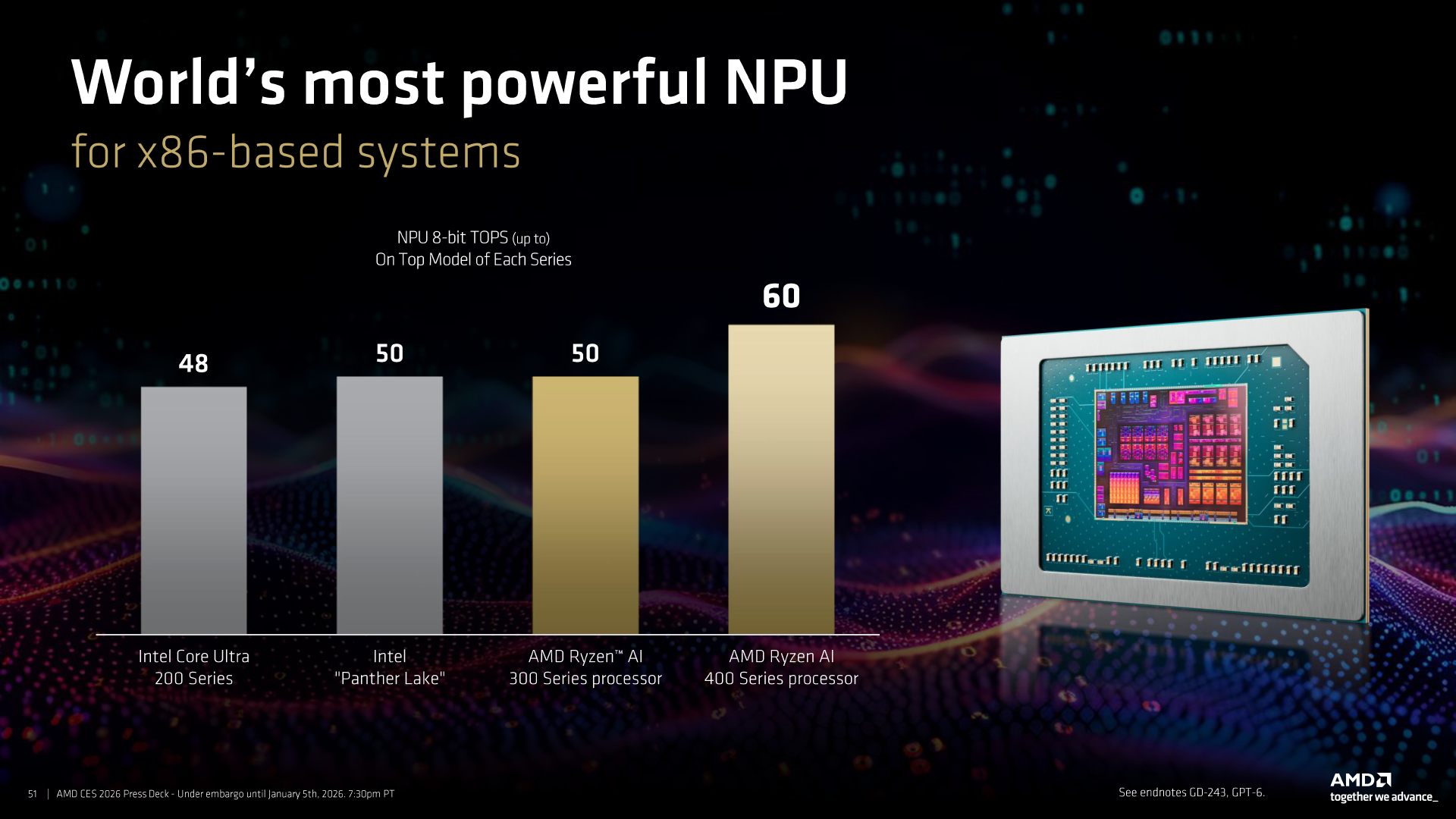
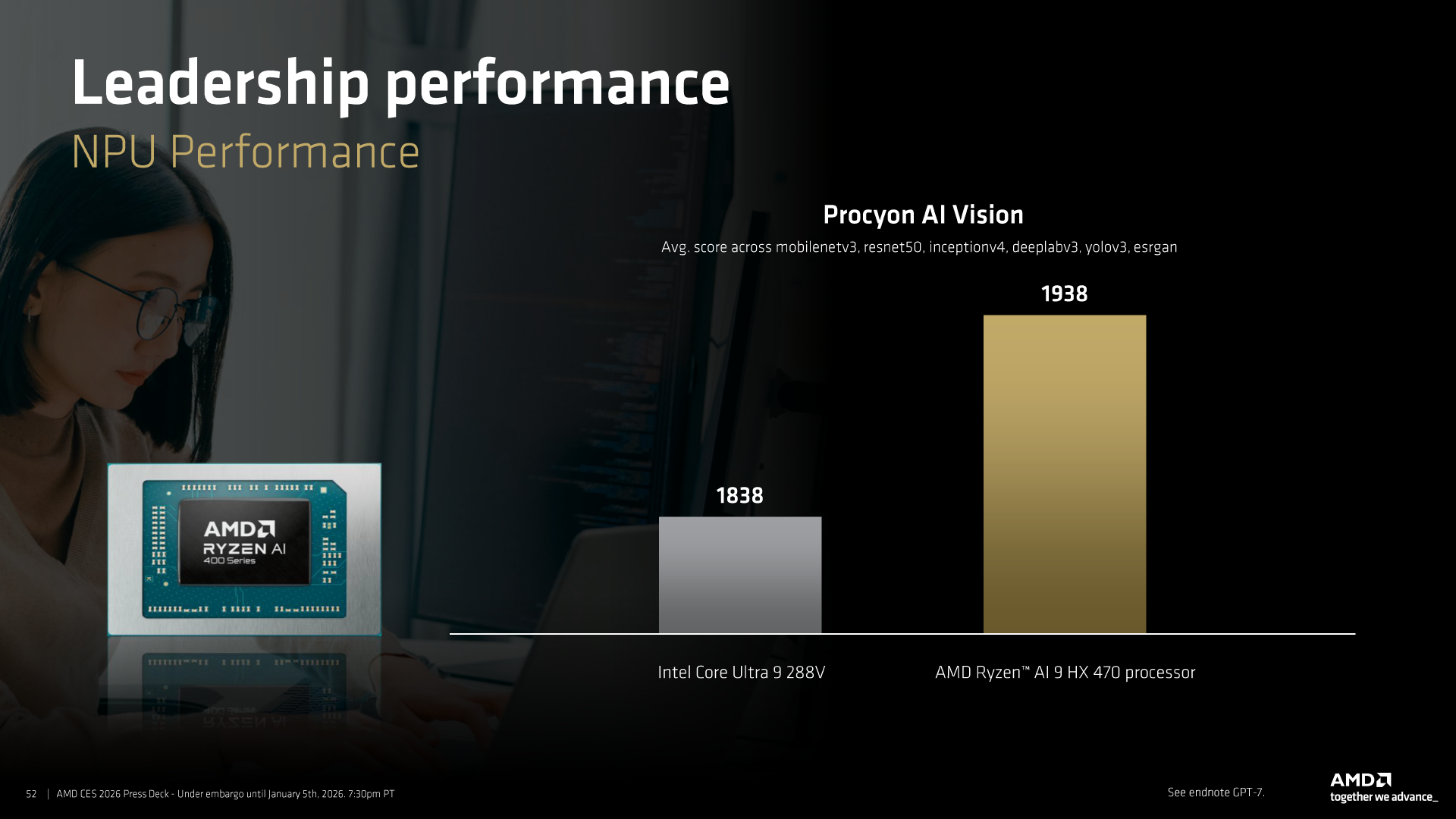
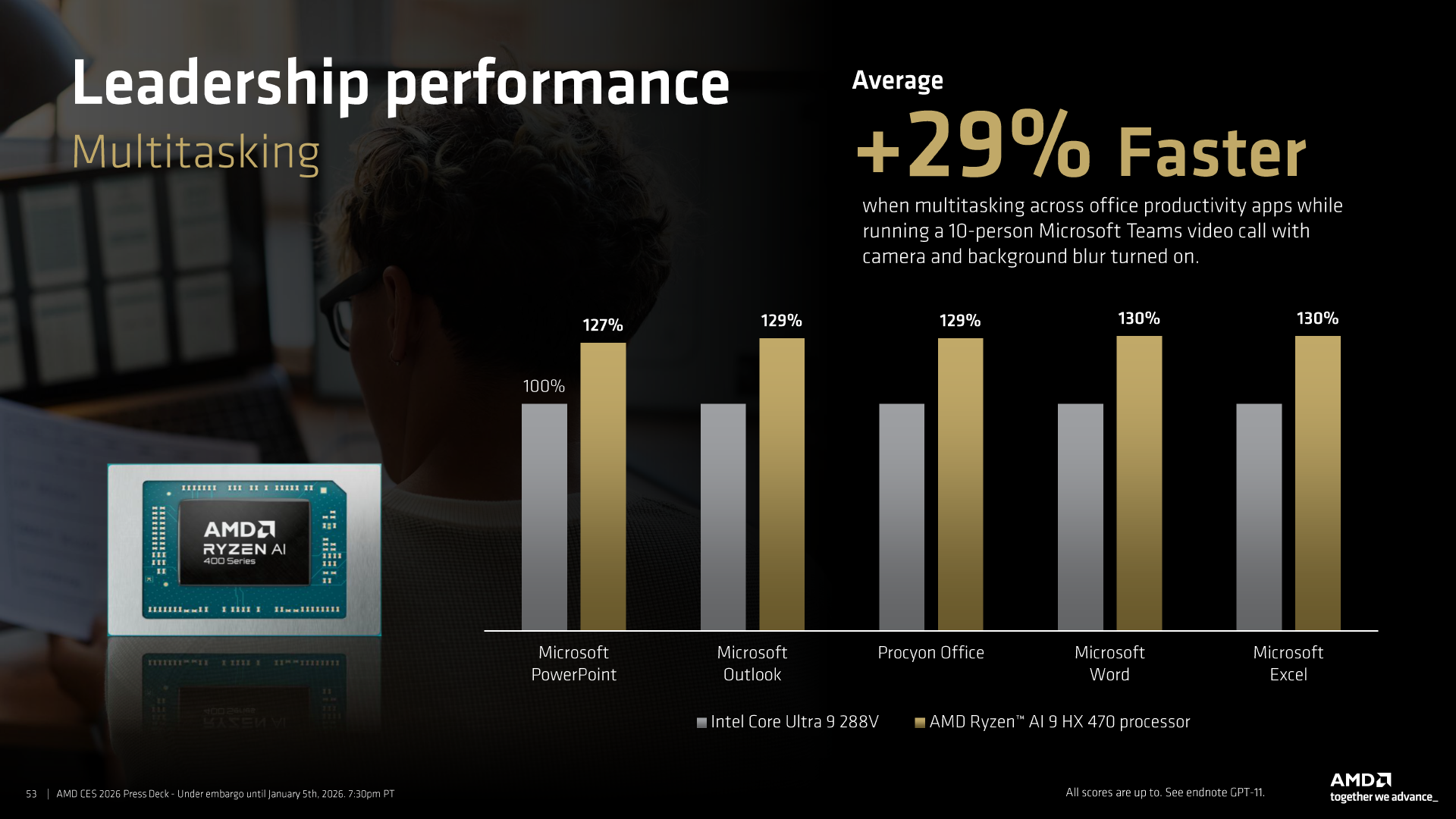
AMD’s performance framing leans heavily into AI and multitasking leadership. AMD states Ryzen AI 400 can scale to 60 TOPS versus up to 50 TOPS referenced for Intel Panther Lake, and versus 48 TOPS referenced for Lunar Lake. In UL Procyon AI Vision, AMD cites a 5.5% improvement, and it also claims multitasking leadership up to 29% in its comparisons, including a configuration where Ryzen AI 9 HX 470 is compared at 28W versus 30W for an Intel Core Ultra 9 288V reference.
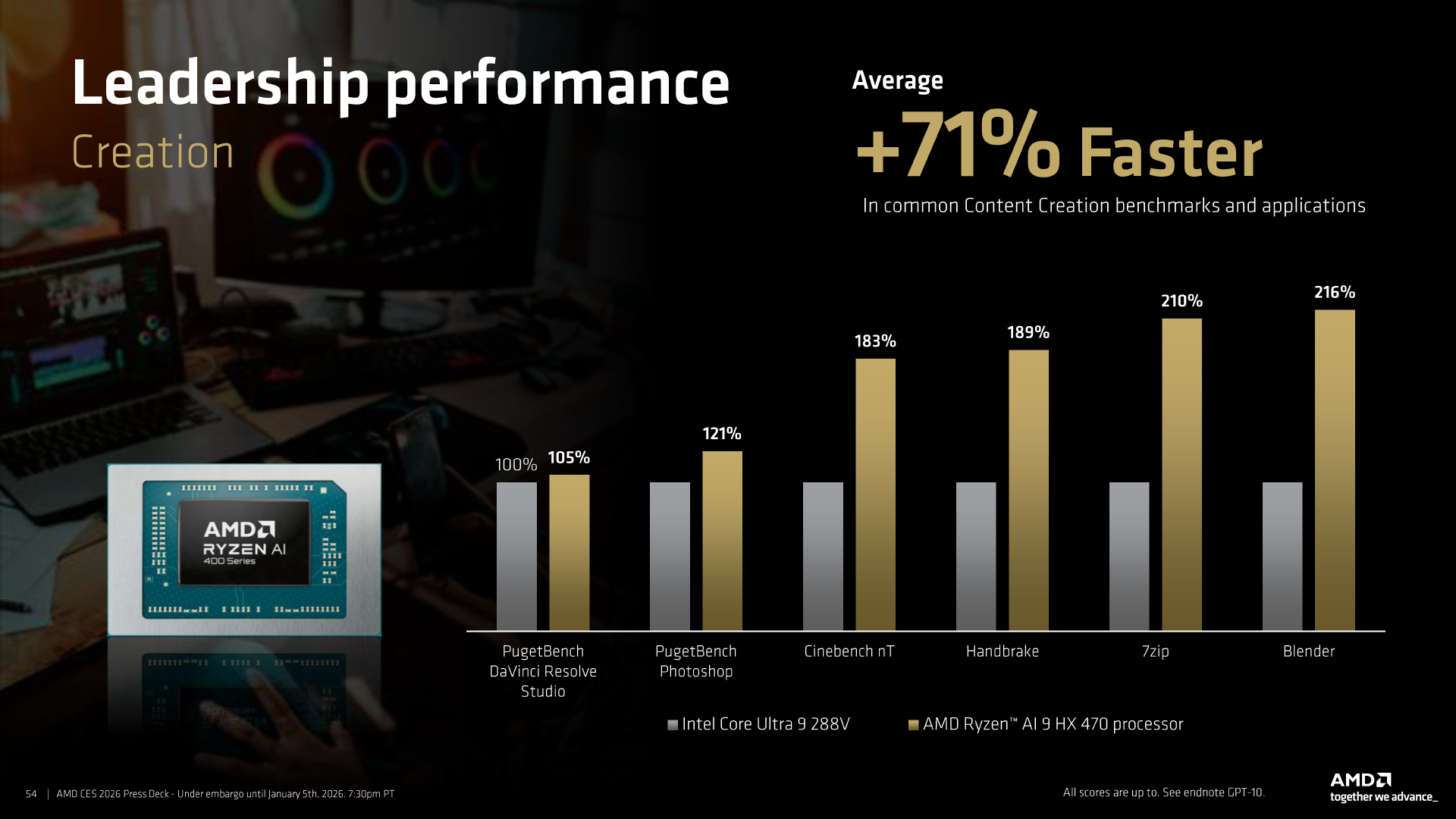
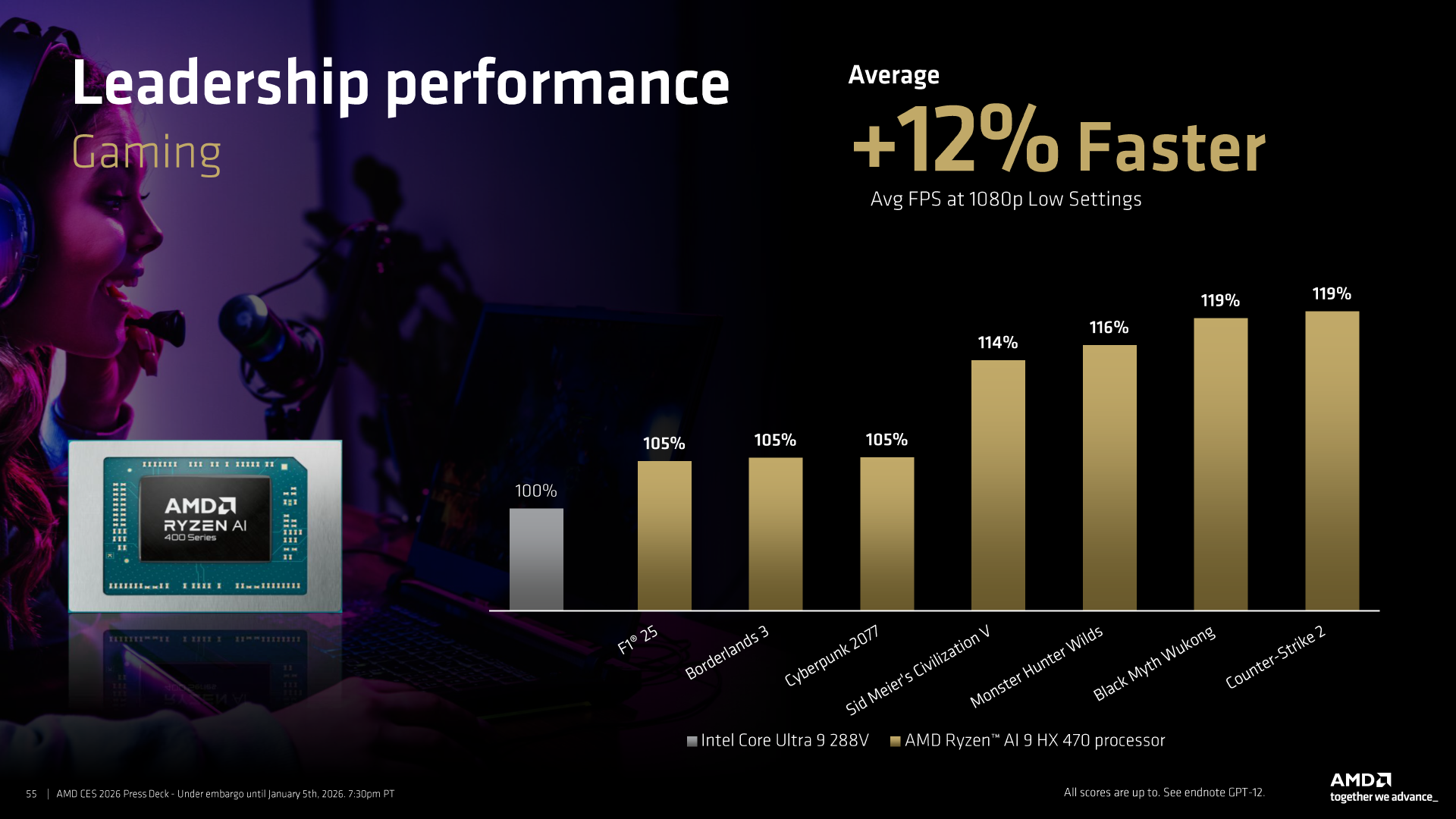
Creator performance is another major pillar in AMD’s messaging. AMD claims the Ryzen AI 9 HX 470 leads by 71% on average and can exceed 2x performance in applications such as Blender and 7 Zip, reinforcing the idea that these chips are meant to be more than office processors with an AI badge. For gaming, AMD states that the iGPU uplift can land around 12% on average versus the Intel Lunar Lake Xe2 iGPU class, with specific game callouts showing double digit gains including Counter Strike 2, Black Myth Wukong, Monster Hunter Wilds, and Civilization V. For a gamer audience, the core takeaway is that AMD is trying to make integrated graphics strong enough that more portable systems can deliver consistent 1080p experiences without immediately forcing an RTX tier discrete GPU.
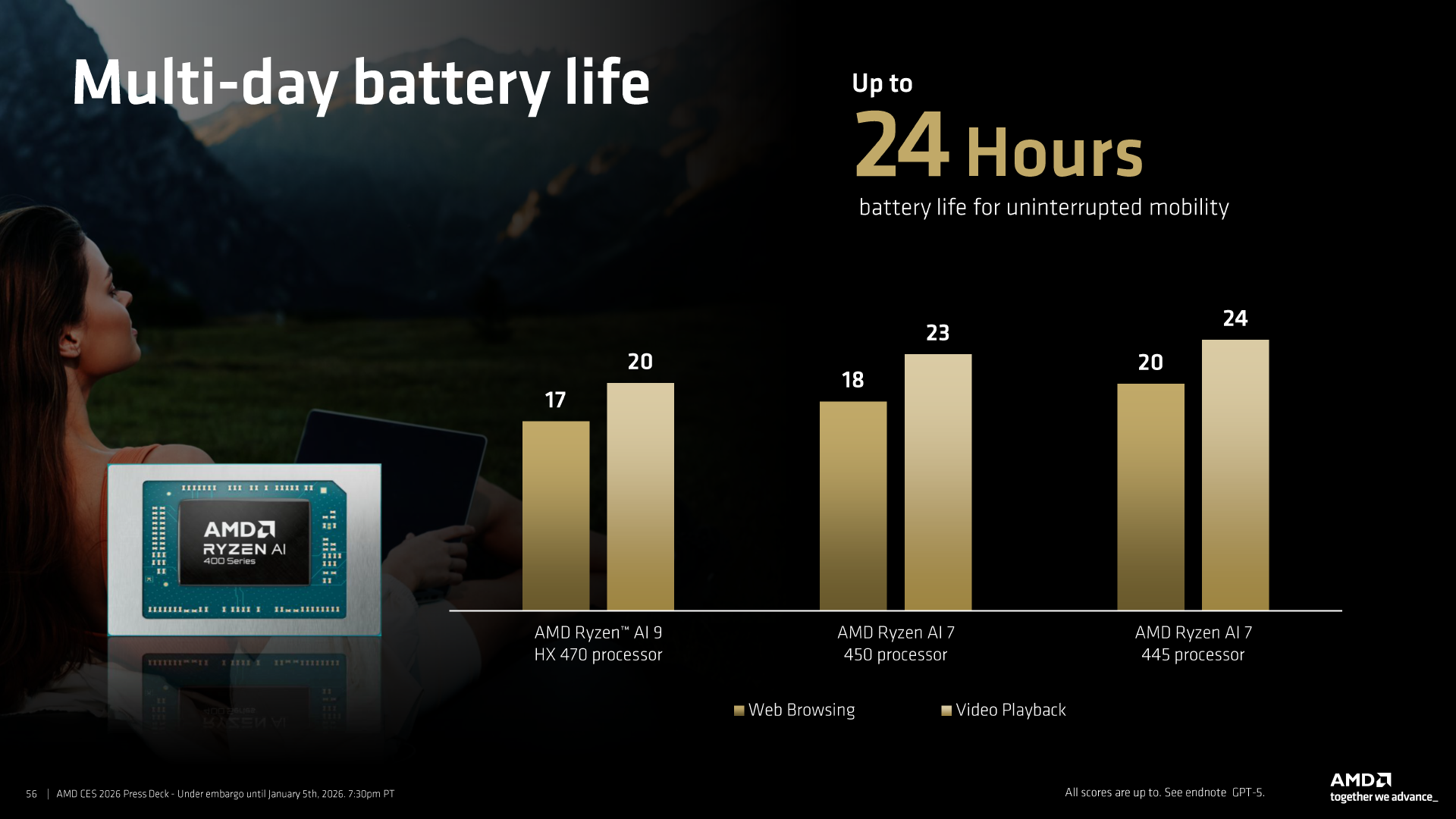
Battery life remains a headline KPI for this generation. AMD claims up to 24 hours of video playback and up to 20 hours of web browsing, which supports its narrative of multi day mobility and positions Ryzen AI 400 as a serious option for students, creators, and traveling gamers who care about endurance as much as peak FPS.
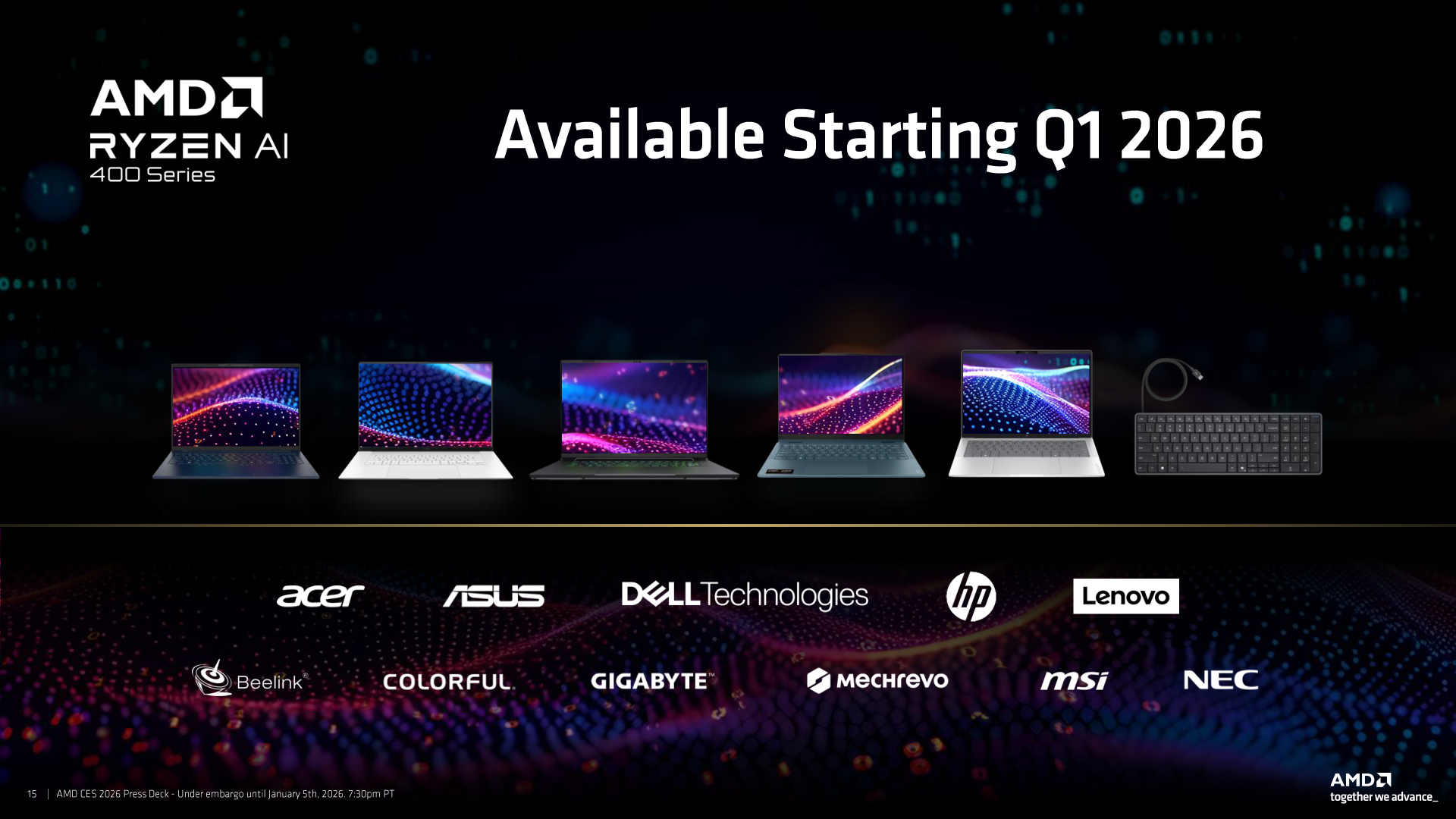
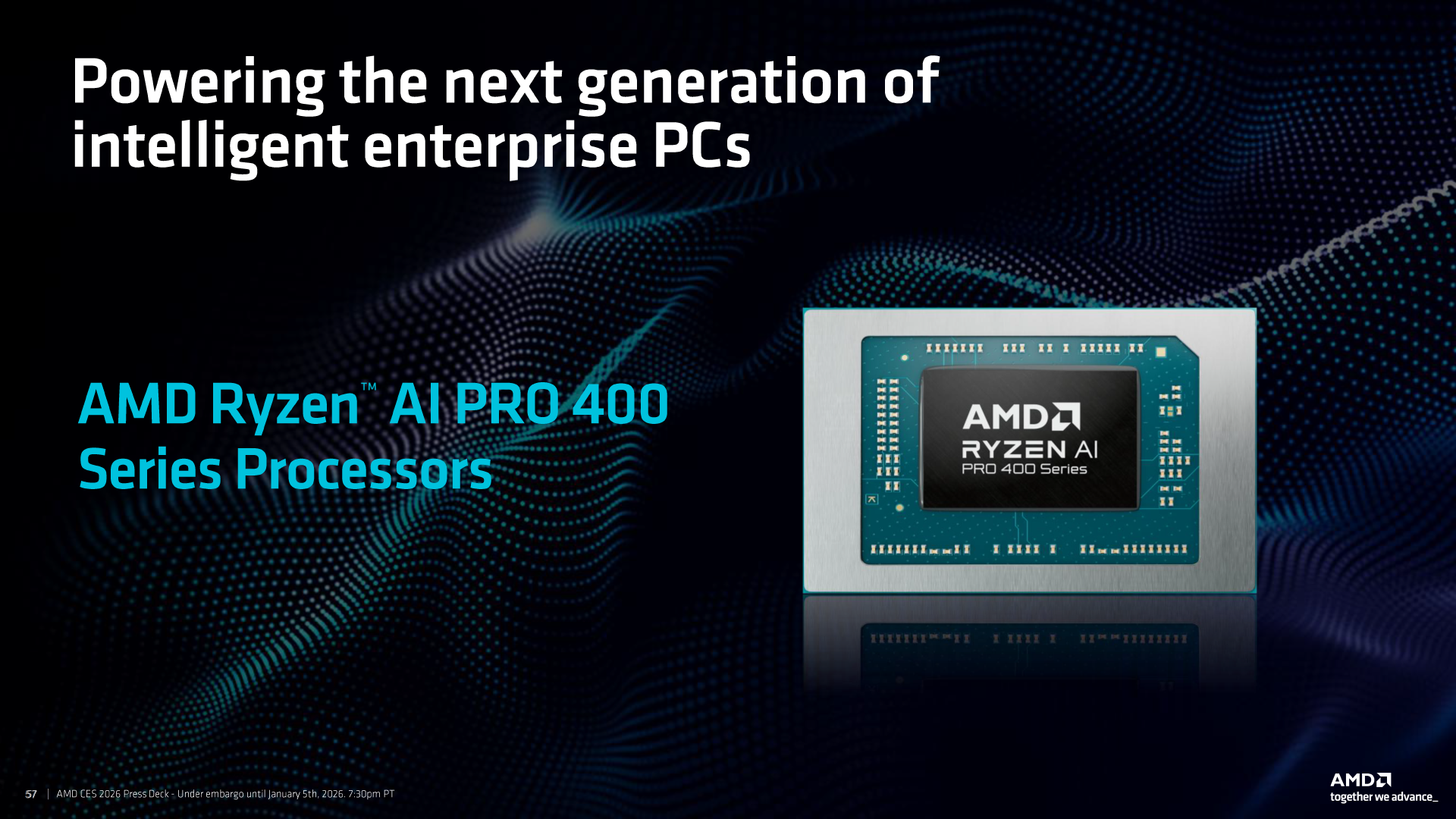
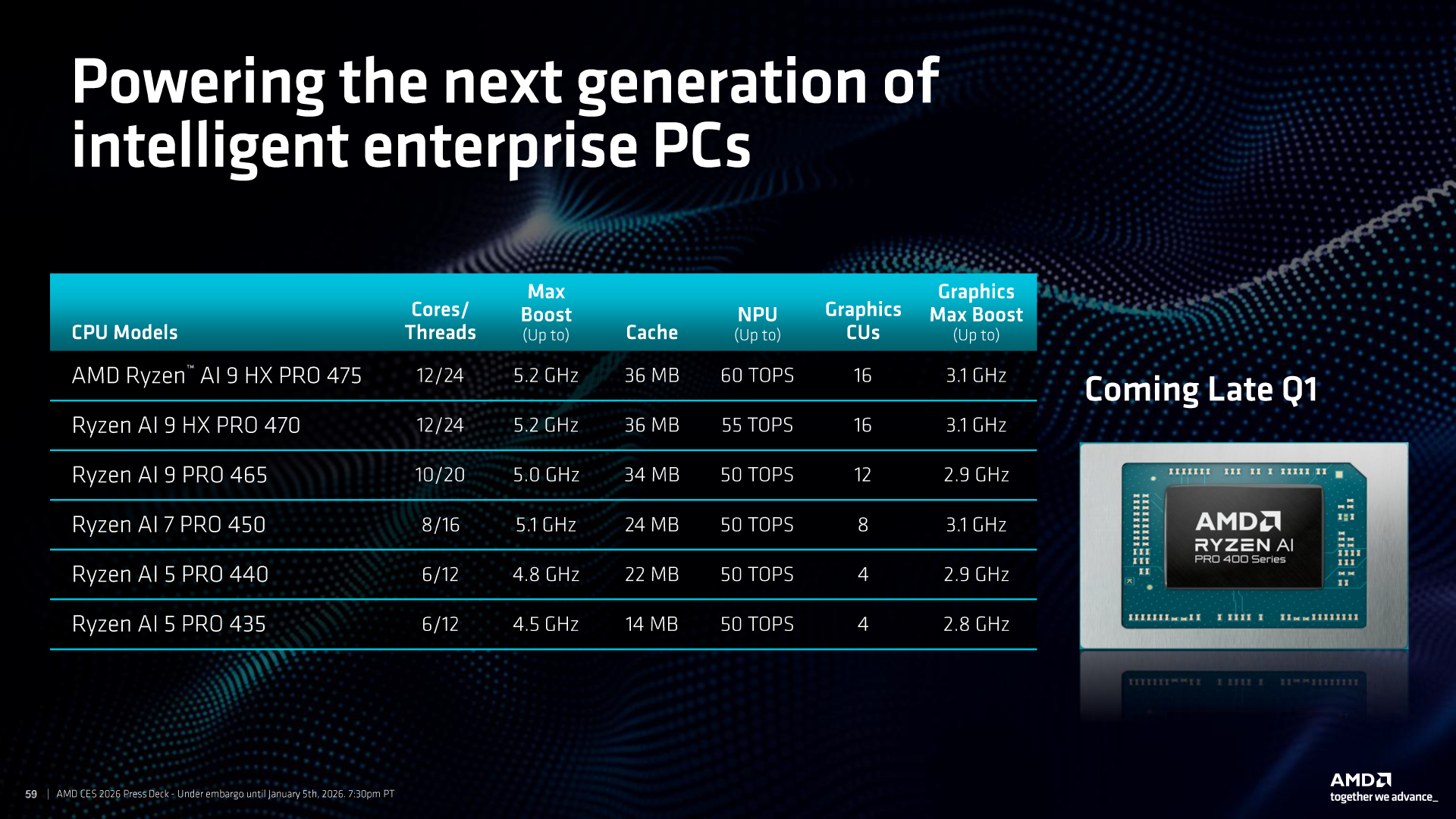
Availability is positioned for Q1 2026 across a broad set of device types including laptops, Mini PCs, and AIO systems through multiple OEM partners. AMD also notes that Ryzen AI 400 PRO series processors are planned for late Q1 2026, targeting the enterprise PC segment and expanding AMD’s footprint in corporate fleets where manageability and platform consistency matter.
If you were choosing a 2026 portable gaming laptop, would you prioritize the iGPU uplift and LPDDR5X 8533MT/s bandwidth, or would you rather spend the budget on a discrete GPU even if it hits battery life and acoustics?
