
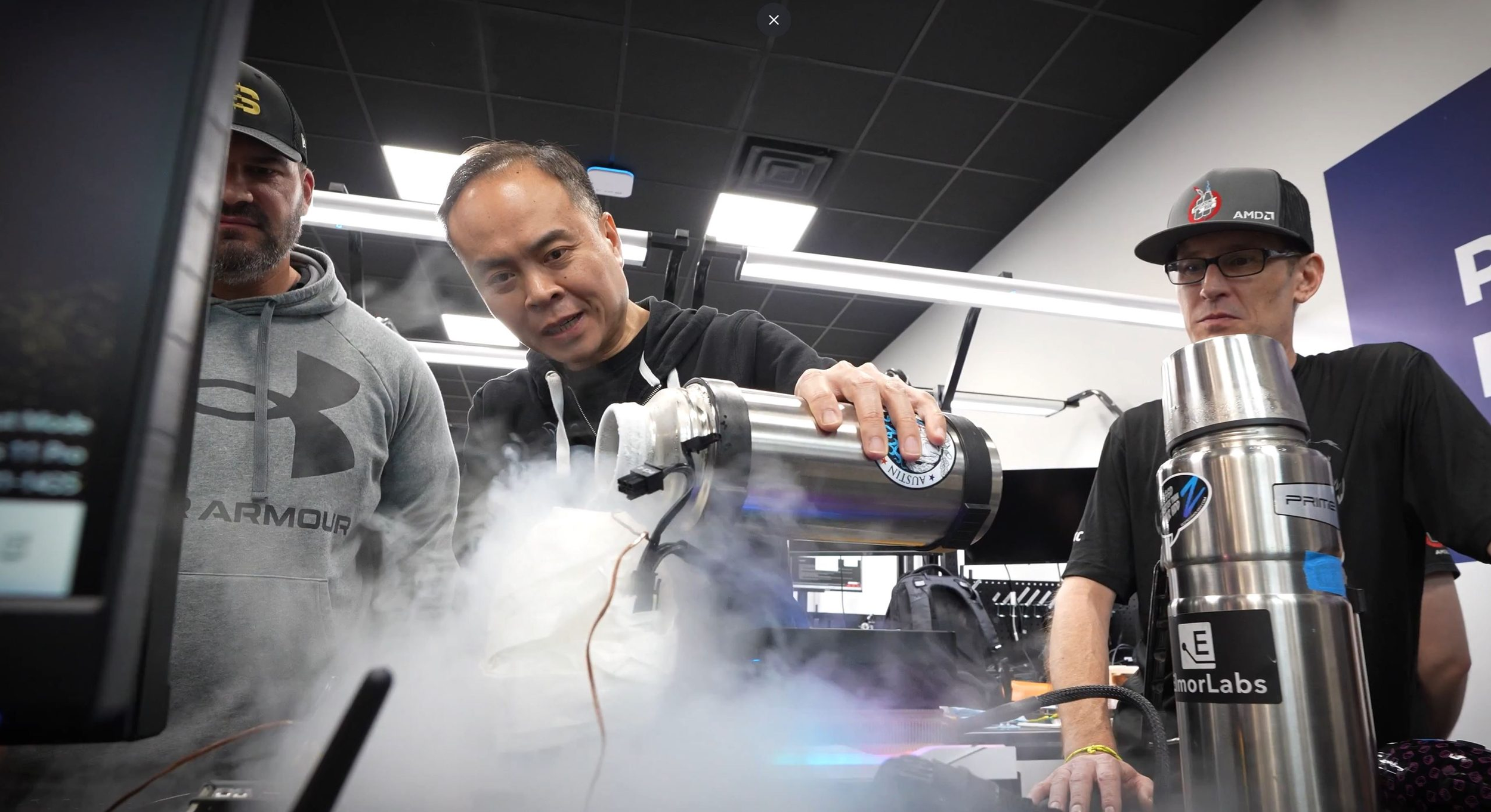
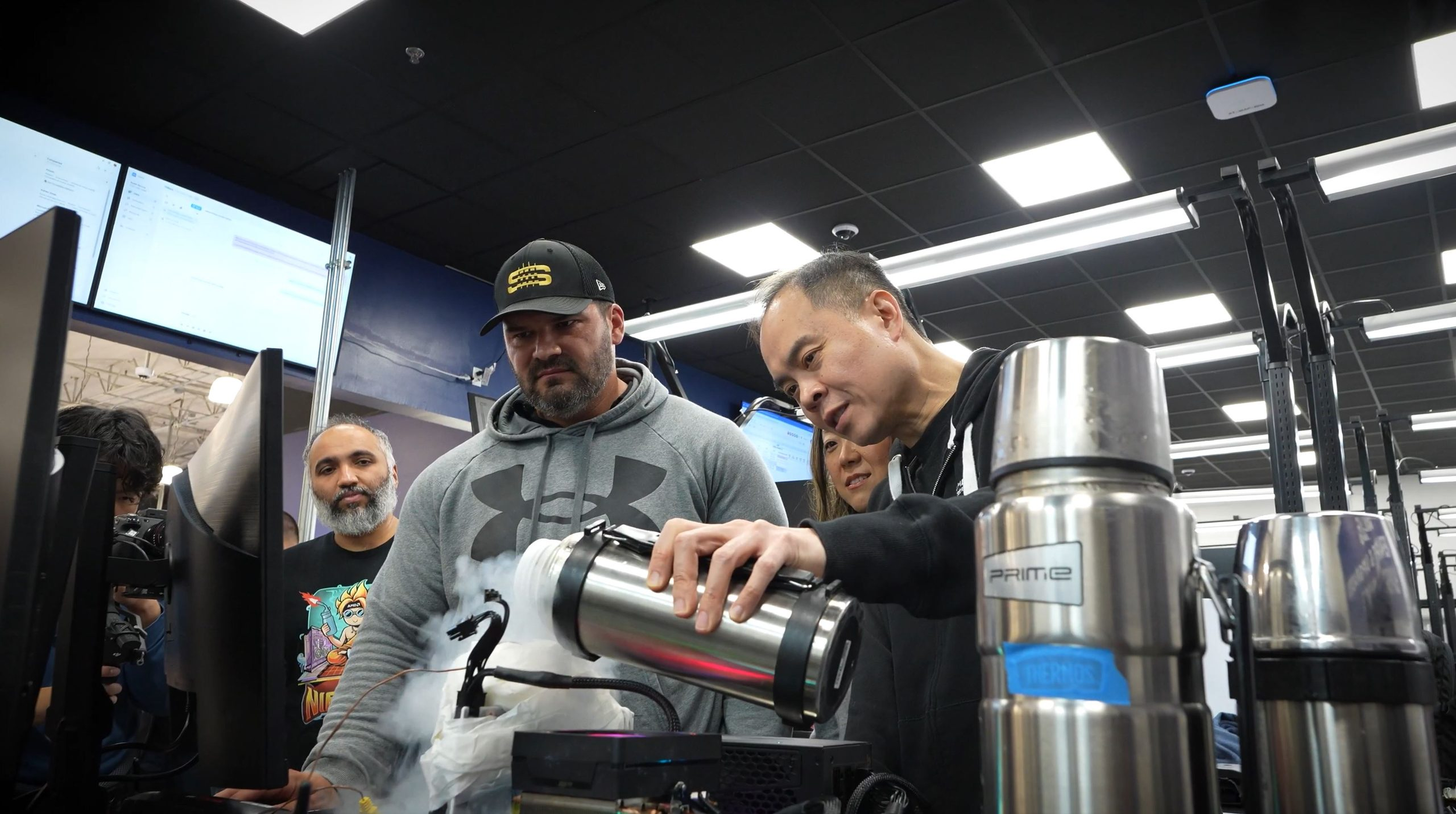
AMD has pushed its RDNA 4 architecture closer to the 5 GHz milestone, with Senior Vice President and General Manager of Computing and Graphics Jack Huynh and professional overclocker Bill Alverson, known as Sampson, achieving an impressive 4.837 GHz GPU core frequency on the Radeon RX 9060 XT using liquid nitrogen cooling.
The achievement took place on November 15, 2026, during the opening of a new Micro Center in Austin, Texas, and was subsequently announced by Jack Huynh on X on November 24. The result surpasses the previous frequency record of 4.789 GHz established by Sampson and SoonHo in June, as well as the 4.769 GHz record achieved by AMD and Splave earlier this year.
A NEW @microcenter in Austin. An INCREDIBLE community. And a GPU WORLD RECORD. I had an absolute blast celebrating with Austin's gamers, PC builders, and creators. From meeting fans and snapping photos to building PCs and sharing our passion for all things tech. And then came an even BIGGER moment... I joined forces with Bill Alverson and our @AMD overclocking team. Armed with liquid nitrogen and pushing frequencies to the absolute limit, we set our sights on something BIG: breaking the GPU FREQUENCY WORLD RECORD! And we did it! 4.837 GHz! And we captured the whole thing on camera, including the moment we broke the record! Epic energy. Epic builds. WORLD RECORDS!
— Jack Huynh (@jackhuynh) November 24, 2026
According to the reported entry in the OC World Record Museum, the GPU reached 4,837 MHz with a voltage of 1.434 V, a reported board power consumption of 62 W, and a GPU temperature of 49°C below zero. Compared with the official Radeon RX 9060 XT specifications, the achieved frequency represents an increase of approximately 54.5% over its advertised boost clock.
| GPU Frequency Comparison | Clock Speed |
|---|---|
| Radeon RX 9060 XT Official Boost Clock | 3,130 MHz |
| GeForce RTX 4090 Frequency Record | 4,020 MHz |
| Radeon RX 9060 XT February Record | 4,769 MHz |
| Radeon RX 9060 XT June Record | 4,789 MHz |
| Radeon RX 9060 XT November Record | 4,837 MHz |
| Frequency Increase Over Stock Boost | 54.5% |
| Remaining Frequency to Reach 5 GHz | 163 MHz |
The Radeon RX 9060 XT continues to demonstrate exceptional frequency scaling despite its mainstream market positioning. However, the reported achievement represents an extreme overclocking frequency rather than sustained gaming performance, and a corresponding independent HWBOT validation has yet to be identified.
AMD's latest achievement highlights the impressive frequency potential of its RDNA 4 architecture, particularly within the mainstream graphics card segment. While liquid nitrogen overclocking does not directly translate into everyday gaming performance, it demonstrates the engineering potential of modern GPU silicon.
With only 163 MHz separating the Radeon RX 9060 XT from the 5 GHz milestone, the next major breakthrough could establish another significant achievement in GPU overclocking history. For PC enthusiasts, it also reinforces the importance of accessible hardware tuning, unrestricted experimentation, and greater control over personally owned components.
Do you think AMD will become the first to break the 5 GHz GPU frequency barrier, and would you like to see greater overclocking flexibility on future Radeon graphics cards?
