
AMD and Splave Push Radeon RX 9060 XT to 4.769 GHz to Set a New GPU Frequency Overclocking World Record
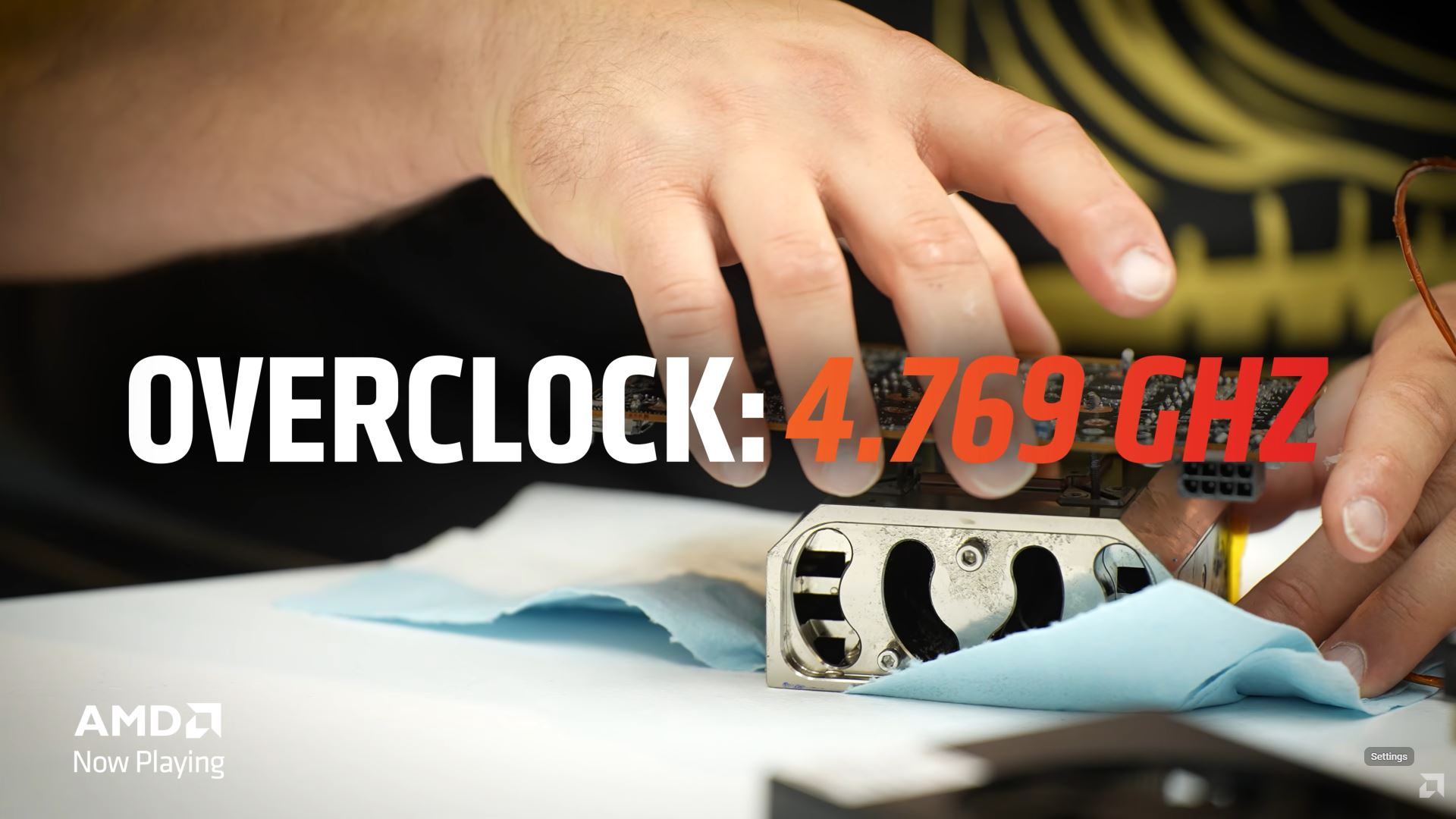
AMD has a new headline for the overclocking community, and it is not coming from a flagship tier product. In a world record focused session at AMD’s Markham office, AMD teamed up with well known overclocker Splave to push the Radeon RX 9060 XT to an eye opening 4.769 GHz on the GPU core, setting a new benchmark for discrete GPU frequency.
What makes the result stand out is how rare it is for any GPU, discrete or integrated, to break the 4.0 GHz barrier in a documented way. Until now, only a very small number of record grade attempts had crossed that threshold, which is why a jump to 4.769 GHz immediately turns heads. It also signals something important about RDNA 4 headroom under extreme conditions, especially when paired with a silicon sample that can tolerate brutal voltage and temperature swings.
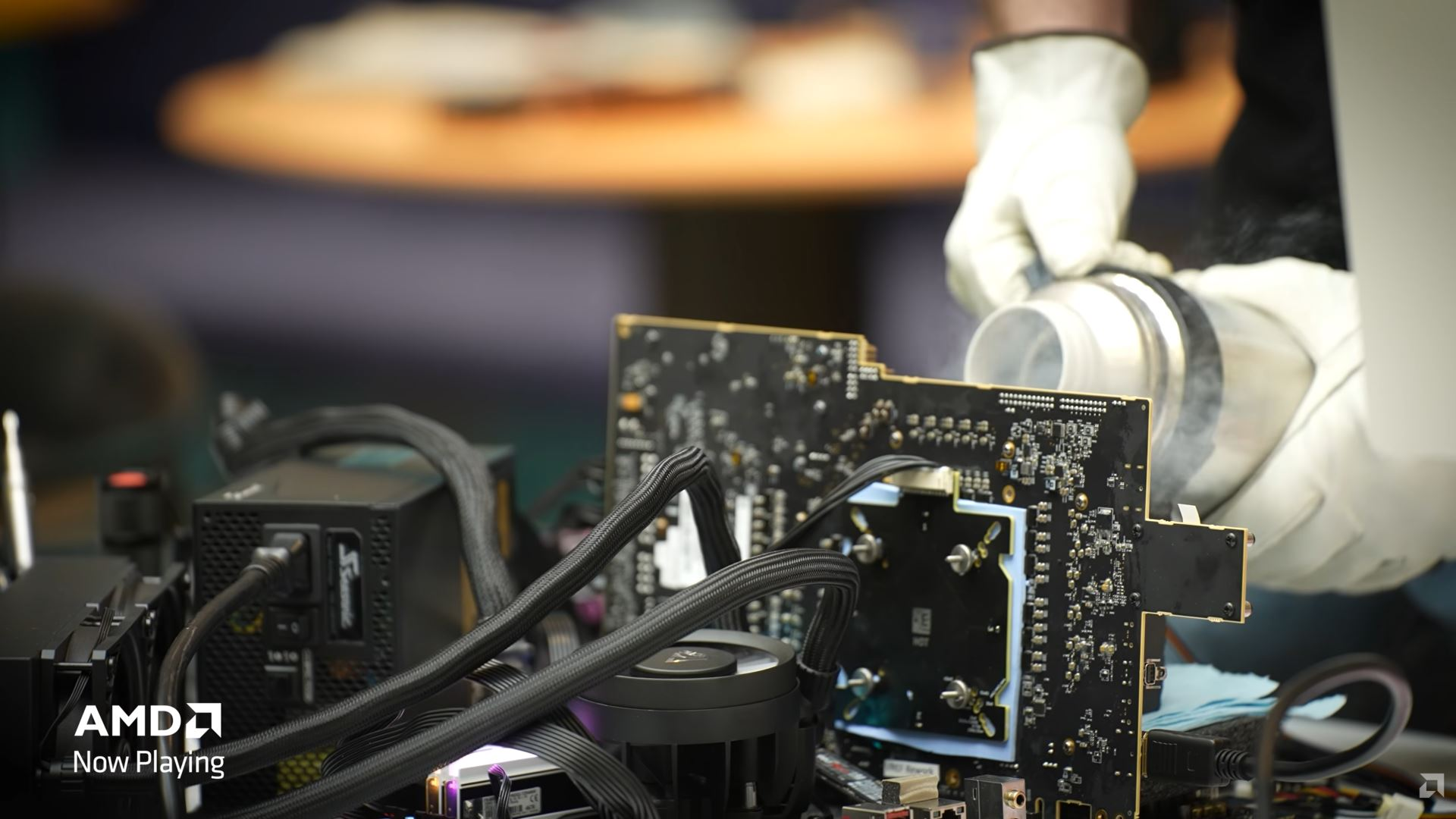
The setup used liquid nitrogen cooling, which is the key enabler here. At stock, the Radeon RX 9060 XT reference boost clock is cited at 3.13 GHz, meaning this record run represents roughly a 1.6 GHz uplift over the official boost behavior. That kind of delta is simply not attainable with conventional cooling, and even high end air or liquid cooling typically tops out far below 4.0 GHz on most GPUs because heat density and stability walls arrive fast as voltage climbs.
AMD shared the moment in a short official video, but the clip does not go deep on platform breakdown, voltage data, workload methodology, or validation screenshots, so the public detail level is mainly the achieved frequency and the demonstration environment rather than a full bench report.
From a practical performance standpoint, extreme frequency records like this are not designed for sustained real world gaming sessions. They are best viewed as peak capability demonstrations that highlight architectural characteristics, silicon scaling, and the hobbyist ceiling when thermals are pushed into exotic territory. Still, these moments do influence perception, because they create a narrative that a GPU family has untapped headroom, even if the daily driver gain on air remains far more modest.
The strategic takeaway for enthusiasts is that RDNA 4 appears to have a very high frequency ceiling under LN2, and AMD is clearly willing to showcase that in a controlled environment with a top tier overclocker. The next logical question is not whether most users will run anywhere near 4.769 GHz, they will not. The question is how much of this frequency friendliness translates into more attainable results at safe voltages, and whether board partner designs and BIOS tuning can sustainably lift real performance without compromising stability.
Do you care more about world record peak clocks like 4.769 GHz, or do you only value overclocking headlines when they translate into stable everyday gains on air or standard liquid cooling?
