
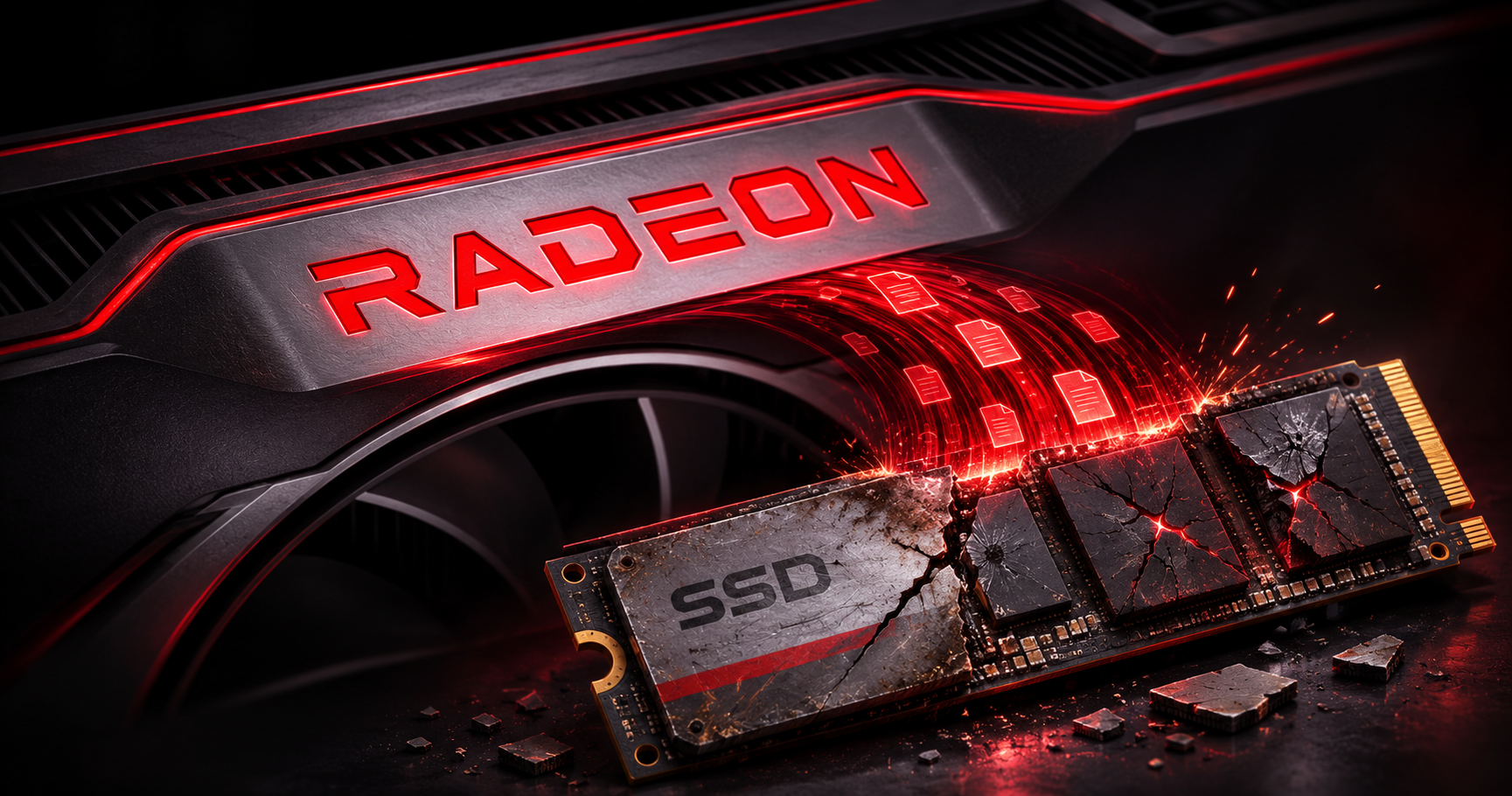
AMD has acknowledged a graphics driver issue that causes excessive background writes to SSDs, potentially accelerating storage wear even when a computer is idle. The problem affects the AMD External Events Utility, particularly the atieclxx.exe process, which can continuously generate disk activity without user interaction. One Radeon user reported losing approximately 14% of their SSD's reported health over 16 months, raising concerns about long term storage reliability and unnecessary hardware degradation.
The issue gained attention after Reddit user wiiu3do discovered that the AMD External Events Client Module had accumulated approximately 125 GB of write activity during a single Windows session. The user's SSD health indicator had declined to 86%, with an estimated reduction of approximately 1 percentage point per month. However, the reported health decline has not been independently verified or conclusively attributed to the driver, and Windows process I/O counters do not necessarily represent actual physical writes to NAND flash.
The affected process is part of AMD Software: Adrenalin Edition and handles background functions including display detection, Radeon hotkeys, and certain FreeSync operations. Community reports indicate sustained write activity ranging from approximately 0.3 MB/s to 1.5 MB/s, with some users recording up to 5 MB/s while their systems were idle. At those rates, unnecessary background activity can accumulate into substantial amounts of data over extended periods.
Potential SSD Write Activity
| Sustained Write Speed | Daily Data | Monthly Data |
|---|---|---|
| 0.3 MB/s | 25.9 GB | 0.78 TB |
| 0.6 MB/s | 51.8 GB | 1.56 TB |
| 1.5 MB/s | 129.6 GB | 3.89 TB |
| 5 MB/s | 432 GB | 12.96 TB |
Figures assume continuous activity over 24 hours per day and 30 days per month. These are estimated host writes, not confirmed NAND wear.
AMD representatives have acknowledged the issue through the official AMD Community forums. AMD_Matt confirmed that the problem remains unresolved in Adrenalin Edition 26.10.2, while another representative identified a possible interaction between the External Events Utility and Microsoft's PCIe filter driver. AMD is targeting Adrenalin Edition 26.11.1 for a fix, expected later in November 2026, although a specific release date has not been confirmed.
The issue has been reported across multiple Radeon driver versions on Windows 10 and Windows 11, but does not appear to affect every system. This follows earlier problems involving AMD Adrenalin and Smart Access Memory, reinforcing the importance of driver testing and stability.
Radeon owners can check their systems without installing additional software. Press Win + R, enter resmon, and open the Disk tab in Windows Resource Monitor. Look for continuous write activity associated with atieclxx.exe or atiesrxx.exe, particularly when the computer is idle. SSD health and cumulative writes can also be monitored using utilities such as CrystalDiskInfo.
Users experiencing the problem can temporarily stop the AMD External Events Utility through Windows Services, although this may interfere with display features, hotkeys, or FreeSync behavior. Some users have also reported improvements after disabling Resizable BAR, but this can reduce gaming performance. Neither workaround is universally effective, making monitoring and installing AMD's forthcoming official fix the preferable approach.
A graphics driver generating unnecessary SSD writes in the background is unacceptable, particularly when users have invested in high quality storage expecting years of reliable operation. Although the reported 14% health reduction cannot be attributed entirely to AMD without additional testing, the confirmed background activity deserves immediate attention.
The problem is especially concerning as SSD and memory prices continue increasing. Consumers should not have to sacrifice the lifespan of existing hardware because of inefficient software behavior, nor should they be expected to disable important gaming features to avoid potential storage wear.
AMD's planned fix is welcome, but the company should prioritize preventing similar issues through more comprehensive driver validation. Software improvements should extend the useful lifespan of PC components rather than introduce unnecessary hardware consumption.
Have you checked whether your AMD Radeon drivers are generating excessive SSD writes, and should GPU manufacturers be held more accountable when software bugs potentially reduce hardware lifespan?
