
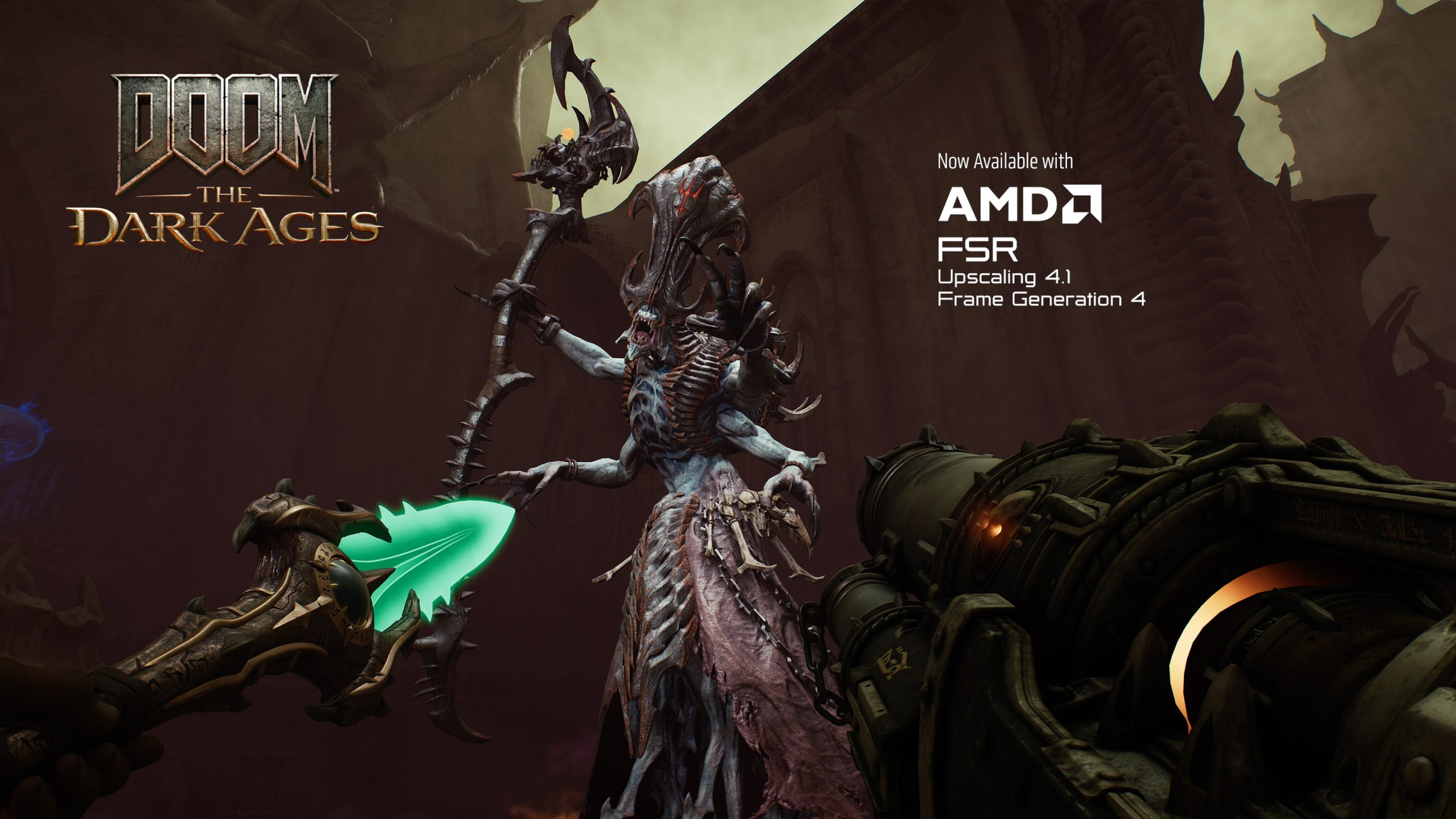
AMD has officially brought FSR Upscaling 4.1 and Frame Generation 4 to Vulkan games for the first time, with DOOM: The Dark Ages becoming the first title to support both technologies. The milestone arrives alongside an updated Unreal Engine plugin featuring FSR 4.1.2, expanding machine learning upscaling compatibility to Radeon RX 6000 graphics cards, Ryzen processors, and gaming handhelds.
The announcement was confirmed by AMD executive Jack Huynh on November 16, 2026, following the release of DOOM: The Dark Ages Update 5. The update introduces native FSR Upscaling 4.1 and Frame Generation 4 support on compatible PC hardware, marking an important step for AMD's graphics technology beyond DirectX 12. Previously, Vulkan titles relied on older FSR implementations, limiting access to AMD's latest machine learning image reconstruction.
The technology is based on AMD FSR SDK 2.4, which introduces Vulkan 1.2 support for FSR Upscaling 4.1.2 and Frame Generation 4.0.2. Unlike previous analytical upscaling methods, FSR 4.1 uses neural networks to reconstruct image details from lower rendering resolutions, improving visual clarity, reducing ghosting, and preserving fine details. Frame Generation 4 introduces machine learning generated intermediate frames on supported Radeon RX 9000 GPUs, potentially improving perceived smoothness in demanding scenes.
DOOM's Update 5 also expands FSR frame generation compatibility to supported Intel graphics cards, although this should not be confused with full FSR 4 machine learning frame generation support. Intel compatibility depends on the appropriate hardware, drivers, and available fallback technology. Beyond graphics improvements, the update introduces Slaughter Mode for owners of the Revelations expansion, offering an endless survival experience with escalating enemy encounters, progression rewards, and checkpoints.
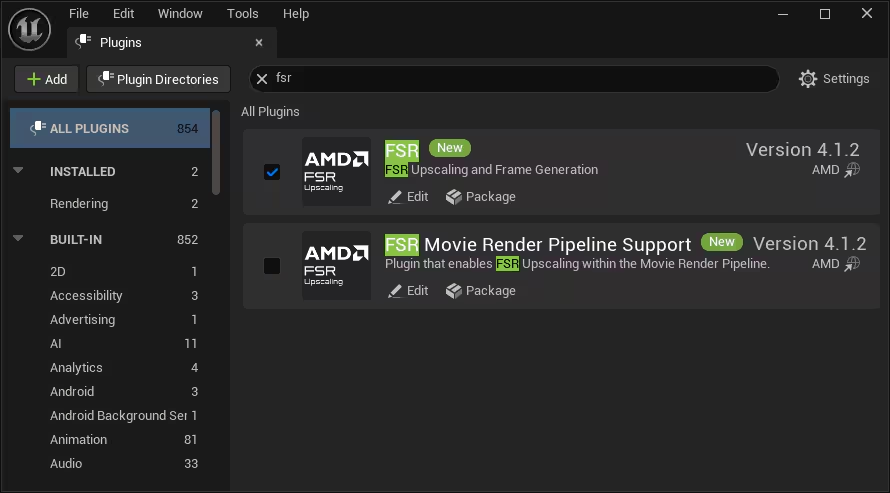
Meanwhile, AMD has released its FSR Unreal Engine plugin version 4.1.2, bringing the latest Redstone improvements to Unreal Engine 5.3 through 5.8. The plugin expands machine learning upscaling to Radeon RX 6000 GPUs and selected Ryzen processors, building upon AMD's previous expansion of FSR 4.1 to older Radeon graphics cards and integrated GPUs.
AMD FSR 4.1.2 Hardware Compatibility
| Hardware | FSR Upscaling 4.1.2 |
|---|---|
| Radeon RX 9000 Series | Full ML model |
| Radeon RX 7000 Series | Full ML model |
| Radeon RX 6000 Series | Full INT8 model |
| Ryzen AI Max 300 / 400 | Full INT8 model |
| Ryzen AI 9 300 / 400 | Optimized INT8 model |
| Ryzen Z2 Extreme / AI Z2 Extreme | Optimized INT8 model |
| Ryzen Z2 A | Optimized INT8 model |
| Other Compatible GPUs | FSR 3 analytical fallback |
For integrated graphics and handheld processors, AMD developed a smaller machine learning model requiring less than half the storage of the full INT8 implementation. This allows devices with limited graphics resources to benefit from improved image reconstruction without requiring additional dedicated hardware.
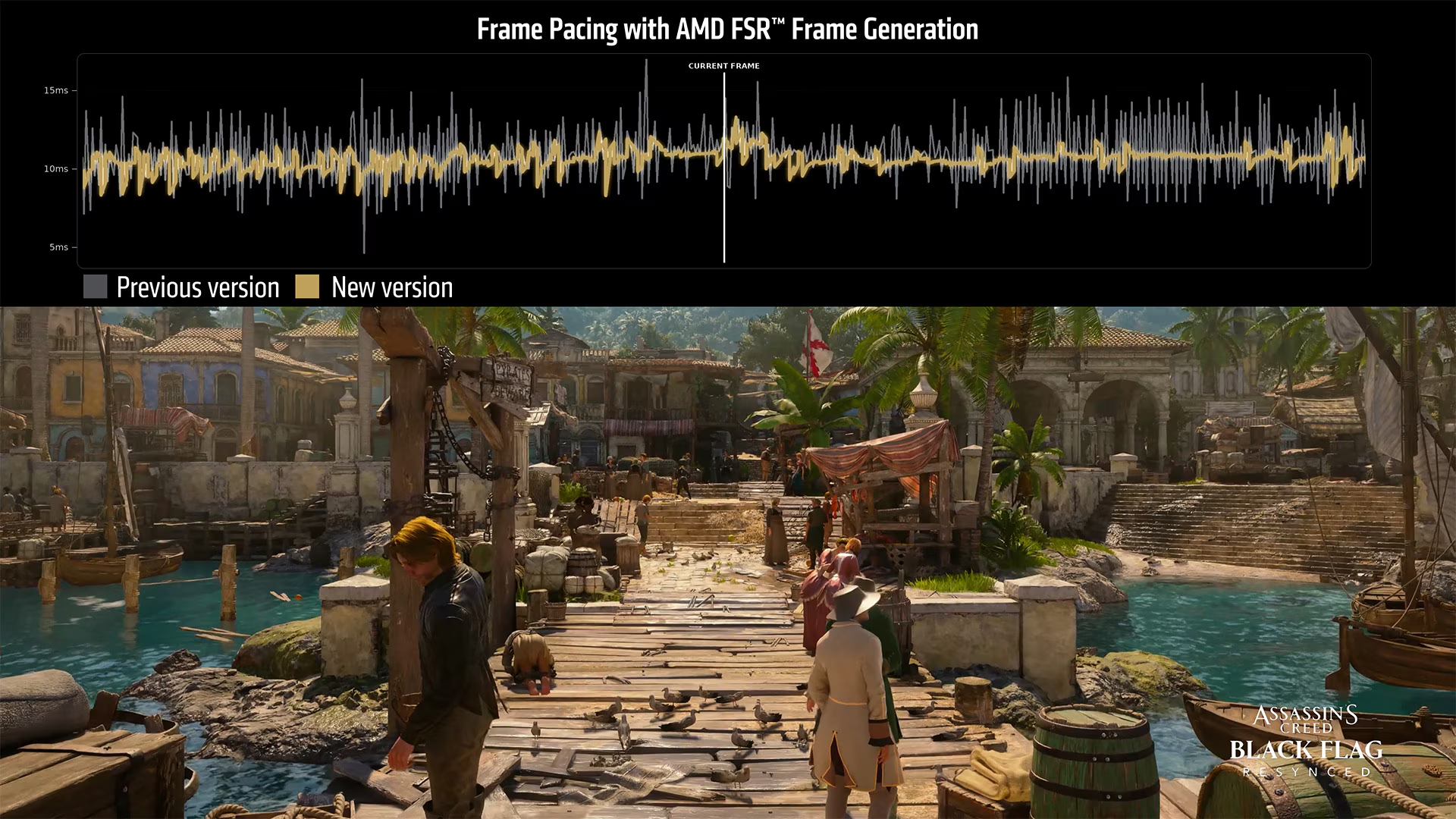
The Unreal Engine update also introduces FSR Frame Generation 4.0.2, Driver Assisted Frame Pacing, and Radeon Anti Lag 2 improvements. On Radeon RX 9000 GPUs, the updated frame pacing technology delegates presentation timing to the graphics driver, potentially reducing CPU overhead and improving frame delivery consistency. The feature requires AMD Adrenalin Edition 26.10.1 or newer and compatible system configurations.
However, there is an important distinction between the 2 releases. Although DOOM: The Dark Ages now supports FSR 4.1 through Vulkan, the Unreal Engine 4.1.2 plugin currently supports DirectX 12 only. Developers using Unreal Engine must wait for a future plugin update to gain Vulkan compatibility. Existing Vulkan games also require integration of the updated SDK rather than automatically receiving FSR 4.1 through a graphics driver update.
AMD's introduction of FSR 4.1 on Vulkan represents an important development for PC gaming, particularly as Vulkan continues expanding across Windows, Linux, and handheld platforms. Bringing machine learning upscaling to older Radeon GPUs and Ryzen integrated graphics also demonstrates that software optimization can extend hardware longevity without forcing users to purchase newer graphics cards.
The expansion is especially valuable for Radeon RX 6000 owners, who can now access modern image reconstruction technology despite using hardware introduced several years ago. However, AMD must continue improving developer adoption, frame generation latency, and compatibility across different graphics APIs.
More importantly, technologies such as FSR should enhance gaming performance without becoming an excuse for developers to neglect traditional optimization. Supporting existing hardware and giving players greater control over graphical settings remain essential for maintaining an accessible PC gaming ecosystem.
Do you believe AMD FSR 4.1 can compete with NVIDIA DLSS in image quality, and should more developers prioritize Vulkan support for better compatibility across Windows, Linux, and handheld gaming PCs?
