
AMD Explains Why FSR 4.1 Needs Different Models For RDNA 3 And RDNA 2
AMD says FSR 4.1 will still deliver comparable image quality on RDNA 3, but RDNA 2 needs more optimization before Radeon RX 6000 users can get official support.
AMD has finally explained why FSR 4.1 support is taking longer to reach older Radeon GPUs. As reported by TechPowerUp, the company confirmed that RDNA 3 will use a different FSR 4.1 model than RDNA 4 because Radeon RX 7000 series GPUs do not support FP8 in the same way as newer RDNA 4 hardware. Instead, RDNA 3 relies on INT8. That means AMD cannot simply take the RDNA 4 FP8 model and drop it onto older GPUs without risking visual artifacts. The model has to be requantized so it can run efficiently on INT8 while preserving the same final image quality target.
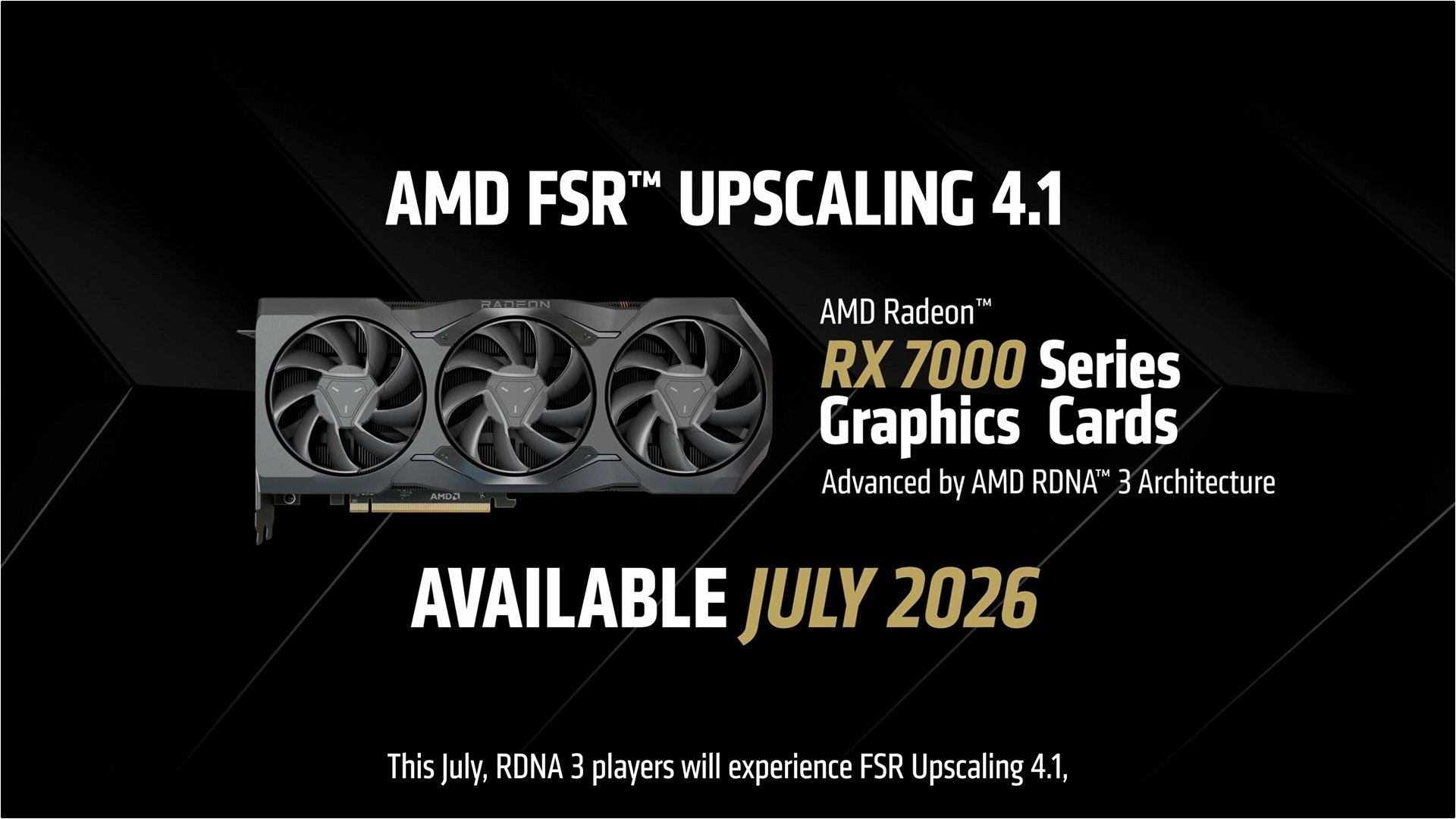
AMD says the end result should be on par with FSR 4.1 running on RDNA 4, even if the model behind it is different.
The delay for RDNA 2 is more complicated. Radeon RX 6000 series GPUs do not have the same AI acceleration features available on newer Radeon architectures, so FSR 4.1 has to rely much more heavily on standard stream processors. That creates a bigger optimization challenge. AMD needs to make sure FSR 4.1 can run efficiently on RDNA 2 without consuming too many shader cycles or causing unacceptable performance loss.
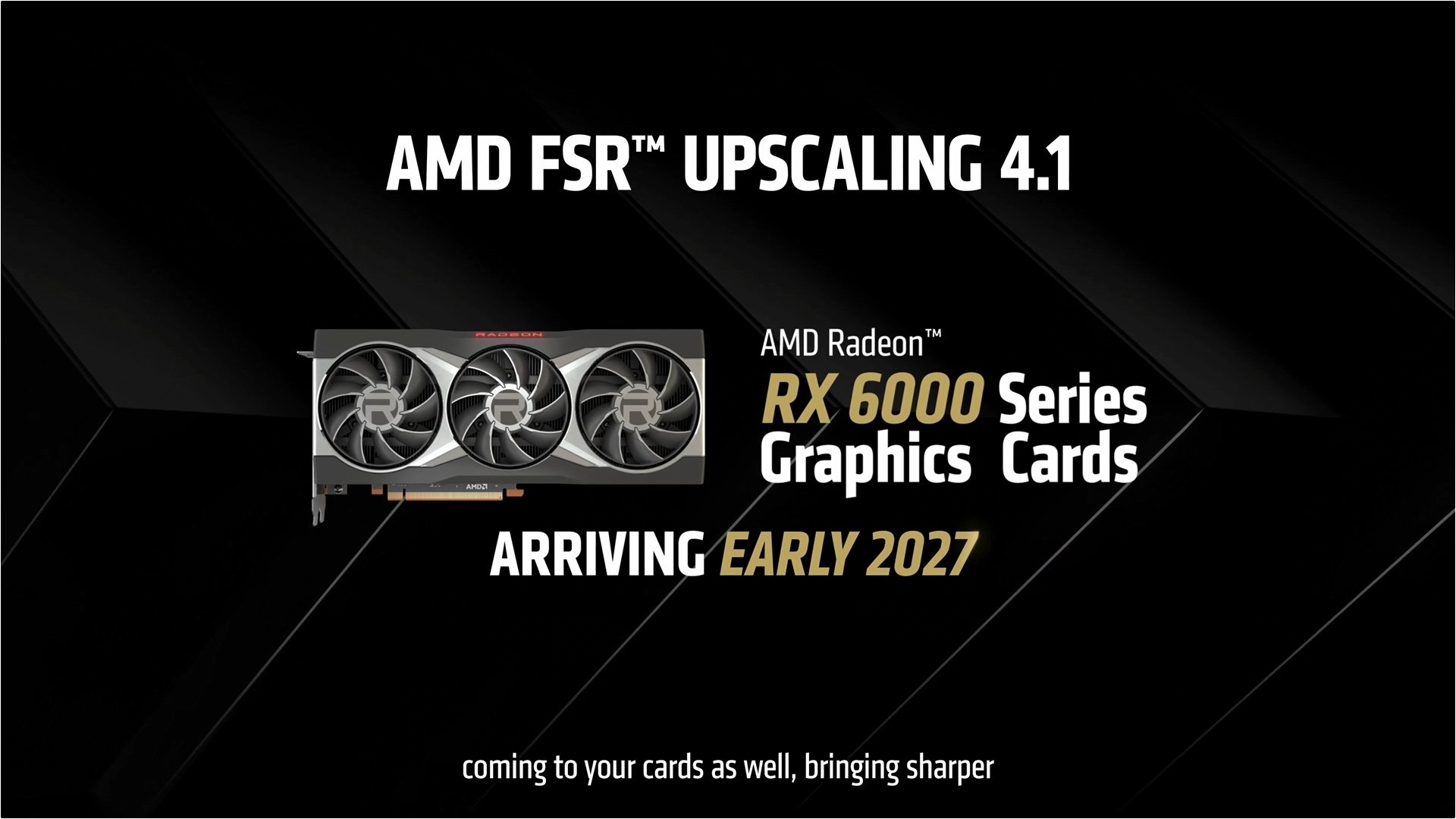
This is why RDNA 3 support is expected in July 2026, while RDNA 2 support is currently planned for early 2027.
The delay has been frustrating for Radeon users, especially after unofficial workarounds and leaked INT8 files suggested that some form of FSR 4 support could run on older hardware. As covered by before, the FSR 4 rollout has already created a larger debate around AMD’s software communication, GPUOpen direction, and support for existing Radeon users.
AMD’s own FSR technology page now positions FSR Redstone as the company’s machine learning powered rendering stack for RDNA 4, including FSR Upscaling, FSR Frame Generation, FSR Ray Regeneration, and FSR Radiance Caching. That is a major step forward for Radeon image reconstruction, but it also creates pressure on AMD to bring as much of that value as possible to older GPUs. For RDNA 3 users, the latest explanation is mostly good news. The model is different, but AMD is promising quality parity. For RDNA 2 users, the news is more mixed. Support is coming, but it will arrive much later and likely requires careful performance tuning.
The technical reason makes sense. FP8 and INT8 are not interchangeable, and RDNA 2 clearly presents a harder optimization problem because it lacks newer AI acceleration hardware. If AMD wants FSR 4.1 to work properly across older Radeon cards, it has to avoid releasing a version that creates artifacts, heavy performance loss, or inconsistent results across games.
But the communication gap is what caused most of the frustration. Radeon users saw leaked files, community tools, and unofficial success stories before AMD gave a clear public explanation. That made many players feel like support was being held back rather than carefully prepared.
The good news is that AMD is now committing to older hardware support. RDNA 3 users should see FSR 4.1 soon, and RDNA 2 users are still on the roadmap. The challenge now is execution.
FSR has always mattered because it felt more open and more flexible than competing upscaling technologies. If AMD can bring strong FSR 4.1 quality to RDNA 3 and RDNA 2 without major performance issues, it can recover some of that trust.
Would you rather AMD release FSR 4.1 faster on older Radeon GPUs, or wait longer for a more optimized and cleaner version?
