
AMD Denies Ryzen 9 7950X3D Warranty Claim After Substrate Swelling Report While GIGABYTE Clears Motherboard Fault
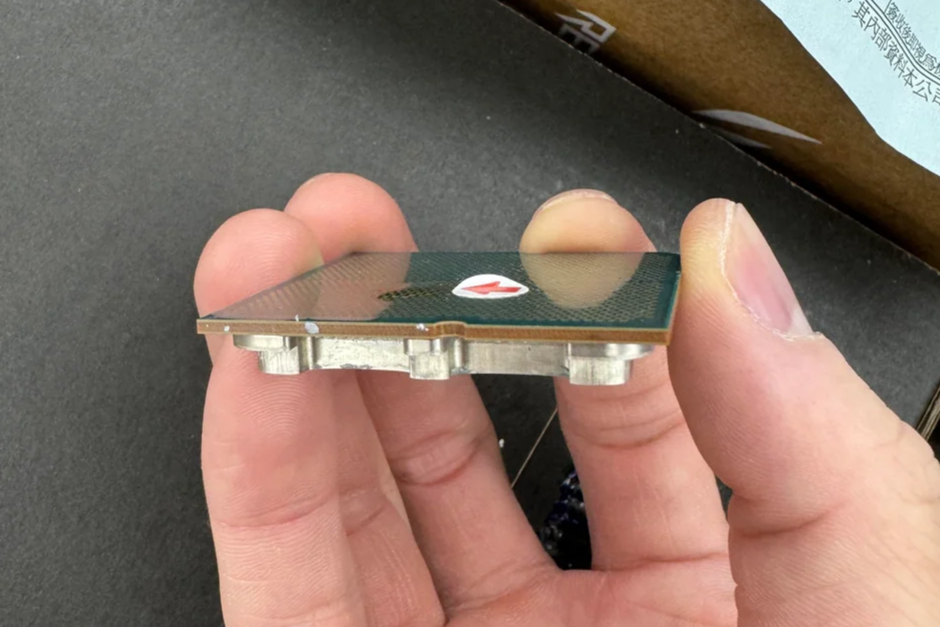
A new Ryzen X3D failure report has added more confusion to the ongoing discussion around damaged AMD 3D V Cache processors on 800 series motherboards. According to a user report on Reddit, AMD denied an RMA claim for a Ryzen 9 7950X3D after identifying swelling on the processor substrate, even after GIGABYTE reportedly cleared the motherboard of any major fault.
The case is notable because it involves a previous generation Ryzen 9 7950X3D rather than the Ryzen 7 9800X3D, which has been the most commonly mentioned chip in recent X3D failure reports. Over the past months, multiple users have reported Ryzen X3D processors dying on 800 series motherboards. Some cases showed visible physical damage, while others involved chips that failed without obvious external signs.
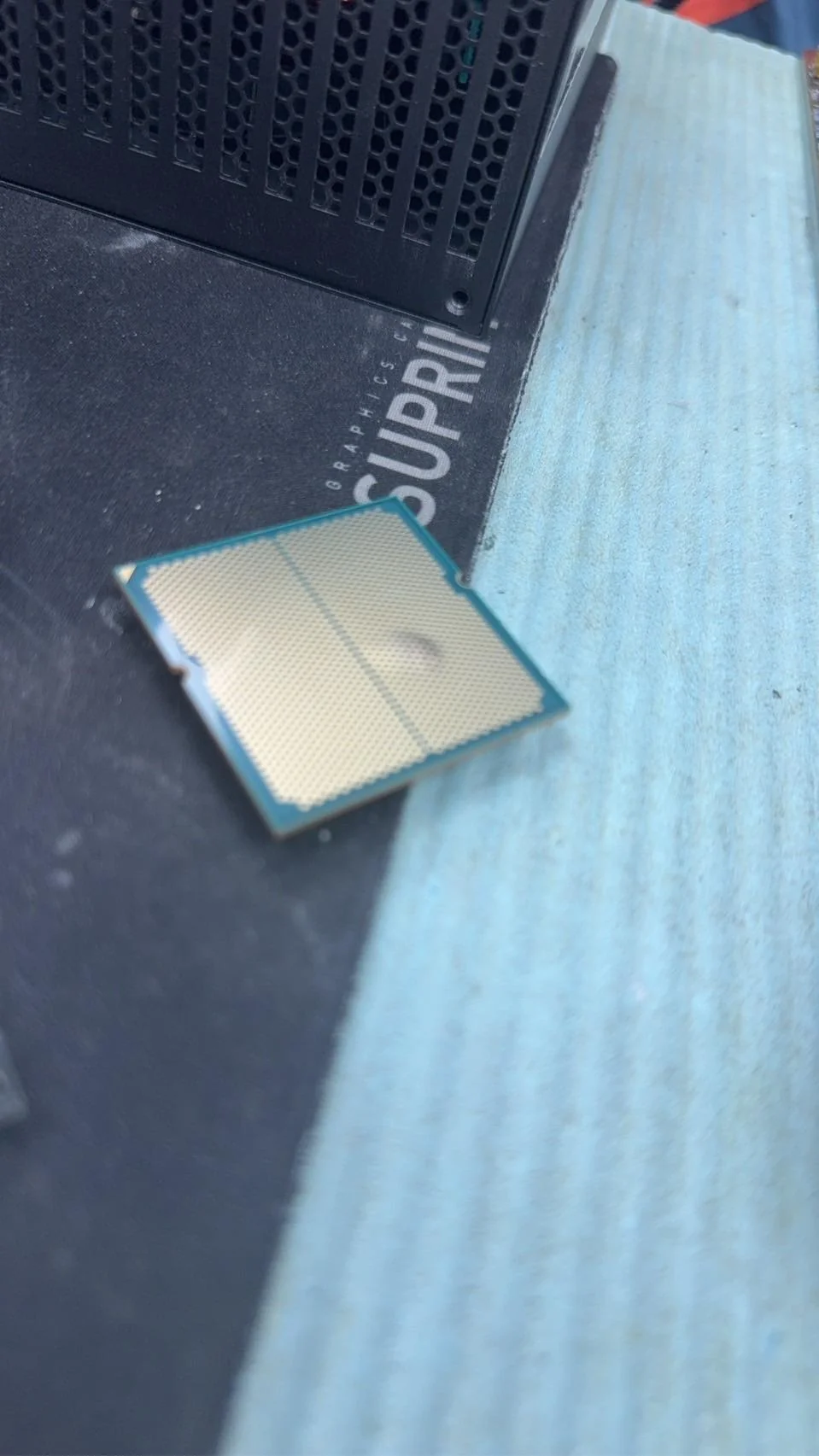
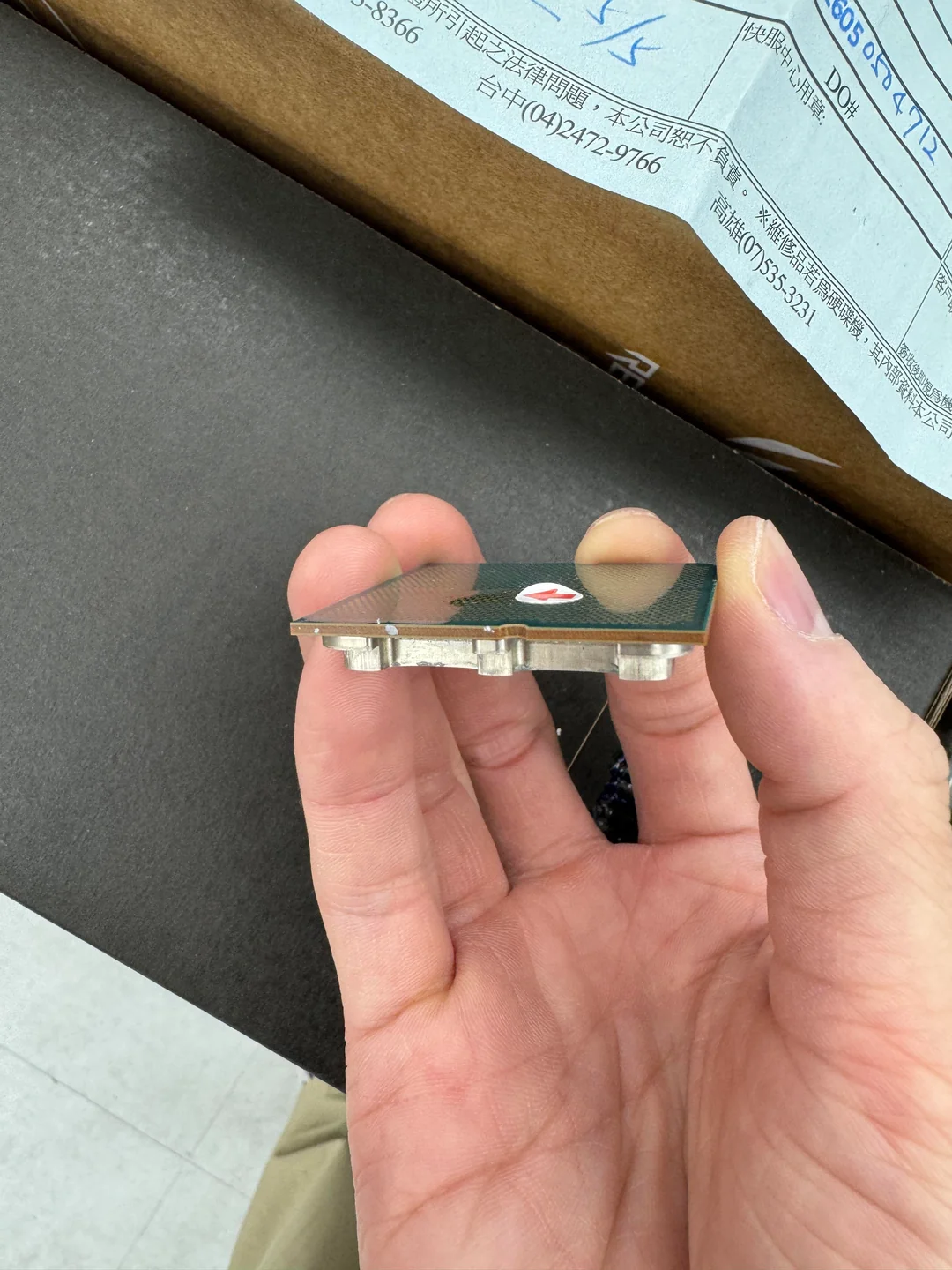
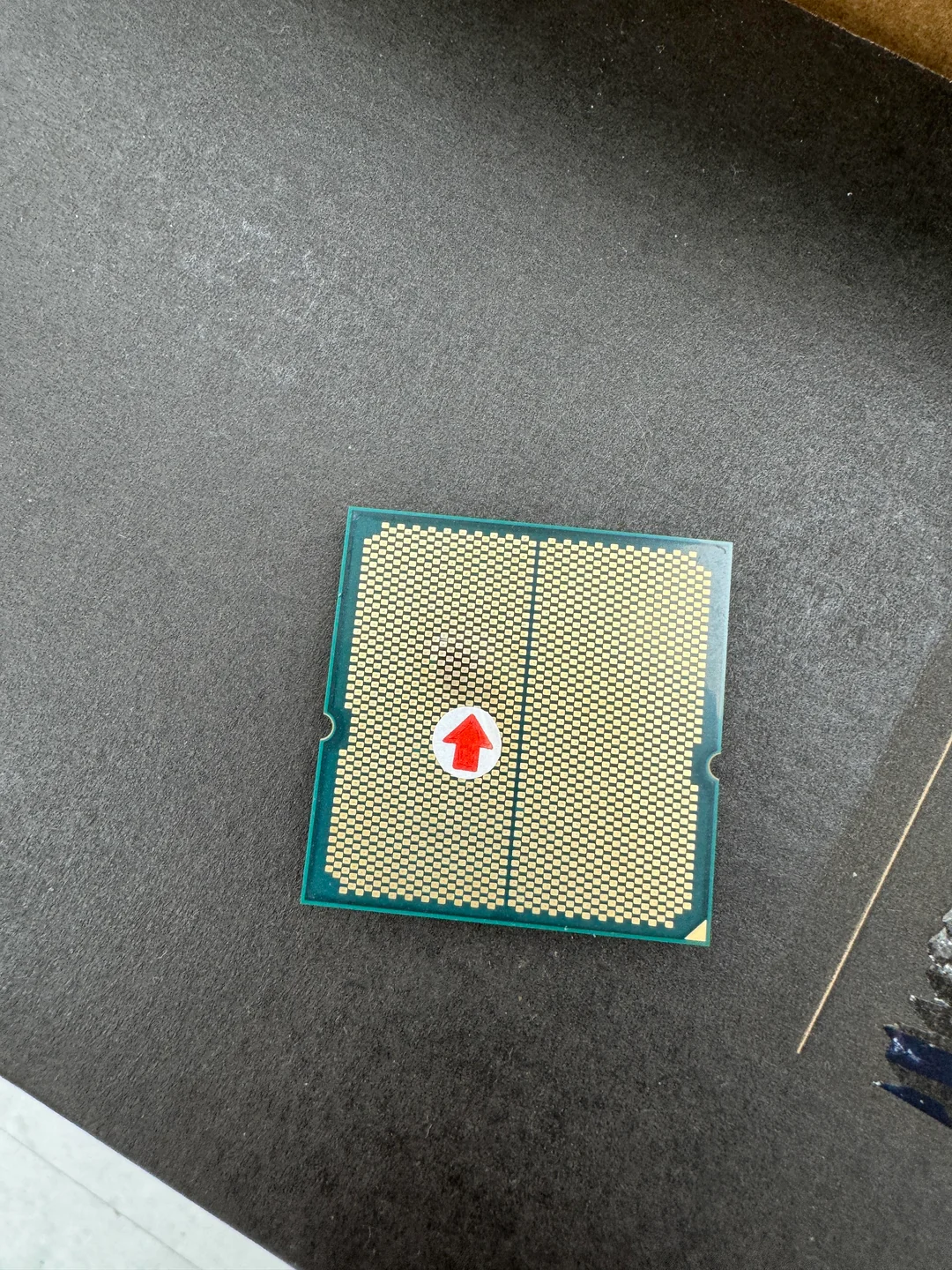
In this latest case, the user said the system had been running normally for years before suddenly failing while idle. According to the report, the user did not manually overclock the processor and did not change BIOS parameters. After the failure, the motherboard was sent to GIGABYTE for inspection.
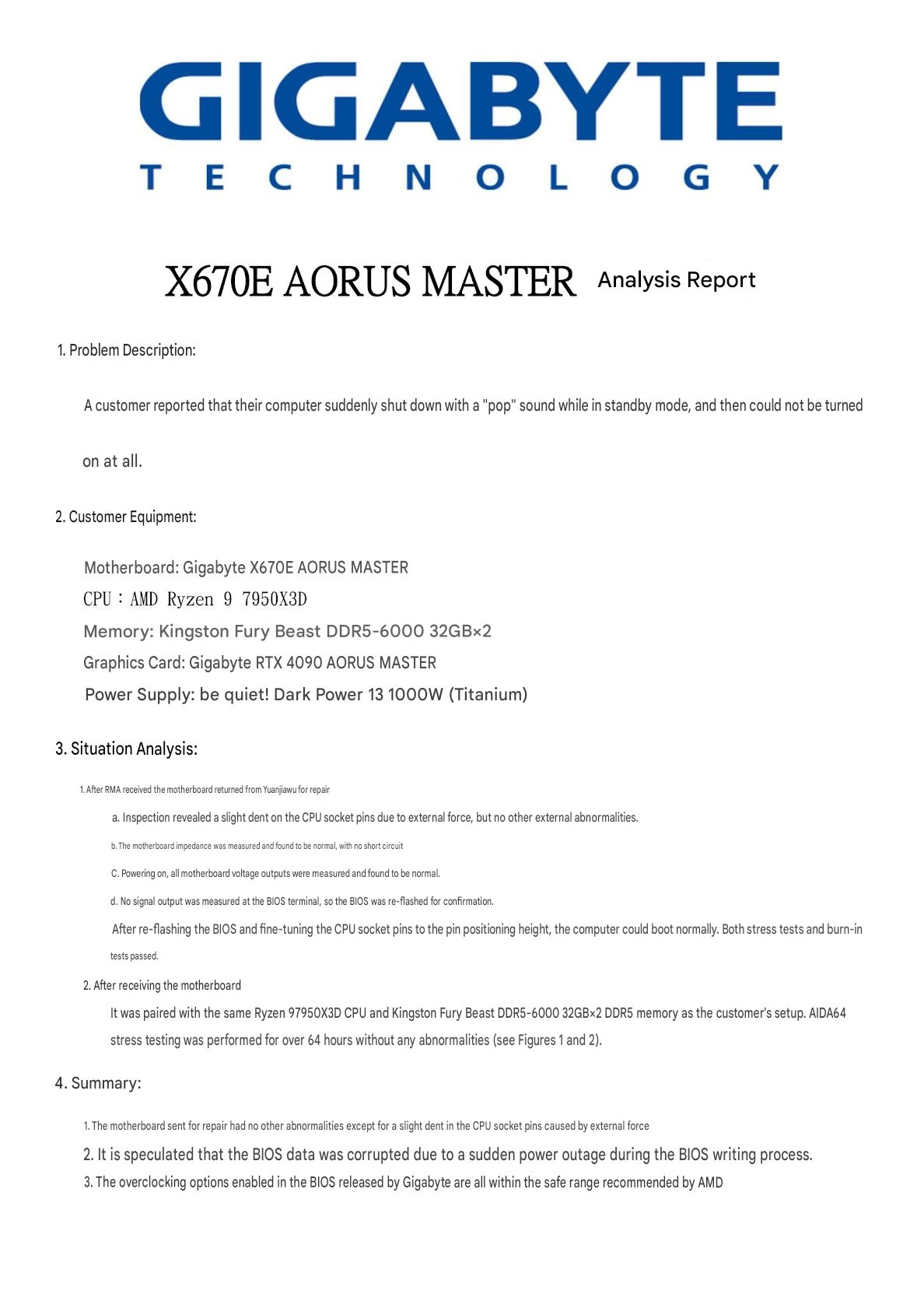
GIGABYTE reportedly found BIOS corruption, but its internal testing did not identify short circuits on the motherboard. After reflashing the BIOS, GIGABYTE was able to get the board working normally with another Ryzen 9 7950X3D. The company also noted a slight dent in the CPU socket pins caused by external force, but said it was repaired.
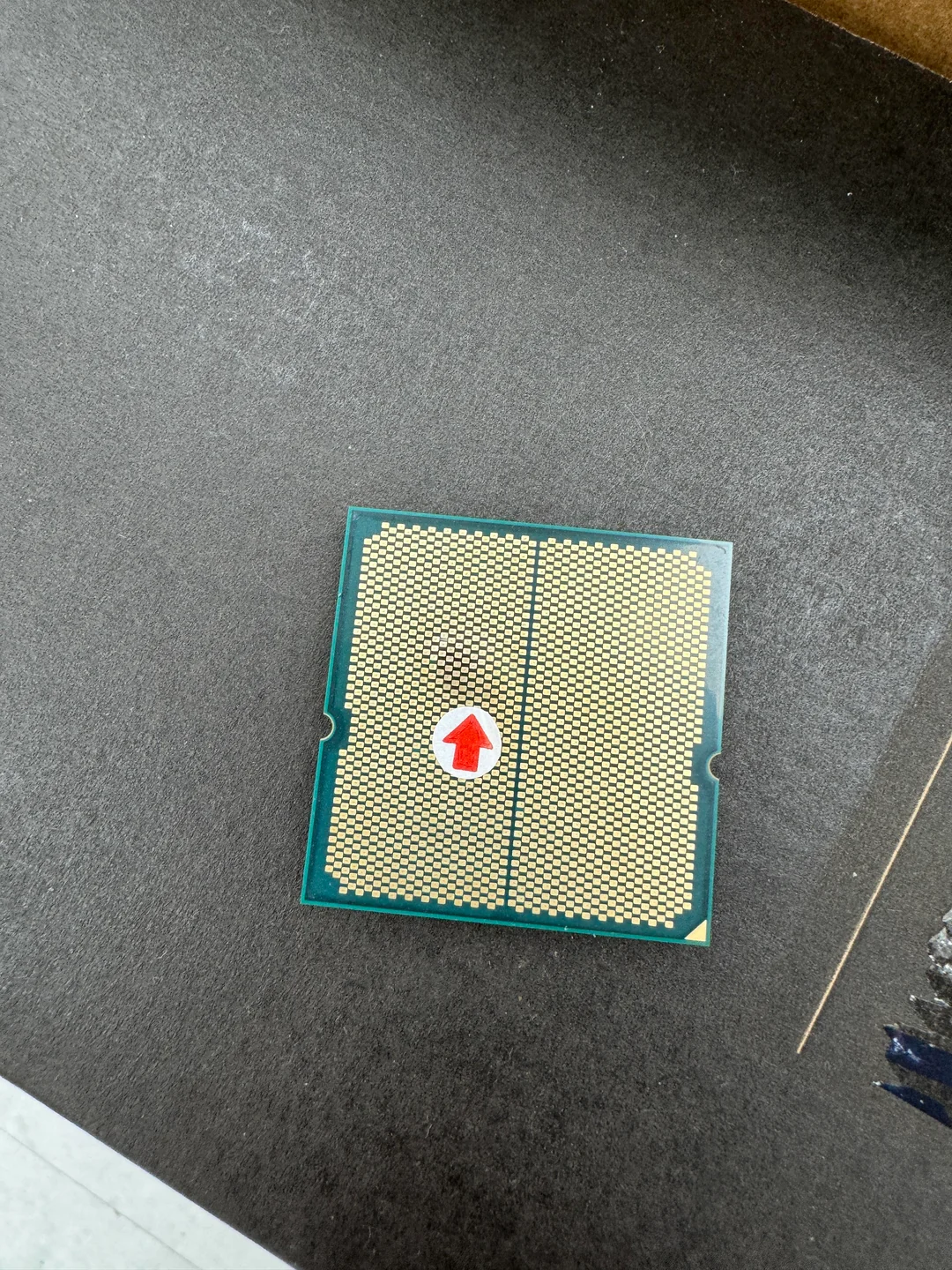
This is where the case becomes difficult for the user. If the motherboard could run another Ryzen 9 7950X3D after BIOS recovery and socket repair, GIGABYTE’s report appears to shift attention back to the failed processor. However, AMD rejected the warranty claim after reviewing the CPU condition, reportedly citing swollen substrate as physical damage.
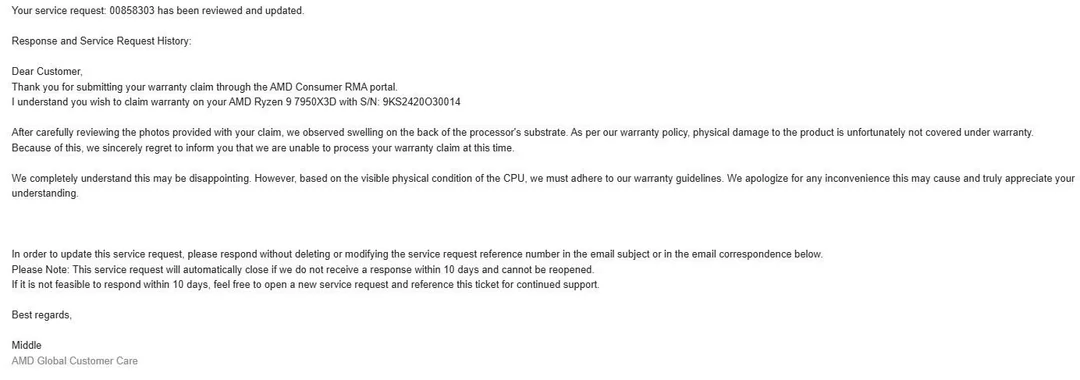
AMD informed the user that the warranty does not cover "physical damages."
— AMD Global Customer Care
The user is now left with several unanswered questions. The most confusing point is how a BIOS corruption report from the motherboard side connects to a CPU substrate swelling issue. The user also questioned whether AMD made the RMA decision after inspecting the processor directly or primarily based on submitted photos of the damaged chip.
The rejection letter shared by the user reportedly lists the service request number 00858303 and states that the Ryzen 9 7950X3D warranty claim was rejected due to swelling on the processor substrate. While AMD has reportedly approved some claims involving electrically damaged CPUs in the past, this case suggests the company may not approve every X3D failure claim, especially when physical deformation is visible.
The case also highlights the importance of BIOS updates in the current AM5 ecosystem. AMD and motherboard vendors have repeatedly advised users to update to the latest BIOS versions, especially as reports of X3D processor failures have circulated across multiple communities. However, the user said they were unaware of the wider issue before the failure occurred.
For PC builders, the situation is frustrating because the failure chain is not simple. GIGABYTE reportedly found BIOS corruption but cleared the motherboard after testing. AMD rejected the processor claim due to substrate swelling. The user says no manual overclocking or BIOS tuning was performed. Without deeper public technical analysis, it remains difficult to determine whether the root cause was firmware, voltage behavior, motherboard condition, physical damage, or a separate processor failure.
This is exactly why these Ryzen X3D failure reports remain so important to track. Even when individual cases cannot prove a wider hardware defect, they reveal how difficult warranty handling can become when multiple components are involved. A dead CPU, a repaired motherboard socket, a corrupted BIOS, and a swollen substrate all create a situation where the user may feel trapped between vendor conclusions.
For AMD, the bigger challenge is trust. Ryzen X3D processors remain some of the most popular gaming CPUs on the market, especially because of their strong performance in games. But when users see reports of dead chips, rejected warranty claims, and unclear motherboard findings, it raises concern over how such cases are investigated and communicated.
For now, this Ryzen 9 7950X3D case should be treated as an individual user report, but it adds another layer to the broader discussion around X3D reliability, BIOS updates, motherboard validation, and RMA transparency. The clearest advice for users remains to keep motherboard BIOS versions updated, avoid unnecessary voltage tuning, monitor system behavior, and document any failure carefully if an RMA is needed.
Do you think AMD should provide more detailed technical explanations when rejecting Ryzen X3D warranty claims, especially when motherboard vendors report no major fault?
