
Amazon Signals a Bigger Ambition for Trainium and Graviton as Andy Jassy Hints at External Sales
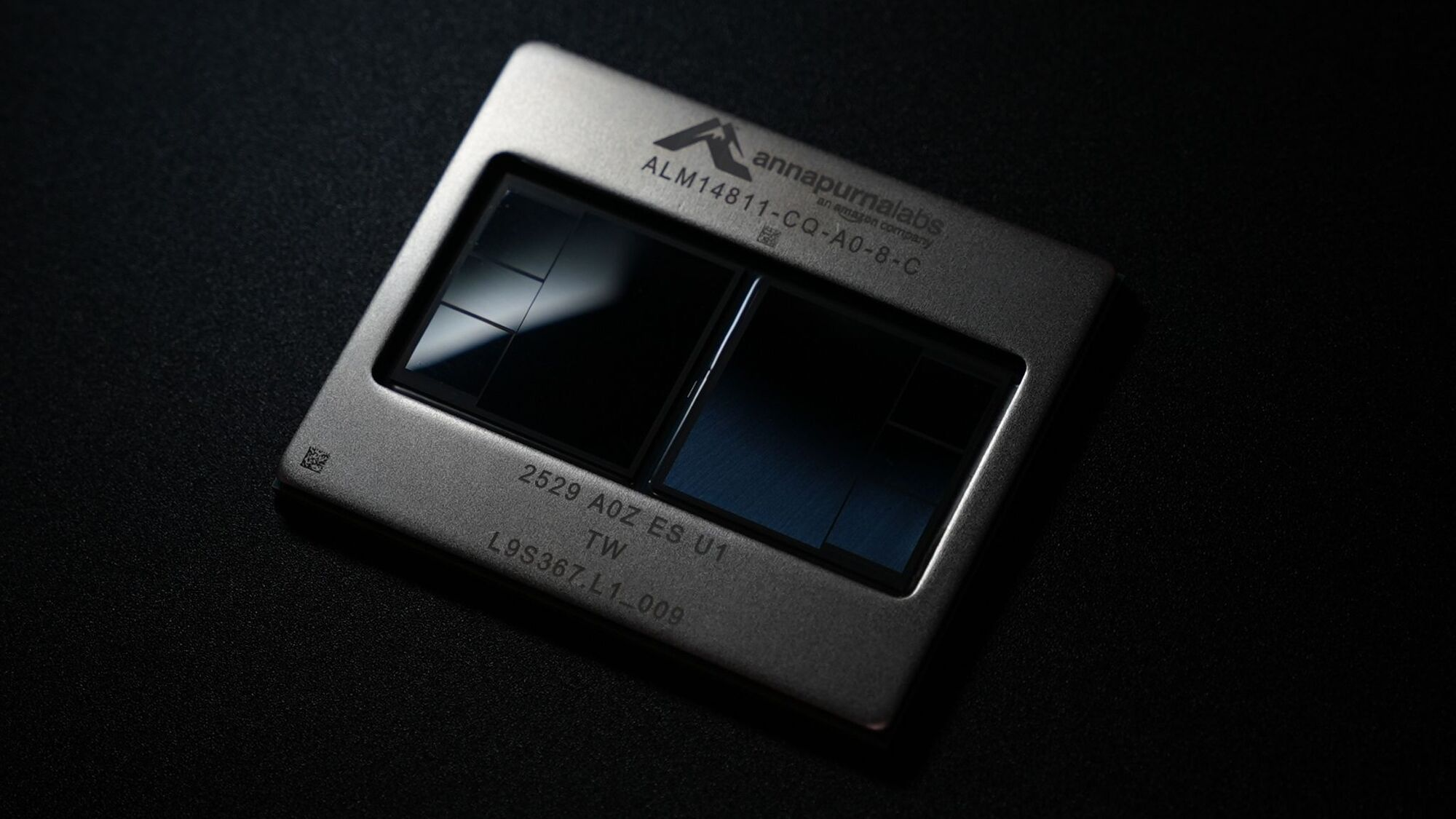
Amazon may be preparing to take its custom silicon strategy beyond AWS infrastructure and into a much broader competitive role. In his latest shareholder letter, chief executive officer Andy Jassy made it clear that Amazon sees enormous long term value in its in house chip portfolio, particularly Trainium, Graviton, and Nitro, and he went further by suggesting that Amazon could eventually sell racks powered by those chips to third parties. That is one of the strongest public signals yet that Amazon is thinking beyond internal deployment and toward becoming a more direct infrastructure supplier in the wider AI and data center market.
The timing is significant. The global AI market continues to face a severe compute crunch, with demand for training, inference, and cloud capacity moving faster than supply. Amazon’s response has been to invest deeply in custom silicon that can improve economics for AWS while also reducing reliance on third party chip vendors. In the letter, Jassy argued that Amazon’s chip business is already “on fire,” said demand for Trainium is booming, and positioned the company’s in house approach as a major cost and margin advantage for AWS. He also stated that Trainium is expected to save Amazon tens of billions of dollars in annual capital expenditures at scale, while also providing several hundred basis points of operating margin benefit compared with relying on outside chips for inference.
Jassy’s most attention grabbing number was his estimate around the size of Amazon’s chip business. He said the company’s annual revenue run rate for chips, including Graviton, Trainium, and Nitro, is now over 20 billion dollars and growing at triple digit year over year rates. He then added that if Amazon’s chip unit were operated as a stand alone business and sold chips produced this year to AWS and other outside customers, the annual run rate would be around 50 billion dollars. That is not the same as saying Amazon has already built a 50 billion dollar merchant chip business, but it is a striking internal benchmark that shows how highly Amazon values its own silicon portfolio.
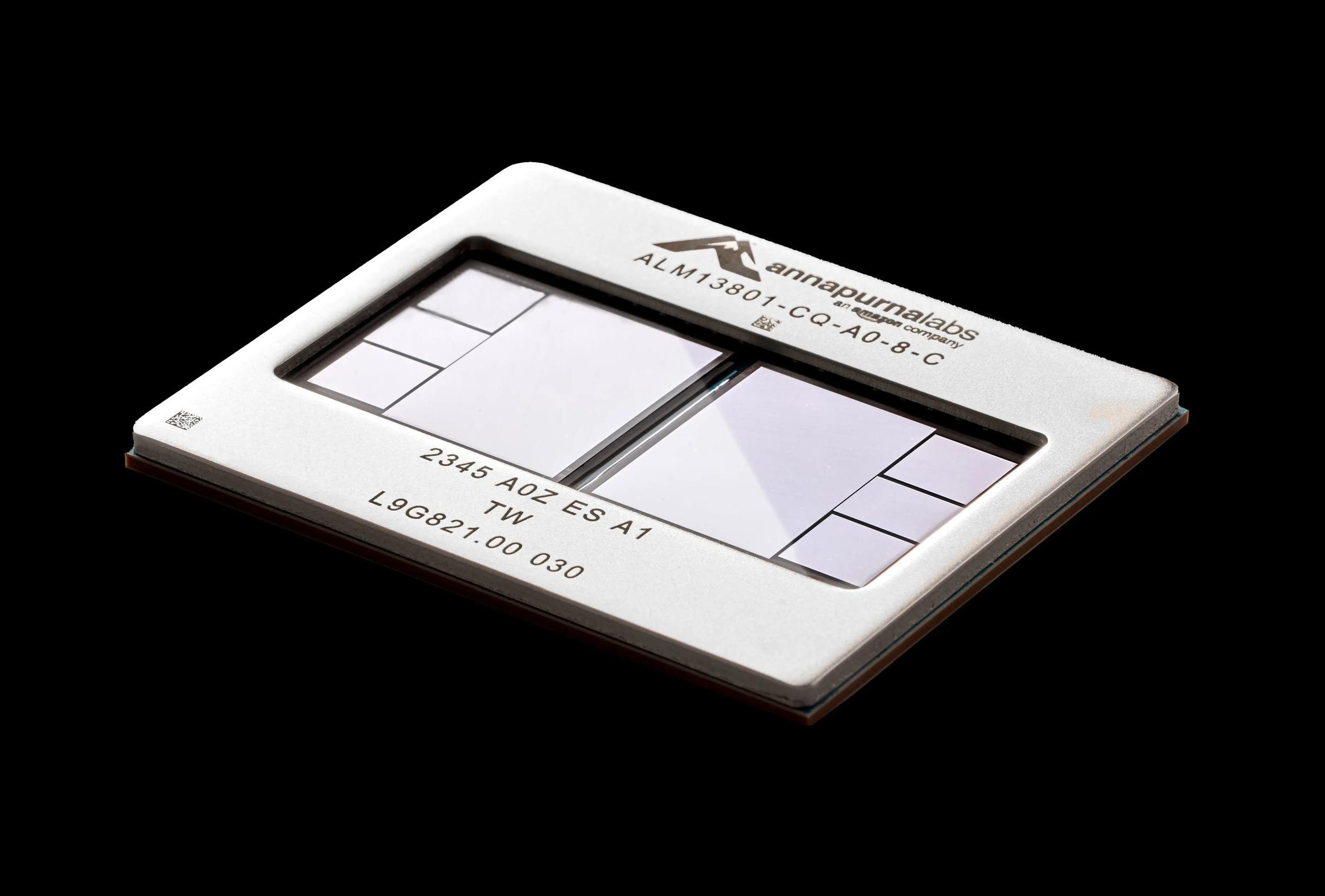
Jassy also made it clear that Amazon believes price to performance is where its advantage becomes most visible. He said Graviton, which Amazon introduced in 2018, offers up to 40% better price performance than other x86 processors and is now used broadly by 98% of the top 1000 EC2 customers. On the AI side, he said Trainium2 delivered around 30% better price performance than comparable GPUs and has largely sold out, while Trainium3, which began shipping at the start of 2026, is 30% to 40% more price performant than Trainium2 and is already nearly fully subscribed. He also noted that a significant portion of Trainium4 capacity has already been reserved even though broad availability is still around 18 months away.
That matters because Amazon is not presenting custom silicon as a niche side project. It is presenting it as a structural pillar of AWS economics and a strategic way to serve customer demand that cannot be met by relying only on the traditional GPU supply chain. Jassy was careful to say Amazon still has a strong partnership with NVIDIA and will continue making AWS a leading environment for NVIDIA deployments, but he also emphasized that customers want better price performance and that Amazon has seen this pattern before in server CPUs. His message was direct: custom infrastructure does not need to replace every mainstream compute option to become massively important. It only needs to address enough of the market where hyperscalers need more supply, better margins, and tighter control over deployment.
One of the more revealing lines in the letter came when Jassy said that 2 large AWS customers had already asked to buy all of Amazon’s Graviton instance capacity in 2026, something AWS cannot accommodate because of broader customer demand. He then followed that by saying there is so much demand for Amazon’s chips that it is “quite possible” the company will sell racks of them to third parties in the future. That is not a formal product launch announcement, but it is a meaningful strategic hint. If Amazon follows through, it would push the company closer to direct competition not only with cloud peers, but also with vendors building AI infrastructure systems around merchant silicon.
The broader business backdrop reinforces how serious Amazon is about this expansion. Jassy said AWS added 3.9 gigawatts of new power capacity in 2025, expects to double total power capacity by the end of 2027, and still faces unserved demand because of capacity constraints. He also said Amazon expects to invest approximately 200 billion dollars in capital expenditures in 2026, with much of that tied to infrastructure that will be monetized in 2027 and 2028. In that context, custom silicon is not simply a technology success story. It is part of a much larger play to secure long term capacity, lower infrastructure costs, and strengthen Amazon’s ability to capture the next wave of AI spending.
From an industry perspective, the key takeaway is that Amazon now seems increasingly comfortable discussing Trainium and Graviton not just as internal AWS enablers, but as assets with external commercial potential. That could reshape how the market views the company. For years, Amazon’s custom chips were often framed as an internal optimization layer for cloud workloads. Jassy’s new comments suggest a bigger ambition, one where Amazon could eventually leverage its own silicon, its own racks, and its own systems level integration to challenge more established infrastructure players in a direct way.
The next phase will depend on execution. Selling to third parties requires more than building efficient chips. It requires productization, support models, ecosystem readiness, software maturity, and a channel strategy that can win confidence outside Amazon’s own cloud. Still, the direction of travel is becoming easier to read. Amazon no longer appears satisfied with custom silicon as a defensive tool. It increasingly looks like the company sees it as an offensive growth engine.
What do you think, could Amazon become a true external silicon and rack supplier at scale, or will Trainium and Graviton remain strongest as internal AWS weapons?
