
NVIDIA Says AI Compute Now Costs More Than Human Labor as Industry Spending Surges
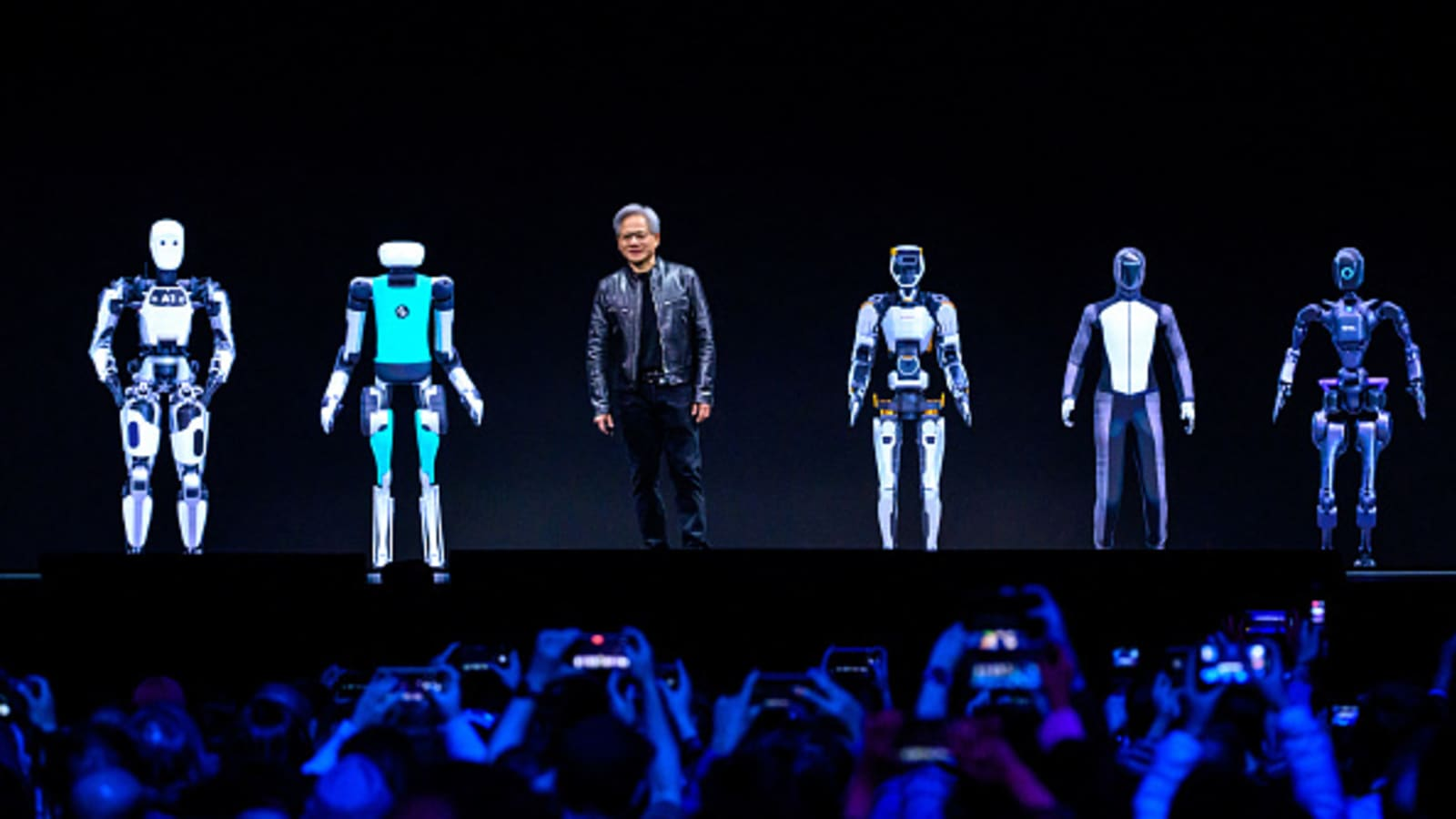
The economics of AI are becoming harder to ignore, and NVIDIA is now one of the clearest examples of how quickly compute costs are overtaking traditional operating expenses. In comments reported by Axios, NVIDIA Vice President of Applied Deep Learning Bryan Catanzaro said that for his team, “the cost of compute is far beyond the costs of the employees,” a striking admission that shows just how expensive modern AI development and deployment has become. The comment is especially important because it comes from one of the companies most closely tied to the AI boom, not from a smaller firm struggling to keep pace.
That shift is not happening in isolation. Gartner’s latest forecast says worldwide IT spending is expected to reach 6.31 trillion dollars in 2026, up 13.5% from 2025, with AI infrastructure continuing to drive a major share of that growth. The fastest expanding segment is data center systems, which Gartner projects will jump 55.8% year over year to 787.99 billion dollars. That figure alone shows why so many companies are finding that AI is no longer a simple software line item. It is becoming a capital intensive infrastructure commitment that reaches deep into servers, networking, cooling, power, and accelerated compute.
For NVIDIA, the quote from Catanzaro underlines a key reality of the current market. Even the companies selling the hardware that powers the AI boom are also massive consumers of it. NVIDIA does not just design GPUs and platforms for customers. It also runs large internal AI workloads across research, applied model development, and product features. That means rising compute usage is hitting both sides of the equation. NVIDIA benefits from the demand, but it also lives inside the same escalating cost structure that is reshaping the rest of the industry.
Axios also reported that NVIDIA is not alone in seeing AI spend climb to uncomfortable levels. Other companies including Uber and Swan AI were cited as examples of businesses watching AI costs rise sharply, with the broader concern being that higher model and compute bills may eventually force companies to prove stronger returns on every AI dollar spent. That is becoming a more important discussion point as AI adoption matures. In the early phase, heavy AI spending looked like a signal of ambition and innovation. Now, investors and finance teams are increasingly likely to ask whether that spending is actually generating measurable productivity, revenue, or strategic advantage.
The broader Gartner outlook reinforces why this pressure is unlikely to ease soon. Beyond data centers, software spending is projected to reach 1.44 trillion dollars in 2026, up 15.1%, while IT services are expected to rise to 1.87 trillion dollars. Communications services and devices are also still growing, but the scale of the jump in AI related infrastructure is what stands out most. This is not a normal budget cycle. It is a structural reallocation of technology spending toward the hardware and platforms required to train, run, and scale AI systems.
| Segment | 2025 Spending | 2025 Growth | 2026 Spending | 2026 Growth |
|---|---|---|---|---|
| Data Center Systems | 505,634 | 51.6% | 787,990 | 55.8% |
| Devices | 791,663 | 9.7% | 856,189 | 8.2% |
| Software | 1,254,449 | 12.8% | 1,443,621 | 15.1% |
| IT Services | 1,715,650 | 6.2% | 1,870,197 | 9.0% |
| Communications Services | 1,296,409 | 3.3% | 1,358,553 | 4.8% |
| Overall IT | 5,563,805 | 10.5% | 6,316,550 | 13.5% |
One reason this matters so much is that compute has become a recurring operational cost, not just an upfront investment. Training new models, serving inference at scale, tuning enterprise deployments, and supporting agent driven systems all require constant access to expensive infrastructure. As companies increase use of AI in more workflows, the compute meter keeps running. That helps explain why Catanzaro’s remark landed so strongly. It captures a new reality where the marginal cost of more AI capability can quickly outpace the cost of the people managing or benefiting from it.
At the same time, this does not necessarily support the idea that AI is replacing people outright. NVIDIA Chief Executive Jensen Huang has repeatedly argued that the future belongs to people who use AI effectively rather than to AI alone. What Catanzaro’s quote really shows is that the balance sheet side of the AI era is getting more complex. Companies may be augmenting people with AI, but they are increasingly doing so through infrastructure bills that are becoming enormous in their own right. That means the next stage of the AI race may be defined not only by who has the best models, but by who can sustain the economics of running them. This is an inference based on the current spending trend and NVIDIA’s own comments.
For the industry, the message is clear. AI is no longer just a talent story or a software story. It is an infrastructure cost story, and one that is rising fast enough for NVIDIA itself to say compute now outweighs human labor in at least part of its business. That is a powerful signal for every company still trying to work out whether the AI boom is translating into real long term efficiency or just a much bigger bill.
What do you think, will rising AI compute costs eventually force companies to slow adoption, or will the returns become strong enough that these bills simply become the new normal?
