
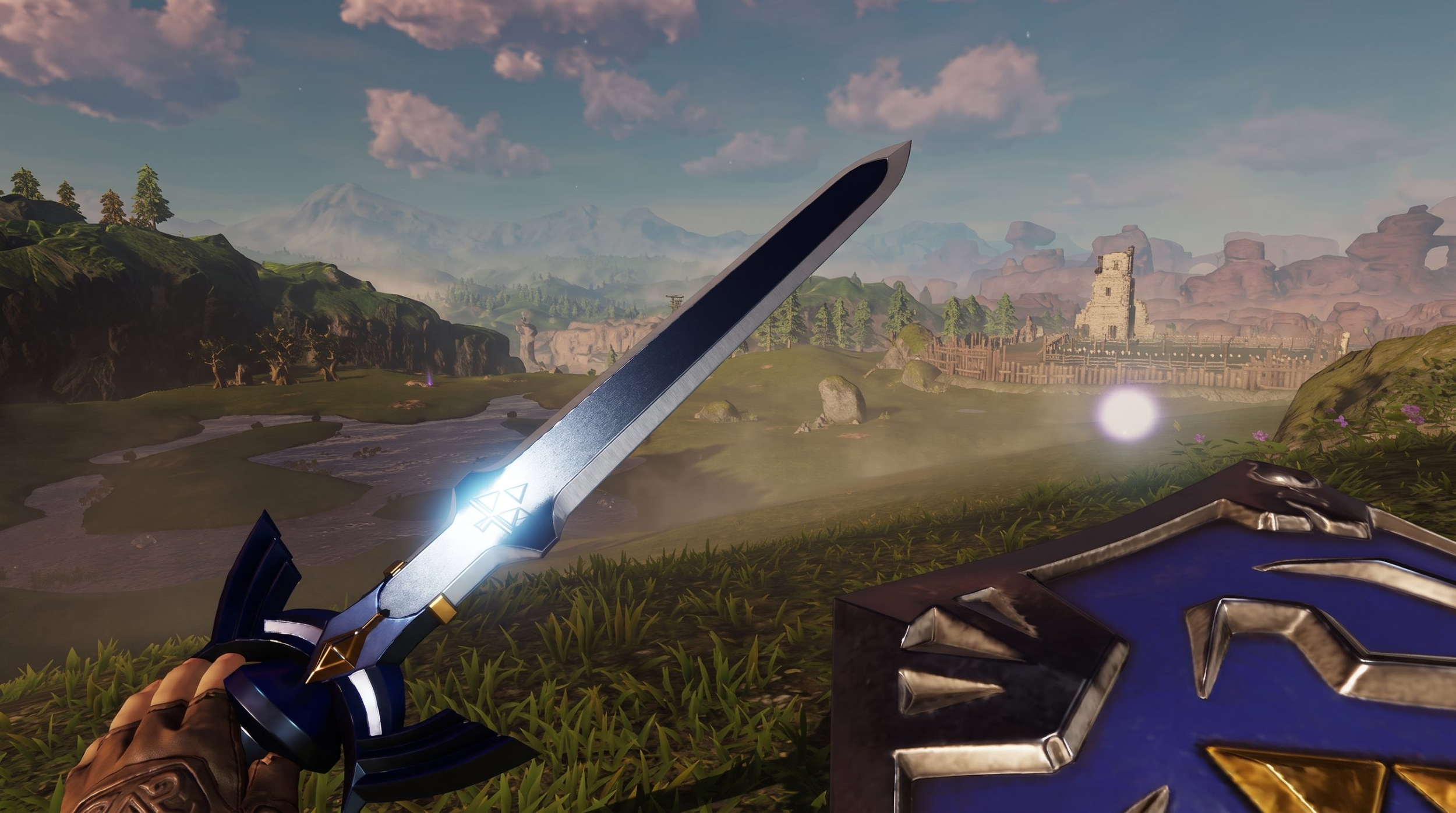
The Legend of Zelda: Ocarina of Time remake has received an unofficial VR modification less than 3 weeks after its November 5, 2026 launch on Nintendo Switch 2. Developed by ReTracedGames, the new OcarinaVR project transforms the adventure into an immersive virtual reality experience, allowing players to explore Hyrule through Link's eyes while physically controlling his sword, shield, and other equipment. The modification builds upon Hookshot, an experimental native PC recompilation of Nintendo's latest remake, demonstrating how quickly the PC modding community is expanding the capabilities of the game beyond its original console release.
According to the developer's official OcarinaVR GitHub repository, the modification uses OpenXR to integrate VR headset tracking with the game's Vulkan renderer. Players can experience the adventure from Link's perspective, with the camera positioned at his actual height, making the world appear considerably different when playing as young Link compared with his adult counterpart. The modification also supports switching between first person and traditional third person views, allowing players to experience the original camera perspective while remaining inside a virtual environment.
One of the most impressive features is the integration of tracked hand movements. Link's arms follow the player's VR controllers, allowing users to physically draw the Master Sword from their back, swing weapons during combat, raise the Hylian Shield, pick up and throw objects, and aim the slingshot using both hands. The developer has also implemented optional hand tracking and support for left handed controls, although compatibility with different headsets and tracking configurations remains experimental.
The technology goes beyond simply moving the camera into Link's head. OcarinaVR modifies the character's skeletal animation to synchronize virtual hands with controller movements while preserving the game's existing combat mechanics. Its rendering implementation generates separate headset views using the game's image and depth information, while menus and cinematic sequences appear on a curved virtual screen to maintain readability.
The developer showcased the modification in an official gameplay demonstration on YouTube, featuring adult Link using the Master Sword and Hylian Shield, combat from multiple perspectives, and young Link exploring Castle Town while interacting with objects and weapons.
However, the project remains in early development. ReTracedGames reports that the bow requires additional work, lighting and shadows can behave incorrectly during head movements, and rapid camera movement may introduce unwanted motion blur. Testing was conducted on a PC equipped with a GeForce RTX 5090 and Meta Quest 3 through Quest Link, with gameplay generally running between 50 and 60 FPS and relying on VR reprojection for smoother headset presentation. Performance on other GPU configurations has not yet been established.
The modification requires Windows 10 or 11, at least 16 GB RAM, a Vulkan 1.3 compatible graphics card supporting mesh shaders, and an OpenXR headset. Players also need their own copy of Ocarina of Time remake version 1.1.1, as the project does not distribute Nintendo's game files. Approximately 60 GB of temporary storage is recommended during compilation.
OcarinaVR follows the rapid development of unofficial Ocarina of Time PC ports featuring DLSS, frame generation, and enhanced graphics. These projects have already introduced higher resolutions, additional rendering options, and performance improvements unavailable through the official Nintendo Switch 2 version.
The free modification, installation instructions, and source code are available through ReTracedGames on GitHub. It remains an independent community project without official support from Nintendo.
OcarinaVR demonstrates the extraordinary creativity of the PC modding community and the potential of native game recompilation. Transforming a newly released Nintendo Switch 2 remake into an interactive VR experience within weeks is a remarkable technical achievement, particularly considering the additional work required for skeletal animation, weapon interactions, and headset rendering.
The most important accomplishment is giving players new ways to experience a game they already own. Features such as VR support, higher resolutions, unlocked performance options, and customizable controls demonstrate why open computing platforms remain essential for gaming innovation.
Although OcarinaVR still needs substantial optimization, projects like this highlight capabilities that console manufacturers rarely provide officially. Supporting community modifications and hardware flexibility helps preserve games while extending their value beyond the limitations of their original platforms.
Would you replay The Legend of Zelda: Ocarina of Time remake entirely in VR with motion controlled combat, or would you prefer Nintendo to release an official PC version with improved graphics and performance?
