
Thermalright Launches AI HydroNous R1 Mini PC With Water Cooled Ryzen AI Max+ 395 and Up to 176W Peak Power
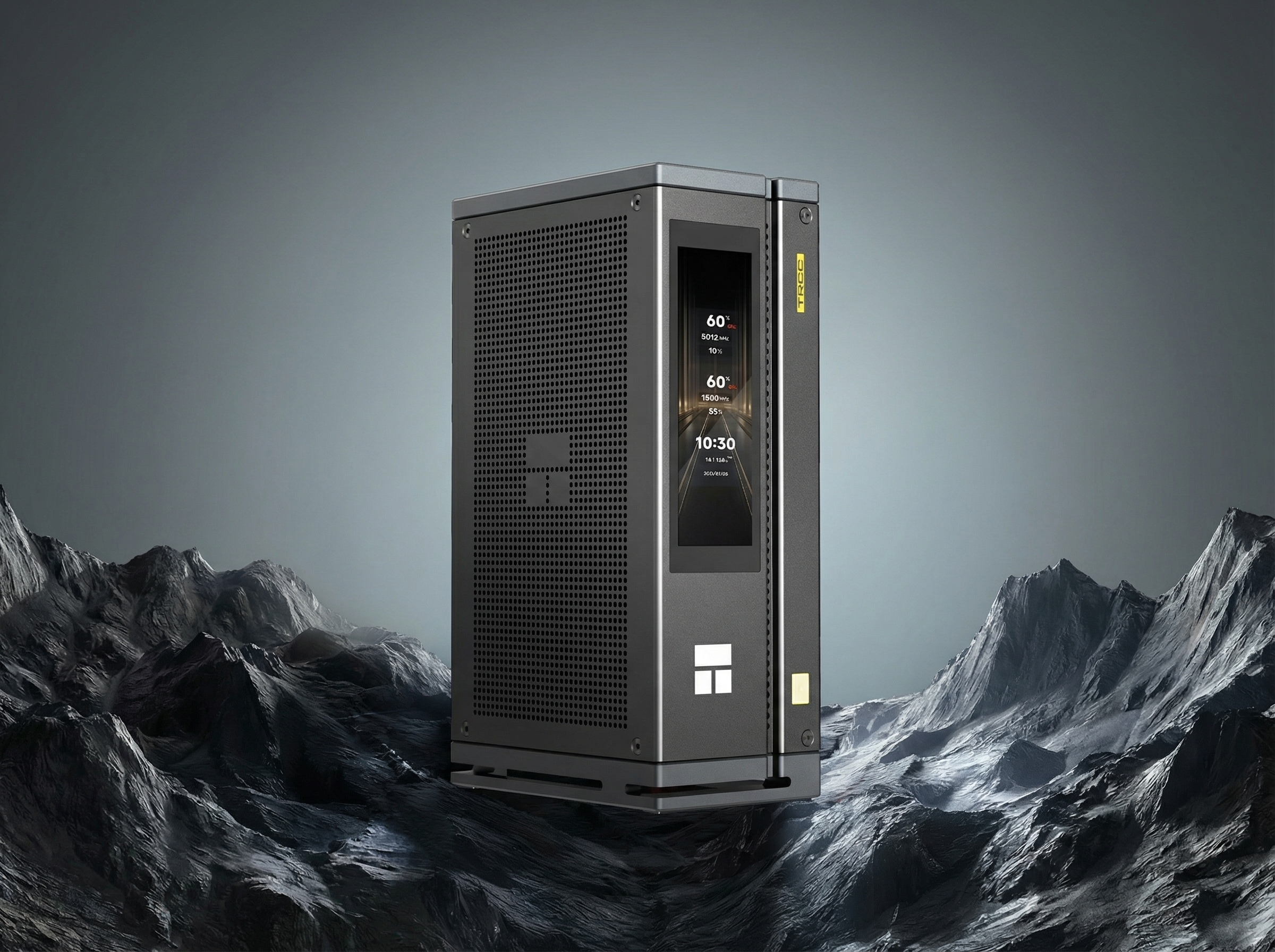
Thermalright has officially introduced the AI HydroNous R1, a new compact mini PC built around AMD’s flagship Ryzen AI Max+ 395 and backed by a custom liquid cooling setup designed to push the Strix Halo chip well beyond its usual operating envelope. According to IT Home, the system is being positioned as a “liquid cooled AI super computing mini desktop center,” with a claimed 176W peak performance release, a notable step above the processor’s standard power profile.
What makes the AI HydroNous R1 especially interesting is the combination of that aggressive power target with a very compact chassis. IT Home reports that the system uses a 2.6L vertical enclosure made from CNC aluminum alloy, while still integrating a 4.6 inch LCD display on the front for system monitoring. In other words, Thermalright is clearly trying to blend enthusiast grade performance with a premium small form factor design, rather than treating this as a generic mini PC box.
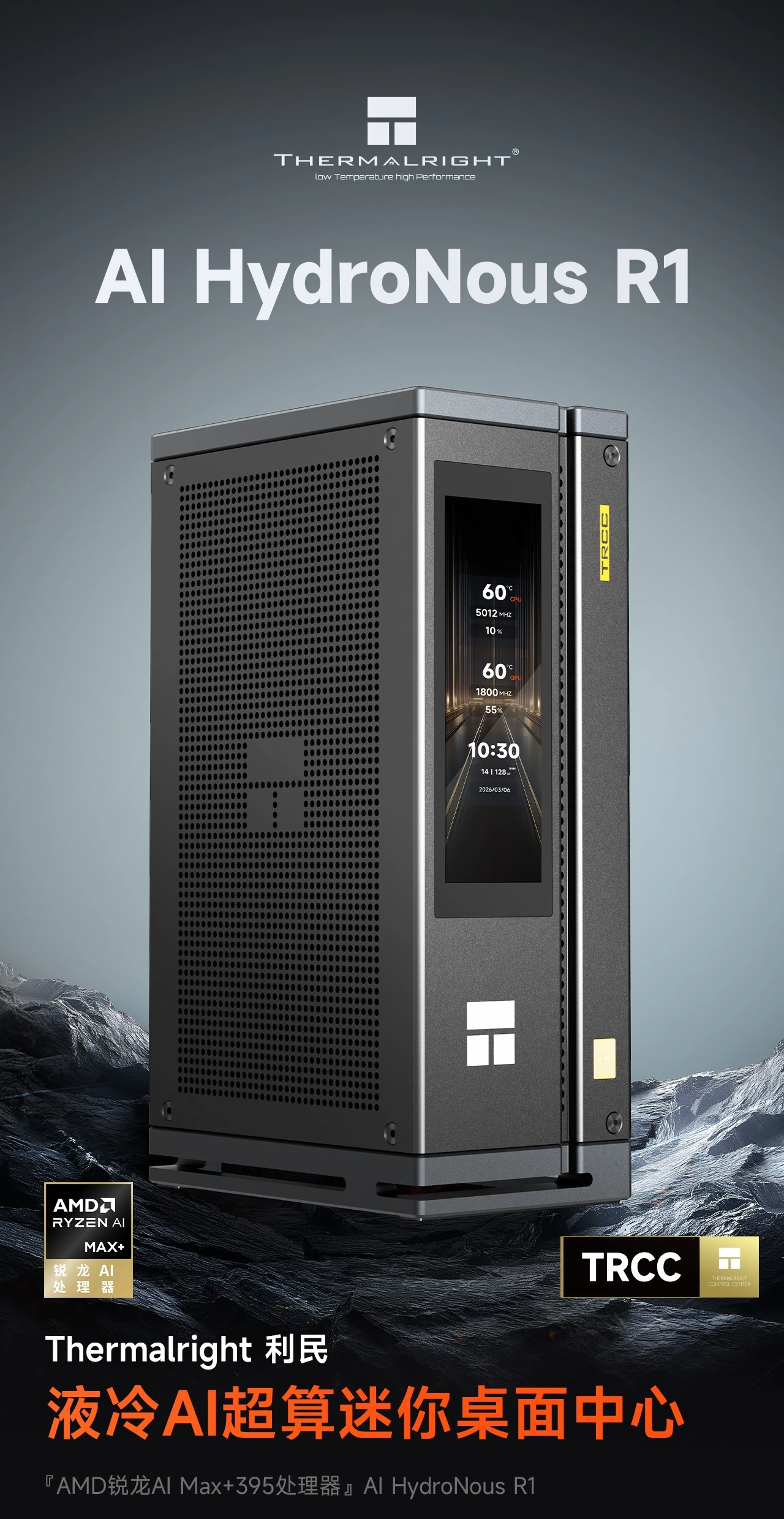
At the core of the machine is the Ryzen AI Max+ 395, AMD’s top Strix Halo APU with 16 cores and 32 threads, paired with the integrated Radeon 8060S graphics. That silicon is already known for offering one of the strongest CPU and integrated graphics combinations currently available in the compact PC segment, but Thermalright’s main pitch here is that water cooling allows it to stretch much further under load. According to the reporting, the AI HydroNous R1 uses a cooling setup built around phase change TIM, a full coverage copper cold plate, a custom 180 radiator, and 2 high end LCP fans, with support for 3 performance modes.

On the connectivity side, the system also looks well equipped for high bandwidth work. IT Home says the mini PC includes 10GbE LAN and 2 USB4 ports, which gives it a more serious workstation and creator oriented flavor than the average compact gaming machine. Wireless support was not clearly confirmed in the cited reporting, so that part remains uncertain for now.
Pricing and memory configuration appear to have surfaced through an additional industry report. A post referenced by @realVictor_M claims the AI HydroNous R1 will ship with 128 GB of RAM and 2 TB of storage for 23,990 yuan, or roughly 3,500 dollars. However, that pricing point does not appear in Thermalright’s own product announcement cited here, so it should still be treated as reported pricing rather than fully finalized official retail confirmation until the company publishes a full product page.
From a market perspective, the AI HydroNous R1 feels like Thermalright making a bold statement in the premium mini PC space. Plenty of compact systems now use powerful mobile silicon, but far fewer try to unlock that hardware with a more extreme cooling approach and a noticeably higher power ceiling. If the cooling solution performs as advertised, this could give the R1 a real advantage in sustained gaming, AI, and creator workloads where compact systems often start to throttle once thermals build up. That last point is an inference based on the reported 176W peak target and the cooling hardware described in the launch coverage.
For users who want a machine with serious CPU and integrated graphics performance without moving up to a full tower build, the AI HydroNous R1 could end up being one of the more interesting Strix Halo mini PCs to watch this year.
Would you actually buy a water cooled mini PC like this, or do you think compact systems at this price point make more sense once they include a dedicated GPU?
