
“Without GeForce, There Would Be No AI”: Jensen Huang Marks 25 Years of GeForce 3 and the GPU Shift That Changed NVIDIA
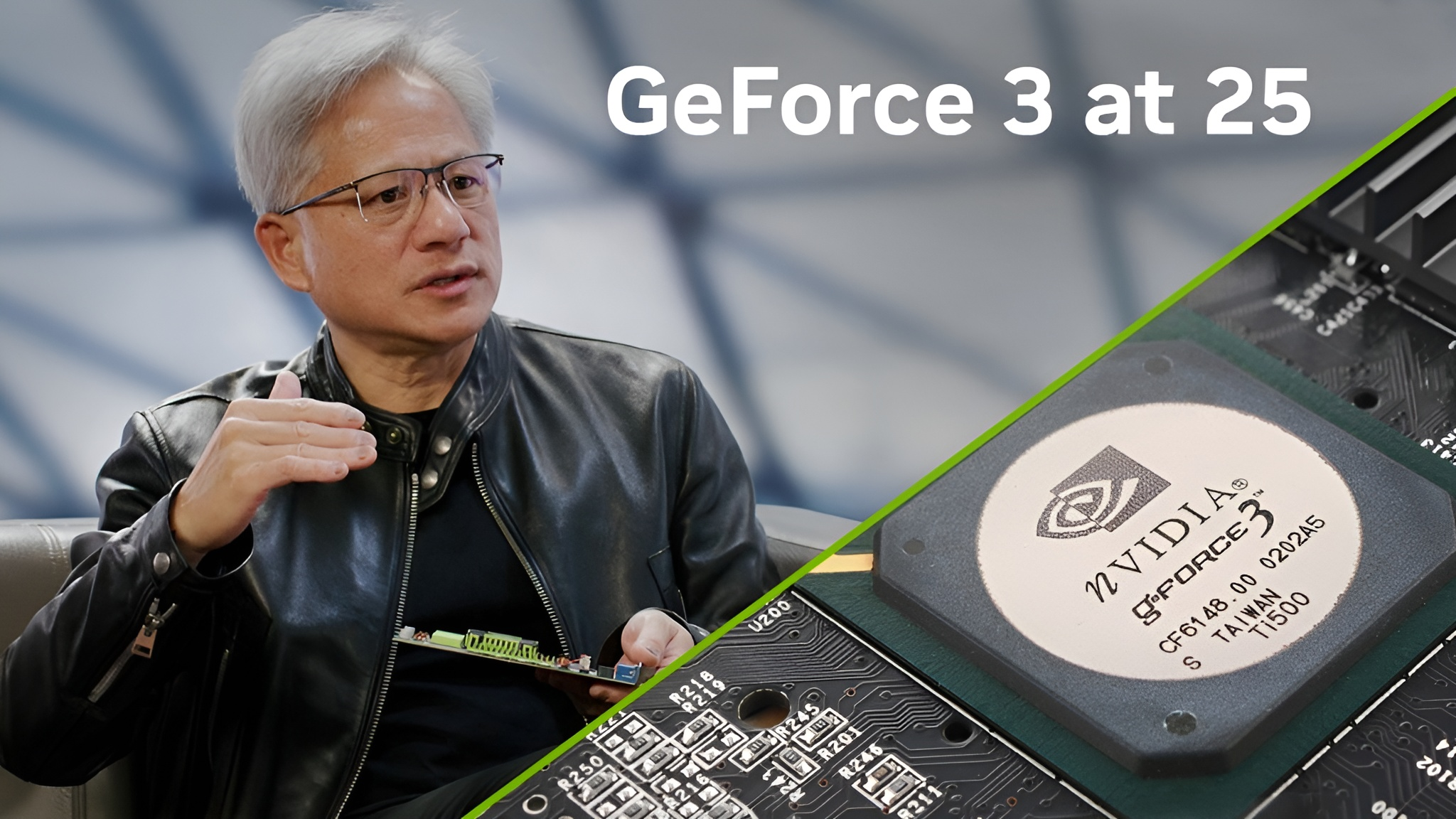
NVIDIA took a rare step back into its gaming history this week as CEO Jensen Huang joined senior GeForce team members to reflect on the 25 year legacy of the GeForce 3, the graphics card he says helped set NVIDIA on the path from graphics company to computing company. In the anniversary discussion shared on YouTube, Huang tied the GeForce 3 directly to the broader technological arc that later produced CUDA, modern GPU computing, and ultimately AI as NVIDIA defines it today.
The heart of Huang’s argument is that GeForce 3 marked the major transition from fixed function graphics to programmable shaders. He explained that in the late 1990s many games started looking too similar because earlier graphics accelerators offered limited flexibility. With GeForce 3, NVIDIA moved into programmable vertex and pixel shader design, giving developers a much more expressive way to shape how games looked and behaved. That shift, Huang said, forced NVIDIA to build deeper compiler and computing expertise, because the company could no longer think only as a hardware graphics vendor.
That historical point matters because it is one of the clearest examples of how gaming R and D ended up feeding technologies far beyond games. Huang’s framing was not that GeForce 3 created AI overnight, but that it began the mindset and software transition that made later breakthroughs possible. In the conversation, he described the company’s move toward programmability as the moment NVIDIA realized it needed to become a computing company. From there, the line to CUDA becomes much easier to see.
Huang then pushed that logic even further with his most quoted line from the discussion: “Without GeForce, there would be no CUDA. Without CUDA, there would be no AI. Without AI, there would be no today.” That is a classic Jensen Huang statement, dramatic, strategic, and very deliberate in how it places GeForce at the foundation of NVIDIA’s modern dominance. It is also consistent with NVIDIA’s own public messaging elsewhere, including its description of GeForce 3 as the programmable shader milestone that set the stage for decades of graphics and compute innovation.
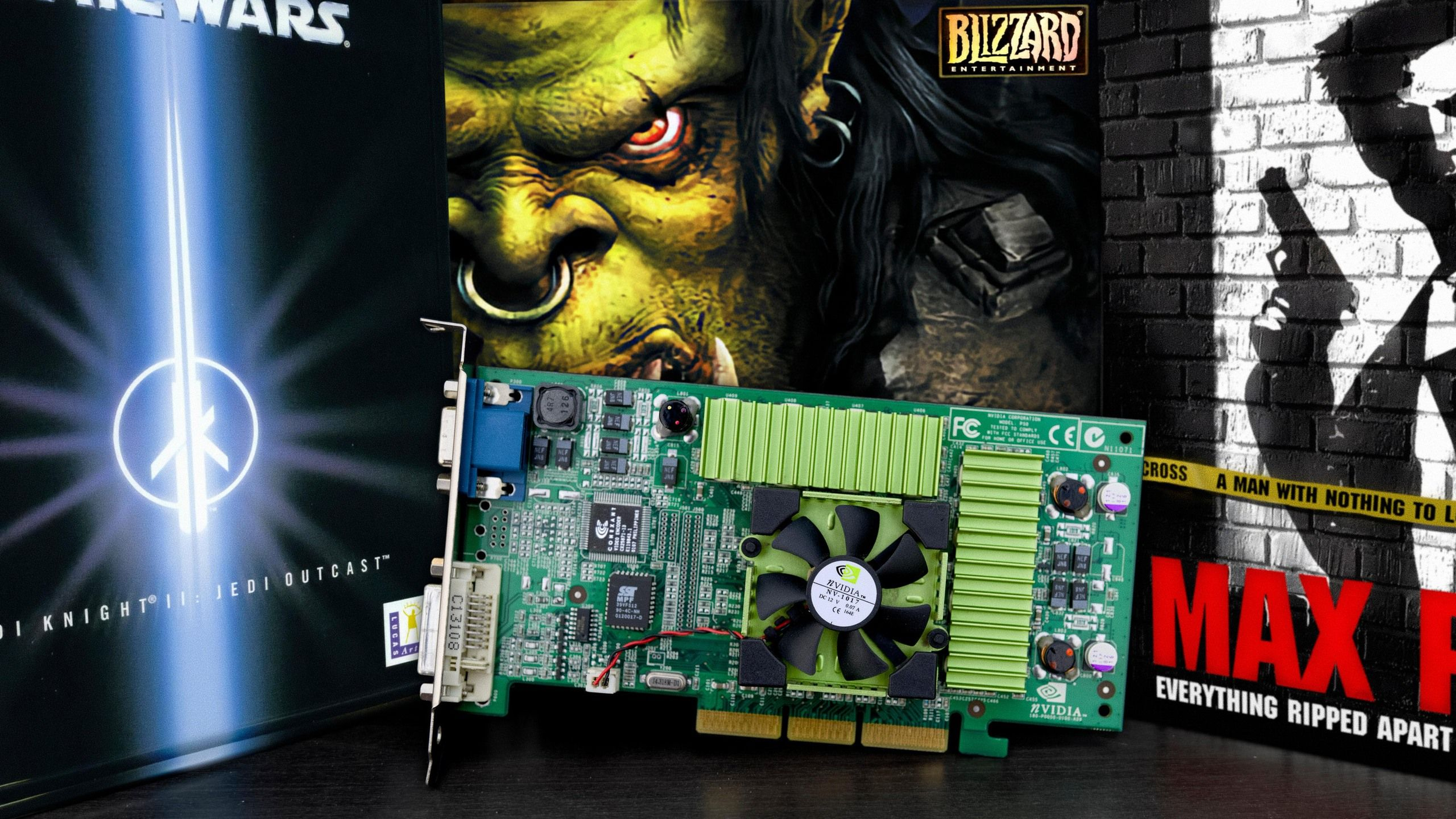
There is real technical substance behind that narrative. GeForce 3 was introduced in 2001 as NVIDIA’s first GeForce generation with programmable shaders and DirectX 8 era shader support, replacing the more rigid graphics pipeline that had defined earlier consumer GPUs. NVIDIA itself has repeatedly pointed back to that moment as the beginning of a longer evolution from pixel shading to compute shading to real time ray tracing and now AI assisted rendering.
Huang also linked this history to later milestones like RTX, ray tracing, and DLSS, arguing that once NVIDIA had embraced programmability and parallel computing, it became possible to keep pushing graphics into more computationally demanding territory. In NVIDIA’s official product history, the company has similarly framed modern GeForce RTX hardware as a convergence of programmable shading, ray tracing, and AI features. That broader throughline is central to why the company still treats gaming as foundational, even while its public spotlight is now dominated by data center and AI infrastructure.
From an industry perspective, this anniversary is also a useful reminder of something easy to overlook in 2026: a large part of today’s AI hardware stack was incubated by years of gaming driven graphics investment. The AI boom may define NVIDIA’s present, but GeForce helped define the engineering culture and architecture roadmap that got the company there. That does not mean gaming is still driving NVIDIA at the same scale as AI revenue today, but it does mean the GeForce story is much more than nostalgia. It is part of the company’s origin story for modern accelerated computing. This conclusion is an inference drawn from Huang’s remarks and NVIDIA’s public historical framing.
There is also an irony here that gamers will notice immediately. NVIDIA is celebrating GeForce as the spark that helped make AI possible at the same time many PC players feel the GeForce brand itself has become less central to NVIDIA’s public identity than it was before. That tension is real. But the anniversary discussion makes clear that inside NVIDIA, GeForce is still treated not as a side chapter, but as the first chapter of everything that followed.
What do you think, is Jensen right to say GeForce helped make today’s AI era possible, or has NVIDIA leaned too hard on that legacy while gaming takes a back seat?
